

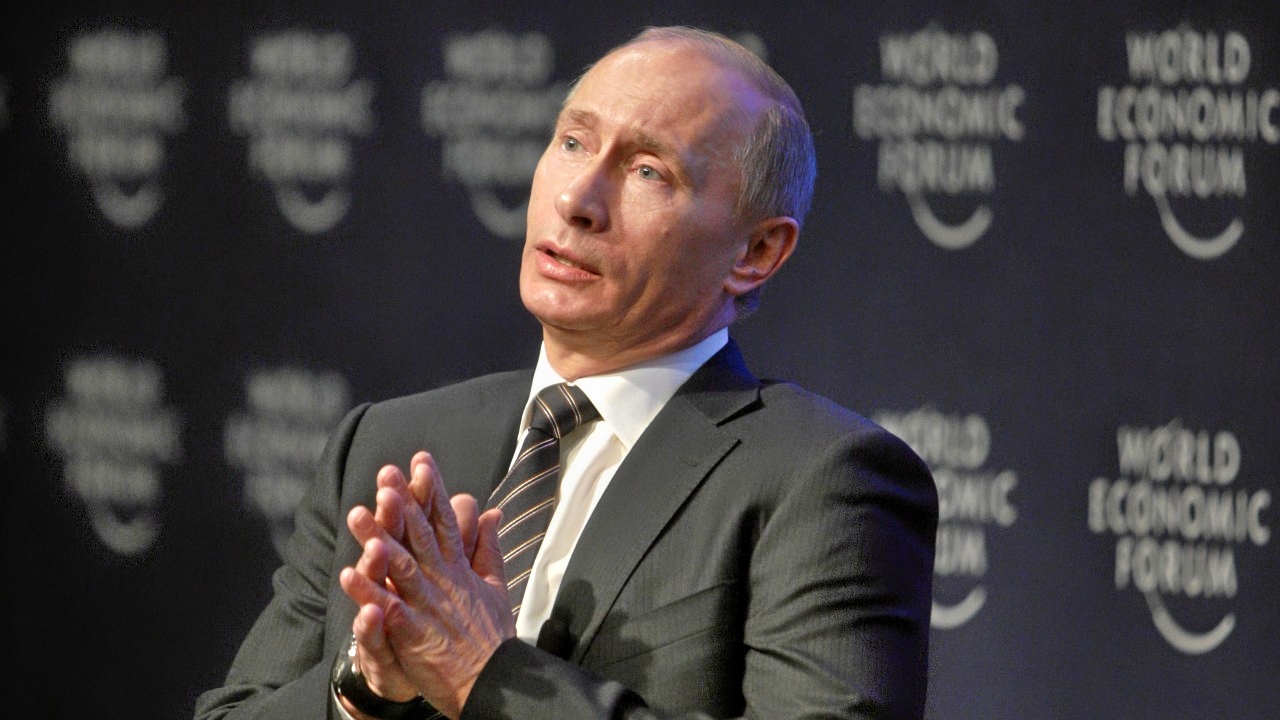
Ukraine launched another major overnight drone strike against Moscow, reportedly damaging a major oil refinery and forcing flight restrictions across all four of the capital’s international airports.
Russian officials claim that more than 60 drones targeting Moscow were shot down, while over 170 were intercepted nationwide.
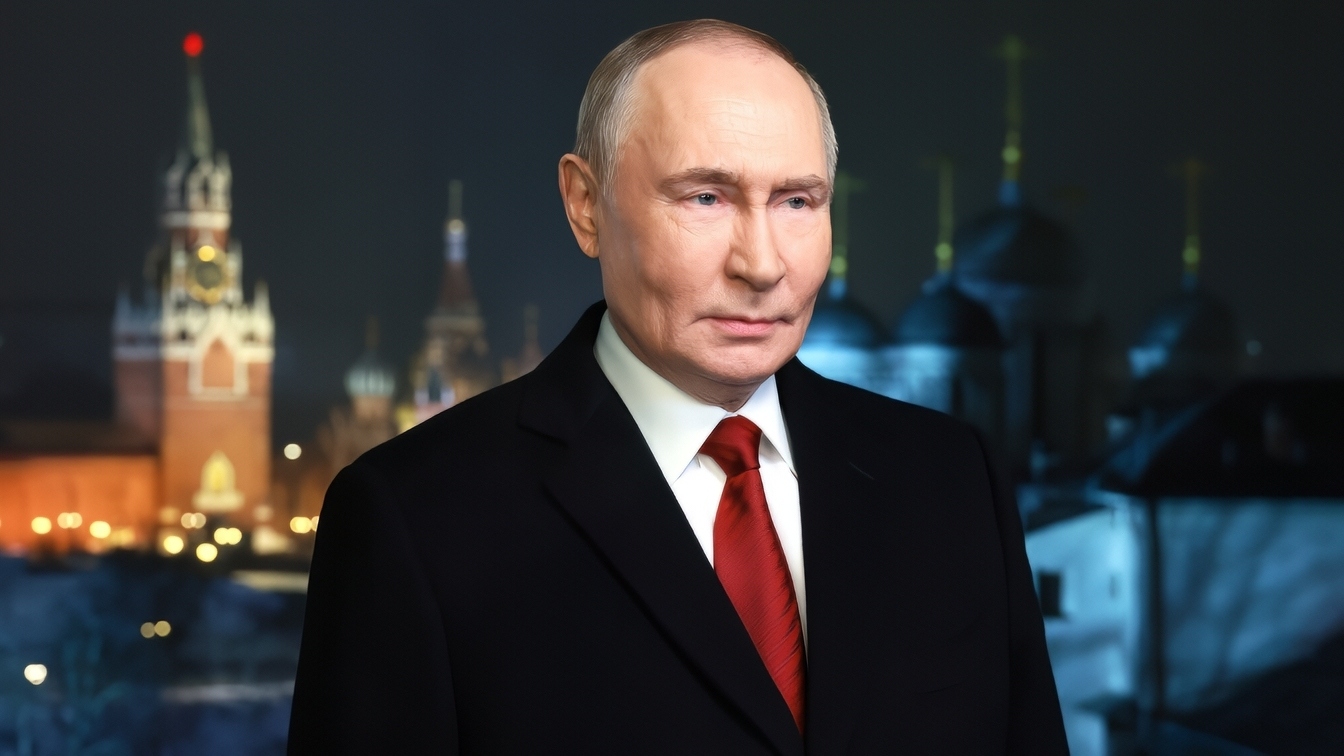
Putin New Year’s Message. Image Credit: Russian Government.
This was not an isolated incident; reportedly, this is the ninth consecutive day of Ukrainian drone attacks targeting Moscow.
Clearly, Ukraine’s drone campaign has evolved from isolated symbolic strikes into a sustained strategic air campaign deep inside Russia.
Evolution of the Strategy: Ukraine Declares Drone War on Moscow
Early in the war, Ukraine used drones for tactical purposes, like artillery spotting, battlefield recon, and FPV attacks.
Ukraine still uses drones for these purposes, but increasingly, Ukraine’s drone deployment has taken on a strategic bent, often being employed for long-range strikes, hundreds of miles behind the front, for the purpose of imposing economic, military, and psychological costs on the enemy.
Ukraine figures that if they can’t immediately seize territory, they can still make the war more expensive for Moscow, imposing costs even without direct battlefield breakthroughs.
Targeting Refineries
Ukraine reportedly struck a Gazprom-owned Moscow refinery, a significant facility capable of refining roughly 11 million tons annually.
This facility apparently provides about 40 percent of Moscow’s gasoline demand. And because oil remains one of Russia’s most important economic assets, this strike has outsized importance.
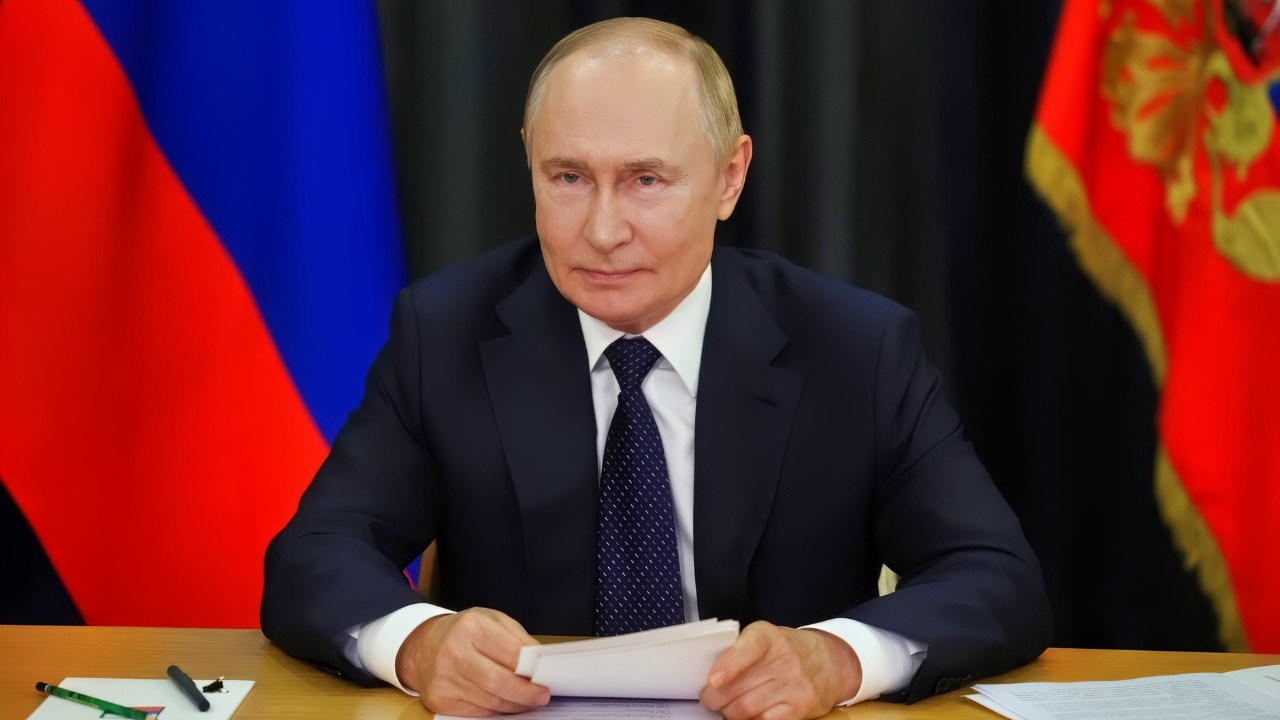
Putin in August 2025. Image Credit: Creative Commons.
Refineries have a military connection, too, supporting logistics, fuel production, transportation, and general industrial activity. So Ukraine’s strike creates economic friction in addition to physical destruction.
Psychological Consequences
The strike, hundreds of miles behind the front, influences perception of the war.
For years, Russians experienced the war through television. But drone attacks in the nation’s capital change that. Now airports are closed, flights are disrupted, and air defense systems are activated.
Fires are appearing near major cities. Kyiv has brought the war to Moscow. This increases pressure on the Russian leadership by bringing the visible consequences of the war closer to population centers, exacerbating war fatigue.
By the Numbers
Moscow Mayor Sergey Sobyanin says that more drones have targeted Moscow in 2026 than during all of 2025.
Reported figures hold that in 2025, a total of 734 drones were intercepted. But in the first half of 2026, over 1,100 drones have already been intercepted.
The implication is that the scale of Ukraine’s long-range strike capability is expanding rapidly. Production seems to be ramping up.
Defending Moscow
Russia is increasingly faced with the challenge of protecting Moscow. Doing so is extremely resource-intensive.
The defense systems deployed around Moscow cannot simultaneously protect oil facilities, military bases, logistics hubs, and infrastructure elsewhere.
Choices must be made, priorities set. And Ukraine does not need every drone to penetrate—simply forcing Russia to disperse expensive air-defense assets across an enormous territory is a worthwhile outcome.
By using cheap drones, Ukraine can force Russia to make expensive defensive responses.
Limitations of the Campaign
Granted, drone strikes alone are not going to win the war. Russia remains geographically vast, economically resilient, and capable of repairing its infrastructure.
The Ukrainian strikes will cause disruptions—not decisive damage. So the drone campaign is part of a broader strategy, but not the tool for winning the war.
Still, the campaign challenges the assumption that wars are won at the front; Ukraine is having a strategic impact hundreds of miles from the active battlefields.
Expect Ukraine to stick with its layered approach of battlefield attrition, attacks on energy infrastructure, and psychological pressure behind enemy lines.
The goal seems to be raising the cost of continuing the conflict to a level beyond what the people of Russia find acceptable.
The Big Picture
The big-picture takeaway here is that a middle power is now routinely striking the capital of a nuclear superpower using cheap, domestically produced drones.
Just a few years ago, this would have sounded implausible—but today it is becoming routine.
Thanks to drone technology, the barrier to conducting long-range strategic strikes has fallen dramatically.
And while the latest drone strikes won’t cause Russia to fall overnight, they matter because they signal the evolution of Ukraine’s long-range drone abilities and their overall strategic vision.
About the Author: Harrison Kass
Harrison Kass is a writer and attorney focused on national security, technology, and political culture. His work has appeared in Tablet, City Journal, The Hill, The Spectator, and The Cipher Brief. He holds a JD from the University of Oregon and a master’s in Global & Joint Program Studies from NYU. More at harrisonkass.com.


