

Warsaw, Poland – On Wednesday morning, 17 June, officers from the Central Directorate of the Russian Federal Security Service (FSB) detained the high-profile St. Petersburg businessman Ilya Traber. His arrest comes as a surprise to many, as he is a famous figure in Russia’s second city in two specific respects.
One is that he is well-known as being a major kingpin in St. Petersburg’s criminal underworld, where he has acquired the nickname “the Antiquarian,” or the “Antiques Dealer.” The second is that his initial rise to prominence in the city’s organized crime community in the 1990s was due in part to his close cooperation with the then-Deputy Mayor.
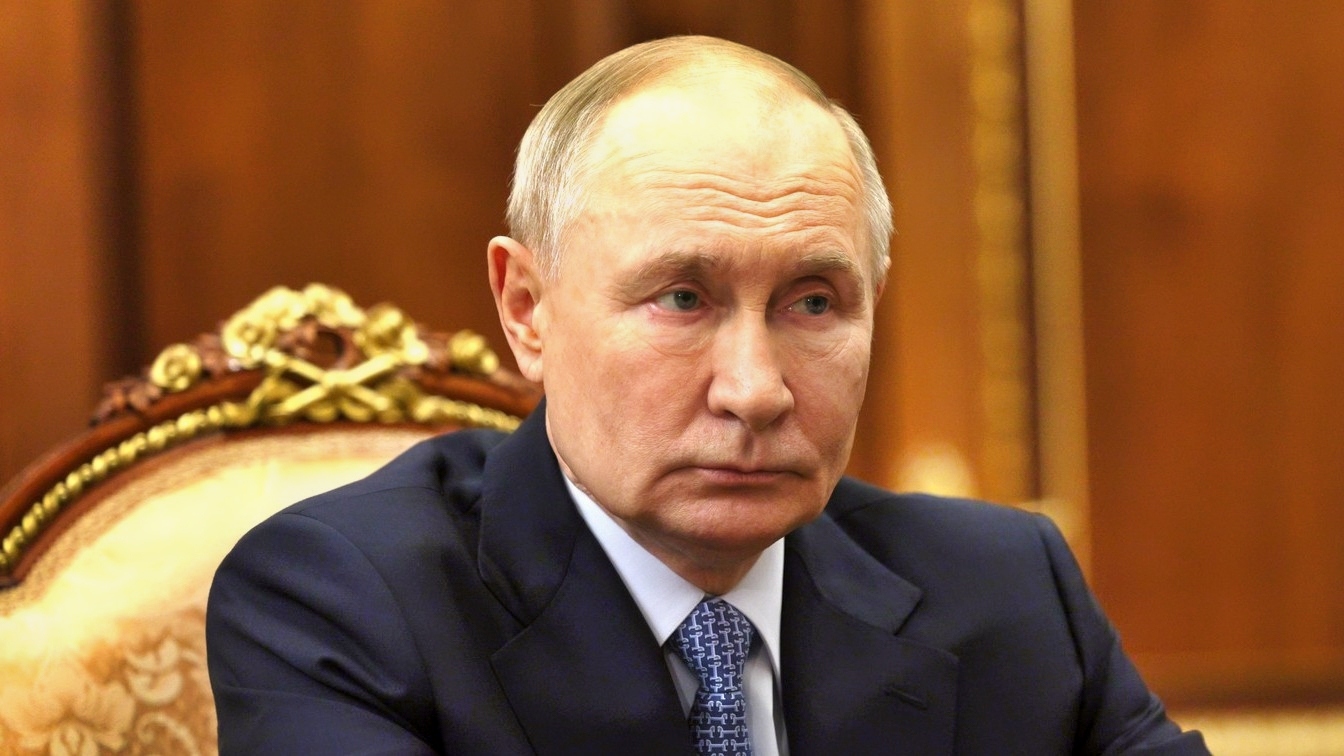
And that Deputy Mayor’s name was Vladimir Vladimirovich Putin, the current-day President of the Russian Federation, who has been in power for more than a quarter of a century.
That one-time close proximity to the former KGB Lt. Col. is an association that many – including Traber himself – thought made him untouchable. Until today, said one analyst of the Russian political system based in Moscow who spoke to National Security Journal, “no law enforcement or security service agent would have touched Traber unless they had some kind of a death wish.”
Association With Putin
And this relationship with Putin was not just some casual affiliation.
Traber rose to prominence as the closest associate and business partner of Vladimir Kumarin (Barsukov), who was the leader of the Tambov Organized Crime Group. It was Traber who was the liaison between the Tambov Organized Crime Group and the Mayor’s Office. It was in this capacity that Traber had direct contact with Putin.
This included Traber having to pay the future president a percentage of the profits from one of his biggest initial business deals. This contract gave him a monopoly on supplying aviation fuel to all airlines at St. Petersburg’s Pulkovo airport. That monopoly status, Putin reportedly told him, was a “gift” from the Mayor’s Office, and the KGB Lt. Col. who would later become President of Russia demanded a kickback accordingly.
Traber was also the only member of the Tambov gang with whom Putin socialized openly. The “Antiques Dealer” was even a guest of honor at Putin’s birthday parties at least twice between 2004 and 2016, which was well after Putin became Prime Minister of Russia in 1999. Traber’s former bodyguard, Sergey Gess, has even claimed that before he became Russia’s President, Putin would even visit Traber’s office “for advice.”
All the while, the underworld boss always kept a low-profile. “He’s still incognito. He never showed off: in the ’90s, he drove a Zhiguli [a cheap Soviet car model that was manufactured in the USSR and based on the Fiat 124]. And I didn’t understand why he drove [such a cheap car]? And once, one time we’re driving, he’s behind the wheel, and coming toward us is a BMW, a Mercedes… And the Antiquarian says: ‘It’s too early to buy foreign cars, 1937 [the year that the Great Purges began under Josef Stalin] could still start again,’” Gess recalled when speaking about how his boss suppressed any action that might reveal his real power and wealth.
Why The Arrest Now
Russia is the land in which conspiracy theories multiply faster than rabbits, and yesterday’s arrest has produced a flurry of such. There are endless interpretations of “what it all means”, but what it does come down to in a nutshell is that this is a sign that Putin’s power and authority may be waning.
Russian law enforcement sources have told Interfax news agency that Traber was arrested on suspicion of involvement in “a murder from previous years.” The St. Petersburg news site Fontanka has since linked the arrests directly to an ongoing investigation into the 24 October 2020 murder of the businessman and local politician Alexander Petrov, who was shot dead while in the yard of his residence.
Searches are reportedly also underway at the home of another one-time criminal acquaintance of Putin’s — Gennady Petrov. He is linked to Rossiya Bank, the Ozero cooperative, and the First Deputy Director of the FSB Sergei Korolev.
The Ozero Cooperative was one of Putin’s first major vehicles for siphoning money from state coffers, a practice he perfected during his rise to power.
When his “boss”, the St. Petersburg Mayor Anatoliy Sobchak, was defeated in the 1996 election, Putin’s group lost their access to the mayor’s contingency fund. Putin and seven co-founders then registered the Ozero (Lake in Russian) Dacha Consumer Cooperative. This gated community violated existing shoreline access laws. More importantly, the Ozero Cooperative had a bank account that allowed Putin to access the wealth it generated without receiving money directly.
Simply put, the arrest of Traber and others now threatens to bring to light all the shady underworld and criminal dealings that Putin was associated with in St. Petersburg before he came to Moscow and became Boris Yeltsin’s Prime Minister. None of this would be any surprise to Russian citizens who understand the long-running connections between their intelligence services and organized crime, but it is the kind of intrusive probing into Putin’s personal and closely-guarded past that he has always shown he despises.
One key to the entire puzzle is why the FSB is involved in this investigation. “Investigating a murder is a matter for local law enforcement; it is not a state security matter,” said the Russian political analyst. “What this appears to be – at least on the surface – is that the increasing power of the FSB due to the authority they have been given due to the war has made them the proverbial ‘state within a state’. They are reaching the point where they no longer need Putin to grant them the power they want – and this is their way of letting him know it.”
About the Author: Reuben F. Johnson
Reuben F. Johnson has thirty-six years of experience analyzing and reporting on foreign weapons systems, defense technologies, and international arms export policy. Johnson is the Director of Research at the Casimir Pulaski Foundation. He is also a survivor of the Russian invasion of Ukraine in February 2022. He worked for years in the American defense industry as a foreign technology analyst and later as a consultant for the U.S. Department of Defense, the Departments of the Navy and Air Force, and the governments of the United Kingdom and Australia. In 2022-2023, he won two awards in a row for his defense reporting. He holds a bachelor’s degree from DePauw University and a master’s degree from Miami University in Ohio, specializing in Soviet and Russian studies. He lives in Warsaw.


