

Even as Washington expresses hope that a full peace deal with Tehran will be signed in the next sixty days, U.S. President Donald Trump is warning that he could resume military action against Iran if the negotiations break down again.
The comments came on the same day that the full details of the recently agreed memorandum of understanding (MOU) were published online and signed by President Trump, revealing the extent of the concessions Washington made to prevent further disruption in the Strait of Hormuz.
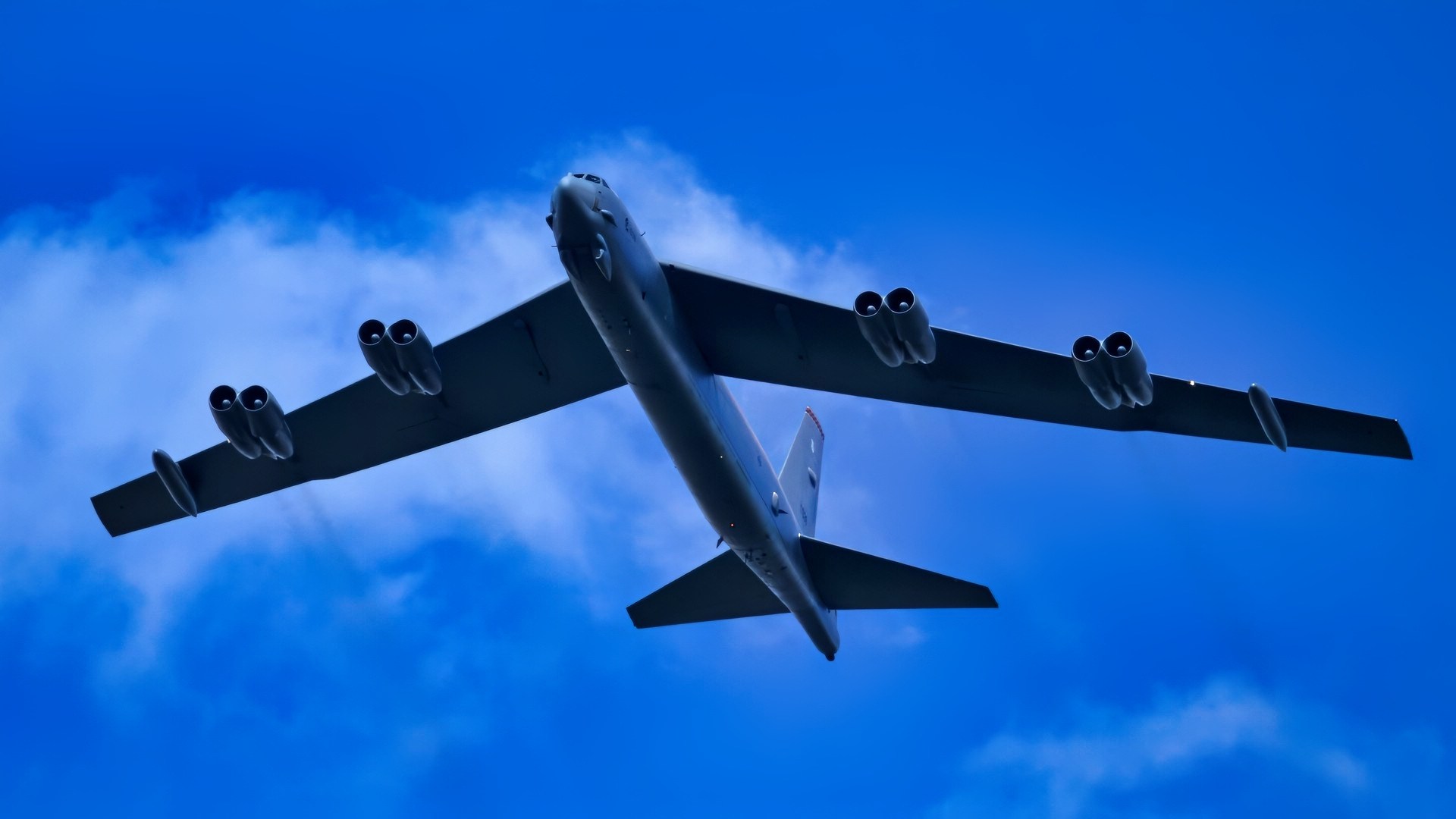
Boeing B-52H Stratofortress. Image Credit: Creative Commons.
Speaking at the G7 summit in Evian, France, President Trump made it clear that the agreement announced earlier this week is only an interim arrangement and not a full settlement.
“No, it’s not final. It’s a memorandum of understanding, and if I don’t like it, we’ll go back to shooting at them, dropping bombs on their head,” the president said.
“If they don’t behave, we’ll go back to dropping bombs right smack in the middle of their head,” he also said, adding that Iran has “misbehaved for 47 years.”
U.S. Officially Releases MOU After Leaks
After days of news reports speculating what the MOU may include, based on various leaked documents, Washington officially released the full 14-point agreement on Wednesday, June 17. The full text, which was revealed by a senior administration official, appears to be identical to many of the documents shared in recent days.
The agreement declares the war over, with points one, two, and three committing both parties to peace and respect for “each other’s sovereignty and territorial integrity” until a full deal can be reached within 60 days.
The framework is the biggest diplomatic breakthrough since the conflict began, though officials in both countries have warned that major disagreements remain unresolved.
While the MOU does address Iran’s nuclear program, it does not go into specific details, meaning the matter of uranium enrichment is still unresolved.
Instead, the agreement only confirms that Iran “will not procure or develop nuclear weapons” – a claim the regime has made before.
Iran also committed to “keeping the current status of its nuclear program in place,” with the U.S. committing “not to impose any new sanctions or deploy additional forces in the region” for the next 60 days.
Is Lebanon the Failure Point?
Importantly, the MOU addresses the Hezbollah-Israel situation. According to point one of the agreement:
“The US and Iran declare the immediate and permanent end of military operations on every front, including in Lebanon, and commit to refraining from the threat or use of force against each other.”
The wording seems to suggest that Iran would not endorse, support, or encourage further strikes from Lebanon into Israel – but the problem has never been Lebanon.
The problem is Hezbollah, the Iranian proxy group that is located in southern Lebanon and operates as a separate military entity.
So while the deal addresses Lebanon, it could be interpreted as vague. The agreement also contains no mechanism for enforcing a commitment from Iran to prevent an attack by Hezbollah against Israel, nor does it prevent Israel from conducting strikes that it deems necessary for a multitude of other reasons beyond retaliation.
That presents an immediate problem for the deal.
Israel has already said that it reserves the right to continue military operations against Hezbollah regardless of any agreement signed by Washington and Tehran.
In fact, Defense Minister Israel Katz said this week that Israel would maintain freedom of action against threats from Lebanon and would not allow Hezbollah to rebuild its military capabilities.
Prime Minister Benjamin Netanyahu has echoed that sentiment, too.
The risk now, then, is that a single strike could upend the entire MOU – and if Iran believes that it is unlikely to ever meet the demands that would result in the unfreezing of its more than $100 billion in frozen assets, it may determine that future aggression is worth it – especially if Hezbollah launches strikes first.
The War Is Paused, But Not Finished
In many ways, the MOU is no more binding than anything that has come before it.
Tehran and Washington may have publicly expressed their desire for the war to end, but without significant concessions, it’s hard to imagine how a deal could be reached that satisfies both sides’ demands.
Iran has not agreed to dismantle its nuclear program, only to freeze it – and while both sides have agreed to stop fighting, they did much the same when the ceasefire was announced in April.
That agreement didn’t stop multiple exchanges of fire, which resulted in an Iranian drone shooting down an American Apache helicopter, and the United States subsequently launching a barrage of missiles at Iranian military sites.
Deals like this have been made before, and the fighting did not, in fact, end. And now, Trump is warning that military action remains on the table, which raises the question: What is the point of the MOU?
About the Author: Jack Buckby
Jack Buckby is a British researcher and analyst specializing in defense and national security, based in New York. His work focuses on military capability, procurement, and strategic competition, producing and editing analysis for policy and defense audiences. He brings extensive editorial experience, with a career output spanning over 1,000 articles at 19FortyFive and National Security Journal, and has previously authored books and papers on extremism and deradicalization.


