

Warsaw, Poland – Ukrainian President Volodymyr Zelenskiy has announced a 40-day operation aimed at “pressuring Russia to end its war.” And those plans involve Crimea.
The Ukrainian president’s surrogates have made it clear that the objective of the operation is to bring Russia to its knees economically.
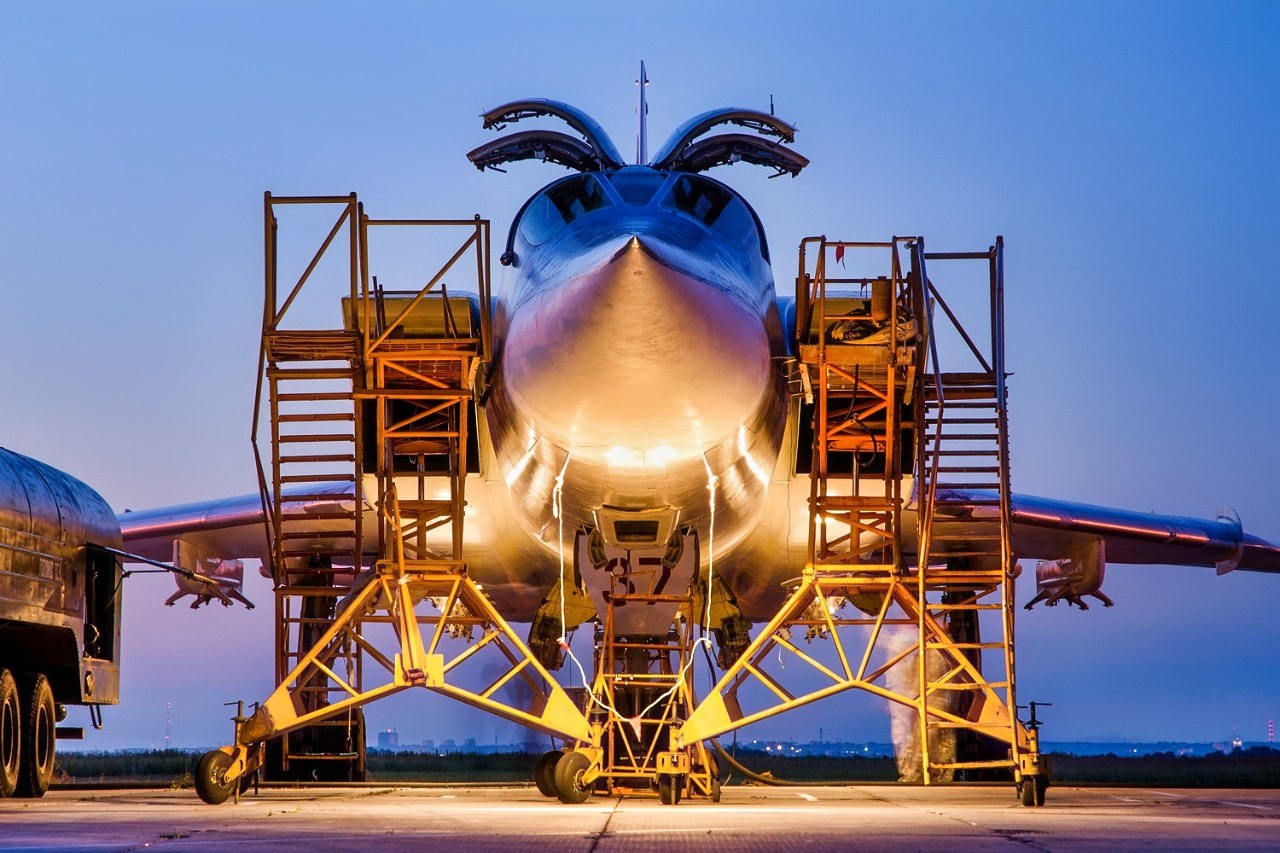
Tu-22M Bomber from Russia. Image Credit: Creative Commons.
Overall, the campaign is directed at fomenting comprehensive internal instability to the point where the regime of Russian President Vladimir Putin finds it impossible to continue the war.
The Russian-imposed government in Crimea must understand that – as one Ukrainian official said – “hell is coming.”
Upon the announcement of the “pressure campaign,” the governor and other officials in the shell-shocked region immediately announced that a state of emergency would be officially implemented for the entire peninsula.
“This state of emergency will remain in effect until the situation improves,” Sevastopol Governor Mikhail Razvozhayev announced in a Telegram video address declaring the emergency regime. Sergei Aksyonov, the Russian-appointed governor of Crimea, also posted his own video declaring the regionwide state of emergency.
The immediate question raised was whether just such a “pressure campaign” was a believable threat to not just Crimea, but to all the regions of Russia that have been hit with Ukrainian drone and missile strikes on a regular basis.
If you put that inquiry to the Russian residents of Crimea – the ones that are still there, that is – the answer appears to be a resounding “yes.”
Recent attacks in Crimea have prompted a growing and regular stream of Russians who have decided to quit the region for good. This is due to the dangers from increasing attacks and the resulting electricity blackouts, food and water shortages, and other difficulties. This past Friday, that stream became a torrent.
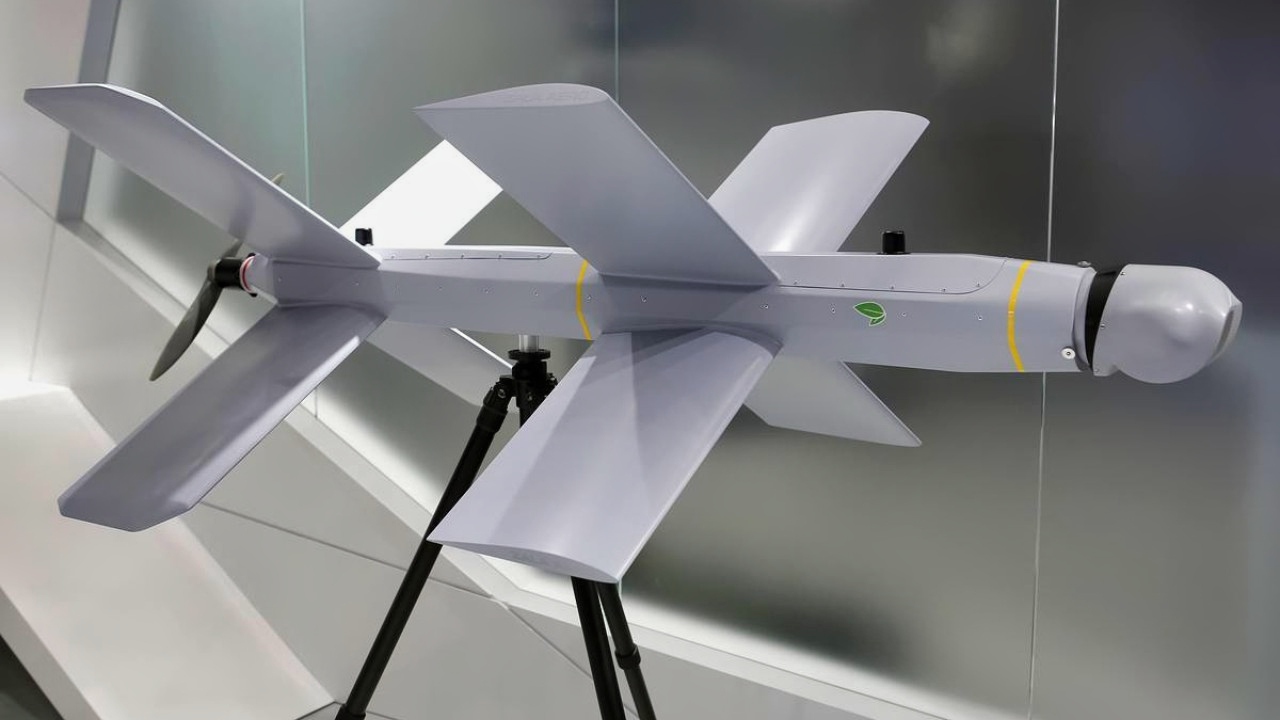
Lancet Drone. Image Credit: Russian State Media.
Panicked Exodus and No Tourist Business for Crimea
So many local residents fled to Mainland Russia in a panic that some 3,000 vehicles backed up at the entrance to the Crimean Bridge. This is the main crossing linking Russia to occupied Crimea.
The mass exodus and the impression that Russia’s presence is threatened are one problem, but the mounting problems in Crimea are also now having serious negative effects on the local economy. Crimea has long been one of the most popular summertime holiday destinations for Russians, making the peninsula heavily dependent on tourism.
But Russia’s main business daily, Kommersant, reported last Friday that Crimea has now seen a sharp drop-off in hotel bookings. Cancellations of reservations made months ago are now up at around 88 percent year-on-year.
These problems in Crimea alone put increasing stress on Moscow’s already straining economy. The Russian economy has reached a standstill for all intents and purposes, with financing of the war against Ukraine draining domestic resources and sacrificing services for the civilian sector.
This is the assessment of Vladyslav Vlasyuk, Ukraine’s presidential representative on sanctions policy, who spoke to Ukrainian media this past Friday.
The 40-Day Operation
Ukraine’s President Volodymyr Zelenskiy said on Friday he had approved a plan for Ukraine’s State Security Service (SBU) to launch the 40-day operation. It came after his meeting with the security service’s chief, Major General Yevhenii Khmara.
This pressure campaign will largely be an intensification of Kyiv’s “plan for long-range sanctions, medium-range sanctions, and the results achieved [thus far] by the SBU,” Zelenskyy said on his X page.
“For several months in a row, the SBU has demonstrated the highest performance in defending Ukraine’s positions on the front lines through the use of various types of drones,” Zelenskiy said on Thursday evening.
Mentioning the mid- and long-range “sanctions” — a term that has been used by Kyiv to describe the drone strikes into Russia and the Ukrainian territories occupied by Moscow is being seen as the Ukrainian president providing a hint for what is coming.
Ukraine’s military planning is all classified, as one would expect, but Zelenskiy provided no additional operational details on what the operation would entail. He praised the SBU for its recent success in “hitting personnel and equipment of the occupying [Russian] forces.”
Over the past several weeks, Ukrainian attacks have dealt a series of blows to Russia’s logistics, energy infrastructure, and military industrial enterprises. The “drone sanctions” have also demolished the sense of “safety of deep rear” that the population in major cities has felt until now by launching strikes against Crimea and Moscow.
About the Author: Reuben F. Johnson
Reuben F. Johnson has thirty-six years of experience analyzing and reporting on foreign weapons systems, defense technologies, and international arms export policy. Johnson is the Director of Research at the Casimir Pulaski Foundation. He is also a survivor of the Russian invasion of Ukraine in February 2022. He worked for years in the American defense industry as a foreign technology analyst and later as a consultant for the U.S. Department of Defense, the Departments of the Navy and Air Force, and the governments of the United Kingdom and Australia. In 2022-2023, he won two awards in a row for his defense reporting. He holds a bachelor’s degree from DePauw University and a master’s degree from Miami University in Ohio, specializing in Soviet and Russian studies. He lives in Warsaw.


Alex FITCH
June 28, 2026 at 4:56 pm
MAP, PLEASE – we know Crimea is somewhere over there . . .
Jake
June 29, 2026 at 3:51 pm
if it wasn’t for Ukraine you guys would have nothing to say every day.