

Russian missile and drone strikes killed at least eight people across Ukraine on Monday and wounded dozens more, the deadliest of them tearing through the central city of Dnipro. The barrage landed barely a day after President Vladimir Putin went on Russian television to reject Kyiv’s proposal for a mutual halt to long-range strikes and to declare that Russia would press on until it fully controls the four regions it claims in Ukraine’s east and south.
At Least Eight Killed In Strikes On Dnipro And Zaporizhzhia

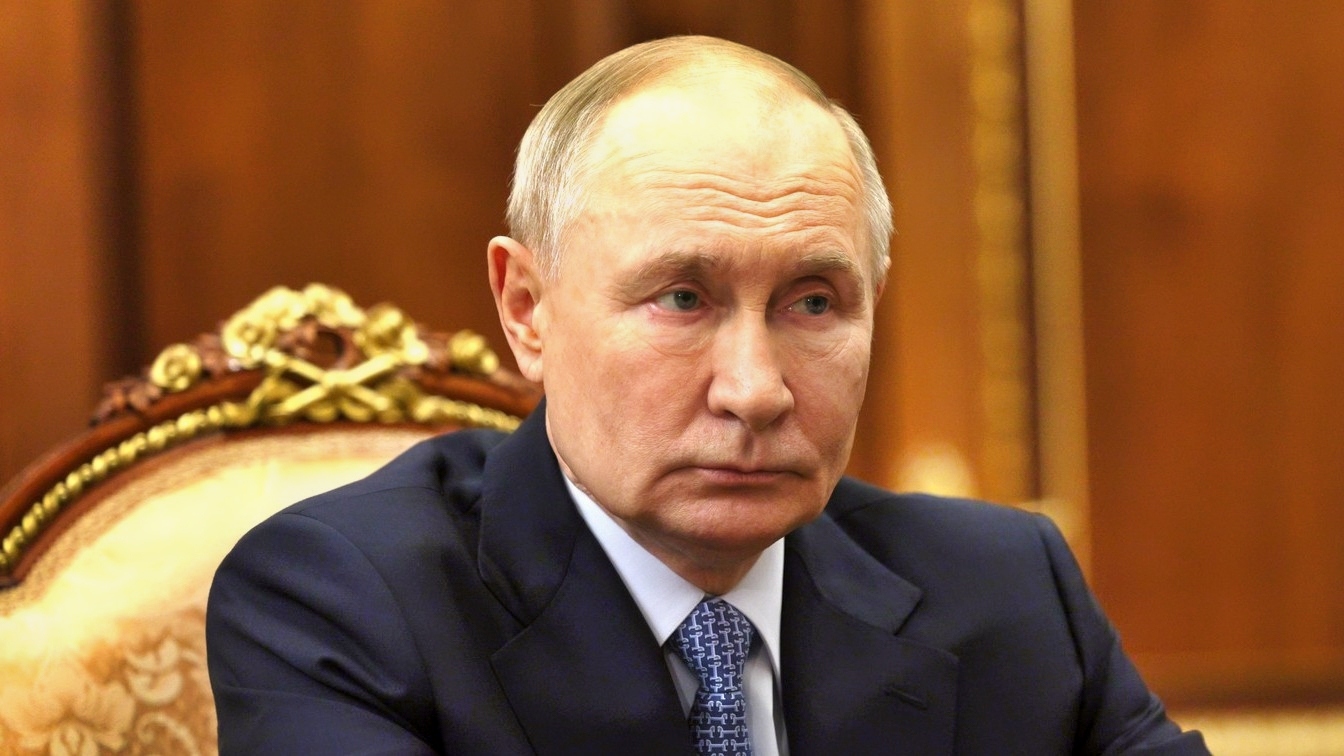
Putin in 2022. Image Credit: Creative Commons.
Ukrainian authorities said the strikes killed at least eight people and wounded 34, with President Volodymyr Zelensky condemning the “horrific attacks” and pressing allies to send more air defenses.
The worst hit Dnipro, an industrial hub about 100 kilometers from the front line, where the regional governor reported five killed and 28 wounded, among them a 13-year-old girl, and posted images of a building with its windows blown out. He said the wounded had suffered traumatic brain injuries, shrapnel wounds, fractures, and blast trauma.
A separate drone attack on Zaporizhzhia, roughly 30 kilometers from the front and the seat of a region Russia claims but does not fully hold, killed three people and injured six, including a child.
Zelensky said Russia also struck the Sumy, Odesa, Chernihiv, Kherson, and Kharkiv regions. The casualty count was still being updated throughout the day.
Take It All: Putin Rejects Ukraine’s Offer To Halt Long-Range Strikes
The strikes followed a weekend interview in which Putin set out a hard line.
Speaking to Russian state television, he said Russia would press ahead with its aim of fully capturing the four regions it annexed in 2022, Donetsk, Luhansk, Kherson, and Zaporizhzhia, territory Kyiv and most of the world reject as an illegal seizure and that Russia controls only in part.
He said Ukraine had proposed a mutual halt to long-range strikes and that the fighting be confined to those four regions, but he turned it down.
Putin framed the offer as a sign of Ukrainian weakness, arguing that Kyiv wanted the pause because Russia’s deep strikes were more damaging than Ukraine’s and because its forces were stretched thin along the front. “Saving the Kyiv regime is not part of our plans,” he said.
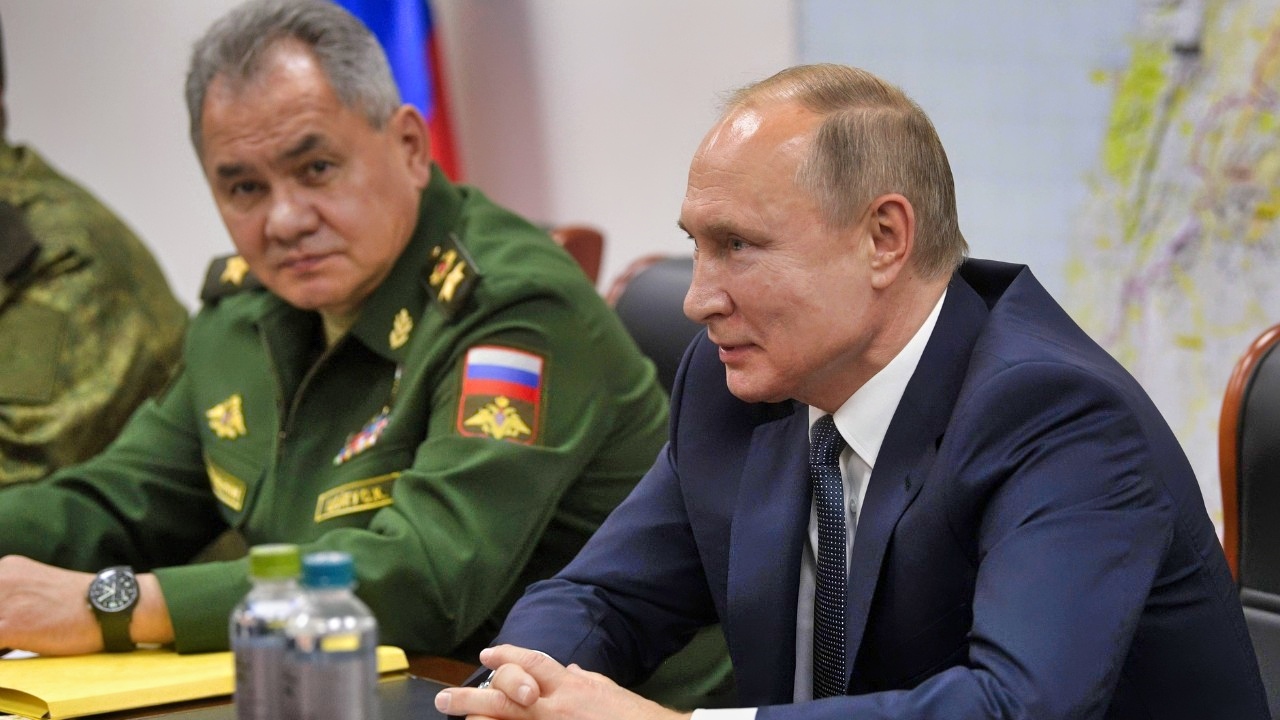
Vladimir Putin in Syria. Image Credit: Creative Commons.
He cast Ukraine’s strikes as an attempt to divert Russia from its larger objective of taking the Donbas and the southern regions.
Talks Without A Truce
The rejection does not mean talks are dead.
Putin said he remained ready to keep discussing an end to the war with American envoys, and the Kremlin expects Steve Witkoff and Jared Kushner to travel to Moscow once Washington is less consumed by its conflict with Iran. What he ruled out was the one step that would most directly ease the violence, a stop to the long-range campaign that is hurting both countries.
On Monday, the Kremlin said its terms had not changed since 2024, when Putin demanded that Ukrainian forces withdraw from the four regions and that Kyiv abandon its bid to join NATO. Zelensky has repeatedly sought a face-to-face meeting with Putin, including in an open letter this month, and Putin has dismissed the idea.
Both Sides Are Trading Deep Strikes
Monday’s attacks are the latest turn in an exchange that has escalated on both sides as diplomacy has stalled. Ukraine has been striking deep inside Russia, hitting oil refineries and other energy sites, and Zelensky said Kyiv’s forces had carried out fresh refinery strikes over the weekend.
Putin, for his part, acknowledged at a Kremlin meeting on Sunday that the Ukrainian drone campaign had caused fuel shortages across several Russian regions, though he insisted the situation was under control and that the strikes had no effect on the front. He called for a rapid increase in production of the air defense systems Russia most needs and for stronger protection of its critical infrastructure.
The pattern now is one of mounting strikes in both directions while the talks go nowhere. Ukraine presses Russia’s energy industry from the air, Russia answers with mass attacks on Ukrainian cities, and each side says the other’s offers are a trap.
For the families in Dnipro and Zaporizhzhia counting their dead on Monday, the negotiations in Moscow and Washington have produced no pause in the missiles, and Putin has now said plainly that none is coming.
About the Author: Harry J. Kazianis
Harry J. Kazianis (@Grecianformula) was the former Senior Director of National Security Affairs at the Center for the National Interest (CFTNI), a foreign policy think tank founded by Richard Nixon based in Washington, DC. Harry has over a decade of experience in think tanks and national security publishing. His ideas have been published in the NY Times, The Washington Post, The Wall Street Journal, CNN, and many other outlets worldwide. He has held positions at CSIS, the Heritage Foundation, the University of Nottingham, and several other institutions related to national security research and studies. He is the former Executive Editor of the National Interest and the Diplomat. He holds a Master’s degree focusing on international affairs from Harvard University.


