
Commercial traffic through the Strait of Hormuz rose again this week after a slump caused by exchanges of fire between Iran and the U.S. over the weekend.
The news suggests that oil producers and tanker operators are testing the waters again in one of the world’s most important waterways.

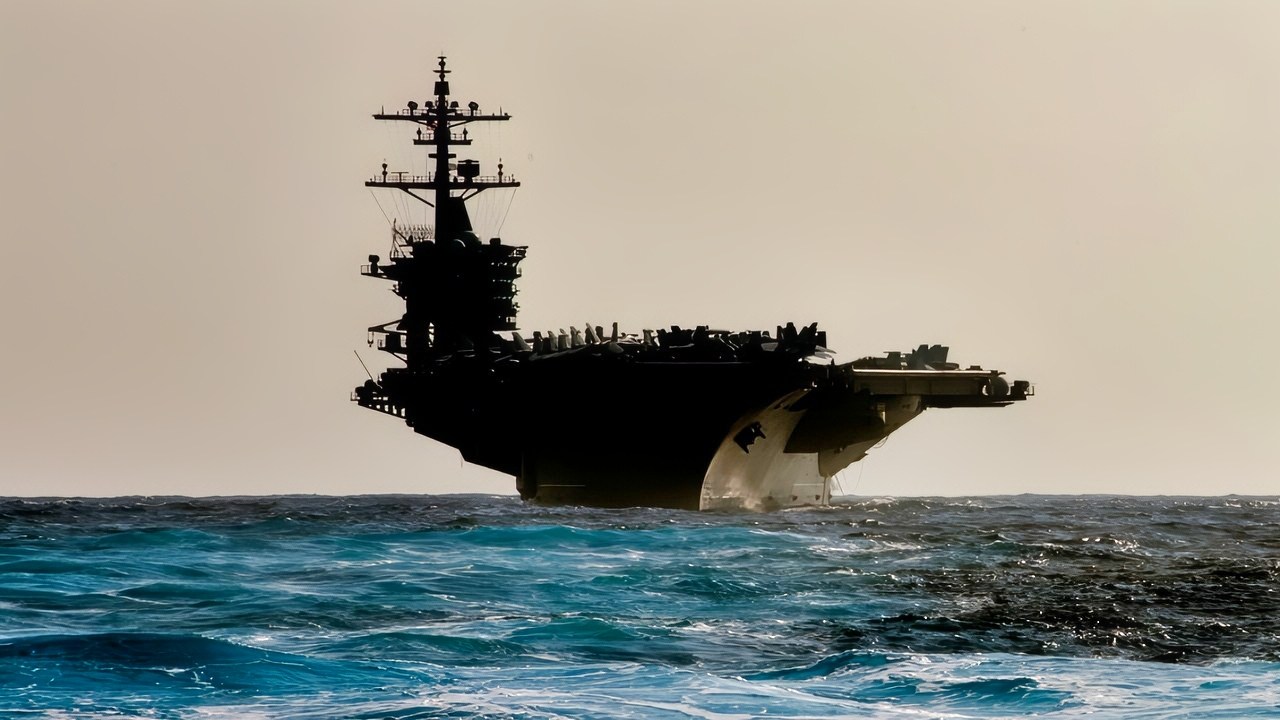
Aircraft Carrier USS Nimitz Coming Home. Image Credit: Creative Commons.
While Iran continues to make threats to shipping companies and vessels considering using alternative routes through Omani waters, operators appear to be willing to keep moving vessels through the Strait as the U.S. attempts to hash out a deal with the regime.
Ship tracking data from Kpler showed that 24 commodity vessels, including everything from LNG carriers to oil tankers, passed through the strait both inbound and outbound on Monday, June 29.
It was the first daily increase since late last week, when Iran attacked two commercial vessels near the Strait and prompted a military backlash from U.S. forces.
The rebound, however, is still very fragile. Before the war began on February 28, around 130 commercial vessels transited the strait every day.
Monday’s total was still far below normal, but the renewed movement of ships into the Persian Gulf suggests that operators believe the route may now remain open long enough for vessels to load crude or other petroleum products at Gulf ports and leave safely.
Traffic Rose By More Than 50%
Looking at weekly traffic, it appears to be trending upward. According to Kpler data, 343 commercial vessels passed through the Strait of Hormuz during the week of June 22-28, which was up 224 from the week of June 15-21. That’s an increase of almost 54%.
Daily traffic also rose from an average of 32 ships during the week of June 15-21 to 49 ships during the week of June 22-28.

The aircraft carrier USS Nimitz (CVN 68) arrives at Joint Base Pearl Harbor-Hickam, Hawaii, for a scheduled port visit Dec. 3, 2013. The Nimitz was in the process of returning to its home port, Everett, Wash., following an eight-month deployment to the U.S. 5th Fleet, U.S. 6th Fleet and U.S. 7th Fleet areas of responsibility. (U.S. Navy photo by Mass Communication Specialist Seaman Apprentice Rose Forest/Released)

An F/A-18F Super Hornet, attached to Strike Fighter Squadron (VFA) 195, taxis on the flight deck of Nimitz-class aircraft carrier USS George Washington (CVN 73) while underway in the Celebes Sea, Nov. 29, 2025. George Washington is the U.S. Navy’s premier forward-deployed aircraft carrier, a long-standing symbol of the United States’ commitment to maintaining a free and open Indo-Pacific region, while operating alongside allies and partners across the U.S. Navy’s largest numbered fleet. (U.S. Navy photo by Mass Communication Specialist 2nd Class Tyler Crowley)
The busiest day was on June 24, when 76 vessels crossed the strait – the highest daily total since the war began on February 28.
The lowest daily count in the earlier week, however, was on June 17 when just 19 vessels passed through the waterway.
The following week, the lowest daily figure was 24 vessels on June 28, after the latest round of attacks spooked markets and commercial operators.
Tankers carrying crude oil and other petroleum products accounted for most of the transits, with most originating from Iran, Saudi Arabia, Iraq, Kuwait, and the United Arab Emirates.
Why the Rebound Matters
The rebound on Monday is important not just because traffic showed signs of recovering after an eventful and dangerous weekend, but also because more vessels were seen entering the Persian Gulf than leaving it – an indicator that operators are hopeful those ships will be able to transit back out again.
Several supertankers sailed inbound on June 29, according to data reviewed by Bloomberg – and that’s notable because an empty or partly loaded tanker moving into the Gulf is usually positioning to load crude before making an outbound voyage through Hormuz again.
Once filled, these supertankers will facilitate the movement of large quantities of oil through the strait, helping ease global oil supply shortages.
Shipowners, after all, would be unlikely to send large tankers into the Gulf if they believed the vessels could be trapped there indefinitely.
At least 6 million barrels of crude oil transited the Strait of Hormuz on Monday.
Saudi Arabia, Qatar, and the United Arab Emirates continued to load LNG and oil from Gulf export terminals despite the weekend tensions, and Iran also resumed loadings at Kharg Island after the U.S. lifted its blockade and allowed Iranian ships to transit the Strait.
It’s Not Over Yet
Shipping traffic is increasing, but the crisis isn’t over yet. U.S. officials are in Doha, Qatar, meeting with mediators as Iran threatens to walk away from negotiations again.
Iran says that the presence of regime officials in Qatar is entirely coincidental, and that there are no scheduled meetings with White House envoy Steve Witkoff and Jared Kushner.
U.S. President Donald Trump has also expressed doubt about the likelihood of negotiations returning, telling reporters that any meeting with Iran in Qatar – should it happen – will be “perhaps important, perhaps not.”
And while negotiations between the U.S. and Iran falter, the shipping recovery remains at risk from talks between Iran and Oman.
On Monday, June 29, Iranian Deputy Foreign Minister Kazem Gharibabadi met Abdulaziz Al Hinai, Oman’s Minister of State for Foreign Affairs. It was the first meeting of the Joint Hormuz Committee in Muscat, and according to Gharibabadi, the talks focused on the future management of the strait and the sovereignty of coastal states.
But as it stands, no agreement has been reached, and the Iranian side has even insisted in recent days that it would enforce its own rules in the Strait of Hormuz with or without Oman’s support.
About the Author: Jack Buckby
Jack Buckby is a British researcher and analyst specializing in defense and national security, based in New York. His work focuses on military capability, procurement, and strategic competition, producing and editing analysis for policy and defense audiences. He brings extensive editorial experience, with a career output spanning over 1,000 articles at 19FortyFive and National Security Journal, and has previously authored books and papers on extremism and deradicalization.


