

Pompano Beach, Florida – A new report by the London-based think tank, the International Institute for Strategic Studies, entitled “Russia’s UAV Campaign over Europe,” concludes that over the past 15 months, Russia is believed to have launched regular UAV incursions into NATO airspace. These violations were not carried out, however, for the simple purpose of harassment or to gauge how long these NATO militaries would take to respond to airspace violations or other hostile acts.
Instead, the document reads that these drone incursions were part of an integrated set of activities designed to eventually provide a complete map of the air defense coverage and radar nets of European NATO nations. This kind of probing, then collecting and analyzing the actions NATO members would take in response to Moscow’s violations of sovereignty, is consistent with a long-standing aspect of military science dating back to the Soviet period.
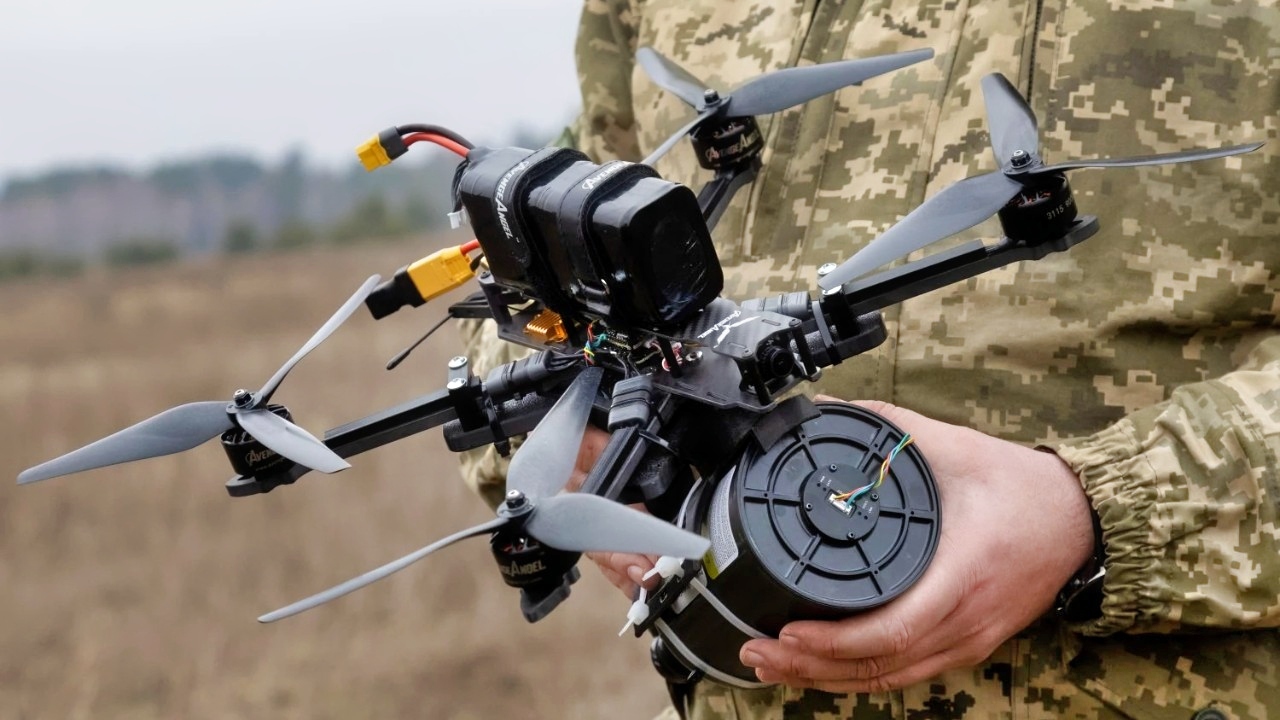
Ukraine Drone. Image Credit: Creative Commons.
That practice, called “Reflexive Control”, is designed to predict how adversary institutions will react to Moscow’s aggressive actions. It is a behavioral manipulation strategy that involves the aggressive party feeding an opponent selected information through what appear to be benign or even reliable sources.
This false information then manipulates the target nation’s perceptions and relies on its institutions to engage in predictable reactions. This causes the adversary to “unknowingly” make self-defeating decisions that worsen rather than improve their situation.
Military strategists in the USSR developed this aspect of informational warfare beginning in the 1960s by combining Soviet psychological, cybernetic, and military research.
The activity eventually became one of the “pillars” of Soviet military research and was also adopted and practiced by the People’s Republic of China (PRC).
By Air, Land, and Sea
The missions of these Russian drone incursions, finds the IISS, would support the development of this kind of strategy. Sustained drone operations across Europe, and at times penetrating the airspace of some of Europe’s most sensitive military installations, would provide the data for any algorithms for how NATO nations would respond to these Russian aggressive initiatives.
The drone incursions included nuclear-sharing sites and the ballistic missile submarine base of France’s Marine Nationale. The think tank’s analysis of all these actions concludes that during the 15-month period that was studied, these Russian UAVs acted “with effective impunity,” reads the ISS press release on the study.
The IISS report recounts a pattern of 144 incidents between August 2024 and February 2026 across 13 European countries. The overall conclusion is that the campaign represents “a series of tactical successes for the Kremlin and a strategic failure of allied air defense in Europe”.

A Dutch soldier shoots from a machine gun during Exercise Scorpion Strike, held by NATO forces in Lithuania on Feb. 21, 2018.
Dutch forces, along with those of six other NATO Allies, make up the enhanced Forward Presence battlegroup in Lithuania. Together with battlegroups in Poland, Latvia and Estonia, they demonstrate NATO’s commitment to collective defence. Image Credit: NATO Flickr.
Alarmingly, the authors see that the preponderance of evidence is that “commercial” vessels with connections to Russia – shadow-fleet tankers, coastal freighters and other smaller vessels – have functioned as mobile launch platforms for UAVs operating near these European strategic sites. These sites are ports, airports, energy infrastructure, and military facilities.
These are precisely the locations that would be priority targets in the event of a Russian move against NATO. Numerous incidents in Germany, Denmark, Belgium, and the Netherlands appear to be linked to launches from Russian-linked maritime vessels. And it is that maritime link that serves as a primary source of data input for Moscow’s reflexive control objectives.
Don’t Know Because Don’t Want to Know
One of the more troubling aspects of this Russian effort is how this subterfuge on such a wide scale and with such an immeasurable level of effort behind it is met with such tepid, if any, reciprocal retaliation.
In one incident in February 2026, the Swedish military reported that a UAV that was jammed near the carrier was of Russian origin and had been launched from the Russian spy trawler Zhigulevsk
The Swedish report confirmed months of suspicions that maritime launches of UAVs were not a suspicion or a theoretical possibility but an actual military operation already being deployed against allied assets. Russian ships have been intercepted and detained for being involved in trying to spy on the West, but no European government has then laterl publicly chastised Russia for these actions.
EU officials will privately state that Russia is responsible for using drones over this 15-month period for nefarious purposes. However, the report states that there is little to no follow-on. It speaks to a lack of that well-known oxymoron – “European Unity” – when it comes to responding with meaningful sanctions or other proportionate responses.
After more than five years of war, European NATO nations still lack the determination to present a unified allied set of actions to censure and call out Russia. One wonders if their collective will to stand up to Russia even still exists.
About the Author: Reuben F. Johnson
Reuben F. Johnson has thirty-six years of experience analyzing and reporting on foreign weapons systems, defense technologies, and international arms export policy. Johnson is the Director of Research at the Casimir Pulaski Foundation. He is also a survivor of the Russian invasion of Ukraine in February 2022. He worked for years in the American defense industry as a foreign technology analyst and later as a consultant for the U.S. Department of Defense, the Departments of the Navy and Air Force, and the governments of the United Kingdom and Australia. In 2022-2023, he won two awards in a row for his defense reporting. He holds a bachelor’s degree from DePauw University and a master’s degree from Miami University in Ohio, specializing in Soviet and Russian studies. He lives in Warsaw.


