

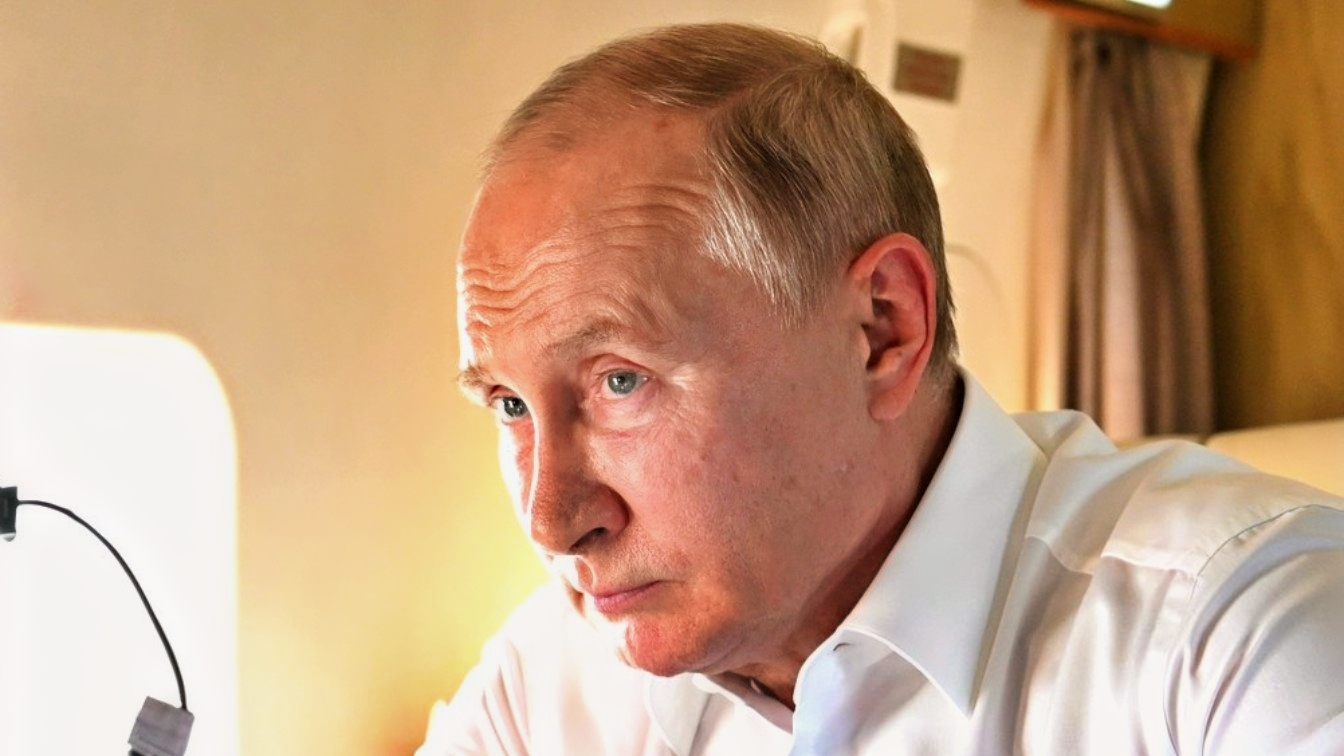
The ongoing war in Ukraine is approaching its fifth year, a remarkable marker for what Russia’s leader initially anticipated to be a very short “special military operation” that would quickly decapitate Ukraine’s leadership and see the country absorbed into Russia. With Russia newly on the back foot, thanks to Ukrainian ingenuity and the Kremlin’s ability to finance the war, much has changed on the battlefield. But some things, particularly Putin’s objectives, have remained the same.
Putin’s Objectives
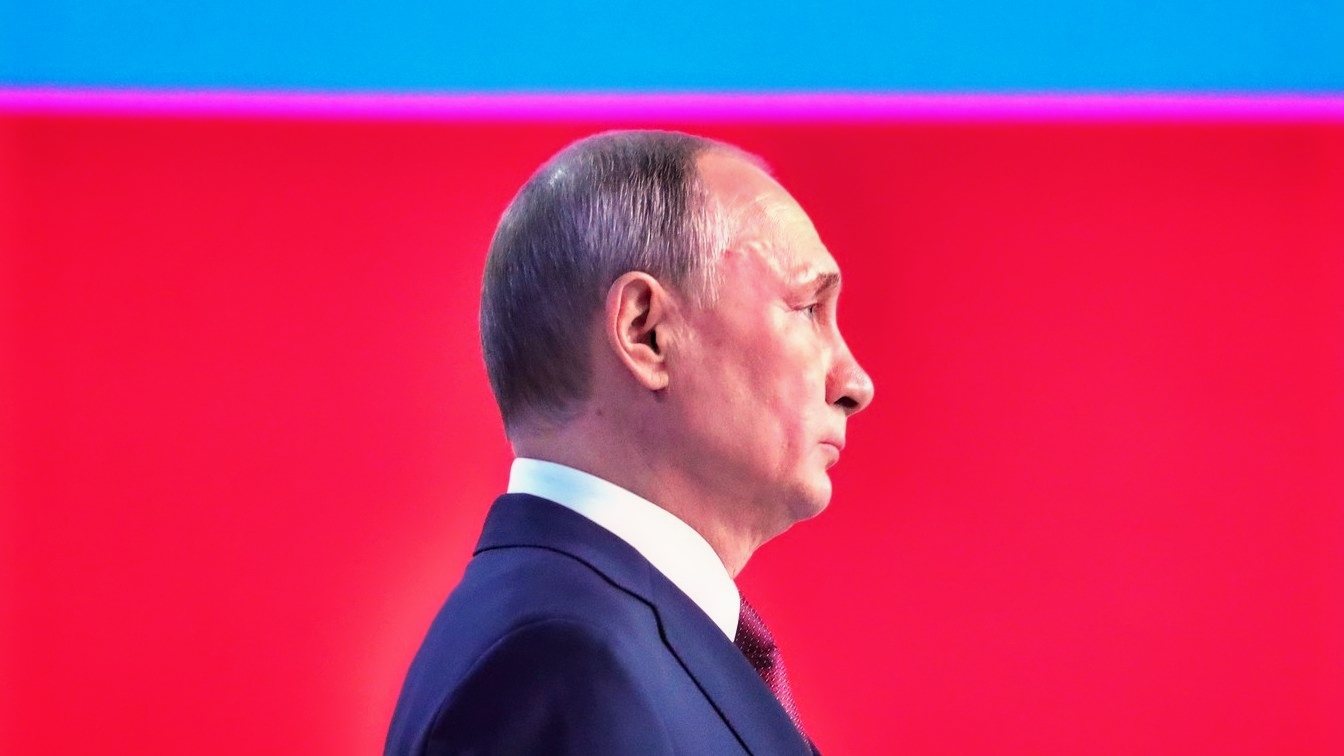
Putin Speaking to Large Crowd in 2019 Russian Federation Photo
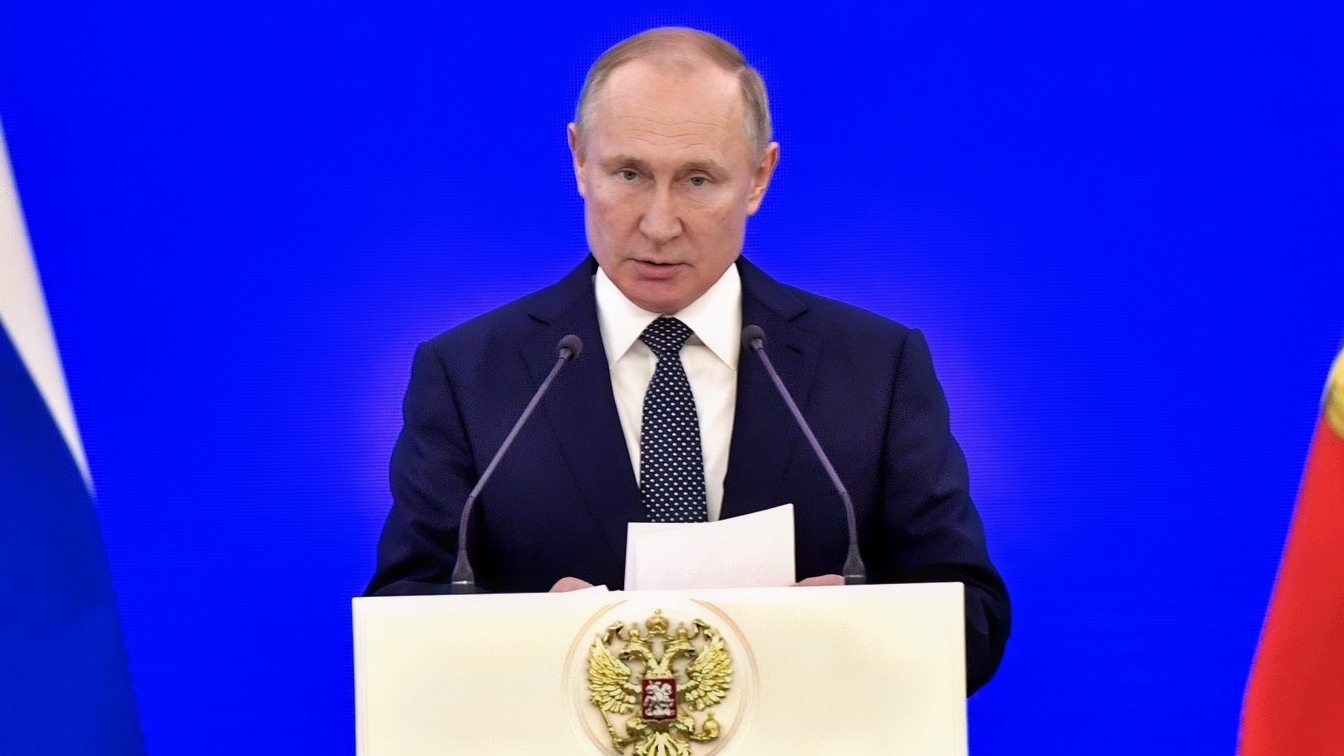
Putin Back in 2019 Russia Federation Photo
Although the Russian leader has at times said that his war against Ukraine is about the de-Nazification of the country, about protecting Russian speakers, or about reuniting the two countries while leveraging dubious historical claims, Putin’s overarching goal seems to be retaining Ukraine within the Russian sphere of influence — by brutal force if necessary.
In an essay titled On the Historical Unity of Russians and Ukrainians, Putin argued that Russians and Ukrainians are one singular people and downplayed the linguistic and cultural differences that have become even more apparent since he launched the full-scale invasion in 2022.
Russian Casualties
According to estimates by the Center for Strategic and International Studies, a think tank, Russia has suffered nearly 1.5 million killed and wounded during the course of the war in Ukraine — the most losses suffered by any nation in Europe since the Second World War.
Astonishingly, this is roughly four times the casualties absorbed by the United States in all wars combined after the Second World War, including Korea, Vietnam, Iraq, Afghanistan, as well as smaller conflicts in Panama, Grenada, and elsewhere.
The reasons for these astonishingly high casualty rates are explained by several factors, including poor combined arms operations, corruption, poor morale and training, ill-advised tactics, and a previously seemingly inexhaustible recruitment base with which to prevent the ranks from dropping precipitously.
Russia often conducts reconnaissance by drawing fire: sending small groups of soldiers to forward positions, sometimes exposed, to reveal where Ukrainian positions are. Once established, Russia can then fly drones toward Ukrainian positions, bombard them with artillery, or mount assaults on those positions. But it is a costly, inefficient strategy.
Rates of Advance
Beginning in the spring of this year, the share of Ukrainian territory occupied by Russia shrank — for virtually the first time since 2023 and the Ukrainian counteroffensive.
Although this was good news for Ukraine, the territorial exchange was very small compared to the previous counteroffensive. Still, it marks progress for Kyiv. Momentum on the battlefield has shifted slightly in Ukraine’s favor, but sustaining it will be difficult.
Russian forces have had years to fortify their positions and have used this time to dig in widely and deeply. Ejecting Russian forces from these positions will be extremely difficult.
How the War Ends
While American President Donald Trump came into office confident of his ability to find an end to the war in Ukraine, securing a lasting ceasefire has been elusive. The dynamics on the battlefield favor the defense, making it difficult for either side to eject the other.
One remarkable expansion of the war, however, has not been within Ukraine but in Russia itself.
Russian oil and gas infrastructure — particularly refineries and transportation hubs — in Russia has been subjected to multiple waves of Ukrainian bombardment. It’s part of what Ukrainian President Volodymyr Zelensky has dubbed his country’s “long-range sanctions” regime against Russia.
It is an astute strategy. The Russian state’s number one source of revenue is the taxation of energy exported from Russia. But energy hubs across the country, in Moscow, St. Petersburg, and much further afield, including places thousands of miles from the front lines in Ukraine, have been subjected to Ukraine’s long-range and explosive-laden drones and a new crop of Flamingo cruise missiles. Sites have, on occasion, been subjected to multiple bombardments, complicating their repair.
The effects of the campaign have been stark. One report by Mediazona, an independent Russian media outlet, shows that fuel rationing is in effect in 56 of Russia’s regions. In Ukraine’s Crimea, occupied by Russia since 2014, fuel is unavailable for civilian use.
With its ability to finance its war in Ukraine under pressure, combined with Ukraine bringing the war face-to-face with a Russian public accustomed to insulation from the war, hopes have been recently buoyed by the thought of the Kremlin soon suing for peace. But that seems unlikely. A more realistic prognosis for this next phase of the war is one of muddling along, absorbing losses, and hoping to ride out the current Ukrainian successes.
About the Author: Caleb Larson
Caleb Larson is an American multiformat journalist based in Berlin, Germany. His work covers the intersection of conflict and society, focusing on American foreign policy and European security. He has reported from Germany, Russia, and the United States. Most recently, he covered the war in Ukraine, reporting extensively on the war’s shifting battle lines from Donbas and writing on the war’s civilian and humanitarian toll. Previously, he worked as a Defense Reporter for POLITICO Europe. You can follow his latest work on X.


