


Despite months of military operations, economic pressure, and diplomacy, restoring commercial shipping through the Strait of Hormuz has proven far more difficult than many expected. The waterway, one of the world’s most strategic, carries roughly 20 percent of global oil exports under normal conditions. But securing the strait has proven an extraordinarily difficult military challenge thanks to geography, Iran’s asymmetric capabilities, and the sheer scale of the operating environment.
The Importance of Hormuz
The Strait of Hormuz is a narrow passage linking the Persian Gulf to the Gulf of Oman. Roughly one-fifth of global petroleum exports normally transit the waterway, making it critical for Gulf producers including Saudi Arabia, the UAE, Kuwait, Iraq, and Qatar. Even partial disruptions affect shipping, insurance, energy markets, and global inflation. Accordingly, keeping the strait open is a vital economic objective—which is why Trump’s efforts have been varied, including airstrikes, economic pressure, naval operations, negotiations, and renewed blockade measures. Despite those varied efforts, commercial shipping remains below normal, with oil markets remaining sensitive to a renewed cycle of violence.

ANDERSEN AIR FORCE BASE, GUAM — F-16 Fighting Falcons, F-18 Hornets and a B-2 Spirit, line the Andersen flight line during Exercise Valiant Shield, 22 June, 2006. Valiant Shield 2006, the U.S. Pacific Command exercise, which runs June 19 to 23, will be conducted in the vicinity of Guam. Valiant Shield focuses on integrated joint training and interoperability among U.S. military forces while responding to a range of mission scenarios.
(U.S. Air Force Photo/Staff Sgt Bennie J. Davis III)
Iran’s Resistance
Iran has proven difficult to beat. According to Jason Campbell of the Middle East Institute, Iran has prepared for this type of conflict for decades with a decentralized military structure, dispersed weapons storage, hidden missile sites, mobile drone launchers, and a distributed command structure. Rather than concentrating forces, Iran has emphasized survivability, which reduces the effectiveness of conventional air campaigns.
Iran has mastered the art of asymmetric warfare, which has been especially obvious in the Strait. Incapable of beating the US Navy head-on, Iran has instead relied on anti-ship missiles, drones, naval mines, fast attack craft, coastal missile batteries, and persistent harassment. The goal is to raise operational risk rather than seek a decisive naval battle. This forces commercial shipping companies to reconsider whether transit is worth the danger.
Campbell argues that bombing launch sites solves only part of the problem. The reasons are that Iran’s launchers are dispersed, the weapons are hidden, production is spread across multiple facilities, and units are capable of operating semi-independently. Destroying fixed infrastructure does not necessarily eliminate the overall threat.
Send in the Troops?
Campbell also argues that fully securing Hormuz would likely require large-scale ground operations, clearing missile launch sites, securing extensive coastline, and controlling inland terrain. Those objectives require troops on the ground. Such an operation would require months to assemble, impose high costs, and expose troops to insurgent attacks. This illustrates the enormous gap between conducting airstrikes and permanently eliminating the threat.
An alternative option, possibly, would be to have the Navy escort every tanker. There is a historical precedent: Operation Earnest Will during the 1980s, in which the US escorted reflagged Kuwaiti tankers.
Today’s environment is far more complex, however. According to Michael Eisenstadt of the Washington Institute, the US fleet is smaller today than in the 1980s. Plus, Iran possesses more advanced drones, anti-ship missiles, cruise missiles, and unmanned systems. Large-scale escort operations would consume substantial naval resources indefinitely.
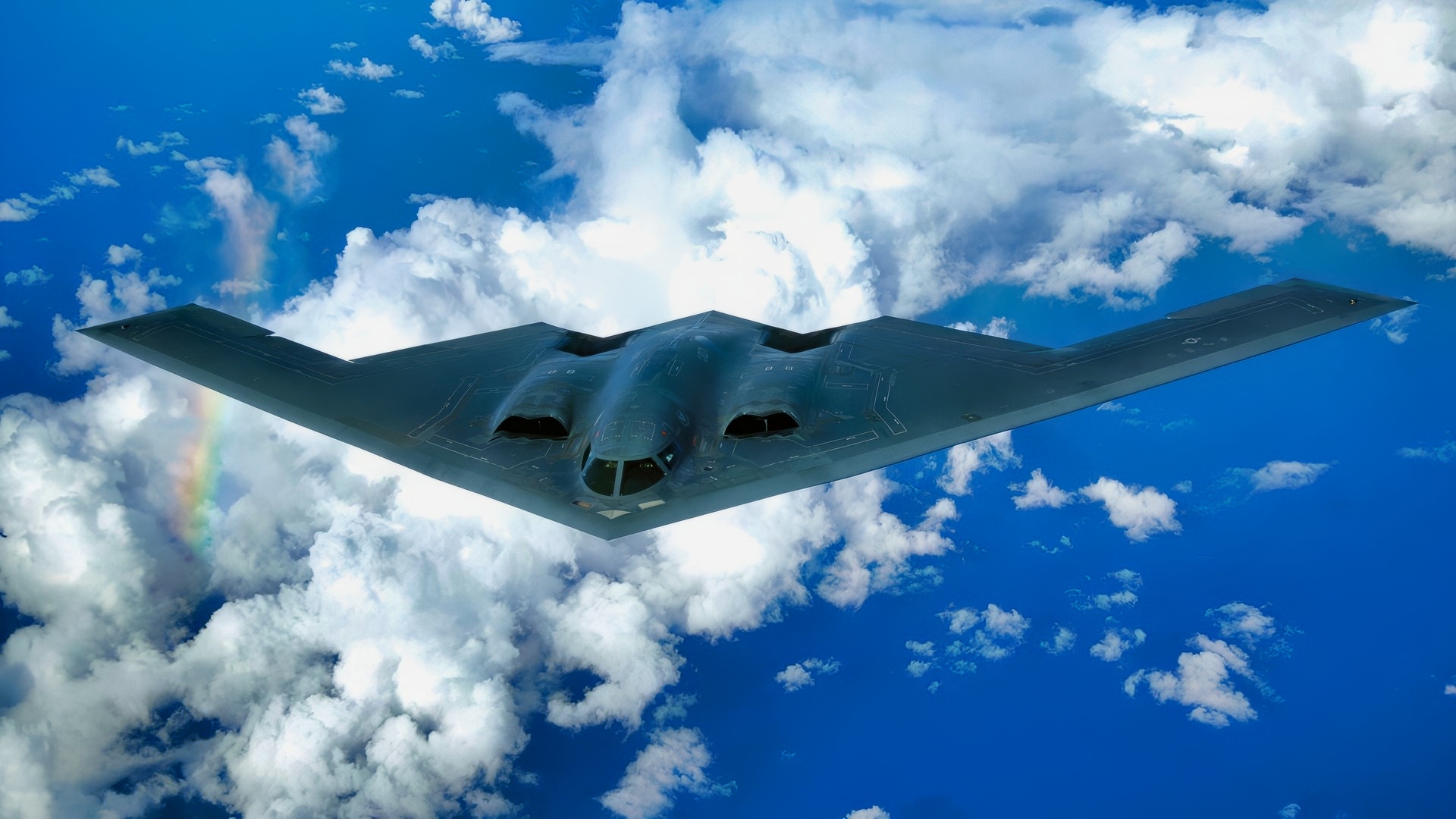
A B-2 Spirit soars after a refueling mission over the Pacific Ocean on Tuesday, May 30, 2006. The B-2, from the 509th Bomb Wing at Whiteman Air Force Base, Mo., is part of a continuous bomber presence in the Asia-Pacific region. (U.S. Air Force photo/Staff Sgt. Bennie J. Davis III)
And according to Noam Raydan of the Washington Institute, Iran doesn’t even necessarily have to attack ships. Simple radio warnings, threats, or uncertainty alone may convince commercial operators to delay voyages.
Shipping companies respond to perceived risk, not only to confirmed attacks. The result is that insurance costs rise, crews become reluctant, and traffic falls.
The economic effects occur without large-scale combat. Shipping companies are already changing routes. Current adaptations include avoiding transit lanes, using southern routes near Oman, and accepting longer voyages where possible. These adjustments reduce efficiency while increasing shipping costs.
Strategic Implications
The strait highlights the enduring power of geography in modern warfare. Even against the US Navy, the world’s most capable blue-water force, a regional power relying on dispersed missiles, drones, mines, and asymmetric tactics can significantly disrupt one of the world’s most important waterways without a conventional battle.
For Washington, the challenge isn’t just defeating Iranian forces—it’s restoring confidence among commercial shipping companies.
About the Author: Harrison Kass
Harrison Kass is a writer and attorney focused on national security, technology, and political culture. His work has appeared in Tablet, City Journal, The Hill, The Spectator, and The Cipher Brief. He holds a JD from the University of Oregon and a master’s in Global & Joint Program Studies from NYU. More at harrisonkass.com.


Swamplaw Yankee
July 15, 2026 at 2:07 am
Who knows about Washington! The inner beltway aquarium is the questionable factor, where confidence in foreign intelligence elites is the goal.
So, until the phrase, the unique “World War Xi” is the constant semantic, there will be op-ed that demands the inner beltway dream that all strategy came from that page in that book that a Bayt-e Rahbari Theologian waved about one day in Farsi controlled Tehran.
The millions of Han intelligence staff gaming every aspect with PRC AI is always some nebulous magic mushroom diversion in US intelligence. Han AI will never be 22% faster in these gaming competitions. NOT.
Did some theologian using the seven layers of deceit talk grind the US intelligence structures to a miasma GULF halt? Yeah, the book deceit talk levels sure works big dividends on the USA MSM.
The big boy talk will actually be about the level of HAN AI superiority over any US intelligence. Particularly with the future move by the MAGA POTUS Trump elite, and, there ‘MUST’ be a future move spectrum that the HAN intelligence is high speed gaming 24/7!
But, with the unique WW Xi in flow, where will Han intelligence find maximum returns for which of their strategies? Can Xi reach out to Ukraine + offer Ukraine a prompt return to their 2103 borders – NOW! Today? Just do not help Taiwan with any stuff, say UAV layered intelligence. Or another juicy tidbit for Ukraine that the MAGA 2026 elite are so blind to offer!
Xi can earn his Nobel Peace Prize with zero 2026 MAGA Trump mentioned. Xi can pass on the unique WW Xi to his CCP successor + retire as undisputed World champion in US capitulations.
Yeah, yeah, the inner beltway still whines inside the aquarium that 2014 POTUS Obama did NOT capitulate when Barry facilitated the Balkanization of independent Ukraine and betrayed the WEST.
BOOTS on the Ground – concepts? Holy 1939-40-41! What a vicious psych-op on the US military mind! Let’s pretend there was no marriage between fervent fascist forever Motherland Kremlin Muscovy and NAZI Hitler Fatherland! Who knows where that 1939 POLAND or Finland Or Ukraine actually is? Who in 1939 cared in the inner beltway!!
Let’s pretend there is no marriage between Xi Han and the Bayt-e Rahbari elite Cabal! This married 2026 couple just can not ‘over’ play the AI gaming strategies of the inner Beltway aquarium. NOT.
Boots on the ground. OMG. Nobody in the inner beltway actually spent 7 days in Kherson Ukraine CBD being hunted by Human Safari Kremlin Muscovy drone operator kids! When did the USMC brass get funding to send big brass over to even sniff the vapour of Han directed death that drifts above the ancient Meat Grinder GENOCIDE line in Ukraine that 2014 POTUS Obama facilitated the re-start of in 2014?
OMG. That is all verboten language in US armed force AI input!! Vapour of death from the HAN directed death technology is a concept that just does not exist in the inner beltway! There is no AI mention of the unique World War Xi + that’s so very final!
megiddo
July 15, 2026 at 6:14 am
Trump now thinkin’ of putting American boots on iranian soil ??? ???
What the heck.
How is he going to hide the bodybags or the wooden boxes arrivin’ home at la Guardia airport.
Man, that WILL GREATLY AFFECT THE VOTING FOR THE MIDTERMS.
Finito for trump.