

The campaign of drone warfare being carried out by Ukraine against Russian oil tankers, merchant ships, and naval vessels in the Sea of Azov and the Black Sea has entered a new, decisive phase. If the effectiveness and level of success achieved so far are maintained, it will have ripple effects that reach all the way back to Moscow.
For that reason, the campaign has been nicknamed МоЛоЧКа (MoLoChKa), an acronym for the Russian phrase meaning “Moscow Will Fall Through Crimea.” The campaign began in the Sea of Azov, where the Ukrainian Unmanned Systems (UAS) forces claim, as of 14 July, to have struck more than 116 vessels in the Sea of Azov.
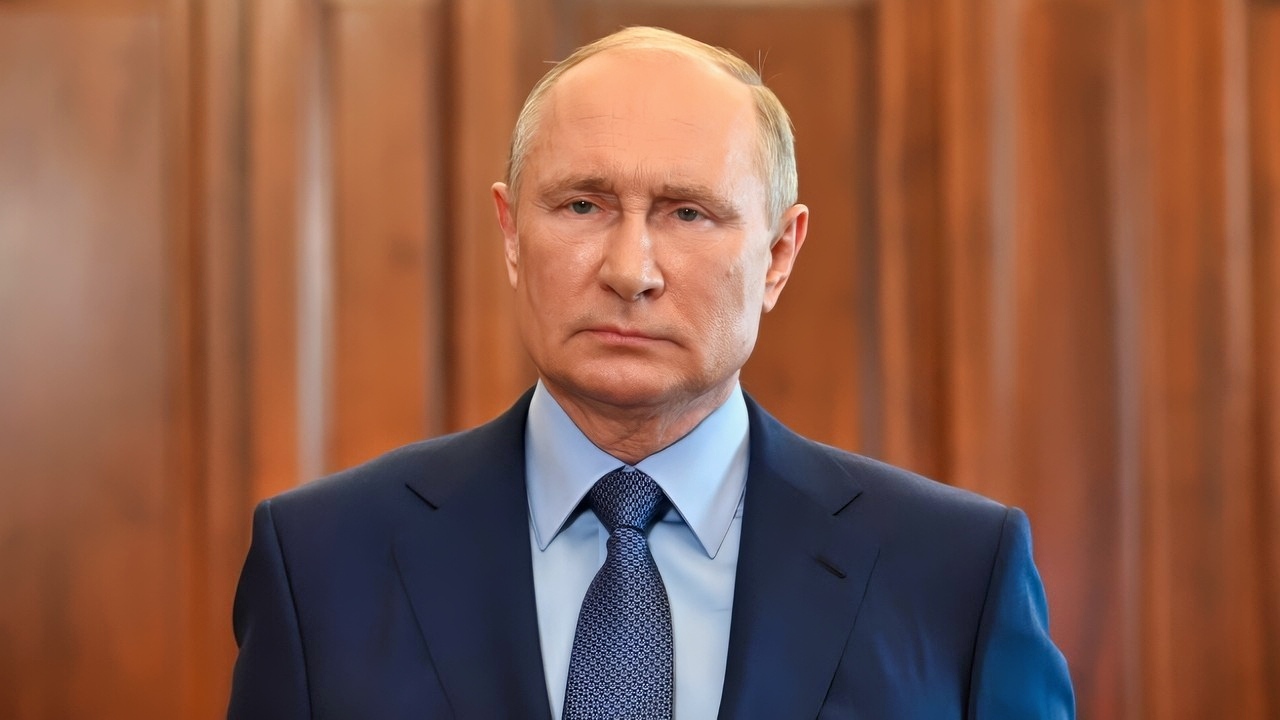
Putin Back in June 2021. Image Credit: Creative Commons.
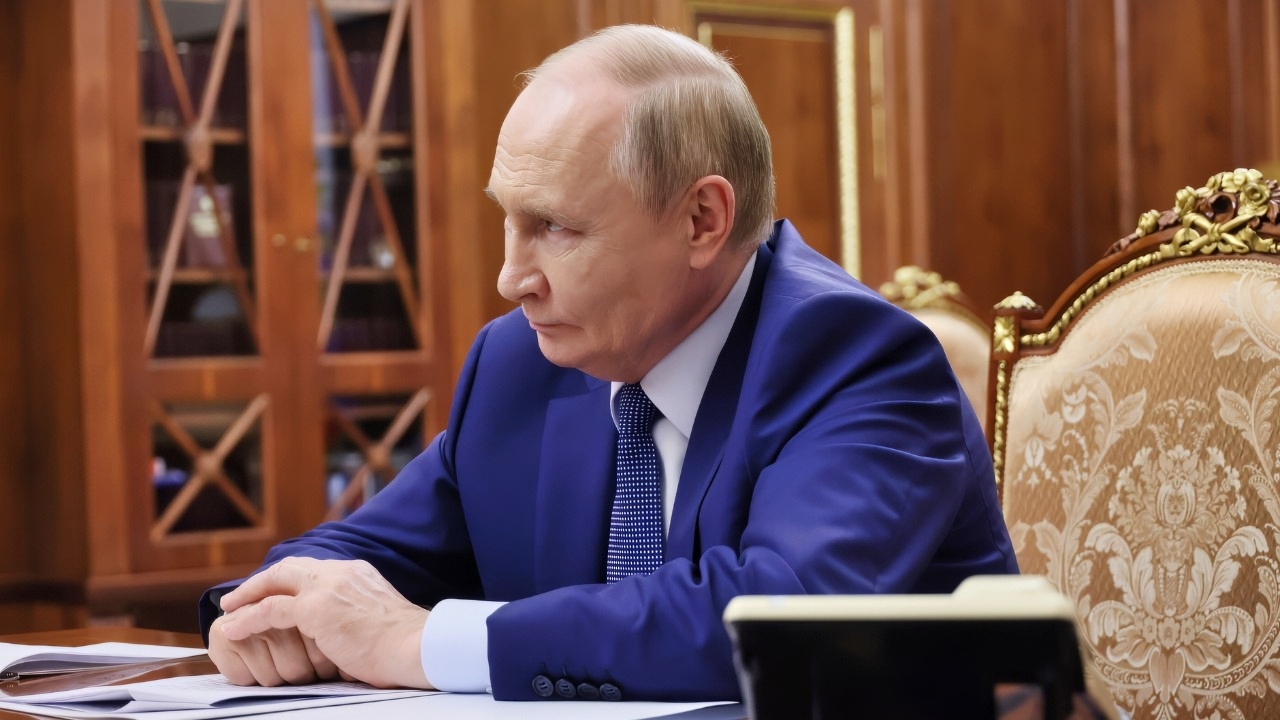
Putin in 2025 Looking Stern. Image Credit: Creative Commons.
The campaign’s underlying strategy is that by using these attacks, which will make Crimea unusable and unsupportable, the Russian military will have to withdraw. This will be such a blow to Russian President Vladimir Putin’s image that he will be forced to call an end to the hostilities or face an internal revolt back in the major Russian cities.
Now, in a Telegram post, the commander of the UAS, Robert Brovdi, stated that his war on Russian shipping and naval facilities has now moved from the Sea of Azov to the Black Sea. Brovdi also said the Black Sea phase of the MoLoChKa operation would launch on 15 July to mark Ukrainian Statehood Day.
“The first round of the maritime battle is over. Now it’s the Black Sea,” Brovdi wrote on the platform. As of 15 July, Brovdi said that having previously hit the 116 vessels in the Sea of Azov, his drone forces hit 17 oil tankers, two gas tankers, and one tugboat on the first day of the campaign now being carried out in the Black Sea.
Putin’s Embarrassment with the Crimean Situation
The waves of drone attacks on sea targets have been made possible, say Ukrainian specialists in the drone industry, by recent technological advances in drone design and production that have brought the sea within range of these unmanned systems piloted by Ukrainian soldiers.
“It is an incredible development,” said the Ukrainian drone industry specialist. “These bodies of water are all surrounded by Russian occupation forces. Yet our drones are flying through their occupied zones and hitting their ships and destroying them by the dozens.”
To reach the Sea of Azov, Ukrainian soldiers had been required to pilot their drones for some 250 miles and to safely bypass Russian air defenses and electronic warfare nets in the process. Then, when over the sea on the last leg before hitting their targets, the pilots fly their drones just above the surface of the water so as to evade radar detection.
Ukraine’s drones have been the number one weapon used in weeks of attacks against Crimea, having hit a host of refineries, oil industry installations and ships that are not only tankers but also vessels transporting cargo that supports military operations on the Crimean Peninsula. They have also hit ships that are servicing the port infrastructure throughout the Black Sea region.
The situation in Crimea constitutes a growing embarrassment for the Kremlin. The Russian President had long ago declared the area that was under control. Yet now these attacks are disrupting the start of the tourist season and prompting inhabitants to flee from territory that Moscow has endeavored to portray as a safe zone.
The peninsula has both a personal and political significance for Putin. When his military invaded and occupied the region in 2014, he argued that this was an act that was addressing and reversing a great historical wrong. Crimea has always been an inseparable part of Russia” was the time-honored battle cry. To the Russian dictator, the 1954 transfer of the territory to Ukraine by the then-Soviet leader Nikita Khrushchev had constituted an injustice that had long needed correction.
Symbolic Significance
It is that inordinate importance that Putin attaches to Crimea that makes it such a high-value target. It is the biggest item in the former KGB Lt. Col.’s trophy case, and he speaks of the territory as though returning it to Russian control was an act of almost religious import.
Crimea has “invaluable civilizational and even sacral importance for Russia”, Putin remarked in 2014 after the takeover, “like the Temple Mount in Jerusalem [is] for the followers of Islam and Judaism”. But for all its “spiritual” worth, it is Crimea’s strategic value that is now thought to be the major factor in the Russian President’s thinking about the peninsula. If he loses it, he can lose the entire country.
Ukraine has taken on the campaign of making Crimea untenable by conducting different escalatory phases. In the first phase, drone attacks were targeted against the land bridge between Russia proper and the peninsula.
In the second phase, strikes were carried out against the large stockpiles necessary to support the operation of its military units in the region. The third phase, which targets sea lanes, began last week when the Ukrainian drone forces finally had the type of drones with the range and precision-targeting necessary to be able to hit Russian vessels while they were exposed and vulnerable is a tremendous blow to Putin.
It is another example of how the Russian leader is unable to do anything to keep Ukraine from hitting any targets it wishes on any territory controlled by Russia. What is most likely to be the next step is not only sustained attacks on Russian ships in the Black Sea, but also on the main Russian naval base at Novorossiysk.
This will expose the extent to which the Russian president is unable to defend his own population and territory. It is another sign to the Russian people that the war needs to come to an end before even more damage is done to the nation and its economy.
About the Author Reuben F. Johnson
Reuben F. Johnson has thirty-six years of experience analyzing and reporting on foreign weapons systems, defense technologies, and international arms export policy. Johnson is the Director of Research at the Casimir Pulaski Foundation. He is also a survivor of the Russian invasion of Ukraine in February 2022. He worked for years in the American defense industry as a foreign technology analyst and later as a consultant for the U.S. Department of Defense, the Departments of the Navy and Air Force, and the governments of the United Kingdom and Australia. In 2022-2023, he won two awards in a row for his defense reporting. He holds a bachelor’s degree from DePauw University and a master’s degree from Miami University in Ohio, specializing in Soviet and Russian studies. He lives in Warsaw.


