

Iran and the Houthis Are Putting Two Global Oil Chokepoints at Risk: Iran and the United States exchanged strikes for a tenth consecutive night as Yemen’s Houthi movement threatened to block Saudi shipping through the Bab el-Mandeb Strait. A Reuters report on the escalation said U.S. forces bombed targets in southern Iran while Tehran launched new attacks against American sites in Bahrain, Kuwait, and Jordan.
U.S. Central Command said its latest operation hit Iranian command centers, maritime capabilities, missile and drone launch sites, and air-defense systems. The official CENTCOM statement said the strikes were intended to reduce Iran’s ability to attack commercial vessels in the Strait of Hormuz. CENTCOM also said U.S. forces had helped approximately 900 commercial vessels carrying 450 million barrels of crude transit the waterway since early May.
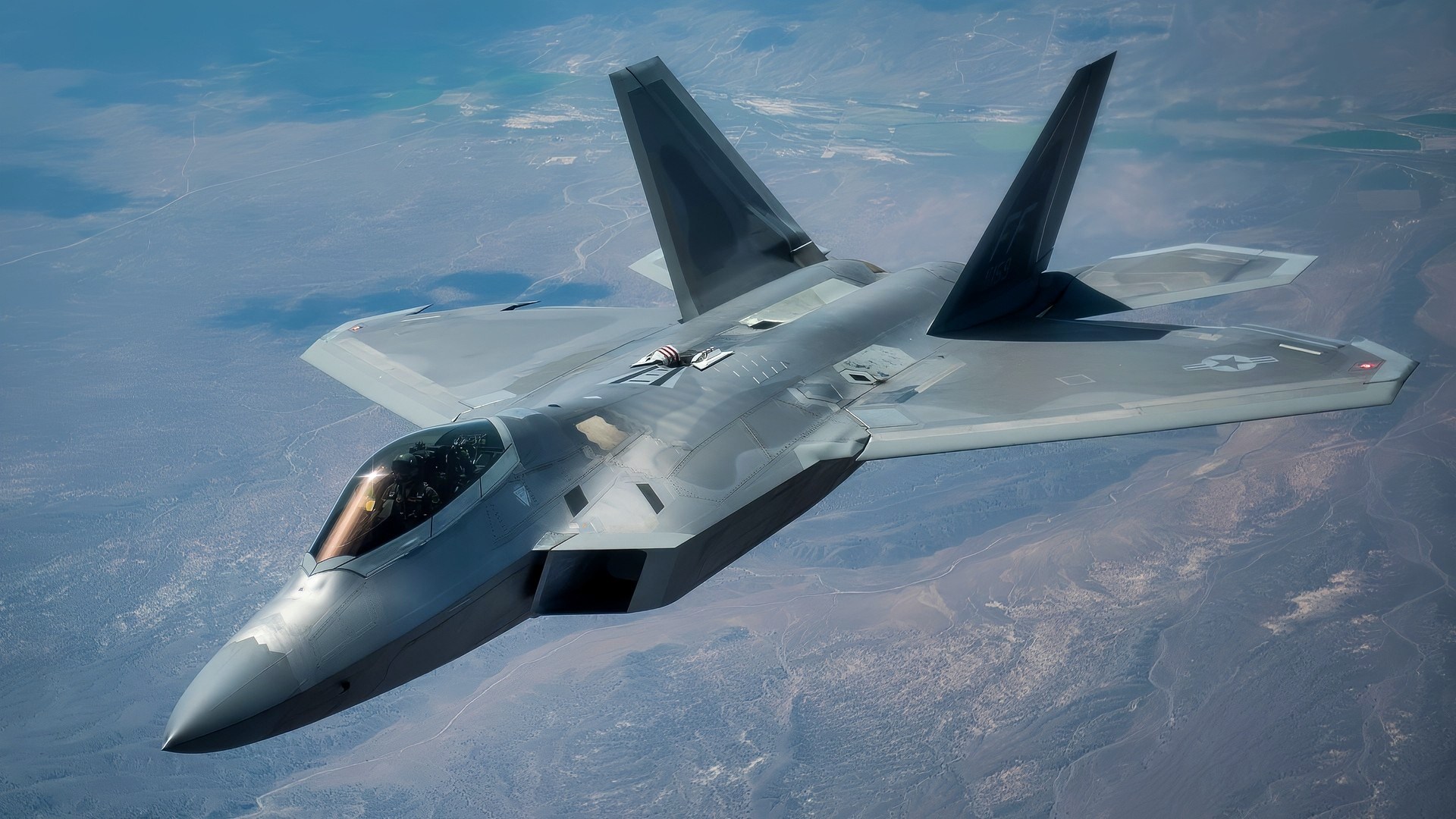
An F-22 Raptor from Langely Air Force Base, V.a. flies by after receiving fuel from a KC-135 Stratotanker from McConnell Air Force Base, Kans., July 27, 2016 during exercise Red Flag, hosted by Nellis Air Force Base, Nev. Red Flag 16-3 is aimed at teaching service members how to integrate air, space and cyberspace elements. (U.S. Air Force photo/Tech. Sgt. David Salanitri)

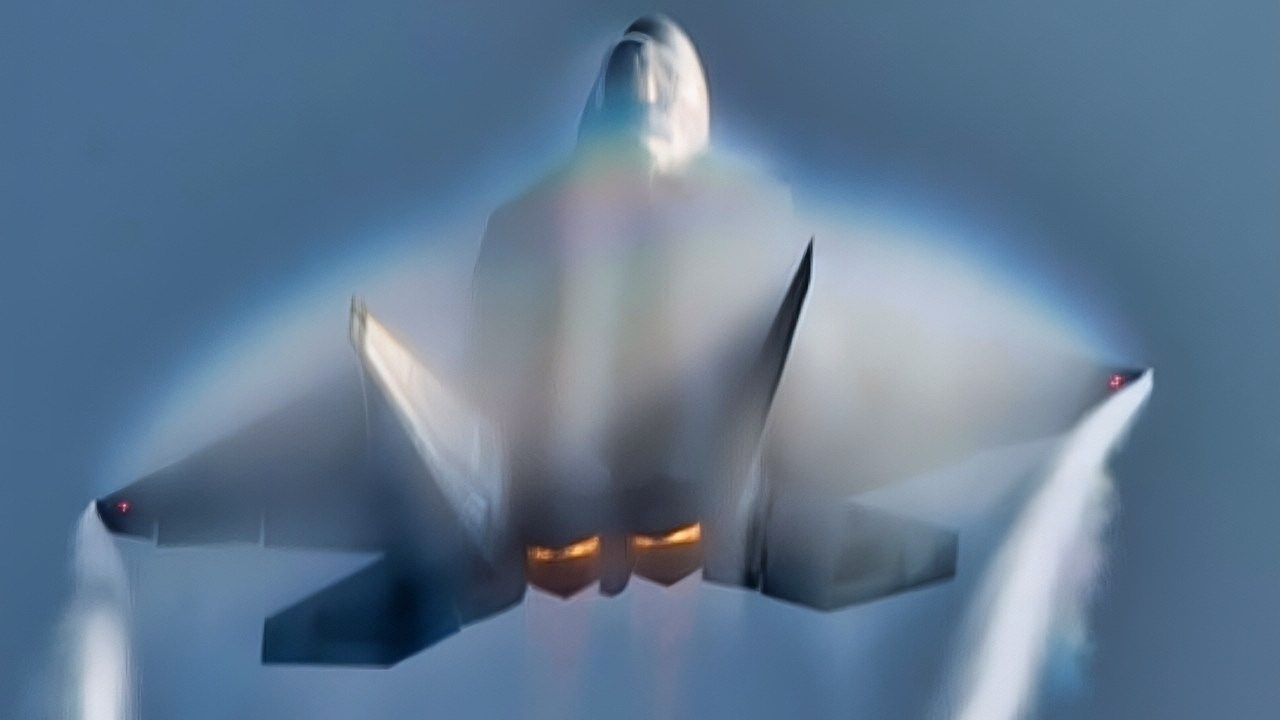
Capt. Kristin “Beo” Wolfe, F-35A Lightning II Demonstration Team pilot and commander, banks hard left making vapor trails over and behind the wings during a practice demonstration at Hill Air Force Base, Utah, Mar. 23, 2021. The demonstration team is part of Air Combat Command and is assigned to the 388th Fighter Wing at Hill AFB. Capt. Wolfe grew up a military child as the daughter of retired Col. Jon Wolfe and has flown the T-6 Texan II, T-38 Talon, F-22 Raptor and now the F-35A Lightning II. (U.S. Air Force photo by Alex R. Lloyd)
Iran continued to contest that passage. A July 21 Reuters update said the Revolutionary Guards claimed two tankers caught fire after explosions in Hormuz, while the United Kingdom Maritime Trade Operations agency reported that another tanker was struck by an unknown projectile and its crew abandoned the vessel. Reuters could not independently confirm Iran’s account of the tanker incidents.
The latest phase has also become one of the costliest for American forces. Reuters said U.S. troop deaths had risen to 17, while CBS News reported that nearly 100 service members had suffered injuries since fighting resumed on July 7. Mediators have proposed a 10-day ceasefire, but strikes and retaliatory attacks continued as of July 21.
The Houthis Threaten Saudi Shipping at Bab el-Mandeb
The Houthi declaration places pressure on Saudi Arabia’s main alternative to Hormuz. Riyadh has moved more crude through its East-West Pipeline to the Red Sea port of Yanbu, reducing the amount that must cross the Persian Gulf. Those exports still have to pass the Bab el-Mandeb on their way toward Asia, leaving Saudi shipping exposed to a second chokepoint controlled from nearby Houthi territory.
Reuters estimated that more than 3 million barrels per day of Saudi crude could be forced onto longer routes if the Houthis successfully disrupt the strait. Its energy-market assessment said Asian buyers could wait an additional month for some cargoes routed around the Cape of Good Hope, while consultants warned that crude prices could return to $115 to $120 per barrel.
The threat had been visible before the formal declaration. Iran had pressed the Houthis to prepare for action at Bab el-Mandeb if U.S. attacks reached Iranian power infrastructure. That possibility made the Red Sea route part of Iran’s wider pressure strategy even while shipping through Hormuz remained severely reduced.
The United States Is Defending a Wider Regional System
The stated U.S. objective centers on commercial passage through Hormuz, but the operating requirement now extends across a much larger area. American forces are protecting bases in several Gulf states, intercepting Iranian missiles and drones, enforcing a blockade on Iranian ports, and supporting merchant vessels. Saudi Arabia is preparing to protect traffic near Yemen, while Jordan, Kuwait, and Bahrain are defending their territory against Iranian attacks.
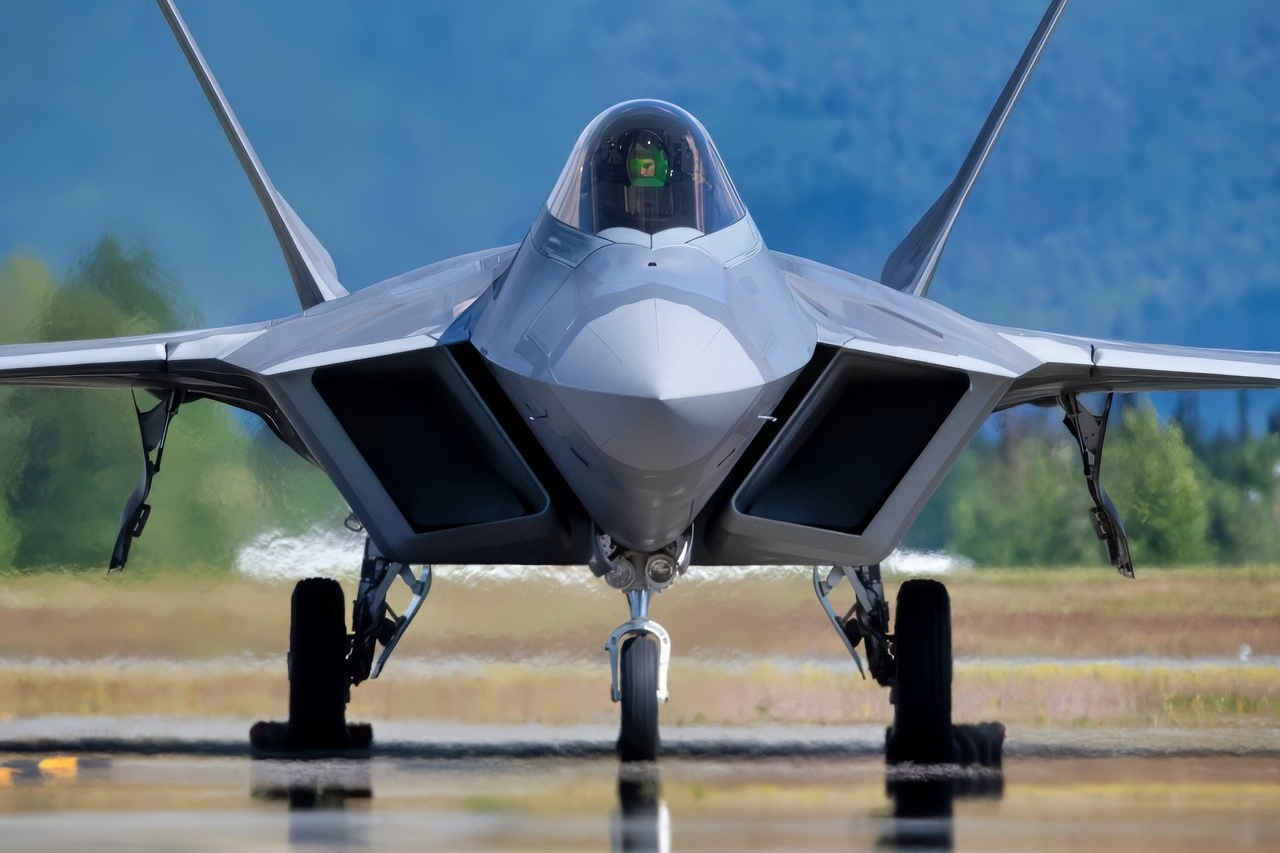
U.S. Air Force Maj. Joshua “Cabo” Gunderson, F-22 Raptor Demonstration team pilot and commander, prepares to take off in a U.S. Air Force F-22 Raptor assigned to the 90th Fighter Squadron over Joint Base Elmendorf Richardson, Alaska, July 9, 2020, as part of JBER Salutes, a two-day event to show appreciation to service members and nearly 100 Anchorage-area “COVID Heroes” and their guests. The service members and COVID Heroes, nominated for their support to the community during the COVID-19 pandemic, toured various areas of the installation, viewed exhibits and static displays of aircraft, and watched demonstrations by Explosive Ordnance Disposal, military working dog teams, and Chemical, Biological, Radiological and Nuclear experts. (U.S. Air Force photo by Alejandro Peña)
Washington’s difficulty is visible in the difference between military escort totals and commercial confidence. CENTCOM can move selected convoys through the strait, but many shipowners remain unwilling to use the route. The U.S. Energy Information Administration describes Hormuz and Bab el-Mandeb as critical energy chokepoints whose disruption increases transit times, insurance costs, and global fuel prices.
The expansion also creates more opportunities for escalation. Each Iranian attack on an American base produces pressure for retaliation. Each U.S. strike gives Tehran another reason to target regional infrastructure or use allied forces. The Houthi move shows how instability at both waterways could affect energy and container shipping at the same time.
A Ceasefire Must Cover Hormuz and Bab el-Mandeb
The proposed 10-day ceasefire offers a possible pause, but any durable agreement will have to address more than U.S. strikes on Iran. Tehran would need to stop attacks on commercial vessels and American bases. The Houthis would have to abandon their announced blockade. Saudi shipping would need credible protection, and tanker operators would need clear rules for passage through Hormuz.
The earlier interim agreement failed partly because Washington and Tehran disagreed over navigation and control of the strait. That breakdown left the administration and Iran with incompatible interpretations of the same arrangement. A replacement needs enforceable terms, independent maritime monitoring, and a process for addressing violations before they trigger another cycle of retaliation.
Iran’s public position remains that energy traffic will remain at risk while U.S. attacks continue. The Revolutionary Guards have threatened that oil and gas shipments will not move normally through Hormuz under continued military pressure. The Houthi blockade adds Saudi Red Sea exports to the same dispute.
A ceasefire will become credible when tanker traffic returns, war-risk insurance declines, crews stop abandoning damaged vessels, and attacks cease at both chokepoints. Until those conditions appear, U.S. forces will remain committed to protecting traffic and responding to attacks across a widening regional conflict.
About the Author: Harry J. Kazianis
Harry J. Kazianis (@Grecianformula) was the former Senior Director of National Security Affairs at the Center for the National Interest (CFTNI), a foreign policy think tank founded by Richard Nixon based in Washington, DC. Harry has over a decade of experience in think tanks and national security publishing. His ideas have been published in the NY Times, The Washington Post, The Wall Street Journal, CNN, and many other outlets worldwide. He has held positions at CSIS, the Heritage Foundation, the University of Nottingham, and several other institutions related to national security research and studies. He is the former Executive Editor of the National Interest and the Diplomat. He holds a Master’s degree focusing on international affairs from Harvard University.


