

A recent report from Foreign Policy has Russia turning to extraordinary financial measures to maintain its war in Ukraine.
The Kremlin is not facing imminent economic collapse, though.
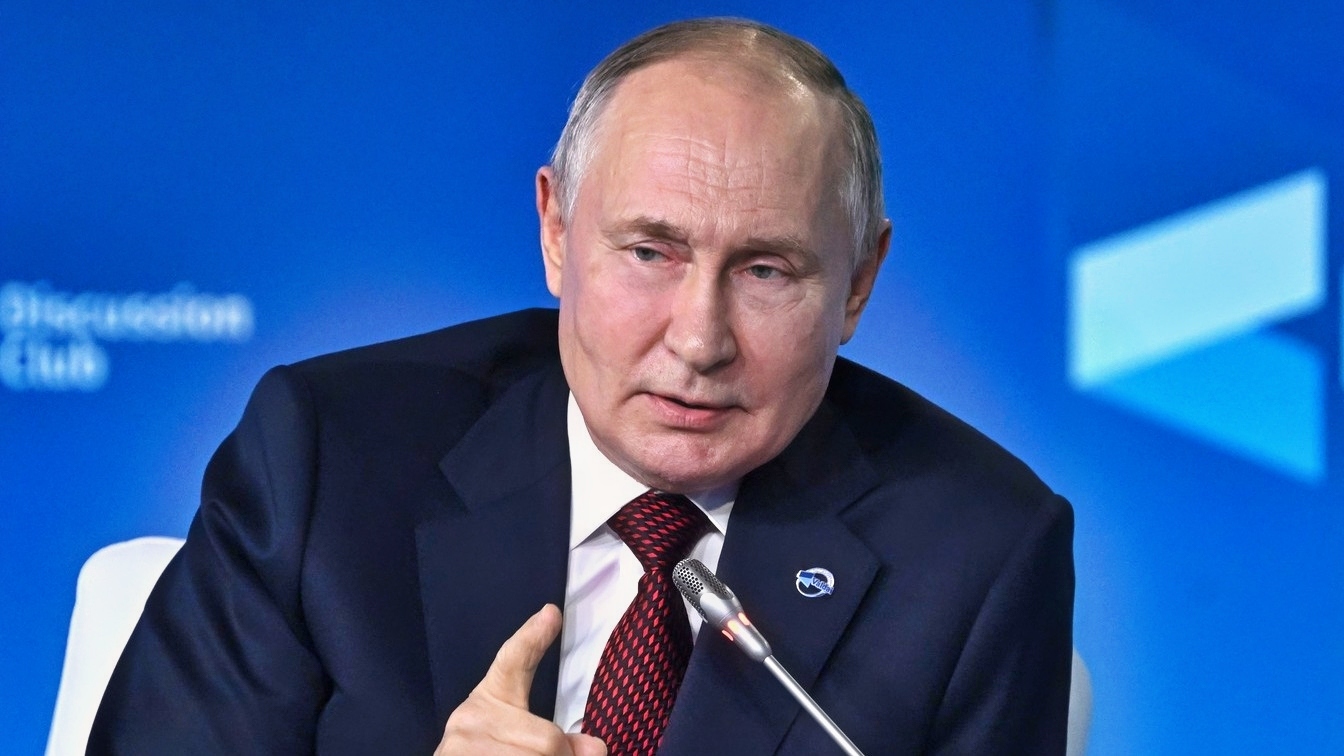
Putin Back in 2023. Image Credit: Russian Federation
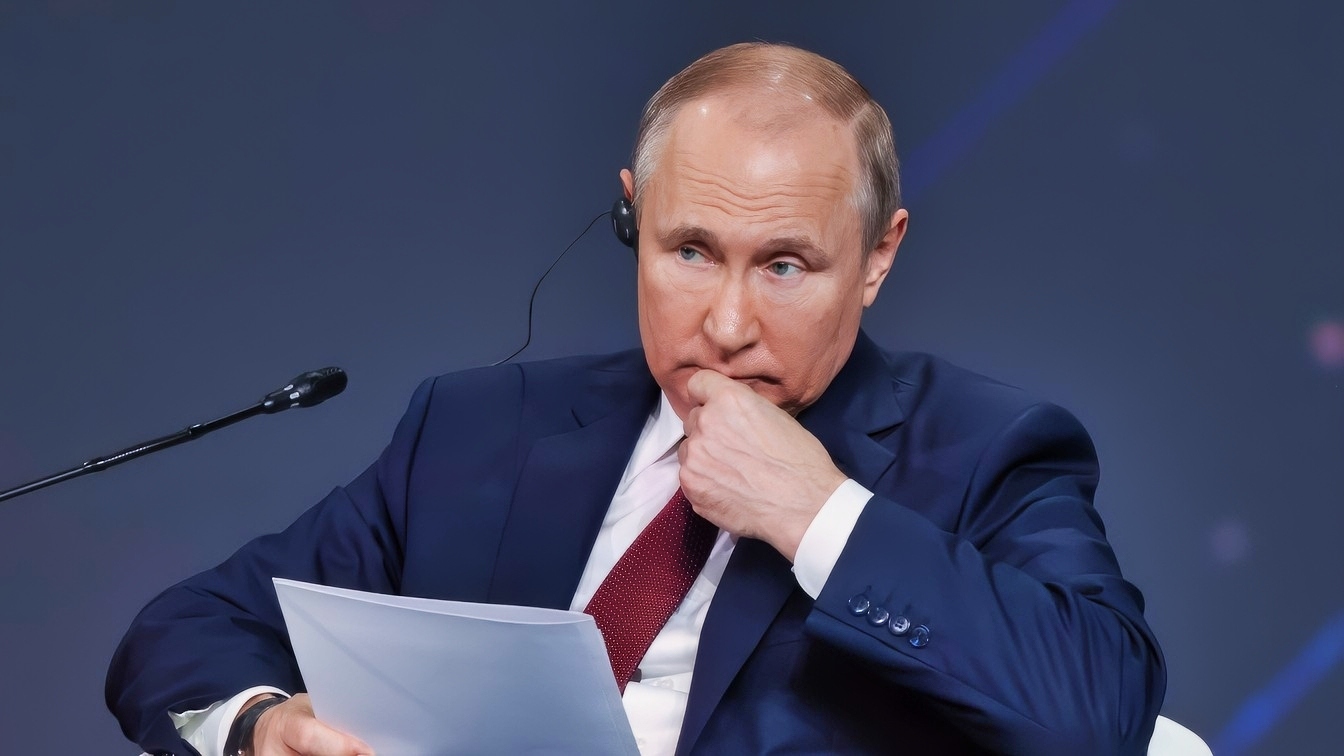
Putin in June 2021 Russian State Media Photo
Instead, it is confronted with a far more challenging prospect: finding politically acceptable means to finance ongoing military operations.
The latest signs of financial pressure emerged in June when Russia’s Finance Ministry backed draft legislation that would transfer nearly $40 billion in private pension savings into state-managed funds.
Around the same time, Communist Party leader Gennady Zyuganov urged President Vladimir Putin to make greater use of the $1.8 trillion held in bank accounts by Russian businesses and households, arguing that the money should serve the state’s interests rather than remain in private financial institutions.
Wider Proposals Aren’t Helping
Such proposals reflect a broader pattern that has unfolded since Russia invaded Ukraine in 2022. Over the course of the conflict, Moscow has drawn from several different sources to finance rapidly rising military expenditures.
Those sources included confiscating private assets, increasing taxes, shifting financial burdens onto state-owned companies (and regional governments), and now increasingly asking ordinary households to bear more of the cost.
One of the Kremlin’s earliest financing tools was the seizure of private assets.
Russian agricultural giant Rusagro is one of the largest cases of confiscation by Russian authorities ostensibly to fund the ongoing war.
In May of this year, a Russian court transferred around $7.6 billion worth of assets belonging to founder Vadim Moshkovich into state ownership.
Other wealthy Russians have attempted to avoid similar outcomes through voluntary contributions or by moving assets abroad.
Billionaire Suleiman Kerimov, for instance, announced plans earlier this year to donate around $1.4 billion to the Russian government.
Even if they haven’t had their assets confiscated by the Russian government, many Russian firms have struggled through higher taxation.
Russian Firms Can’t Pay for the War Alone
In fact, Russia increased its corporate profit tax rate from 20 percent to 25 percent in 2025, a move that Moscow anticipated would generate $22 billion in additional annual revenue.
Business groups have warned Russian leaders that many companies are no longer generating the profits needed to sustain additional taxation, raising concerns about economic stability and political dissent.
The most shocking bit of news comes from Gazprom, which has long been one of Russia’s most profitable corporations–responsible for roughly ten percent of federal budget revenue.
Back in 2022, the Kremlin required Gazprom to transfer about $72 billion to the government, effectively consuming Gazprom’s profits from the previous year.
During 2023 and 2024, Gazprom was also required to make monthly payments totaling around $63 million. Those extraordinary transfers contributed to the company’s first annual loss in nearly 30 years during 2023. Although Gazprom did return to profitability in 2024, its market value has fallen precipitously (shrinking from $367 billion at its 2008 height to around only $26 billion today).
Russian Regional Governments Face Hardships
As noted above, Russia’s regional governments have also absorbed increasing wartime costs.
Major social spending cuts have been enacted for the federal budget.
At the same time, the Russian state has encouraged regional governments inside Russia to assume greater responsibility for pensions, social programs, and family benefits.
At the same time, federal transfers to the regions have remained frozen at nominal 2021 levels despite years of inflation.
Regional governments have been tasked with financing military recruitment bonuses, too, as well as the compensation to families of fallen soldiers–along with reconstruction efforts in Russian-controlled areas of Ukraine.
More recently, Moscow has begun shifting additional costs directly onto households, including utility price increases totaling nearly 28 percent over the next two years, which will significantly impact everyday living expenses and evoke concern about the financial burden on ordinary Russians.
Russian State Hits Hard at Pensions
Russia raised its value-added tax from 20 percent to 22 percent at the start of the year. At the time of that VAT increase, Russian officials explicitly linked it to the increase in defense and national security spending.
Authorities have further approved utility price increases totaling nearly 28 percent over the next two years, significantly outpacing the government’s official inflation forecast.
But the most politically charged step lies in legislation impacting the pensions of Russian workers.
Under a draft law, around $40 billion held in private pension accounts would be transferred into a state-managed pension fund that invests much of its portfolio in Russian government bonds.
The proposal would help finance Russia’s widening budget deficit at a time when demand for Russian government debt has weakened.
These pressures do not mean that the Russian economy is on the verge of collapse.
It just indicates that the Kremlin’s financing options are becoming more constrained the longer that the war drags on.
Of course, Moscow retains the ability to raise taxes more, confiscate additional assets, or reduce spending elsewhere.
But each new measure carries increasing economic and political risks (as the costs of the war continue to mount).
It is for these reasons that many experts in the West fear that, far from being pressured into ending the war, the Putin government is preparing one last offensive push to break the back of the Ukrainian Armed Forces.
Time, however, does not seem to be on Russia’s side the longer that Putin fails to achieve a decisive victory soon.
Ukraine is, of course, also racing against the clock. The real question is which side will buckle first?
That answer is far harder to give reliably under current conditions.
About the Author: Brandon J Weichert
Brandon J. Weichert is Senior National Security Editor. He also manages The Weichert Brief on Substack. Weichert also hosts “National Security Talk” on Rumble. He is the author of four bestselling national security books, the most recent of which is A Disaster of Our Own Making: How the West Lost Ukraine (Encounter Books). Follow him via Twitter/X @WeTheBrandon.


