

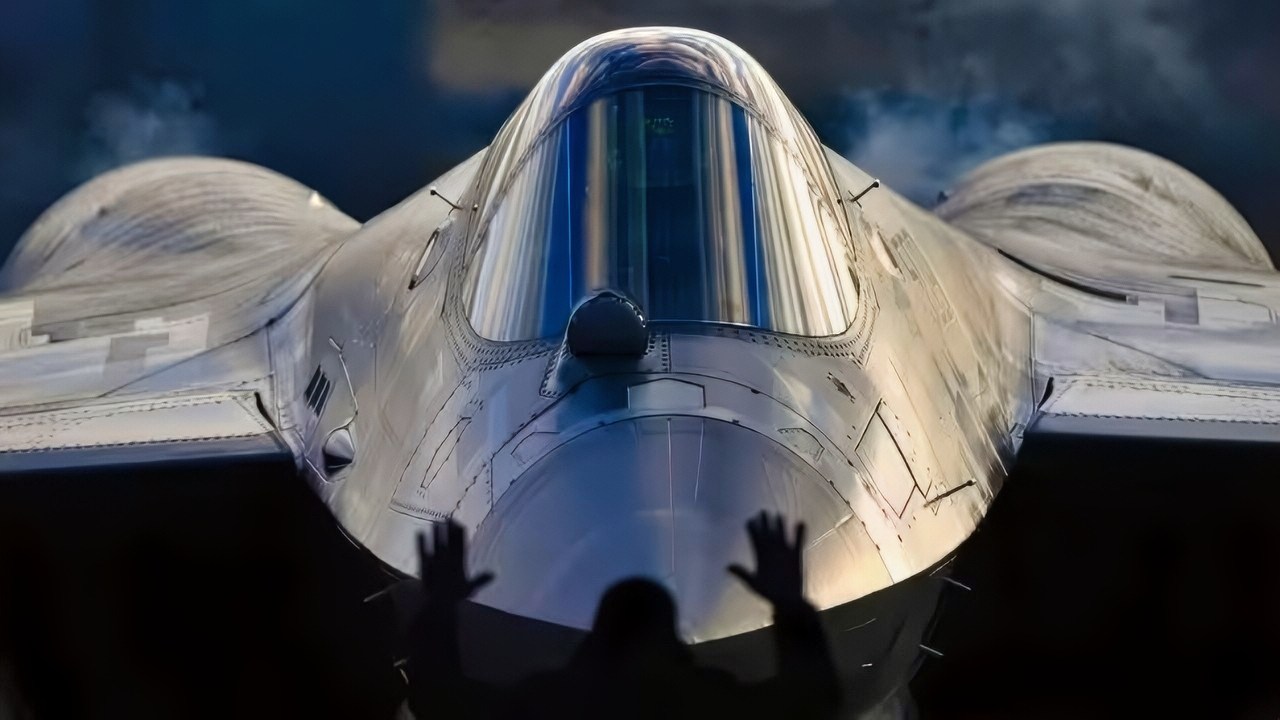
During the first years of the war in Ukraine, the extensive military assistance that the People’s Republic of China (PRC) provided to Russia had provoked no end of debates as to whether the communist nation should be sanctioned accordingly.
Beijing’s has made numerous duplicitous calls for peace and has even offered to mediate the conflict. But at the same time, as one analysis from 2023 pointed out, the PRC is pushing its military assistance deliveries to Russia right up to the red line that means sanctions if it is crossed.
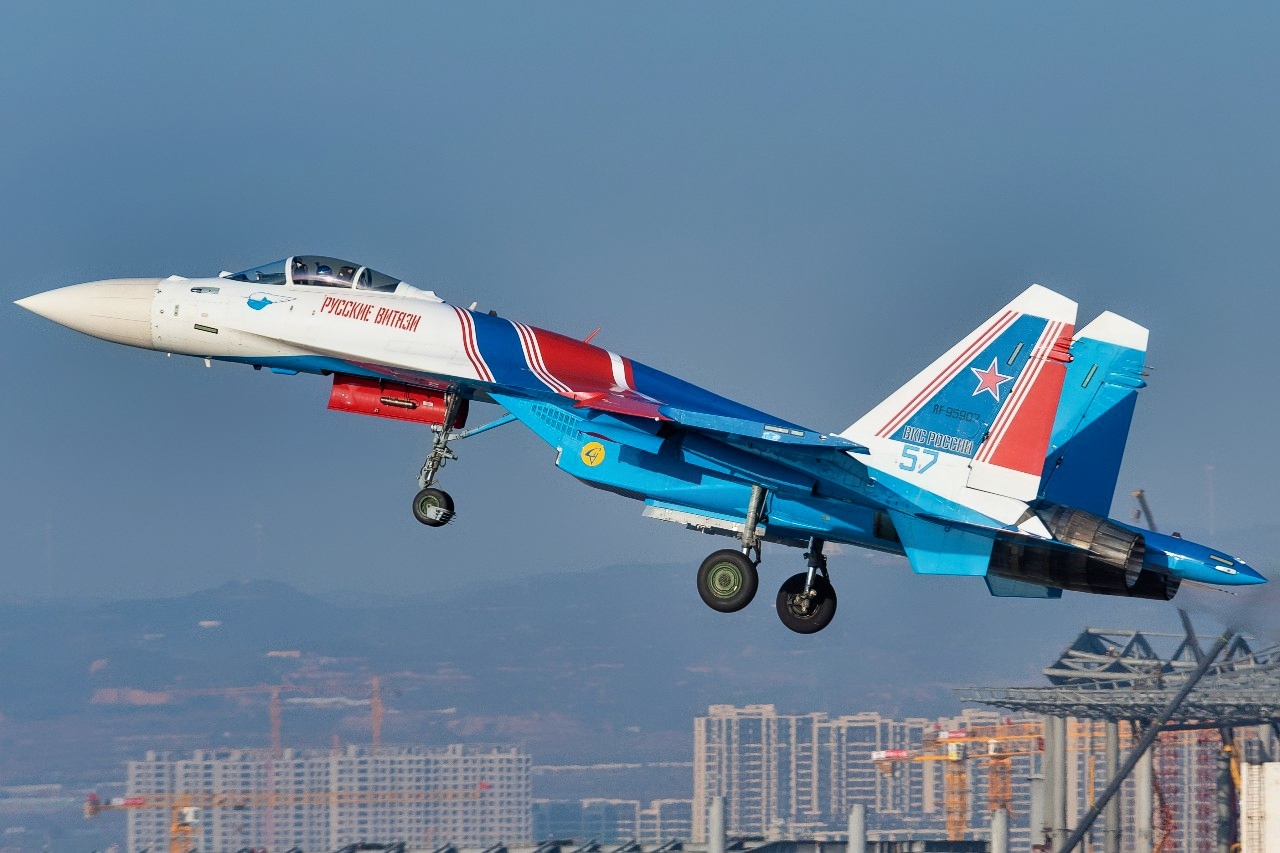
Su-35. Image Credit: Creative Commons.

Su-35 Fighter. Image Credit: Creative Commons.
China and Russia: The Great Military Team-Up
To be clear, the materials that have been delivered to Russia have not crossed into the territory of military-grade items. These nonlethal, but military-use items sent to Russia did have a measurable impact on President Vladimir Putin’s war. The number of protective gear items was large enough to equip a majority of the men mobilized by Russia since the February 2022 invasion.
The PRC also shipped large numbers of drones that ended up being used to direct artillery fire against Ukrainian positions or drop grenades on them. These shipments also included thermal vision optical equipment to allow Russian soldiers to fight at night.
In addition, the more sensitive items for which the PRC thought might trigger sanctions were shipped to Belarus and made it a transit point before this hardware was transported to Russia. Notable among these were items that were officially “commercial” products but were really components such as engines and electronics that ended up in drones and other Russian weapons.
Lethal Trade Between China and Russia
But today the concern of the US and its allies is the proverbial quid pro quo that Moscow is now apparently being told it is obligated to provide to the PRC. Today the People’s Liberation Army (PLA) is receiving all manner of training, intelligence, and advanced military technology from Russia.
This raises the concern that the boost these new innovations and capabilities would provide could give the PLA advantages in a future war over the Republic of China (ROC) on Taiwan. Moreover, there is the additional concern that this level of defense technology flowing into the region would also be used to threaten, if not commit acts of aggression against Japan and the Republic of Korea (ROK).
Since 2024, Chinese soldiers have also undergone training in drone and urban combat at a military complex near the Russian city of Volgograd in south-west Russia, said people briefed on European intelligence reports told The Economist this week. That training facility is used by Russia’s 8th Army, which provides the main combat power for Russian operations in eastern Ukraine.
But beyond training and battlefield techniques, the PRC is now in a position to acquire the most advanced military technology Russia has developed to date. Many of these represent weapon systems that Beijing has been trying to get its hands on for years, but the technology embedded in them has been held back by Russia – at least until now.
Among these capabilities are upgrades to the PLA’s air and missile defense systems. The US and others are also anxious that Russia will assist the PRC’s naval force, the PLAN, to design and build stealthier nuclear submarines. Beijing regards these platforms as mission-critical for any war for the ROC.
Drills and Combat Experience
The PRC has engaged in drills and exercises with Russia, which have included activity in the Sea of Japan – all of which has Tokyo concerned. And this level of cooperation between the PRC and Russia has expanded steadily in both scale and sophistication since 2022.
Beijing has seen some benefit to learning from the Russian navy’s experiences in Ukraine and how effective Kyiv’s naval drones have been in the Black Sea. In the past weeks, there have also been an unprecedented number of joint operations between the two navies.
These joint drills and other naval exercises provide the PLA with what are exceedingly rare opportunities to learn from the experience that Russia has experienced in four and a half years of war. For the PLAN, these drills demonstrated a “scenario of fighting unmanned systems”, said Rear Admiral Sergei Sinko, the leader of Russia’s forces for the exercise.
But what is more important is, “China can now ask things of Russia that Russia cannot ask of China,” said Lyle Goldstein of Brown University, who spoke to The Economist as well.
He also pointed out that PLA military journals discuss the force’s interest in Russian technical information that has been collected on American and allied weapons such as HIMARS rocket launchers. These are weapons that are also used by the ROC armed forces.
How this relationship continues to develop will depend greatly on how the war in Ukraine ends – as well as when. If Russia ends up as weakened and isolated as anticipated, Putin would need assistance from Beijing as much as or more than it does now.
There is also a chance that Russia could collapse and turn into smaller geographical entities that will be at each other’s throats. If so, the military technology and other resources that the PRC longs after could be theirs for the taking. So, should Russia lose or draw, Beijing still stands to benefit. For the Communist Party leader Xi Jinping, the longer the Ukraine war goes on, the better for his nation’s interests.
About the Author: Reuben F. Johnson
Reuben F. Johnson has thirty-six years of experience analyzing and reporting on foreign weapons systems, defense technologies, and international arms export policy. Johnson is the Director of Research at the Casimir Pulaski Foundation. He is also a survivor of the Russian invasion of Ukraine in February 2022. He worked for years in the American defense industry as a foreign technology analyst and later as a consultant for the U.S. Department of Defense, the Departments of the Navy and Air Force, and the governments of the United Kingdom and Australia. In 2022-2023, he won two awards in a row for his defense reporting. He holds a bachelor’s degree from DePauw University and a master’s degree from Miami University in Ohio, specializing in Soviet and Russian studies. He lives in Warsaw.


