

Pakistan says the United States and the Islamic Republic of Iran are moving closer to an arrangement that could help break the months-long standoff over the Strait of Hormuz (SoH), even as Washington and Tehran continue trading threats. Maritime violence persists across the region–including now in the Strait of Bab el-Mandeb.
What the Pakistanis Are Saying
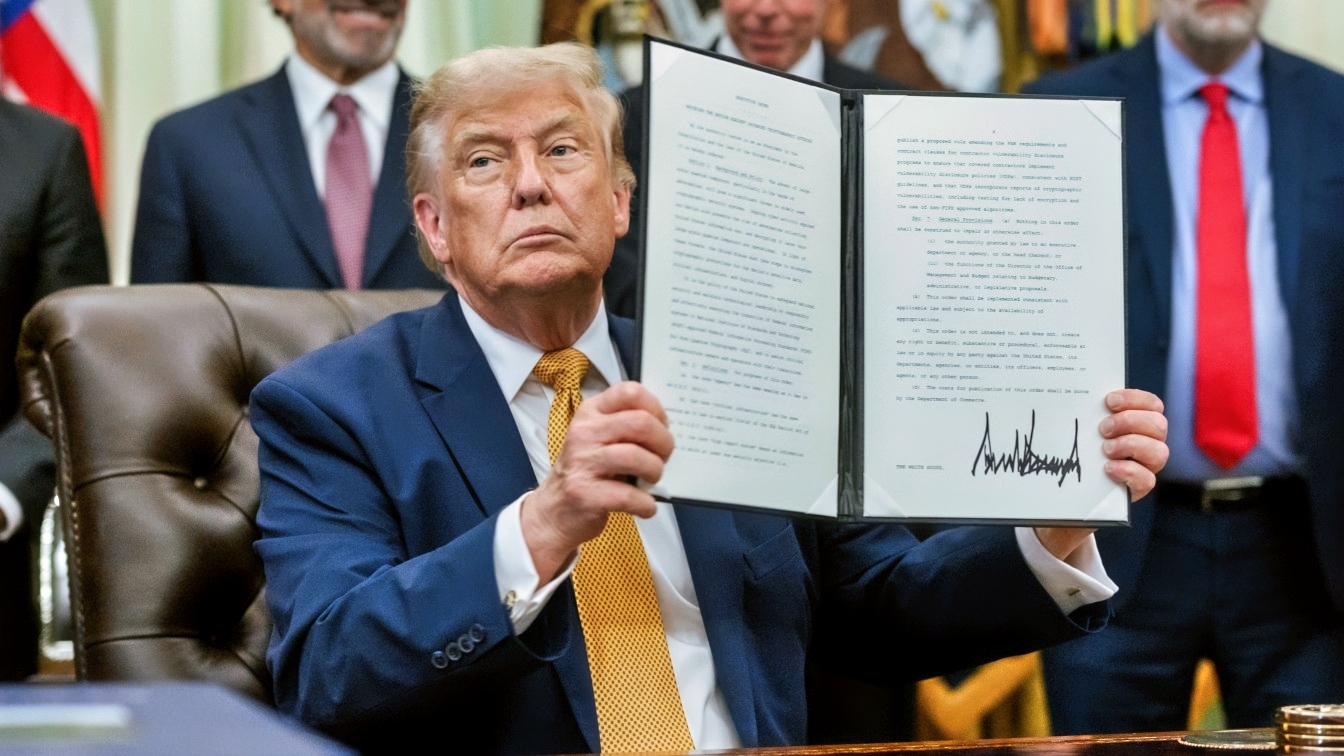
President Donald J. Trump, joined by Secretary of War Pete Hegseth, Physicist John M. Martinis, Science and Technology Policy Director Michael Kratsios, Secretary of Commerce Howard Lutnick, Secretary of Energy Chris Wright, OMB Director Russ Vought, and others, delivers remarks after signing an Executive Order on quantum computing in the Oval Office, Monday, June 22, 2026. (Official White House Photo by Joyce N. Boghosian)
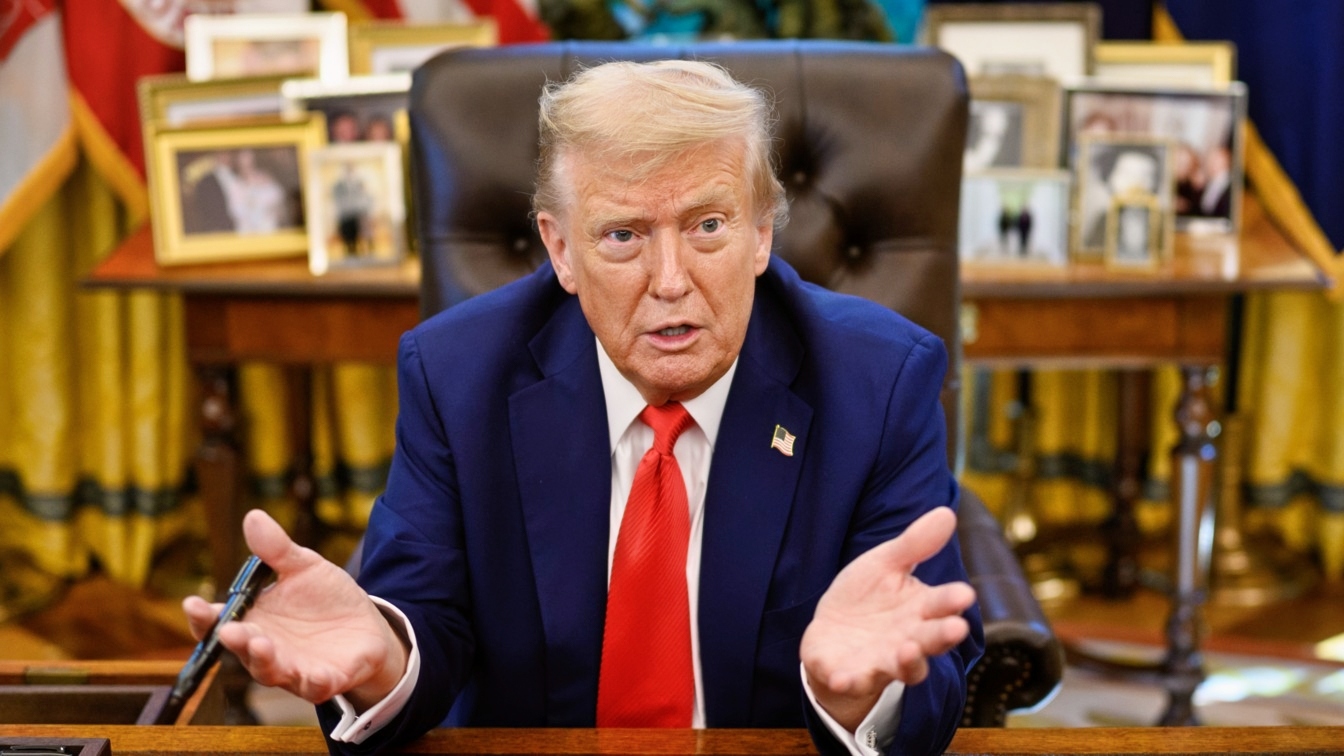
President Donald J. Trump visits with President Lee Jae-myung of the Republic of Korea, Monday, August 25, 2025, in the Oval Office. (Official White House Photo by Daniel Torok)
Pakistani Defense Minister Khawaja Asif claimed that recent diplomatic signals suggested negotiations were moving toward an agreement.
Per comments given by the Pakistani defense chief to Bloomberg, “Things are shaping up again in favor of a peace arrangement or a deal.” Developments over the last few days indicate that the two sides have reached “some sort of an arrangement.”
Of course, recently President Trump has claimed that he was “low-key” negotiating with the Iranians.
The Iranians, meanwhile, say they haven’t talked to American representatives in a while–and the government in Tehran is making moves and statements indicating they intend to wait the current US administration out for the next two years.
Pakistan has been intimately involved in the ongoing attempts to end the Middle East war between the US, Israel, and Iran.
Previous rounds of negotiations, such as during the failed Memorandum of Understanding (MoU), were conducted with Pakistan as an intermediary.
Pakistani officials were positive back then, too.
Ultimately, that deal fell apart shortly after the US president signed it.
Anyway, Qatar has separately claimed that negotiations between Iran and Oman over the management of the SoH had reached a critical moment.
Those discussions are about control of the contested waterway. Iranian officials emphasize that any agreement between itself and Oman would not automatically restore the SoH to prewar levels of use.
Nowhere Near A Deal
Before the war began on February 28, roughly one-fifth of the world’s traded oil and liquefied natural gas (LNG) passed through the SoH.
Iran effectively blocked the Strait after the United States and Israel engaged in an unprovoked air war against the Islamic Republic of Iran.
In retaliation for those strikes, which killed several Iranian military, political, and religious leaders–including the Ayatollah Ali Khamenei–Iran blocked the SoH.
Tehran has indicated it is nearing a final agreement with Oman that will establish new shipping lanes through the SoH.
The Islamic Republic maintains that any final agreement would require Oman’s nominal ally in Washington to meet additional conditions.
The conditions Iran has set include an end to the US blockade of Iranian ports, sanctions relief, the release of frozen Iranian assets, and guarantees against renewed military attacks.
Iran’s parliament is also pushing a law that would deny access to the SoH for any Israeli or US-flagged ships.
In the case of the latter, the only way that Iran would permit US-flagged vessels to cross the SoH would be if Washington gave war reparations to the Islamic Republic.
The Trump administration is unlikely to acquiesce to such demands.
Agreement-Incapable
In fact, President Donald Trump has called for the Iranians to pay the United States reparations.
Trump insisted that Tehran should pay the US for damage attributed to Iran over decades, including the deaths of American military personnel and Iranian civilians.
On top of that, the forty-seventh president insists that the US controls the SoH.
Meanwhile, Iran has repeatedly demonstrated its ability to threaten shipping (despite the US military presence.
Diplomatic activity continues amid attacks on commercial shipping.
A Houthi missile attack on a cargo vessel near the Bab el-Mandeb Strait on Tuesday killed crew members.
At the same time, US forces struck the Panama-flagged Vela Nova in the Gulf of Oman after CENTCOM said the ship attempted to evade the US blockade of Iranian ports.
CENTCOM said an MH-60 helicopter fired two Hellfire missiles into the vessel’s engine room after its crew ignored repeated warnings.
The command said US forces had disabled three noncompliant vessels, boarded others, and redirected 55 commercial ships attempting to breach the blockade as of Tuesday.
Months of US military operations have not restored normal passage through the SoH.
Iran continues to link a full reopening to concessions from Washington, while the Trump administration rejects Iranian control over the waterway and continues its blockade.
There is unlikely to be any real movement toward an agreement with both sides in this ongoing conflict, nowhere near a consensus on basic facts on the ground–let alone on issues of what would actually end the war.
Hope Over Reality
Pakistan’s announcement, therefore, represents evidence of diplomatic movement.
It is not a confirmation that any agreement has been completed.
No final terms have been announced.
Iran has not committed to fully reopening the Strait of Hormuz.
But Pakistani and Qatari officials now say that negotiations have advanced, raising the possibility that an agreement over the world’s most important energy chokepoint could be approaching.
Whether those negotiations can bridge the remaining disputes, or whether that agreement really restores shipping to what it was before the war, remains uncertain.
And that uncertainty is hurting the global economy and leading to increased tensions, which only work against any final agreement.
About the Author: Brandon J. Weichert
Brandon J. Weichert is the Senior National Security Editor at 19FortyFive.com. He also manages The Weichert Brief on Substack. Weichert also hosts “National Security Talk” on Rumble. He is the author of four bestselling national security books, the most recent of which is A Disaster of Our Own Making: How the West Lost Ukraine (Encounter Books). Follow him via Twitter/X @WeTheBrandon.


