

The war over the war continues. President Donald Trump defied expectations over the weekend when he abandoned his previous threats to conduct a “Military Terror” campaign against Iranian energy and water infrastructure along with the Israelis.
Oman has presented an equitable deal to the Islamic Republic of Iran that involves the two sides sharing control equally of the contested Strait of Hormuz (SoH).

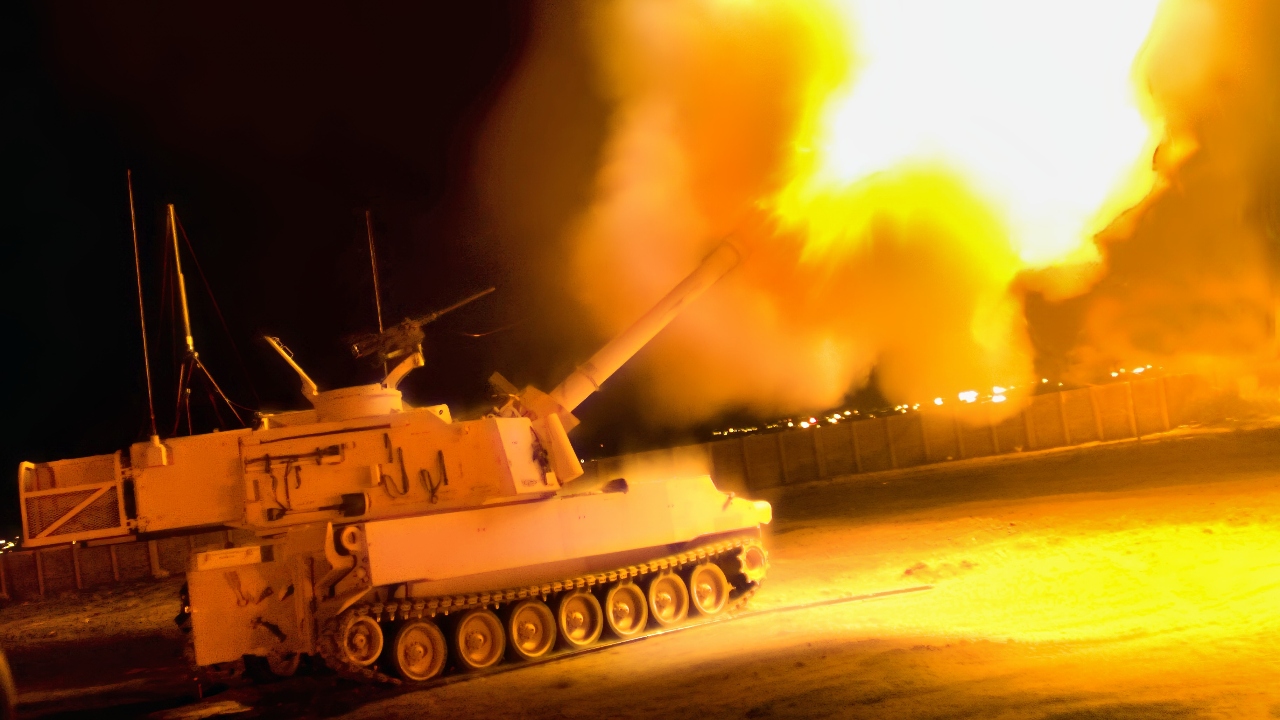
NATO Artillery Test. Image Credit: NATO.
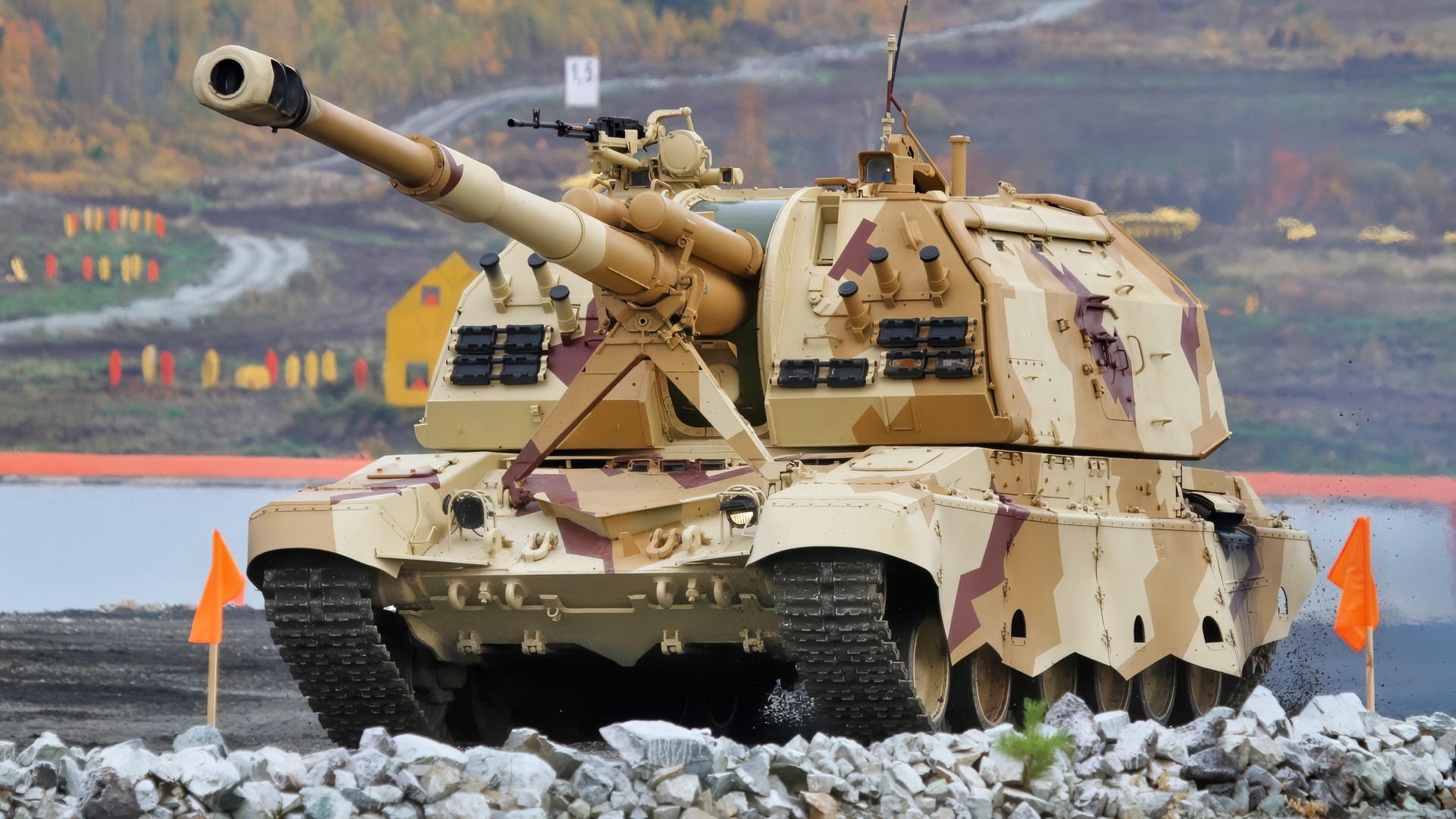
Russian Artillery. Image Credit: Creative Commons.
Fighting To Depletion
Meanwhile, the head of the United States European Command (EUCOM) issued a warning last week that the United States Navy lacks the requisite number of interceptors to provide air defense and missile defense missions over Israel — not if the White House expects the Navy to be able to conduct defensive missions of the US homeland for any reason soon.
The military has been cautioning the Trump administration about the dangerous rate of depletion of critical US military munitions.
What’s more, the Iranians have steadily degraded and damaged essential US military facilities throughout the Gulf region.
These two developments have done more to damage the United States’ war-making ability than anything else.
Many are wondering now if Trump was ever really serious about escalating militarily against Iran.
Trump claims the Iranians “begged” him for a deal. The Iranians deny that claim. There seems to be some confusion as to whether American negotiators were directly speaking with the Iranians.
After all, we know that the Omanis, Saudis, and other Arab states have been heavily involved in pressing the US and Iranians to negotiate, indicating that direct connections between the two warring parties are not there (yet).
Plus, Iran’s side insists that they’ve not had direct talks with the American side.
So, the likelihood that Iran asked — or, in Trump’s parlance, “begged” — for a deal is wrong.
What we do know is that the key point of contention between Washington and Tehran is over who controls the SoH—the Omanis claim to have made a diplomatic breakthrough with Iran over that matter.
Essentially, the two countries, which share long coastlines with the SoH, would split the waterway between them.
The Iranians would get one side, the Omanis would get the other. Ships entering the SoH would use the Iranian side while ships exiting the SoH would utilize the Omani route.
To avoid fears that Iran would be “taking over” the SoH, too, Muscat’s representatives pushed for a voluntary toll to be paid by ships using the SoH so that the two routes could be maintained.
Others say Trump was merely bluffing.
Even if that were true (it might be), what was the end goal of bluffing? To de-escalate. To get out of the war. Why?
Because the US military was running out of its key conventional arms. The US is depleting its Strategic Petroleum Reserve (SPR) to the point that it hasn’t been this low (near 300 million barrels) since 1983, when it was still relatively new.
In both cases, the depleted arms and SPR will take years to restore fully.
And that timeline will be further extended if the Trump administration continues its war.
At some point, the US will deplete itself. And that moment will likely come before the Islamic Republic ever folds (either in terms of regime change or simply abandoning its newfound control of the SoH).
The Saudis Wanted Out
There’s another factor here. The Saudi factor. In this telling, Riyadh was rightly fearful of Iranian retaliation directed against its vital (but vulnerable) energy and water infrastructure.
The Kingdom has been holding on economically— barely— thanks to alternative pipelines and waterways that move its energy products out of the region.
With the introduction of the Houthis of Yemen into the fight, where the Houthis have selectively blockaded the Strait of Bab el-Mandeb, the Saudi economy is now being hit as never before.
If the US and Israelis followed through on Trump’s threats of waging a “Military Terror” campaign against Iran last weekend, the prospects that the Iranians would utterly devastate Saudi Arabia’s ARAMCO energy production infrastructure were high.
Thus, the Saudis would be required to pay massive sums to repair any of that damage. One thing the Saudis could do to generate the money for that (since their energy funds have been low since the war began) is to sell off their massive share of US Treasuries.
The mere whiff of Riyadh considering this move (which would be highly damaging to the US economy at this time), as well as the fears that Saudi Arabia might disallow the US military the use of key bases in Saudi territory, might have compelled Trump to abandon his egregious plans for “Military Terror” against the Iranian people.
Can Trump Take This Off-Ramp?
Regardless of the real reasons, the fact is that the president was unlikely to have been asked by Iran to hold off. It is more likely that a combination of diplomacy and depletion on the American side–coupled with fears over the real economic damage prolonging the war might do to the United States, as the country enters a pivotal Midterm election cycle in November–prompted Trump to give peace (however temporarily) a chance.
It remains to be seen if this new round of diplomacy will last any longer than did the previous round (the world got an 18-day reprieve with the Memorandum of Understanding).
There is hope, though, because striking energy infrastructure the way that Trump was threatening to do would be the equivalent of the nuclear option: not only would Iran retaliate in kind to every nearby Gulf state, but such attacks would devastate the global energy markets–at a time when Washington is desperate to keep the price of energy as low as possible.
About the Author: Brandon J. Weichert
Brandon J. Weichert is Senior National Security Editor. He also manages The Weichert Brief on Substack. Weichert also hosts “National Security Talk” on Rumble. He is the author of four bestselling national security books, the most recent of which is A Disaster of Our Own Making: How the West Lost Ukraine (Encounter Books). Follow him via Twitter/X @WeTheBrandon.


