

Over four and a half years into the war, Ukrainians know what to expect as the region’s bitterly cold winter months approach. Stymied on the battlefield, Russia has bombarded Kyiv, the Ukrainian capital, as well as other cities around the country and placed vital civilian infrastructure in its crosshairs, hoping to batter the country’s noncombatants into submission and leverage their misery to affect political change and, if successful, the submission of the Ukrainian state to the will of the Kremlin.
Though the toll exacted by the Russian war machine on Ukrainians has been significant, the Russian campaign against the country’s civilian infrastructure has not been entirely successful in winters past. But the opening salvoes of Russian bombardment suggest that this winter could be brutal.

Putin on June 24 2023 Russian Federation Photo

Putin Clapping Russia Federation Photo
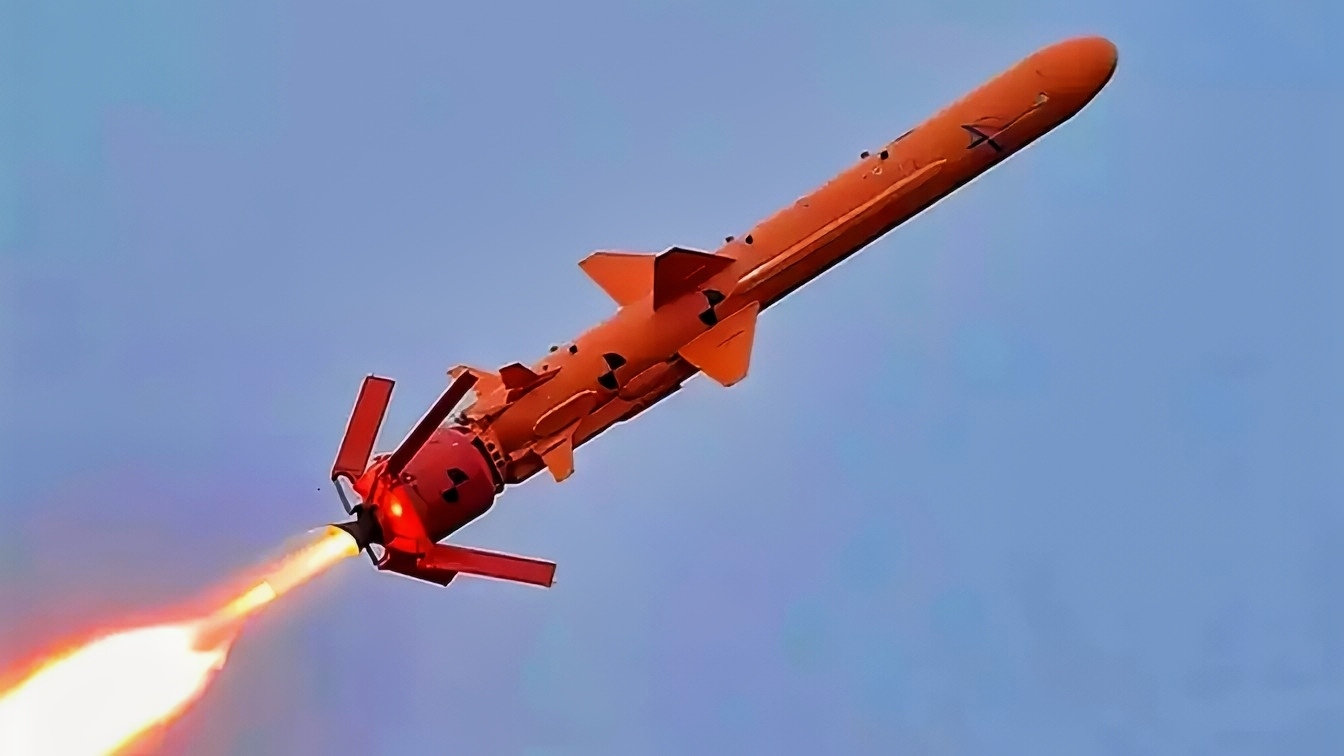
Earlier this week, Russian cruise missiles and explosive-packed drones rained down on Kyiv, punching into energy facilities and a thermal power plant and leaving parts of the city without power or heating.
Drones versus Interceptors in Ukraine War
Kyiv is the seat of the Ukrainian government, and the center from which the country directs its forces. Around three million Ukrainians call the city home. It is also home to President Volodymyr Zelensky and his family. It is, therefore, the best-protected city in the country, and in years past has managed to stave off the brunt of Russian air attacks, absorbing occasional strikes on apartment buildings and other infrastructure, thanks in large part to robust Ukrainian air defenses.
But the competition between air defenses and increasingly sophisticated Russian munitions has escalated, and Ukraine can’t count on successfully shooting them down as reliably as it has in years past. Russia’s Geran family of one-way kamikaze drones has grown in sophistication, swapping early propeller engines for turbojets and allowing the weapons to outpace many of Ukraine’s air-defense interceptors.
At the same time, the world’s supply of air defense interceptor missiles, high-speed munitions that can reliably take down drones, cruise missiles, and ballistic munitions, is under enormous strain. The Patriot family of American-made air-defense interceptors is in demand in Europe, Ukraine, and the Middle East.
Despite their effectiveness, Patriots are incredibly slow to manufacture, taking 24 to 30 months from order placement to final delivery. The interceptors undergo rigorous testing during manufacture to validate the reliability of their many components and subsystems—a painstaking but unavoidable part of their construction.
Other Civilian Infrastructure Attacked
On Saturday, Russian drones struck a bridge in Kyiv that spans the Dnipro River, a north-south body of water and the country’s largest river that bisects the Ukrainian capital. Although no casualties were reported, traffic across the bridge was halted. The strike followed another Russian strike earlier this week on another Dnipro bridge, which significantly disrupted traffic across the river and within Kyiv as drivers sought alternative, but much longer, routes. An estimated half a million people commute across the river every day.
Evidence of a Concerted Russian Effort
According to the Ukrainian Energy Minister, Denys Shmyhal, Russia’s campaign this winter against Ukraine’s civilian infrastructure prioritizes critical infrastructure such as thermal plants, electrical substations, hydroelectric plants — and most concerning — Ukraine’s three remaining nuclear power plants. Ukraine’s water system is also expected to come under fire, with pumping substations and wastewater treatment facilities anticipated targets.
Speaking to Ukrainian media, Mr. Shmyhal said Ukraine intercepted a Russian document outlining plans to attack Ukraine’s energy, water, and heating facilities. “Last week, we received information from our intelligence services which they had obtained from the Russian side – the strategy the Russian terrorists will use this winter,” the minister explained.
“There are two large documents, written in a very cold and precise manner. They contain tables specifying the amount of weaponry needed to destroy each facility. The types of weapons range from ballistic missiles to jet-powered and conventional drones. Everything has been calculated, with the required strike packages, as they call them, laid out for each facility. We understand how they are going to act.”
“Our partners, like us,” he added, “were struck by its cynicism, by this cold, terrorist calculation of how to destroy our energy sector.”
Meanwhile, Ukraine is building resilience into its energy and heating systems, moving away from large, centralized, easily targetable facilities toward smaller, dispersed substations. But with winter rapidly approaching, time is running out.
About the Author: Caleb Larson
Caleb Larson is an American multiformat journalist based in Berlin, Germany. His work covers the intersection of conflict and society, focusing on American foreign policy and European security. He has reported from Germany, Russia, and the United States. Most recently, he covered the war in Ukraine, reporting extensively on the shifting battle lines in Donbas and writing about its civilian and humanitarian toll. Previously, he worked as a Defense Reporter for POLITICO Europe. You can follow his latest work on X.


