
U.S. Secretary of State Marco Rubio claimed on Wednesday, 7th October, that Iran has “lost complete control” over the Strait of Hormuz.
Rubio, speaking at a press conference during a visit to Greece, said the vital waterway was “open,” even as traffic fell to a two-month low that same day.
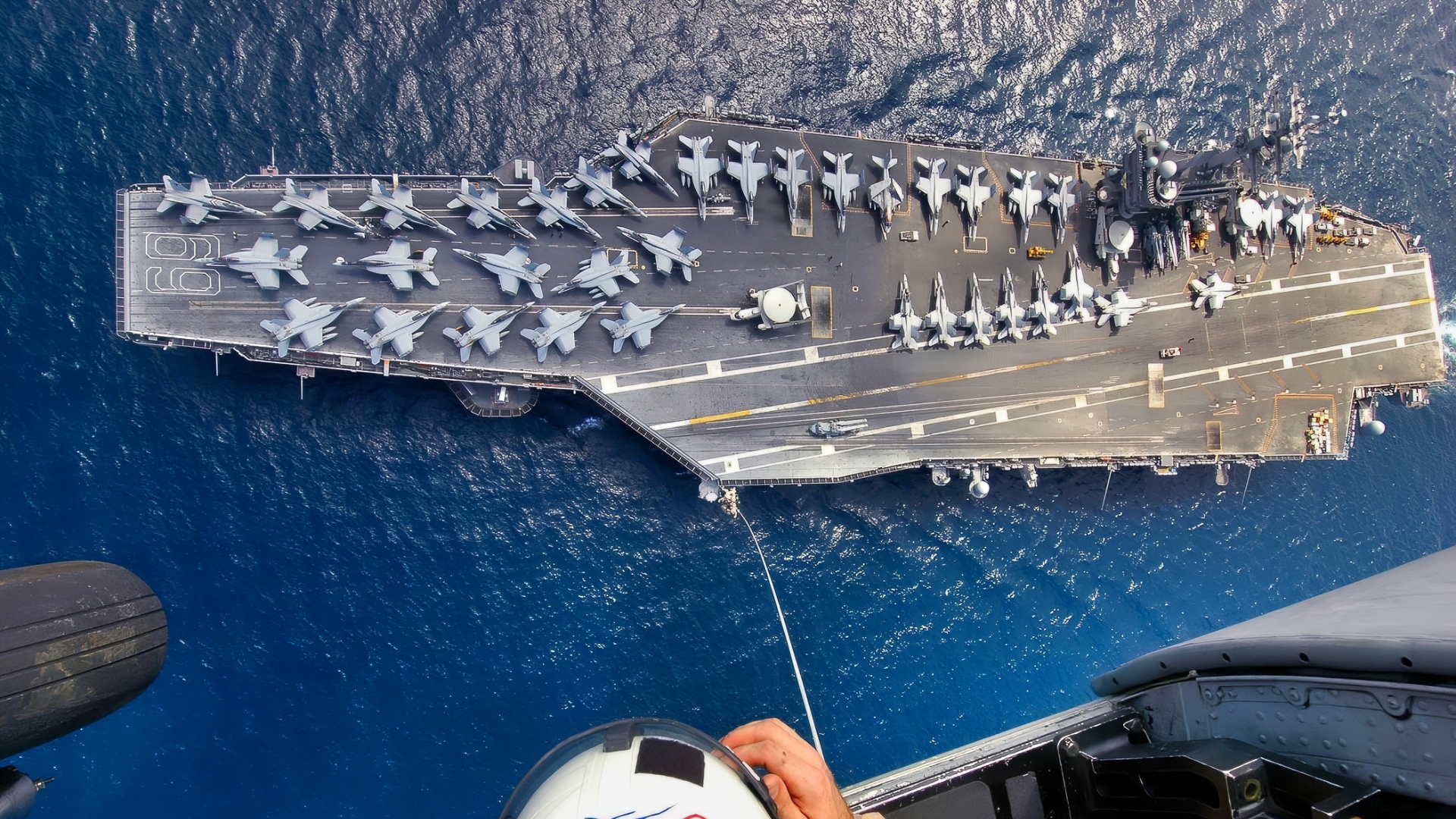
Explosive Ordnance Disposal 1st Class Christopher Courtney assigned to Explosive Ordnance Disposal Mobile Unit Six (EODMU-6), Det. 16 assist his team members during Special Purpose Insertion Extraction (SPIE) training from an SH-60 Seahawk helicopter. The Nimitz-class aircraft carrier USS Dwight D. Eisenhower (CVN-69) is deployed in support of Maritime Security Operations (MSO) and the global war on terrorism.
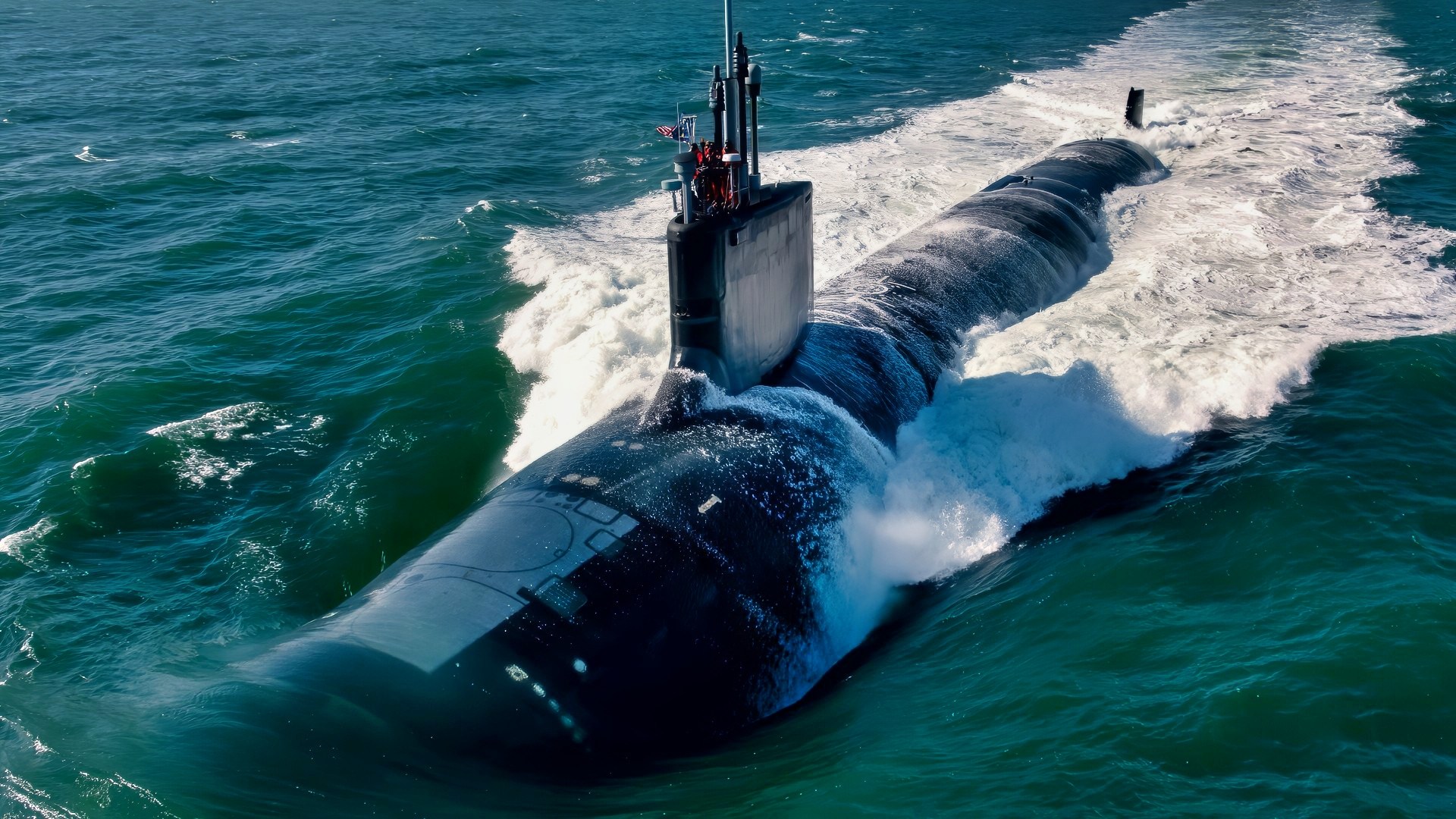
ATLANTIC OCEAN (Feb. 1, 2022) The future Virginia-class attack submarine Montana (SSN 794) conducts initial sea trials Feb. 1, 2022 in the Atlantic Ocean. Montana is the 10th Virginia-class submarine. (U.S. Navy photo courtesy of HII by Ashley Cowan) Montana SSN 794 Alpha Sea Trials
The Secretary of State also commented on the Iranian economy during his visit to Athens.
Iran’s Leverage Slipping?
On Wednesday, Rubio told reporters that Iran has “lost complete control” over the strait during a joint press conference with Greek Foreign Minister George Gerapetritis.
“The Strait of Hormuz is open,” Rubio said. “There’s almost as much oil flowing out now as there was before this conflict began. So, they’ve lost complete control of the strait.”
The Secretary of State also said the Iranian economy was “about to reach a place few countries in the world have been” as a result of “crippling” sanctions imposed by the U.S., adding that every dollar received by Iran’s “radical Shia clerics” is spent on Hezbollah and Hamas.
“Iran cannot have a nuclear weapon. Simple. Period. End of story,” Rubio continued. “And anything they agree to that would be acceptable to the United States has to be something that ensures that Iran will never have a nuclear weapon.”
Rubio also argued that Iran was seeking to “build up a conventional capability so massive they would become untouchable.”
Iran Begs to Differ
Iran has ramped up its attacks on commercial vessels in recent days.
In the week commencing Monday, 28th September, ten tankers were struck in the Strait of Hormuz – surpassing the weekly record for attacks on commercial shipping of six.
On Tuesday, 6th October, just seven tankers passed through the strait, the daily total since Thursday, 23rd July, and less than half the seven-day moving average, according to data from Kpler.
On Wednesday, Iranian media reported that Iran would soon close transit routes through the Strait of Hormuz that it deemed illegal.
Mohammadreza Naqdi, a senior officer in Iran’s Islamic Revolutionary Guard Corps, said a “few routes” had been created through the straits by blasting rocks to clear passages for small boats that would then “smuggle oil and transfer it to tankers.”
He added: “The Strait of Hormuz is closed, and the armed forces of the Islamic Republic of Iran have control over it. The situation will continue until Iran’s legitimate demands are met.”
Rubio Somewhat Right
While traffic through the Strait of Hormuz fluctuates, Rubio is somewhat right to say that oil is flowing from the Middle East as much as before the conflict began.
At the end of September, oil exports from the Gulf states returned to pre-war levels for the first time in seven months.
This return to normality is partly because exporters have found alternative ways to bypass the Strait of Hormuz.
For example, Saudi Arabia has resumed shipping through its East-West oil pipeline.
At the same time, the United Arab Emirates enjoys a similar advantage by rerouting oil to its Fujairah export terminal just outside the Strait of Hormuz.
It is also building a new pipeline expected to be completed next year.
Another tool at exporters’ disposal is the ability to conduct ship-to-ship transfers in the safety of open waters, allowing a larger tanker to transfer cargo to a smaller vessel, which Iranian shore teams find much harder to detect with trackers turned off.
A Trip to Athens
The Secretary of State was in the Greek capital to announce a new counterterrorism information partnership between the U.S. and Greece.
As a long-term NATO ally, Greece has been an important asset to the U.S. because of its Mediterranean location, and it leads a European Union mission to protect commercial shipping in the Red Sea.
Greek Foreign Minister Gerapetritis said on Wednesday his country would be willing to offer maritime aid in the Strait of Hormuz in the event of a viable peace process between Washington and Tehran.
“Greece, as you know, has a leading role in the presence, particularly in the Red Sea,” said Gerapetritis. “On the other hand, if it becomes necessary, we are in a position to be able to cooperate with the United States to provide the necessary naval assistance in the area of the Strait of Hormuz as well, provided that the situation allows it, provided that there is a viable peace process.”
About the author: Shay Bottomley
Shay Bottomley is a British journalist. He has written for the Western Standard, Business Insider, Maidenhead Advertiser, Slough Express, Windsor Express, Berkshire Live and Southend Echo.