

Amidst a major buildup of US military forces throughout the Middle East, as Israeli warplanes continue scrambling, conducting what appear to be mock attack runs, and the countdown to the two most consequential elections of this decade–Israel’s Prime Minister Benjamin Netanyahu and the US Midterm elections–runs down, the Iranians are also preparing.
Escalation Underway?
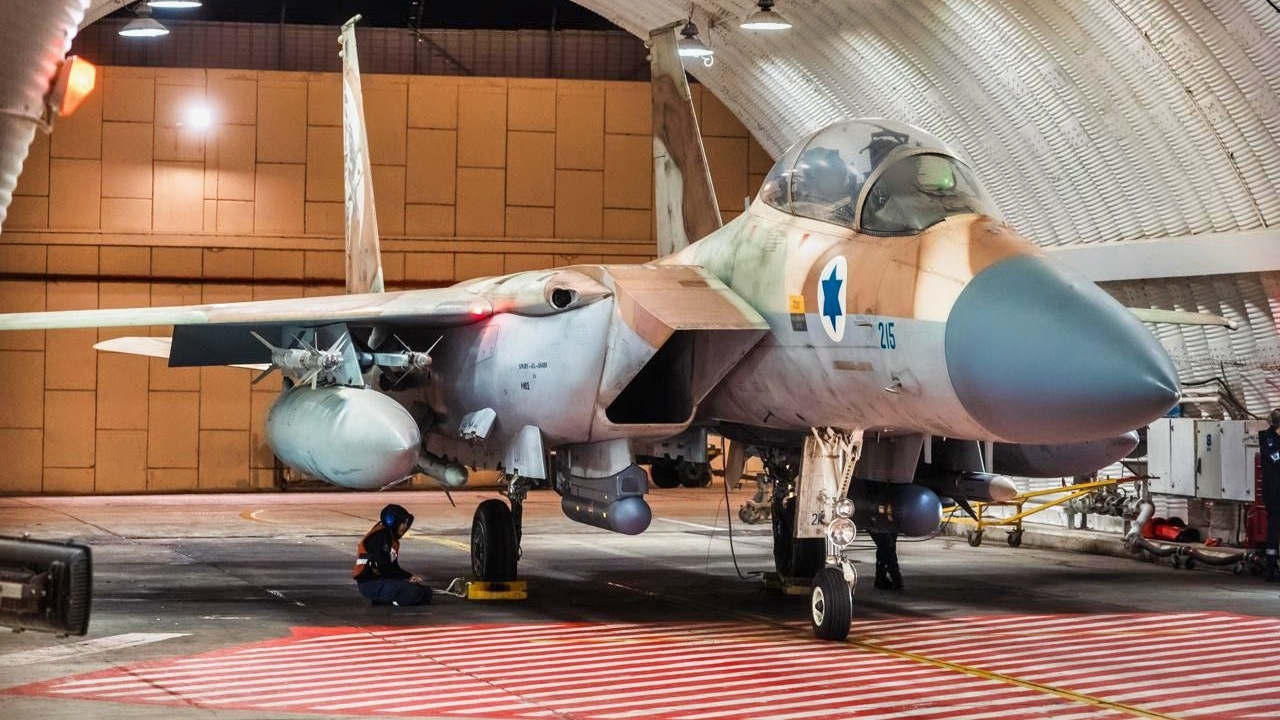
F-15I Fighter Israeli Air Force. Image Credit: Creative Commons.

F-35I Adir Fighter. Image Credit: Israeli Air Force.
Reports indicate that the Iranian military is increasing its attacks on critical shipping throughout the Strait of Hormuz (SoH) while calling up more forces to prepare for a renewed round of attacks by the Americans and Israelis once their elections are over.
But, in the background, a glimmer of hope remains.
Iran maintains it would accept an expedited version of the Islamabad Agreement, originally signed over the summer and almost immediately abandoned by both sides.
Under this expedited agreement, both sides would have a seven-day window to achieve their diplomatic aims. The first five days, the Americans would need to lift their blockade of Iranian ports, release frozen assets, and waive sanctions on Iranian oil sales.
On the sixth day, the Iranians would fully reopen the SoH, allowing critical shipping to resume and the region to cool down.
In theory, that would likely create the conditions for a sustained peace. On the seventh day of the agreement, the US and Iran would sit down at a big, beautiful table and start negotiations in earnest.
The bigger problem facing those of us who favor peace is that the Trump administration has a sequencing problem.
It’s not that the forty-seventh president doesn’t want to get out of this mess (he and his partner, Israeli Prime Minister Benjamin Netanyahu, created it).
Trump Doesn’t Want to Appear Weak
It’s that Trump must not appear to be conceding to the Iranians.
The seven-day expedited Memorandum of Understanding (MoU) would be exactly that: a concession.
And while Trump might ultimately agree to the seven-day deal, he will brook no sign of concessions to Tehran with the Midterm elections still hanging over his head.
For Trump, this is political.
He must appear to be winning (even though it’s obvious he is not at the strategic level).
One thing that the president wants is a real negotiation on Iran’s nuclear weapons program paired with a full reopening of the SoH sans sanctions relief and the restoration of Iran’s frozen funds.
If Tehran granted that, Trump would likely accept their proposal and hold his ire even after the Midterms.
Neither side, though, can be seen as giving in, even though both would prefer to de-escalate and abandon this most dangerous course of action.
Senior Iranian officials believe that if they can prolong the negotiations, they can weaken Trump politically by having his party lose the Midterm elections.
The economic certainty generated by their SoH blockade, therefore, works to Iran’s benefit whenever the negotiations begin because Trump walks into the room severely politically weakened.
Iran Is Uncertain
But Iran is also worried that another Israeli-American round of hostilities could do severe damage to the Islamic Republic, which has already been heavily damaged by the war so far (contrary to what Tehran would have you believe).
The pain of the partial US blockade and the damage already incurred by previous US and Israeli military actions against the Islamic Republic is not yet being fully felt.
It likely won’t be fully felt for many months.
On the other hand, both Netanyahu and Trump will feel the pain of losing the elections in Israel and the US midterms immediately.
That pain, the Iranians believe, could weaken Israel while forcing Trump to adhere to Tehran’s demands.
This might be a miscalculation.
The Netanyahu Factor
Such a stance will undoubtedly place the headstrong Trump and the ideologically committed Netanyahu into a use-it-or-lose-it mentality.
In a televised phone call between the American and Israeli leaders, in which Trump bizarrely endorsed Netanyahu’s bid for the prime ministership, Netanyahu made ominous references to finishing what the two men started on February 28 against Iran.
Whether that was mere bluster or something more remains to be seen.
Again, though, the introduction of a third aircraft carrier and a second amphibious landing group into the region, along with additional tanker planes, suggests something is about to pop.
It is also possible that Trump intends to put on a grand finale to his war in three acts (which is how one Israeli source described it to me off the record recently).
We’ve now reached the third act of the show, and much like how Trump ended last year’s 12-Day War with dazzling strikes on Iran’s suspected nuclear weapons facilities, Trump might be planning an even bigger version of that.
The question then is: will Tehran sit there and take it?
That is unlikely. In fact, the Iranians have already promised massive retaliation unlike anything seen before in Trump and Netanyahu’s “war in three acts.”
The implication is that Iran might destroy the remaining critical energy and even water infrastructure of the nearby Gulf states.
They might even go-for-broke and destroy sensitive targets in distant Israel as part of their retaliation.
A Dangerous Impasse
And what about Israel?
The Israelis have shown little interest in negotiating with anyone, especially the Islamic Republic of Iran.
One gets the sense that Netanyahu in particular would love to see the Americans and Iranians deadlocked in a brutal standoff indefinitely, since it keeps the Americans committed to the region while it perpetually weakens the Islamic Republic, allowing for Israel to restore its lost strength theoretically.
But if the Americans are planning to do one last dazzling strike and then quietly accept the Iranian offer, what if Israel decides to throw a spanner into the works by attacking on their own and doing more damage to Iran than Washington intended–thereby curbing any chance of peace?
That prospect seems more likely, frankly, given the conflict’s escalatory nature.
If this war occurred in a vacuum between Trump and Tehran, the forty-seventh president likely would have gotten a deal by now.
We Know Why There Won’t Be a Deal With Iran
But the inconvenient timing of the Midterm elections, the Israeli factor, and the unpredictability of an Iranian counterattack are conspiring to keep any meaningful off-ramp from opening before calamity strikes.
About the Author: Brandon J. Weichert
Brandon J. Weichert is the Senior National Security Editor. He also manages The Weichert Brief on Substack. Weichert is the co-host for The Mario Nawfal Show on Twitter/X. He is the author of four bestselling national security books, most recently A Disaster of Our Own Making: How the West Lost Ukraine (Encounter Books). His next book, Fortress Americas: A New Monroe Doctrine (Tucker Carlson Books), is due out December 8. Follow him via Twitter/X @WeTheBrandon.


