
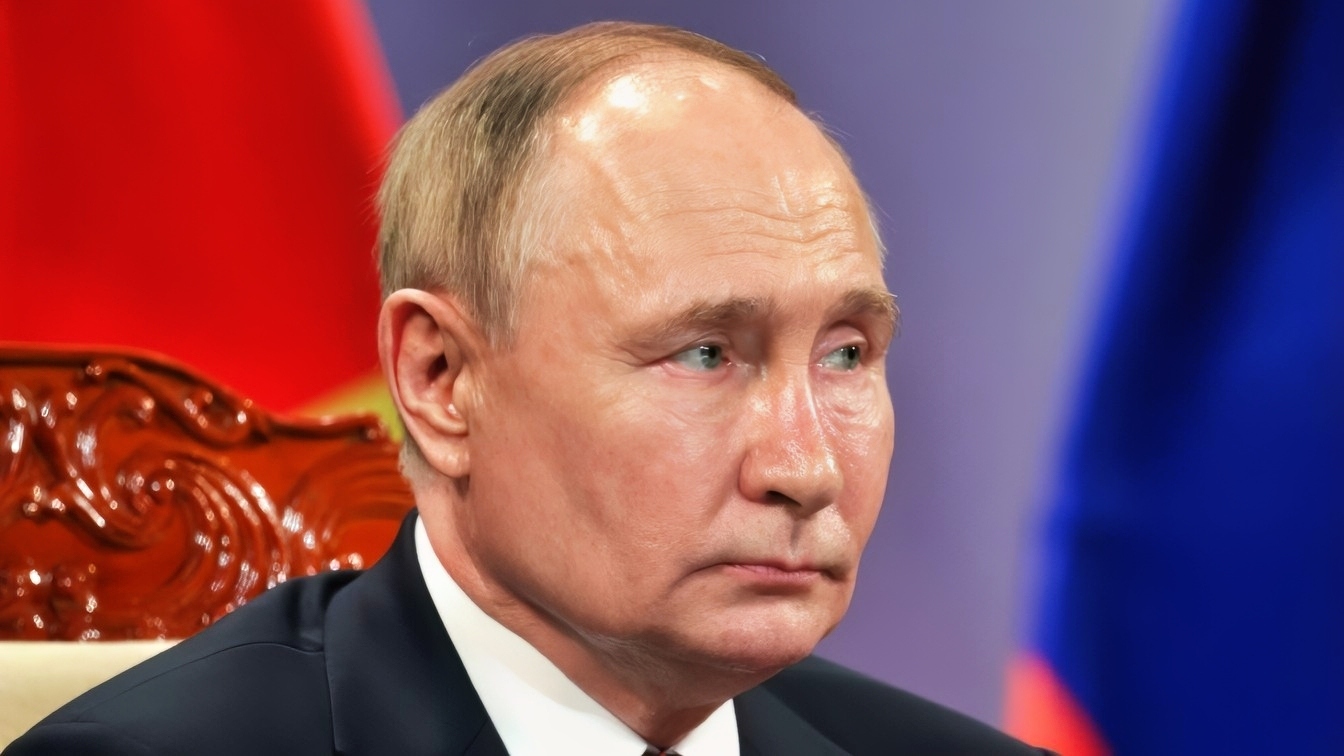
The United Transitional Cabinet of Belarus, a government in exile that was formed in 2022, warned on June 22 that President Alexander Lukashenko may be preparing to join the war in Ukraine.
The Belarusian leader appears to have had his hand forced, following years of efforts to keep his country out of the conflict.
Putin on June 24 2023 Russian Federation Photo
What Was Said
In a statement published on Telegram, the government in exile claimed that information provided to Kyiv suggested Lukashenko was “systematically” preparing Belarus for war.
Pavel Latushka, the deputy head of the cabinet, sent a 30-page letter to Ukrainian Minister of Foreign Affairs Andriy Sybiha that is said to document the “complete transformation of Belarus into a military bridgehead for the Russian Federation.”
The development comes after Ukrainian President Volodymyr Zelenskyy issued an ultimatum to Belarus, warning that if Russian military hardware that supports strikes against Ukraine is not moved out of the country, Kyiv would do it for them.
“There are transmitters on the relevant towers. Can he remove this? What are the words for, that he doesn’t want to be in the war?” the Ukrainian president said on June 19, citing previous statements by the Belarusian leader that he does not intend for his country to become directly involved in the war.
“Let him remove the equipment, let him turn off this equipment,” he also said, according to translations published online.
“I think a week will be enough for him to do this. Because, why do I say a week?
Because right now every day, because of this, our civilians are dying, and children are wounded. If he doesn’t do this, we will.”
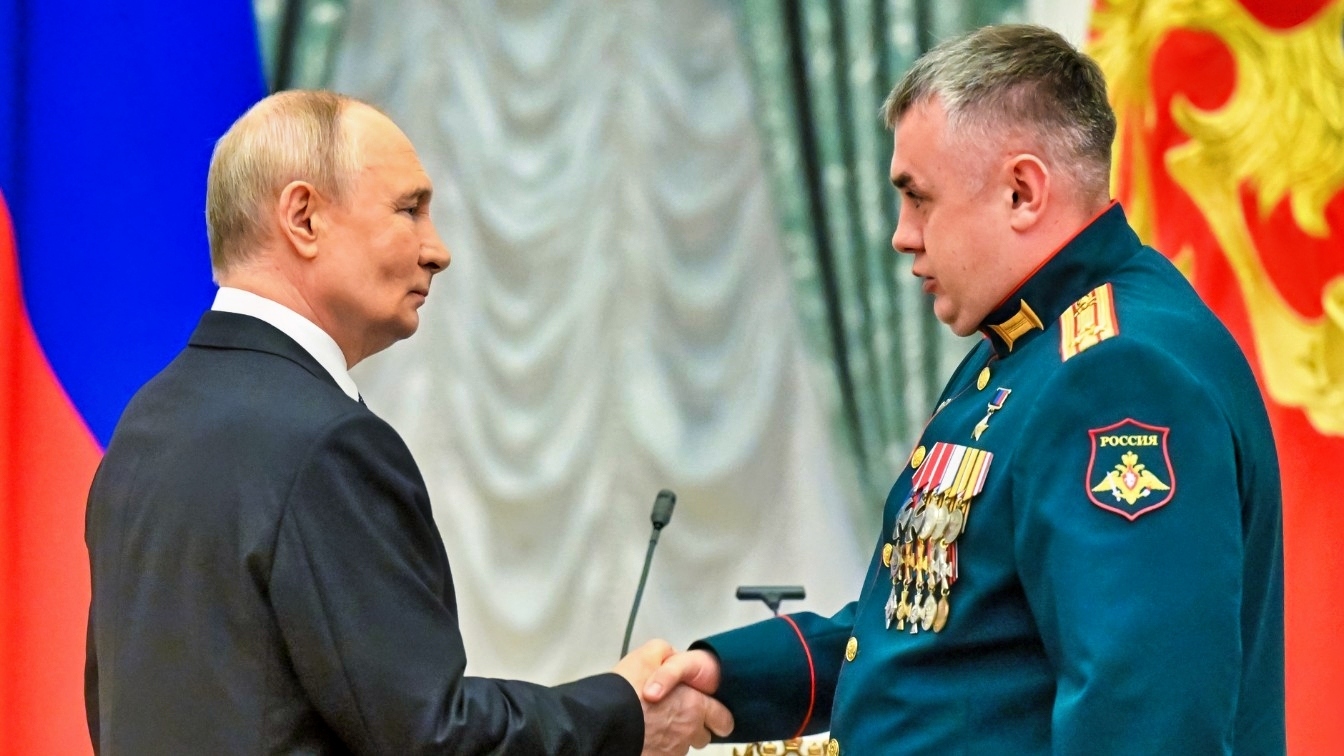
Putin and Russian Military Creative Commons Image
An “Imminent Threat” to Belarus
The document sent to Kyiv outlined a number of indicators that Belarus is preparing for conflict, spanning the legalization of so-called “preventative strikes.”
According to the letter, the regime in Belarus has introduced changes in military legislation that would facilitate pre-emptive strikes in the event that the country faces an “imminent threat.”
The letter notes that Constitutional amendments allow for the interpretation of a wide range of military conditions as an “imminent threat,” including the “concentration of troops near the borders or other threats to national security.”
Any such threat would allow the Belarusian army to be sent abroad.
The government in exile appears to suggest that Zelenskyy’s recent threat could be interpreted as imminent and justify further action, given Lukashenko’s refusal to remove Russian equipment.
The letter also points to the “large-scale deployment” of soldiers from villages across the country, noting that the number of contract employees in Belarus has increased 5-fold since 2022, with the country’s reserve now estimated at 289,000 people.
Specifically, in the Ukrainian direction, a Southern operational command is being created with up to 80,000 troops.
Increasing Defense Budget and Russian Integration
The letter also notes that, over four years, the Belarusian defense budget has “increased 5 times.”
“The military-industrial complex of Belarus is fully integrated with the Russian military, and a total secrecy regime has been introduced.
Only in 2024, more than 4,000 new units of military equipment were accepted into service,” it reads.
Additionally, it warns that the Belarusian military has fully integrated into the Russian army, with Russian troops now stationed in Belarus on a permanent basis and tactical nuclear weapons, along with the Oreshnik missile system, also stationed in the country.
There is, however, some confusion about the nuclear-capable hypersonic missiles being sent to Belarus.
In December 2025, Russia released footage showing the deployment of the Oreshnik missile system in Belarus.
“The Russian Oreshnik missile systems entered combat duty in [Belarus].
This step is a clear confirmation of the effectiveness of the bilateral interstate treaty on security guarantees within the Union State, which entered into force in March,” Russian Ambassador to Belarus Boris Gryzlov said at the time.
However, in February 2026, Belarusian opposition leader Sviatlana Tsikhanouskaya told RBC-Ukraine that there was “no evidence” the weapons were in Belarus, and that the announcement may have simply been an effort to “provoke and look stronger.”
New Defense Lines Being Drawn
The letter also pointed to new lines of defense being drawn along the borders with Lithuania, Poland, and Ukraine, with military infrastructure being modernized to support heavy Russian military equipment.
“The infrastructure (masts, airfields) is being modernized for the heavy equipment of the Russian Federation.
Compulsory military training has been introduced in schools, and tens of thousands of children must go through special military-patriotic camps,” the letter reads when translated into English.
Additionally, it points to the mobilization of both the medicine and civilian sectors to prepare for war, and the accumulation of strategic resources, including a new 30-day petroleum product reserve.
Combined with “non-stop large-scale military maneuvers,” the United Transitional Cabinet of Belarus argues that Belarus is not only better prepared to potentially join the conflict, but is also actively preparing to do so.
About the Author: Jack Buckby
Jack Buckby is a British researcher and analyst specializing in defense and national security, based in New York. His work focuses on military capability, procurement, and strategic competition, producing and editing analysis for policy and defense audiences. He brings extensive editorial experience, with a career output spanning over 1,000 articles at 19FortyFive and National Security Journal, and has previously authored books and papers on extremism and deradicalization.


