

Why A Trump-North Korea Summit Might Not Happen
Despite intense speculation, a meeting between President Trump and North Korean leader Kim Jong-un is highly improbable for the foreseeable future. While some preliminary US preparations were discussed, they were in anticipation of Trump’s unpredictable diplomatic whims rather than any tangible signal of impending engagement with North Korea.
Pyongyang is in a far stronger strategic position than during the first Trump term, negating its need for diplomatic, security, or economic benefits from Washington. The final decision for a meeting is in Kim’s hands, not Trump’s.
Trump’s Dictator Idolatry
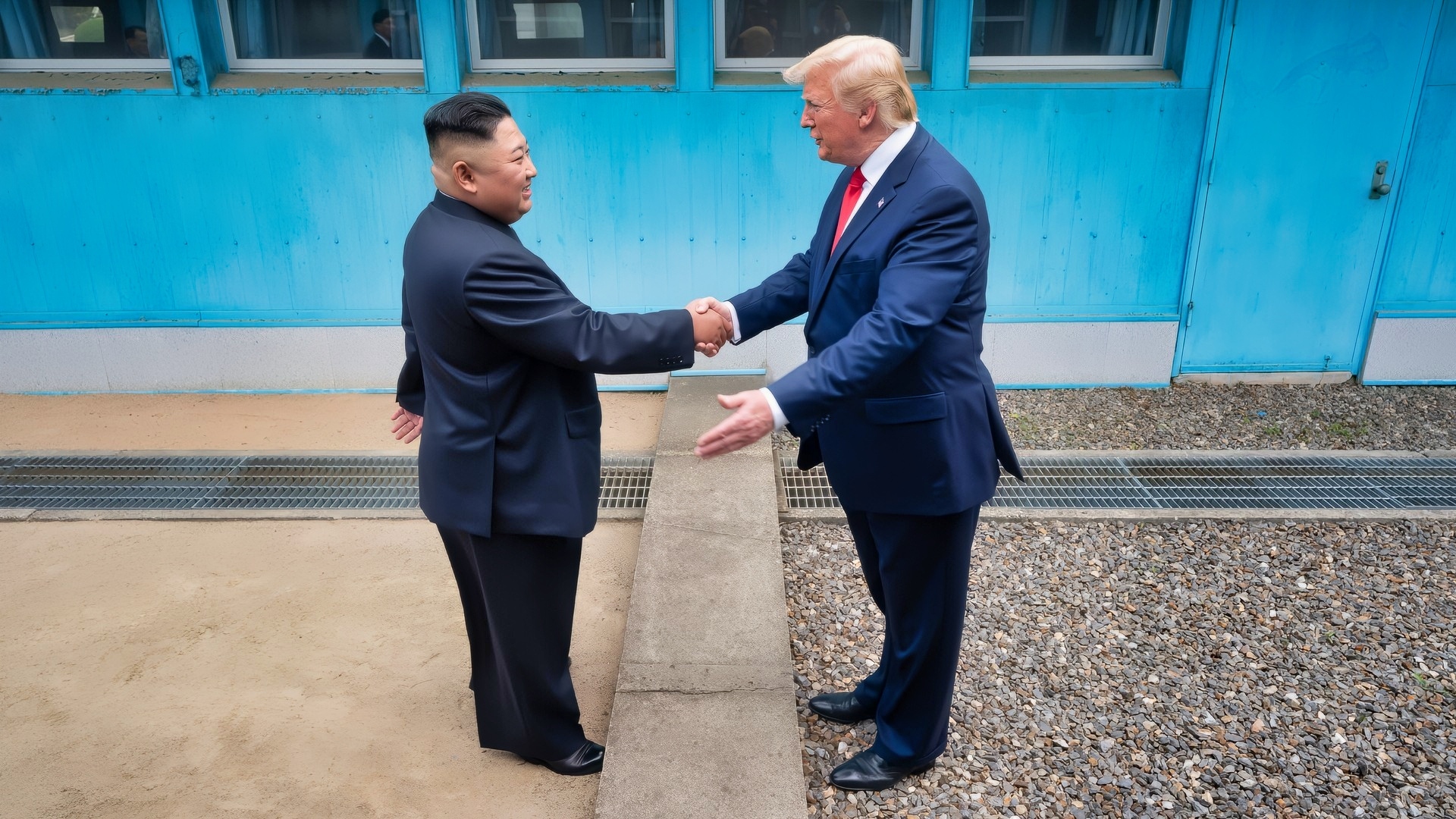
Trump repeatedly extols having a strong relationship with Kim, reiterating this week that he would “love to meet” the North Korean leader and could extend his Asia trip to do so. Such a meeting would be a repeat of Trump’s unplanned June 2019 meeting at the inter-Korean demilitarized zone, which took place within a day of his Twitter request.
The United Nations Command’s cancellation of tours to the joint security area in the DMZ this week, and North Korea’s recent sprucing up of its side of the border, are cited as indications of a forthcoming meeting.
However, US and South Korean officials emphasize that no meeting plans have been made, nor has any contact been made with North Korean counterparts. Two senior US officials traveling with Trump to Asia commented that the administration hadn’t sent Kim an invitation.
For the past six years, North Korea has rejected all diplomatic entreaties from the United States, including a personal letter from President Trump. There are no indications of a recent thawing in Pyongyang’s intransigence. Kim Jong-un declared this month that, while he is willing to meet with Trump, the US must abandon its “delusional obsession” with denuclearizing North Korea.
Closed for Discussion
Kim Jong-un sees little need to engage with Washington, since he receives far greater benefits from Russia with fewer conditions than he gets from the United States. Russia’s largesse in return for North Korea providing massive amounts of military equipment, ammunition, and troops enables Pyongyang to mitigate the impact of international sanctions, as does Kim’s lucrative cybercurrency crimes and resurgent trade with China.
Moscow and Beijing are now even more obstructionist in the UN Security Council, preventing any punitive action against North Korea after its repeated violations of UN resolutions. Recent trilateral meetings in Beijing and Pyongyang underscore the strength of their relationships and ability to defy US pressure.
Conditions of the Supreme Leader
Kim Jong-un could, however, potentially see an upside to reaching out to Trump.
The regime has declared it is unwilling to meet until the US reduces its ‘hostile policy’ by canceling allied military exercises and US rotational deployments of strategic assets. Trump unilaterally canceled both of those in 2018 while gaining nothing in return from Pyongyang.
Kim could propose to Trump that they sign a bilateral peace declaration to “end” the Korean War, achieving what no US president had done in seven decades. Pyongyang could suggest that such an accomplishment would merit the Nobel Peace Prize, which has eluded Trump.
However, a simplistic peace declaration with North Korea would be a historic but meaningless feel-good gesture that would not improve the security situation on the Korean Peninsula. It would not reduce the North Korean military threat to the American homeland or US allies. Instead, it could create societal and legislative momentum in both South Korea and the US for premature reduction or removal of US forces and degrading US deterrence capabilities.
Drawing down US forces before reducing the North Korean nuclear, missile, and conventional threats would be a sign of weakness. It would risk destabilizing the region and emboldening Pyongyang to take more provocative actions. It would also play into Beijing’s desire to reduce US influence in the region.
Experts debate the efficacy of Trump’s first-term “top-down” approach with Kim Jong-un, rather than traditional diplomatic efforts to craft agreements that are elevated to senior leadership for breaking impasses or securing final signature. Despite Trump’s 2018 post-Singapore summit claims that “there is no longer a nuclear threat from North Korea” and Kim had already started “de-nuking the whole place,” his unconventional strategy was no more successful than those of his predecessors.
Instead, North Korea continued to develop and deploy new nuclear weapons and missiles, including solid-fueled ICBMs with multiple warheads, hypersonic missiles with maneuverable warheads, tactical nuclear warheads, submarine-launched missiles, and underwater attack systems.
While Trump might revel in another photo-op meeting with Kim, any subsequent negotiations should curtail the North Korean military threat by developing a comprehensive roadmap to denuclearization, including sufficient verification measures to ensure compliance. Washington could first recommend discussions on confidence-building measures to reduce tensions and the potential for miscalculation and conflict by enhancing transparency and notification procedures for military exercises and deployments.
President Trump should not reduce bilateral military exercises with South Korea nor cut U.S. military forces in northeast Asia before a substantial decrease in the North Korean nuclear and conventional forces threat. One does not lower the shield before reducing the threat.
About the Author: Bruce Klingner
Bruce Klingner is a senior fellow at the Mansfield Foundation. He previously served 20 years with the Central Intelligence Agency and the Defense Intelligence Agency, including as CIA’s Deputy Division Chief for Korea. You can follow him on X: @bruceklingner.


Krystal cane
October 27, 2025 at 9:46 pm
Looks like a gay hookup