

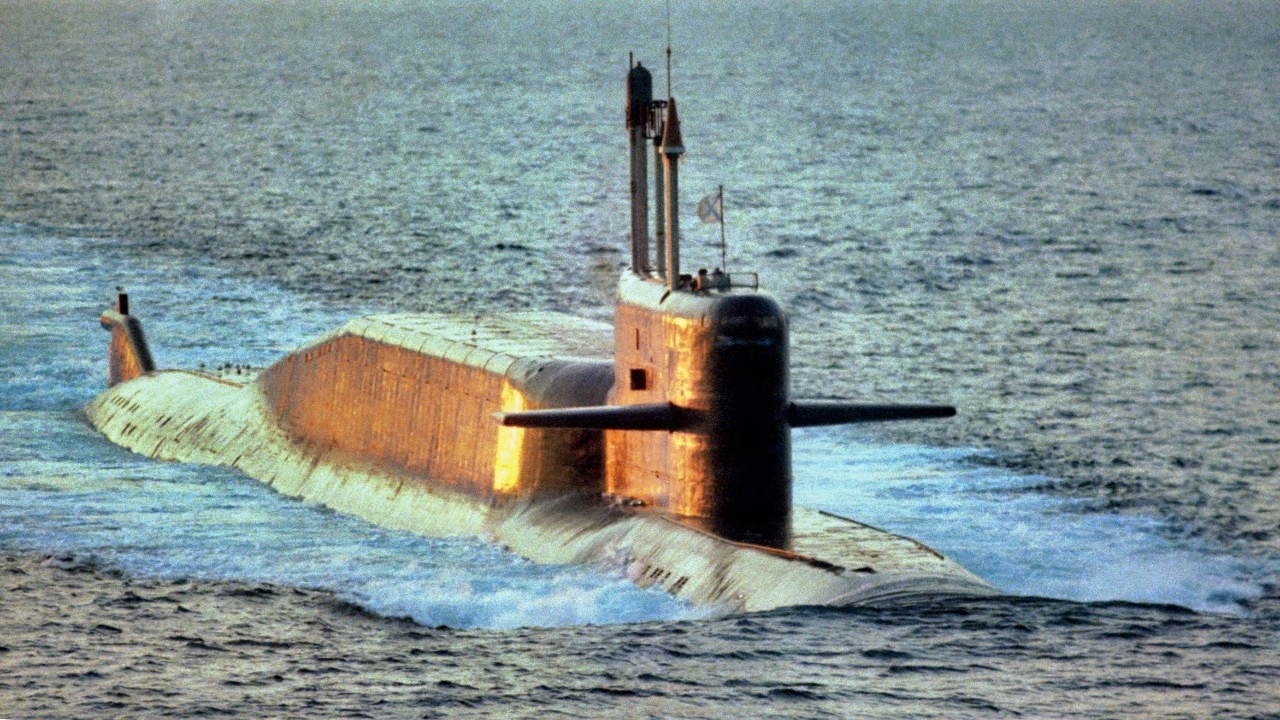
Key Points and Summary – South Korean intelligence reports say Russia has provided North Korea with two to three nuclear-submarine propulsion modules—reportedly lifted from decommissioned Russian boats—containing a working reactor, turbines and cooling systems.
-If true, the transfer would vastly extend DPRK submarine endurance and reach, edging Pyongyang toward a true sea-based nuclear deterrent and potentially violating the global non-proliferation regime.
-Analysts see the move as payback for North Korean munitions and manpower sent to Russia’s war in Ukraine.
-Even if initially limited, experts warn Pyongyang could reverse-engineer the tech. The handoff would likely trigger additional sanctions on both Moscow and Pyongyang.
North Korea: Getting Help from Russia on Nuclear Submarines?
WARSAW, POLAND – Russian President Vladimir Putin has reportedly provided the Democratic People’s Republic of Korea (DPRK) with their first nuclear-powered submarine propulsion system. If the reports of this transfer of technology are accurate, it would represent a violation of international conventions on nuclear proliferation.
This propulsion technology appears to be the first payoff for Pyongyang for having supplied Moscow with an endless stream of munitions, missiles, gunpowder, and soldiers sent to die on the front in Russia’s war with Ukraine. According to the reports based on information from South Korean intelligence services, Russia has provided North Korea with two or three modules containing small nuclear reactors that are for use in nuclear submarines.
These South Korean military intelligence reports state that Seoul has received and is currently investigating information that Russia has supplied North Korea with this nuclear propulsion technology for use in their latest-model submarines. The publication Korea JoongAng Daily reported on Wednesday that Russia is believed to have handed over “two to three nuclear submarine modules” to North Korea in the first half of this year, which included a working reactor.
These modules form the core of a nuclear submarine’s propulsion system, comprising the reactor, turbine, and cooling system. This would provide North Korea with an entire nuclear submarine propulsion configuration.
Increasing Operational Range for North Korea Nuclear Subs
According to the same leaked South Korean intelligence reports, these modules were not newly manufactured. Instead, they were taken from decommissioned Russian nuclear-powered submarines, the South Korean intelligence report reads.
The significance of the DPRK being handed this technology is the extended range it provides for Pyongyang’s submarine fleet. Unlike conventional diesel-electric submarines, nuclear-powered submarines enjoy unlimited endurance, speed, and range.
Freed from needing to refuel their diesel fuel tanks, food supplies become their only operational limitation. This would give the DPRK subs more than double their current range, a capability only the US, UK, France, and Russia can boast of – the only other nations that operate nuclear-powered submarines.
The DPRK has for some time made the construction of nuclear submarines a strategic priority. As such, having strategic nuclear submarines in their fleet that would be capable of striking the Continental United States is the “missing component” of their nuclear force.
“North Korea’s nuclear submarine construction is a national project … Concerns [are] that it could be developed in a short period of time,” according to the South Korean intelligence sources quoted in both Seoul and Tokyo dailies.
“Pyongyang do have nuclear weapons—yes. But they have little to no ability to launch those weapons against another country due to the limited capacity and unreliability of their land-based intercontinental ballistic missile force,” said a former senior US Naval Intelligence official. “Having a submarine that could approach the cost of Japan, or South Korea or the US and not have to be bothered about its range or loiter time limitations solves that problem,” he said.
On March 8, the DPRK Rodong Sinmun newspaper published what is believed to be the first footage ever of the Korean Workers’ Party Chairman Kim Jong Un inspecting the construction of a naval vessel. The images seen are believed to be those of a “nuclear-powered strategic guided missile submarine.”
No More Restrictions?
The same South Korean government source reported that “North Korea has been persistently requesting Russia to provide nuclear submarine technology as well as new fighter jets since last year. Russia was initially reluctant but appears to have decided to provide them this year.”
Experts believed that Russia lifted its prior self-restraint on providing these technologies to North Korea because Moscow believed that the capacities provided to Pyongyang would still not allow it to roll out its nuclear submarine in the near future. This is because a nuclear reactor is the most limiting item in building a nuclear submarine, and thus far, the DPRK has been unable to develop its own small nuclear reactor for those purposes.
However, the situation could ultimately change. This module, which Russia has provided the DPRK, might not allow Kim to independently secure the core technology necessary for a nuclear submarine reactor design, as the engineering techniques are not the same as those Pyongyang has developed for its nuclear weapons program.
According to both Ukrainian and Russian sources, this is why the DPRK had been aggressively demanding nuclear submarine propulsion technology from Moscow in exchange for its sending troops to the Ukraine war. Although the DPRK has been supplied with used reactors, this could still be an enabling technology.
Lee Chung Geun, an honorary research fellow at the Korea Institute for Science and Technology Policy, told Japanese and South Korean news agencies that “North Korea could reverse-engineer a Russian reactor [by disassembling it and creating blueprints] and operate it on land, thereby acquiring the relevant technology.”
If this nuclear submarine module was indeed transferred to the DPRK, it would mean Russia crossed a red line and has fundamentally undermined the Nuclear Non-Proliferation Treaty (NPT) regime. In this event, additional international sanctions against North Korea and Russia are almost inevitable.
About the Author: Reuben F. Johnson
Reuben F. Johnson has thirty-six years of experience analyzing and reporting on foreign weapons systems, defense technologies, and international arms export policy. Johnson is the Director of Research at the Casimir Pulaski Foundation. He is also a survivor of the Russian invasion of Ukraine in February 2022. He worked for years in the American defense industry as a foreign technology analyst and later as a consultant for the U.S. Department of Defense, the Departments of the Navy and Air Force, and the governments of the United Kingdom and Australia. In 2022-2023, he won two awards in a row for his defense reporting. He holds a bachelor’s degree from DePauw University and a master’s degree from Miami University in Ohio, specializing in Soviet and Russian studies. He lives in Warsaw.
More Military
The U.S. Army’s Big Strategic Long Range Cannon (1,150 Mile Range) Mistake Still Stings
The F-4 Phantom II Has a Message for the U.S. Military
The Iowa-Class Battleships Have a Message for the U.S. Navy
Russia’s Kirov-Class Battlecruisers Have a Message for the U.S. Navy
Russia’s PAK DA Stealth Bomber Has a Message for the U.S. Air Force


