


Gas prices in the United States are once again on the rise, with many top market analysts predicting further increases in the coming months due to the renewed conflict in Iran.
However, the United States is once again the world’s leading oil producer. The US imports only 8 percent of its oil from the Middle East.

F-22 Raptor Elephant Walk. Image Credit: Creative Commons.
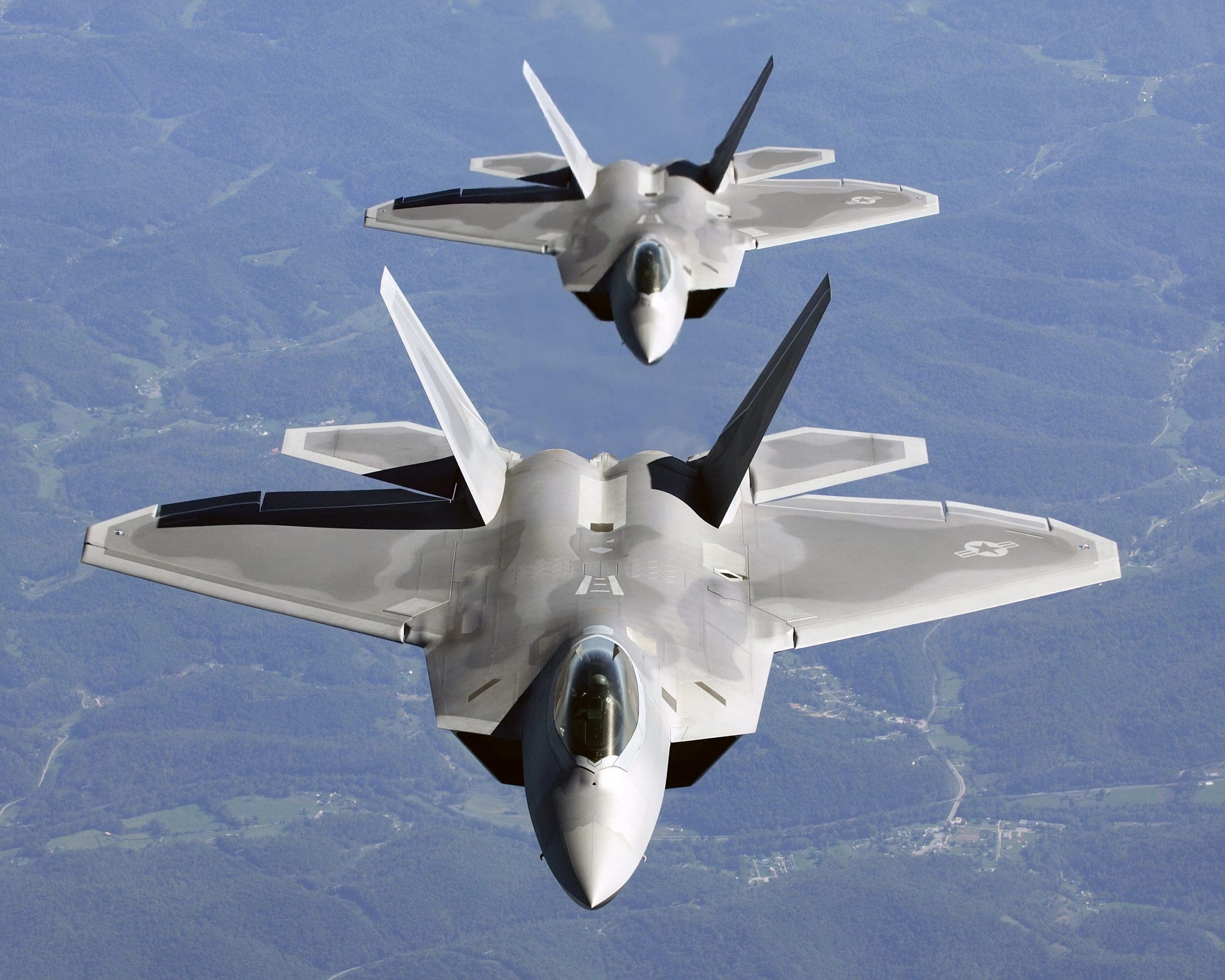
Lt. Col. James Hecker (front) and Lt. Col. Evan Dertein line up their F/A-22 Raptor aircraft behind a KC-10 Extender to refuel while en route to Hill Air Force Base, Utah. Colonel Hecker commands the first operational Raptor squadron — the 27th Fighter Squadron at Langley Air Force Base, Va. The unit went to Hill for operation Combat Hammer, the squadron’s first deployment, Oct. 15. The deployment has a twofold goal: complete a deployment and to generate a combat-effective sortie rate away from home. [U.S. Air Force photo by TSgt Ben Bloker]
The Brent Crude Futures were trading even higher at $82.45 as of 11:15 am on July 17.
Many consumers want to know why gasoline prices are so high in the United States, even though the United States produces more oil and gas than any other nation and isn’t dependent on Middle Eastern oil.
The US Produces More Oil Than It Uses
USA Today reported that the United States produces approximately 13.72 million barrels per day (bpd) of crude oil and condensate.
Including all other petroleum liquids and other liquid fuels, this figure reaches roughly 23.88 million barrels per day, making the U.S. both the world’s largest oil producer and top consumer.
The US imports about 6 million barrels a day. Although it exports more than it imports.
However, the US is a gas-guzzling nation, using about 20 million barrels per day, accounting for nearly 20 percent of the global oil consumption. Our transportation sector accounts for about 40 percent of US gas and oil consumption.
So, why are the prices so high, given the country is a net producer?
Oil And Gas Are Part Of A Global Marketplace
U.S. gas prices are high even though the US has more oil than it needs because crude oil is traded on a global market, not a localized one.
Even though the United States is the world’s top oil producer, events elsewhere—such as the ongoing war in the Middle East and disruptions in the Strait of Hormuz—can cause global prices to rise.
“It’s a global market,” said Mark Zandi, chief economist of Moody’s Analytics, said to USA Today earlier this year. “So, oil literally flows to the highest price.
If a tanker can get a higher price in Malaysia than it can in Rotterdam, then it can in Rio de Janeiro; it’s going to go to Malaysia.”
When global prices spike, U.S. producers can sell their domestic oil overseas for higher profits, forcing American consumers to pay the same globally inflated price at the pump.
However, while the U.S. produces mostly “light” crude oil, many domestic refineries are built to process heavier, imported crude, meaning the U.S. must still import millions of barrels a day at international market rates.
The Iran Conflict Affected The Global Oil Supply
Oil prices rose because the conflict in Iran drastically altered the oil supply in the region, due to the closure of the Strait of Hormuz, the sudden danger in shipping oil, and collateral damage to oil-industry infrastructure, among other factors.
The conflict threatened the oil supply to regions that rely heavily on oil from the Middle East, including parts of Asia and Europe. Prices rose dramatically everywhere at first, including in the United States.
Many oil-producing nations, including the United States, released oil from their Strategic Petroleum Reserves (SPR), alleviating shortages and easing prices back down, though not to pre-conflict levels.
“We produce as much as we consume,” Zandi said. “But at the end of the day, the producers here are going to sell to whoever can give them the highest prices, as well. They’re businesspeople.”
The State Of California Is Most Dependent On Middle Eastern Oil
California gets most of its oil from the Middle East, but that is not the reason that it has the highest gas prices in the nation.
Kate Gordon, CEO of California Forward, a nonprofit that advocates for sustainability, said earlier this year, “We get nothing from east of the Rockies.”
However, California gas prices are consistently the highest in the nation due to a combination of state taxes, strict environmental regulations, and an isolated supply market.
Consumers in California pay the highest state excise tax in the country (more than $0.63 per gallon) plus additional sales taxes, cap-and-trade fees, and the Low Carbon Fuel Standard (LCFS) compliance costs, which together add more than $1.00 per gallon to the base price of gasoline.
The state has seen a shrinking number of in-state refineries, reducing production capacity and creating a tighter balance between supply and demand.
“California is a tough place to do business for refiners,” Tolly Graves, manager of the Chevron Richmond refinery, said. “It costs us hundreds of millions a year just to stay in business,” Graves said. “Things have to change for us to be willing to invest in a refinery in California.”
So the rise in gasoline prices is not really about where the U.S. buys oil. It is about the worldwide price of oil, which is sensitive to any major disruption in the Middle East.
About the Author: Steve Balestrieri
Steve Balestrieri is a National Security Columnist. He served as a US Army Special Forces NCO and Warrant Officer. In addition to writing on defense, he covers the NFL for PatsFans.com and is a member of the Pro Football Writers of America (PFWA). His work was regularly featured in many military publications.


Gunnerdad
July 18, 2026 at 3:50 pm
We pay for our own oil like it comes from the Middle East. Taxpayer money helps in the development of the oil fields in Alaska and then some of the oil is sold to Japan and others instead of Americans. Trump needs to set the oil CEOs down and explain that he has helped them a lot and now the debt comes do to the American consumer. Also they need to stop gouging us on Diesel. It costs much less to produce but they charge us more than gas. Back in the day when gas was $0.29 Diesel was 1/2 that price. Now since it drives our economy they charge us more. that needs to stop! I’ve worked in the refineries so I now the process.