
While the renewed fighting between the U.S. and Iran may appear to be evidence that diplomacy has failed, the constraints facing both governments seem to point toward yet another agreement in the near future. It’s simply a matter of how much damage the U.S. does to Iran and Tehran does to its regional neighbors before that deal is made.
In short, the dynamics are this: Iran cannot force the United States out of the Middle East, nor can it defeat American forces conventionally. But Washington has its own constraints, too, in that it cannot stop Tehran from threatening the Strait of Hormuz even after destroying its ships, missile batteries, command centers, and ports. No matter what, Iran or its proxies will threaten the Strait of Hormuz in some way – and thereby prevent the safe and regular passage of commercial ships and oil tankers through the waterway.

Capt. Karla Arango, 20th Bomb Squadron pilot, communicates to crew inside a B-52 Stratofortress during Global Thunder 2019 at Barksdale Air Force Base, La., Nov. 3, 2018. Global Thunder is an annual U.S. Strategic Command (USSTRATCOM) exercise designed to provide training opportunities to test and validate command, control and operational procedures. The training is based on a notional scenario developed to drive execution of USSTRATCOM and component forces’ ability to support the geographic combatant commands, deter adversaries and, if necessary, employ forces as directed by the President of the United States. (U.S. Air Force photo by Senior Airman Philip Bryant)
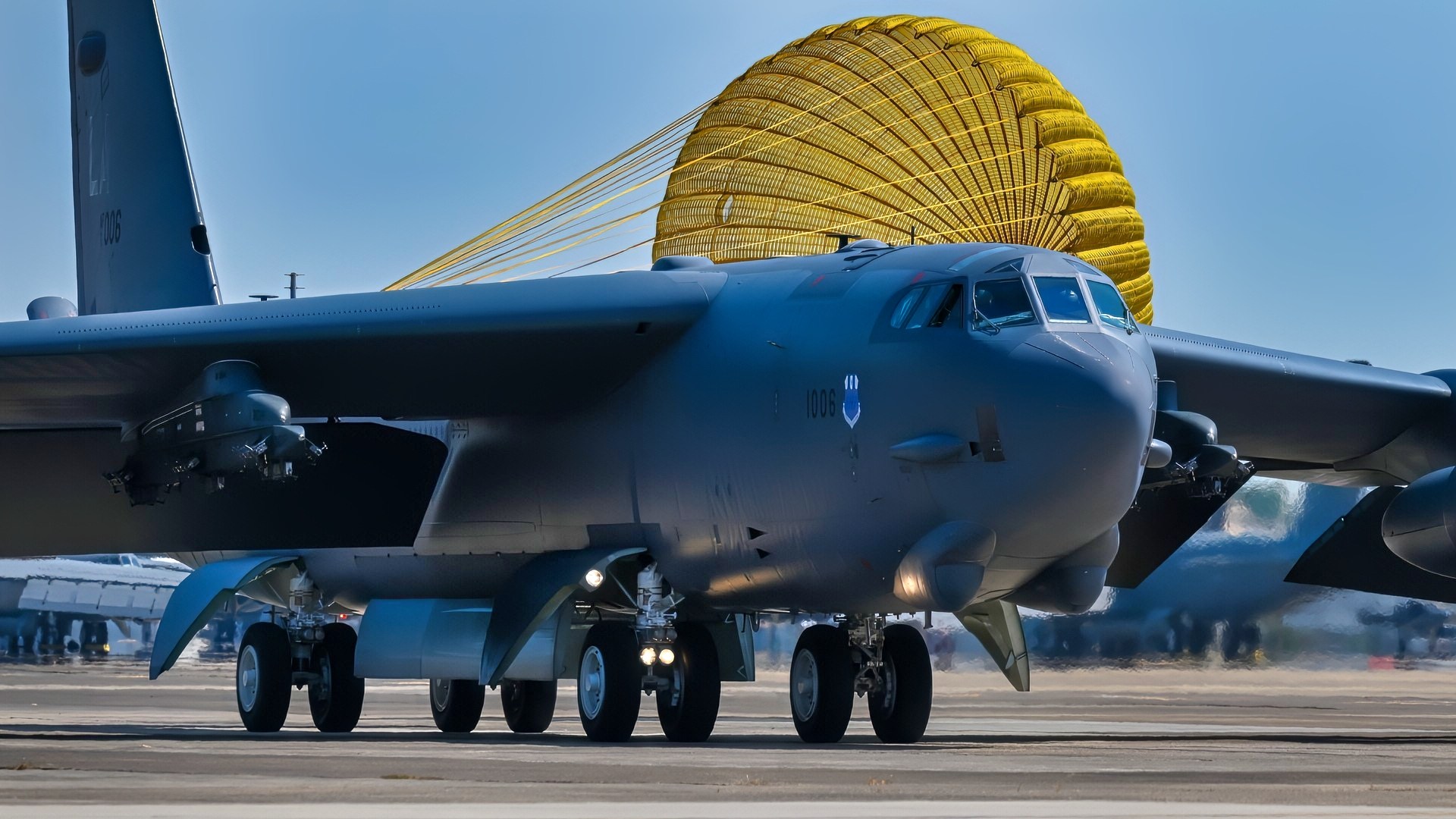
A B-52 Stratofortress from the 2nd Bomb Wing returns home to Barksdale Air Force Base following a Bomber Task Force mission at Andersen Air Force Base, Guam, Aug. 20, 2023. BTF missions demonstrate the credibility of the United States forces to address a global security environment that is more diverse and uncertain than at any other time in history. (U.S. Air Force photo by Airman 1st Class Seth Watson)
President Donald Trump is already approaching his limit in many ways, too. Trump knows that Iran won’t stop until it can’t continue, and during an interview on Fox News aired on July 14, he even refused to rule out limited ground operations that could deprive Iran of some of its most valuable remaining military and oil infrastructure assets. Curiously, though, the president suggested that U.S. forces may not be the ones to do it, stating, “sometimes you need a ground campaign, but we have other people that will do the ground campaign for us.”
If a ground invasion occurs, it would be terrible for Trump. But it also may prove to be necessary, and by the end of it, there still may be a deal.
Airstrikes Cannot Eliminate the Threat
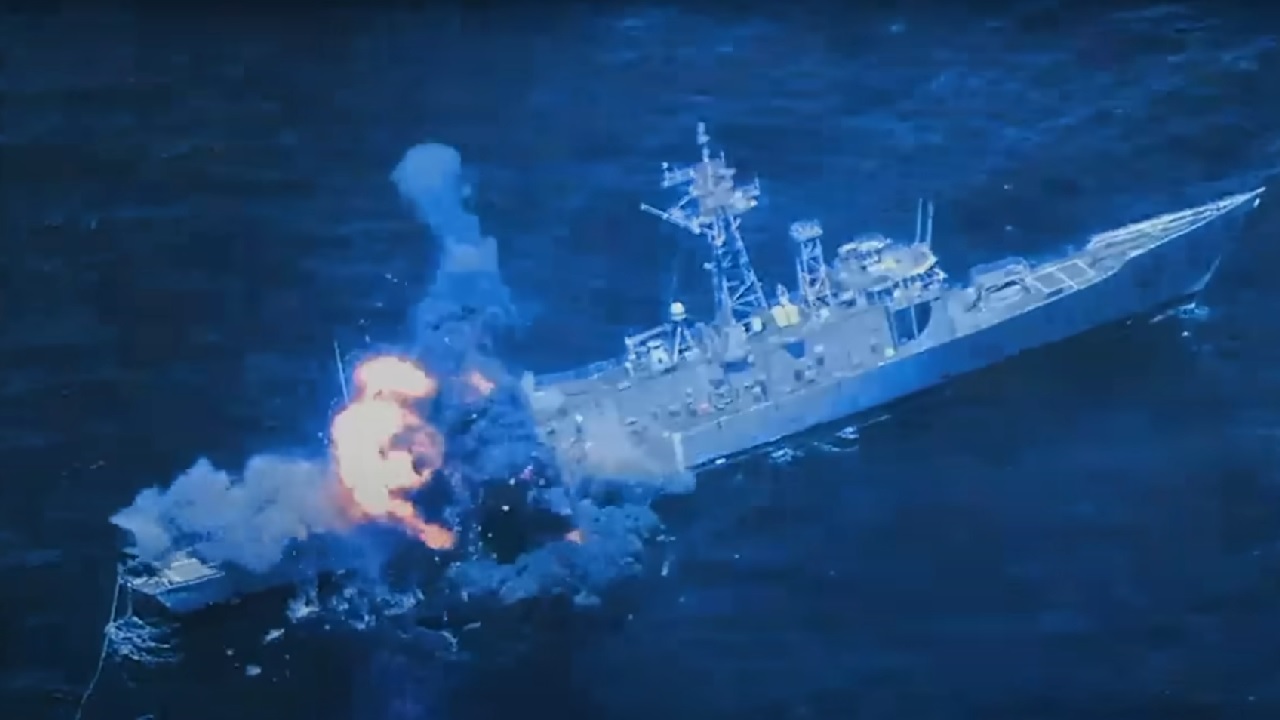
After conducting devastating airstrikes against Iranian infrastructure for almost a week straight and following strikes that began in February, it’s clear that even the might of the United States military cannot completely eliminate the threat. Iran’s conventional military has been severely degraded; Iran’s coastal defenses have been destroyed, along with missile and drone sites, naval assets, ports, military positions around Bandar Abbas, and various command centers. Earlier in the war, these U.S. strikes took out most of Iran’s conventional navy within approximately ten days.
But even after all that, the Strait of Hormuz remains effectively closed in the sense that very little traffic is moving. Shipping companies and insurers may technically be willing to allow ships to pass, but captains and crews are too concerned about their safety to even attempt passage – and that’s happening right as the U.S. offers its greatest assurances yet.
The fear is in part a result of the fact that the U.S. Navy is conducting raids on ships believed to be transiting to or from Iranian ports, but it is largely the result of Iran’s ability to disperse mobile anti-ship missiles or deploy naval mines. Iranian forces or proxies are also operating small boats from civilian ports to instill fear throughout the Strait of Hormuz. So even as Washington attempts to reopen shipping lanes and escort vessels, clear mines, and destroy launchers whenever they are detected, the threat remains.
Iran, therefore, does not need to defeat the U.S. Navy. It just needs to preserve enough missiles, drones, mines, and launch crews to make commercial shipping dangerous and expensive.
There is no indication that the threat will disappear any time soon, even with overwhelming force.
A Ground War Isn’t the Answer
Trump’s comments have, of course, raised questions about whether the United States could launch a limited ground campaign against Iran. Such an operation would not necessarily mean invading Tehran or occupying the entire country, which would be an enormous undertaking. It could instead involve seizing strategic islands such as Kharg or the Greater and Lesser Tunbs, which play important roles in Iran’s military posture and oil exports. But even those limited operations would carry significant risks.
For example, holding territory would require protecting American forces against barrages of missiles and drones from the Iranian mainland, potentially drawing the United States into a conflict lasting months or even years. More importantly, though, every single brigade or weapon committed to Iran is one less available for the Pentagon as it tries to deter China in the Indo-Pacific. It’s a bad idea for the United States, and it still wouldn’t prevent Iranian forces or proxies from causing chaos in the Strait of Hormuz.
A Deal Has to Happen
That leaves both governments facing the same reality. Iran can continue imposing costs on international shipping, but it cannot force the United States to leave the Gulf. And Washington can continue destroying Iranian military infrastructure, but it cannot, evidently, guarantee freedom of navigation. And even when Washington believes it can, the ships don’t move anyway, with reports this week revealing how many ships are simply refusing U.S. Navy escort.
All the while, Trump is also looking down the barrel of a political gun, with the November 2026 midterm elections threatening to destroy his ability to govern by handing the Senate or House back to the Democrats if the war worsens economic conditions even further.
Neither side here has a realistic path to outright victory. That doesn’t mean another agreement will come quickly, of course, or even before further fighting – but it does suggest that both Washington and Tehran are fighting their way to the limits of what they can both achieve militarily. Once both sides exhaust all options, a deal almost seems inevitable.
About the Author: Jack Buckby
Jack Buckby is a British researcher and analyst specializing in defense and national security, based in New York. His work focuses on military capability, procurement, and strategic competition, producing and editing analysis for policy and defense audiences. He brings extensive editorial experience, with a career output spanning over 1,000 articles at 19FortyFive and National Security Journal, and has previously authored books and papers on extremism and deradicalization.


Joel Bowling
July 17, 2026 at 11:00 pm
what should have happened but didn’t because Trump rejected the advice of military leaders 🤔… I posted this in April…
Epic failure on the Trump DoD to not destroy the Iranian command and control systems that can “allow” safe passage of tankers thru the Strait of Hormuz!!!
The US should have immediately seized the Kharg island oil terminal and adjacent Iranian islands with the US Marine Corps MEU that should have been in the area embarked onboard ships… a simultaneously launched attack with ground forces should have immediately coincided to secure the entire region around the Strait by our 82 Airborne and other fast deployment units… during all this, any Iranian ships should have been destroyed to prevent further mine deployment in the waters…
another ground assault from the northern area of Iran by the willing and capable Kurds would have forced the Iranian regime to use ground forces and assets to fight against such, thus facilitating our efforts to secure the entire Strait of Hormuz and affecting regime change…