

Summary and Key Points: Iran has done more than close the Strait of Hormuz — it has claimed ownership of the route that carries 20 percent of the world’s oil.
-The IRGC now runs a coordination regime with fees reaching $2 million per passage, while Russia and China move freely and most Western ships stay out.
-Iran formally told all 176 IMO members that transit requires its permission. The longer no one contests the claim, the more permanent it becomes.
The Real Iran Strait of Hormuz Questions
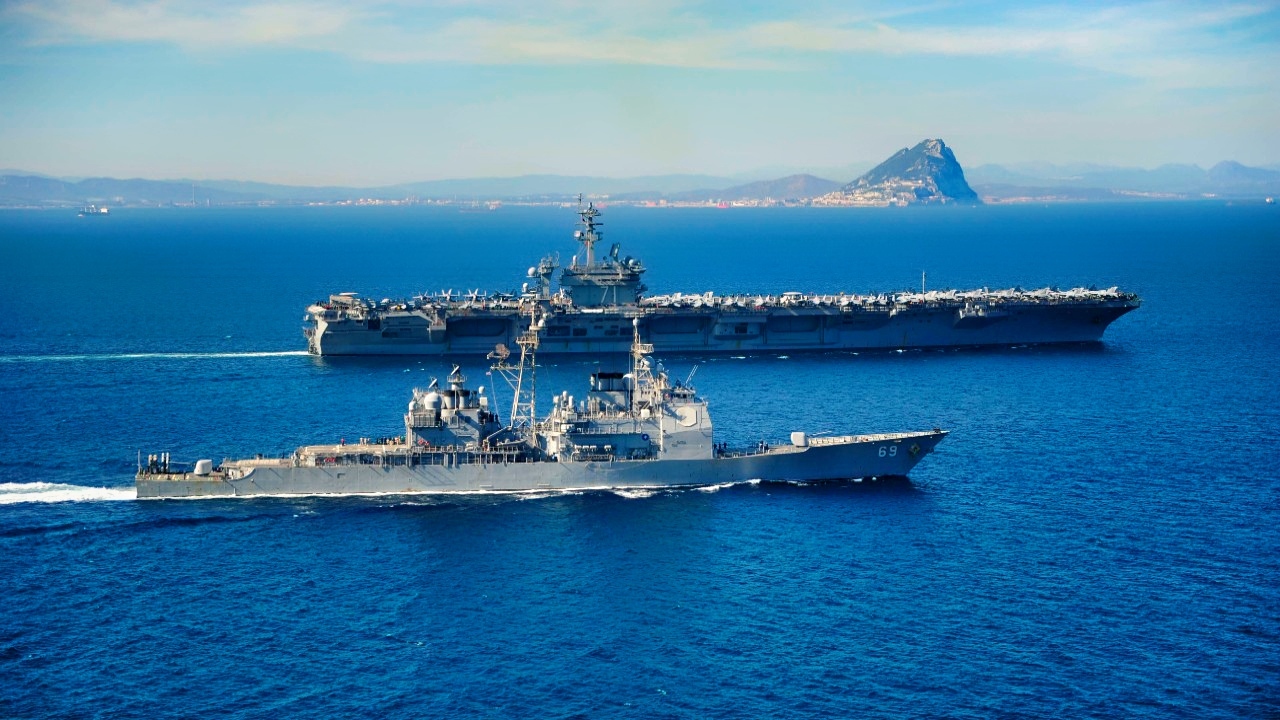
US Navy Warship. Image Credit: Creative Commons.

(Oct. 21, 2005) – Naval forces from Argentina, Brazil, Spain, Uruguay and the United States perform divisional tactical maneuvers off the coast of Brazil during UNITAS 47-06 Atlantic Phase. UNITAS is the largest multi-national naval exercise conducted with naval forces from the U.S., the Caribbean Sea, and South and Central America. The exercises focus on building multinational coalitions, while promoting hemispheric defense and mutual cooperation. U.S. Navy photo by Photographer’s Mate 2nd Class Michael Sandberg (RELEASED)
Plenty of commentary on the Islamabad talks asks whether Washington is paying too much to reopen the Strait of Hormuz. It’s a legitimate concern. It’s also not the hardest question on the table.
While the closure held the world’s attention, the IRGC was building something alongside it — a coordination regime, approved routing corridors, and access terms that vary depending on whose flag you’re flying. Russia, China, and Pakistan moved products throughout.
Most Western commercial operators suspended operations rather than engage the system; those that did transit filed detailed documentation through IRGC-approved intermediaries and, in at least two documented cases, paid fees of up to $2 million per passage.
In March, Iran sent formal notes to all 176 members of the IMO stating that transit requires coordination with Iranian authorities. The IRGC announced it was managing traffic “with permission and in coordination with the IRGC Navy.” Iran’s Supreme National Security Council then formally established the Persian Gulf Strait Authority to administer the regime. Lloyd’s List Intelligence called it exactly what it was: a de facto toll booth.
Iran didn’t just close the Strait of Hormuz.
It claimed ownership of it and put that claim in writing to the institutions that govern international maritime law.
That’s the problem a payoff doesn’t solve. A ransom ends when the payment clears. What Iran has built at Hormuz doesn’t end with the deal. It stays, and it gets harder to contest the longer nobody challenges it. The Islamabad talks are built around the price of reopening. They are not built around this.
Rights Don’t Stay Rights When Nobody Enforces Them
UNCLOS guarantees transit passage through the Strait as a right of all states — unconditional, not subject to Iranian consent. That guarantee has been on the books since 1994. What ninety days showed is how fast the two can come apart.
Every operator that files a coordination request with the IRGC is treating Iranian authorization as a condition of transit — not because anyone agreed to that, just because that’s how things work now. Insurers are repricing around it. Flag states are accommodating it to keep their vessels moving. This is how sovereignty claims actually get made — not through declarations but through practice, until the practice is the reality and the law is just words on paper.
Iran understood this. The planning books didn’t account for it.

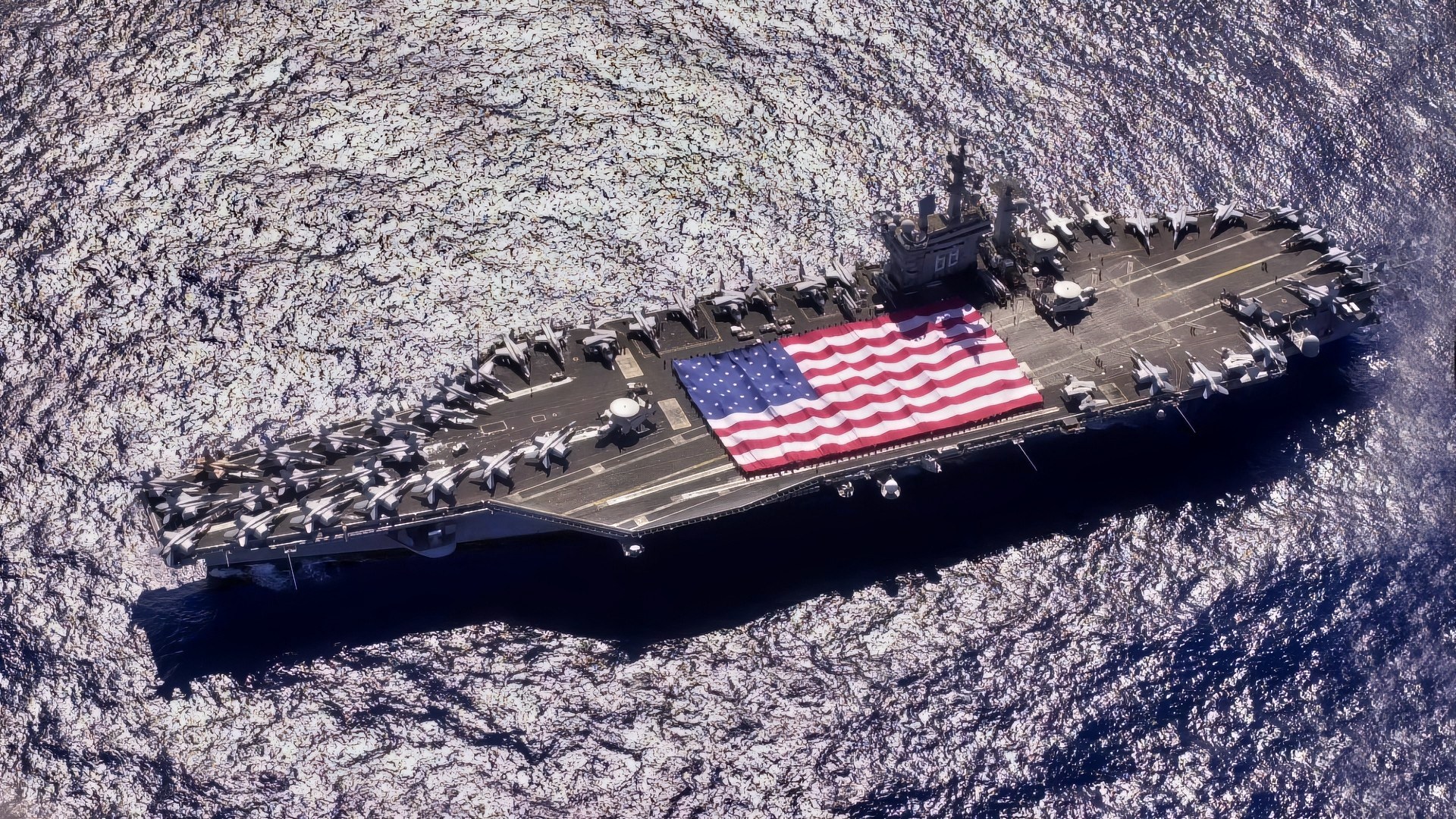
The aircraft carrier USS Nimitz (CVN 68) steams in the Pacific Ocean, Oct. 5, 2024. Nimitz is underway in 3rd Fleet conducting routine training operations. (U.S. Navy photo by Mass Communication Specialist Second Class Carson Croom)
What the Negotiations Aren’t Doing
The Islamabad Talks failed — partly on the Hormuz question, partly on the nuclear one. What’s now being discussed is a 60-day ceasefire extension with gradual reopening of the strait. Trump has publicly opposed the tolling arrangement.
The US position on record is complete, immediate, and safe opening.
Opposition to tolls is not the same as contesting the coordination requirement. And gradual reopening is not the same as reopening on terms that don’t require Iranian approval. There is no explicit US reaffirmation that transit through Hormuz is a right, not a permission. No insistence that reopening means ships pass without filing requests with the IRGC. No demand that Iran withdraw the position it put in writing to the UN and IMO.
The talks are aimed at stopping the shooting and moving oil. Contesting what Iran put on the record with the UN is not part of the brief. That silence is doing real work — and it’s doing it for Tehran.
What Silence Hardens Into
Here is the problem that outlasts whatever gets signed.
Once ships are routinely coordinating with the IRGC, insurers have priced it in, flag states have made their accommodations, and Iran has a UN record behind it, the next Iranian government can expand, restrict, or reprice access whenever it wants — not because a treaty says so, but because that’s how the strait has been operating and nobody successfully contested it.
Washington isn’t the only one watching. Riyadh, Abu Dhabi, and every Gulf state that has spent three months quietly reassessing US security guarantees is drawing conclusions right now. So is Beijing, which has a direct stake in showing that a sovereignty claim over international waters can survive American military pressure. What happens at Hormuz is read in many other capitals.
A payoff ends the crisis. What’s taking shape instead is a baseline — one that the next crisis begins from, on terms Iran sets.
What Would Actually Work
A deal isn’t the problem. A deal that ignores what Iran put in writing to the UN and treats the coordination requirement as a logistics question is.
Reopening that requires no IRGC coordination, paired with a clear US statement that transit through Hormuz is a right rather than a permission — that’s the version of this that actually closes the account. Without it, the payment clears, and the coordination requirement stays. It’s already priced into the insurance market. It’s already on file at the UN. It gets harder to contest the longer nobody does.
The question was whether we’re destined to pay Iran off. The trajectory increasingly points that way — but that’s still the optimistic read. A ransom ends when the payment clears. What Iran has built doesn’t need a payment to survive. It needs the other side to stop pushing back. In Islamabad right now, that’s exactly what’s happening.
About the Author: Dr. Andrew Latham
Andrew Latham is a professor of international relations and political theory at Macalester College in Saint Paul, MN. You can follow him on X: @aakatham.


