
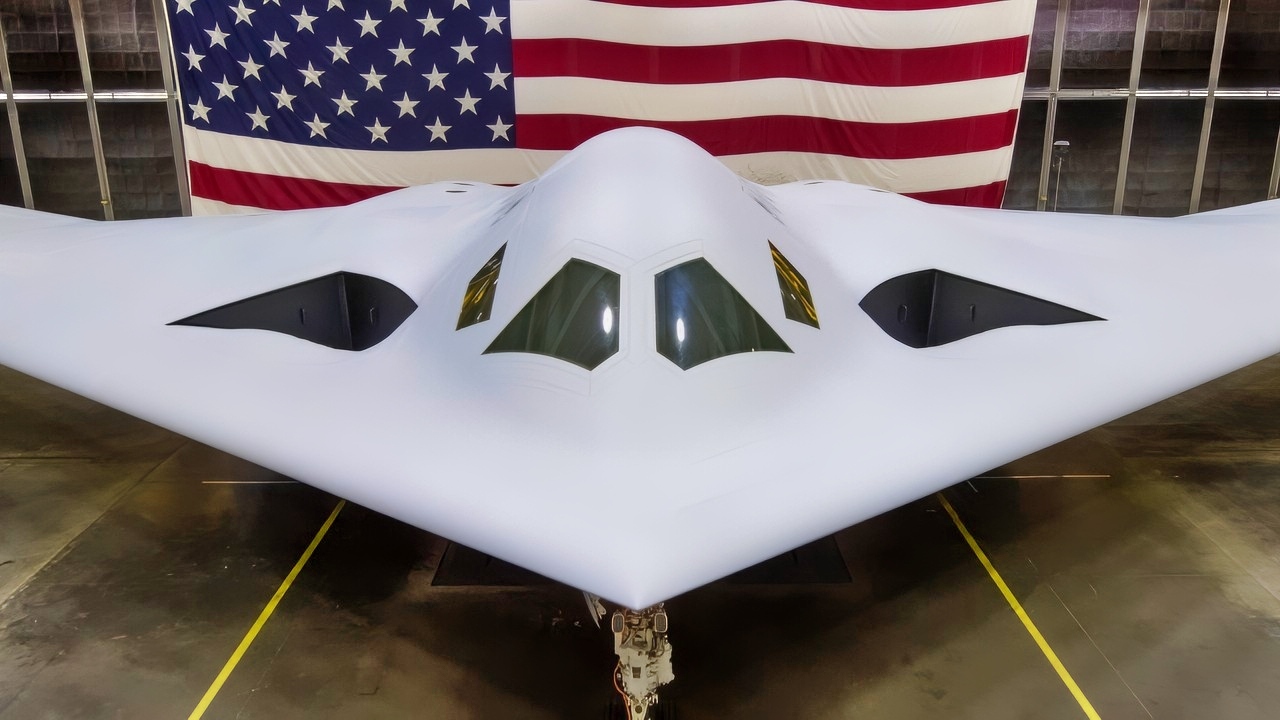
Key Points and Summary – America may edge China in next-gen aircraft like the B-21 and F-47 NGAD, but ground infrastructure could decide who wins. Hardened aircraft shelters (HAS) protect fleets from blasts, fragments and surveillance, enabling rapid turnarounds under fire.
-A Hudson study warned DoD against skipping ~$30M in B-21 shelters, risking a $203B force.
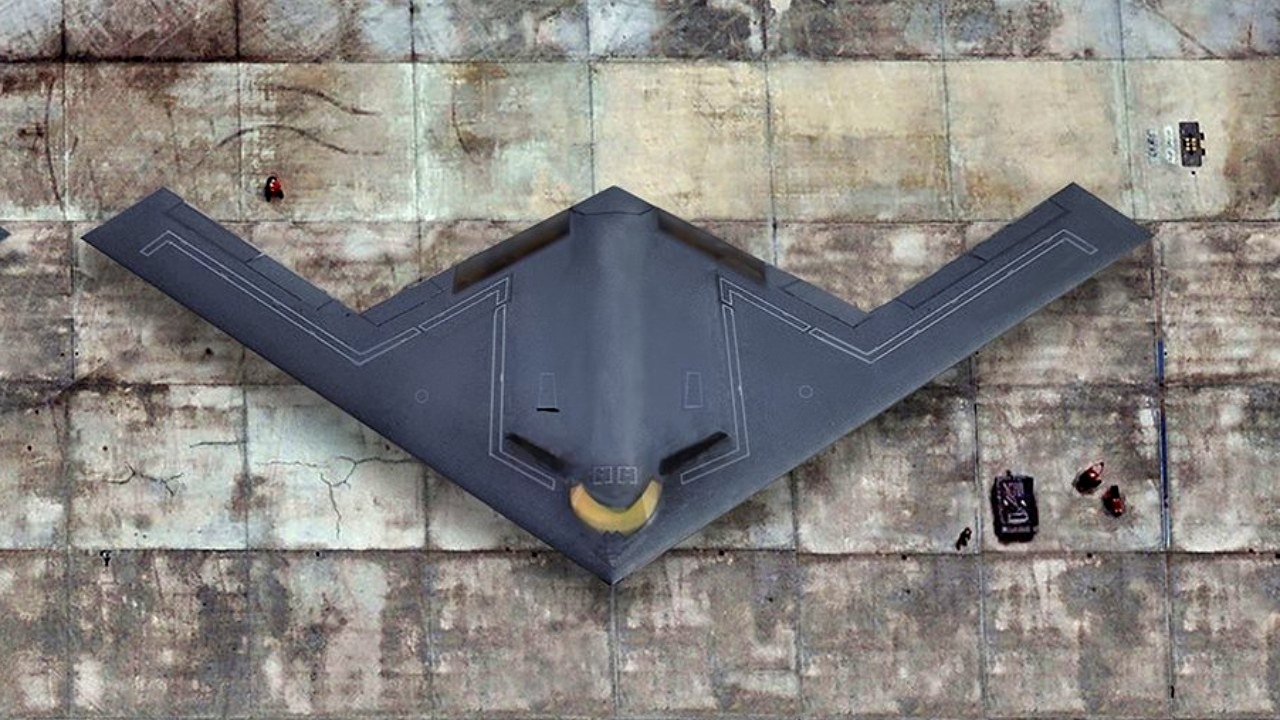
B-21 Raider Stealth Bomber Artist Image. Image Credit: Creative Commons.
-History—from Arab-Israeli airbase resilience to recent missile strikes—shows unprotected jets are easy kills.
-While the PLA has built 3,000+ shelters and hardens bases across the Indo-Pacific, the U.S. still relies on thin-skinned hangars.
-Deterrence demands resilient, dispersed, defended airfields—starting with HAS for the B-21 and fifth-gen fleets, now, not later.
The B-21 and Next Generation Fighters: Destroyed on the Ground?
The United States is racing to match China in the procurement of next-generation aircraft, with the B-21 Raider program and a long-term push toward sixth-generation airframes like the Next Generation Air Dominance (NGAD) fighter, the F-47.
But even if Washington edges Beijing by a handful of airframes in the 2030s and 2040s, the race may ultimately be defined by what happens on the ground, and not in the air.
HAS Problems
While China expands its own arsenal of hardened aircraft shelters (HAS), the U.S. is reluctant to build the infrastructure necessary to protect hundreds of high-value assets that will soon be fielded, from the B-21 to a fleet of fifth-generation and “fifth-generation-plus” aircraft like the F-35 Lightning II, the F-22 Raptor, and the upgraded F-35 variants currently under consideration.
A January 2025 report from the Hudson Institute warned that the Department of Defense must adopt a far more serious approach to hardening U.S. bases, particularly as it undertakes the development of newer, more advanced Air Force assets.
The authors specifically criticized the Pentagon’s decision to forgo approximately $30 million in hardened shelters for the B-21, describing the move as a dangerous gamble that could undercut America’s global strike capability.

The B-21 Raider program is on track and continues flight testing at Northrop Grumman’s manufacturing facility on Edwards Air Force Base, California. The B-21 will have an open architecture to integrate new technologies and respond to future threats across the spectrum of operations. The B-21 Long Range Strike Family of Systems will greatly enhance mission effectiveness and Joint interoperability in advanced threat environments, strengthening U.S. deterrence and strategic advantage. (U.S. Air Force photo)
With a total anticipated investment of more than $203 billion over 30 years to develop, purchase, and operate a fleet of at least 100 B-21 bombers, resilient basing infrastructure is crucial to protect those aircraft – and history shows that assessment to be true.
Hardened Aircraft Shelters, and Why They Matter
Hardened aircraft shelters (HAS) are reinforced hangars designed to shield combat jets from blast, fragments, fire, and surveillance.
The hangars make maintenance and turnarounds possible while under cover, and purpose-built shelters can even meaningfully reduce vulnerability to cruise missiles, drones, and sub-munitions, increasing the attack’s cost to neutralize each aircraft.
In protecting aircraft, adversaries are not only faced with additional trouble, causing damage to aircraft. Still, they are required to base strike decisions on other intelligence and not simply imagery obtained via drones or satellites that prove where an aircraft is staged or stored.
The proliferation of hardened shelters can be traced back to the Cold War, particularly in the wake of the devastation of unprotected fleets in the Arab-Israeli wars, which drove base-hardening programs across the world. NATO and Warsaw Pact nations standardized HAS designs across Europe in the mid-20th Century.
Within the U.S. Air Forces in Europe (USAFE) command – the branch of the U.S. Air Force responsible for operations in Europe – second-generation shelters were introduced around 1972 following the deployment of the F-111 aircraft, which demanded additional space for its large wing span. That iteration, and those that came shortly afterwards, replaced the original USAFE TAB-VEE shelter – short for “Theater Air Base Vulnerability Evaluation Exercise.”
The Danger
Hardened aircraft shelters remain crucial today, widely recognized as essential for protecting high-value fleet assets. A July 2024 policy paper by the Mitchell Institute for Aerospace Studies described how an “effective operational concept for U.S. air base defense” is “critical for deterrence.”
Reflecting on People’s Liberation Army (PLA) strategists’ understanding of the concept of pre-emptive strikes that facilitate “winning without engaging the enemy in a reciprocal battle,” the report’s authors provide historical context of how hardened shelters can ensure a war is not lost before it can be fought. Using the 1973 Yom Kippur War as an example, the report describes how Egypt and Syria prepared their air bases in anticipation of an Israeli Air Force strike – and minimized the damage caused by the eventual attack.
“They constructed hardened shelters at their air bases, bases that were now well-defended with Soviet-purchased surface-to-air missiles and air defense artillery,” the authors write. “Unable to overcome active and passive air defenses, even after hundreds of sorties, the IAF managed to destroy only 22 Arab coalition aircraft on the ground.”
“However, the IAF observed that, in some cases, their opponents were able to effect repairs and generate combat sorties less than an hour after a runway strike,” the report continues.
History shows us that airpower on the ground is vulnerable unless the hangars protecting it are built to withstand attack. The U.S. could be learning from both Cold War precedents and recent events. And it should be.
On June 23, 2005, Iran fired missiles at Al-Udeid Air Base in Qatar – a linchpin of U.S. operations in the Middle East.
China Is Watching
Meanwhile, China is rapidly gaining a strategic advantage in how it fortifies its air force infrastructure. Since the early 2010s, the PLA has more than doubled its total aircraft shelters, now numbering over 3,000 (not including civilian airfields).
And while the U.S. is ramping up its Indo-Pacific region air base infrastructure to ensure they are protected, the decision to forgo the most obvious form of protection for the incoming fleet of B-21s appears to many as a major and dangerous oversight.
About the Author:
Jack Buckby is a British author, counter-extremism researcher, and journalist based in New York who writes frequently for National Security Journal. Reporting on the U.K., Europe, and the U.S., he works to analyze and understand left-wing and right-wing radicalization, and reports on Western governments’ approaches to the pressing issues of today. His books and research papers explore these themes and propose pragmatic solutions to our increasingly polarized society. His latest book is The Truth Teller: RFK Jr. and the Case for a Post-Partisan Presidency.
More Military
Canada Has a Clear Message for the F-35 Fighter
Russia’s Oscar-Class Submarine Summed Up in 4 Words
688I: The U.S. Navy’s Best Attack Submarine?


