


Key Points and Summary – Nuclear attack subs like the U.S. Virginia-class bring speed, range, and deep-water agility—key in the vast Western Pacific. But stealth rules underwater, and Japan’s Soryu-class, with AIP and later lithium-ion batteries, is among the quietest boats afloat.
-AIP reduces acoustic signatures by avoiding reactor pumps and enabling long submerged endurance, while Virginia Block III upgrades—anechoic coatings, low-emission antennas, and Large Aperture Bow sonar—sharpen U.S. stealth and detection at distance.

Japan Soryu-Class Submarine. Image Credit: Creative Commons.
-Each design solves a different problem: Soryu maximizes silence in littorals; Virginia brings global reach and punch. Together, a U.S.–Japan undersea team could form a stealth “web” guarding key Pacific chokepoints.
Japan: AIP Stealth Submarine Superpower?
Nuclear-powered attack submarines are fast and maneuverable. This dramatically improves their survivability because the boats can reposition quickly when under threat or maneuver as needed to evade incoming attacks.
However, stealth is the most essential attribute of all. While many details related to the U.S. Virginia-class submarines’ quieting technologies are not available for security reasons, the technological advancements incorporated into Virginias since Block III may reduce their undersea signature in ways rivaled only by the ultra-quiet Air Independent Propulsion (AIP) submarine technologies used by Russia and Japan.
Japan Soryu-class
The Japan Maritime Self-Defense Force’s Soryu-class submarines could be among the stealthiest to ever exist. They are engineered with lithium-ion batteries and a non-nuclear diesel-electric propulsion system. They are also a little smaller than most attack submarines.
In part, the small size is specifically intended to make these subs less detectable. Lithium-ion batteries enable submarines to remain submerged for more extended periods than lead-acid batteries, thereby reducing the risks associated with surfacing.

Soryu-Class Japan Submarines. Image Credit: Creative Commons.
The longer a boat can stay at depth, the less detectable it is. Lithium-ion batteries, however, were not added to Soryu-class submarines until the 11th boat. Nevertheless, all previous submarines in the class used the extremely quiet AIP technology.
AIP More Survivable?
Although the U.S. Navy has prioritized nuclear propulsion, AIP reduces the need to surface and further enhances survivability by eliminating the underwater noise generated by submarine nuclear reactors that use pumps to circulate reactor coolant.
The AIP propulsion in the Soryu-class is used to help support the boats’ diesel-electric engine. This engine is described in a 2020 essay in The National Interest as unique, because it “uses bottled liquid oxygen so that the engine’s diesel fuel can combust.”
This propulsion system runs much quieter than a traditional diesel engine. Furthermore, its range is estimated to be around 6,100 miles, or about 9,800 kilometers, according to The National Interest.
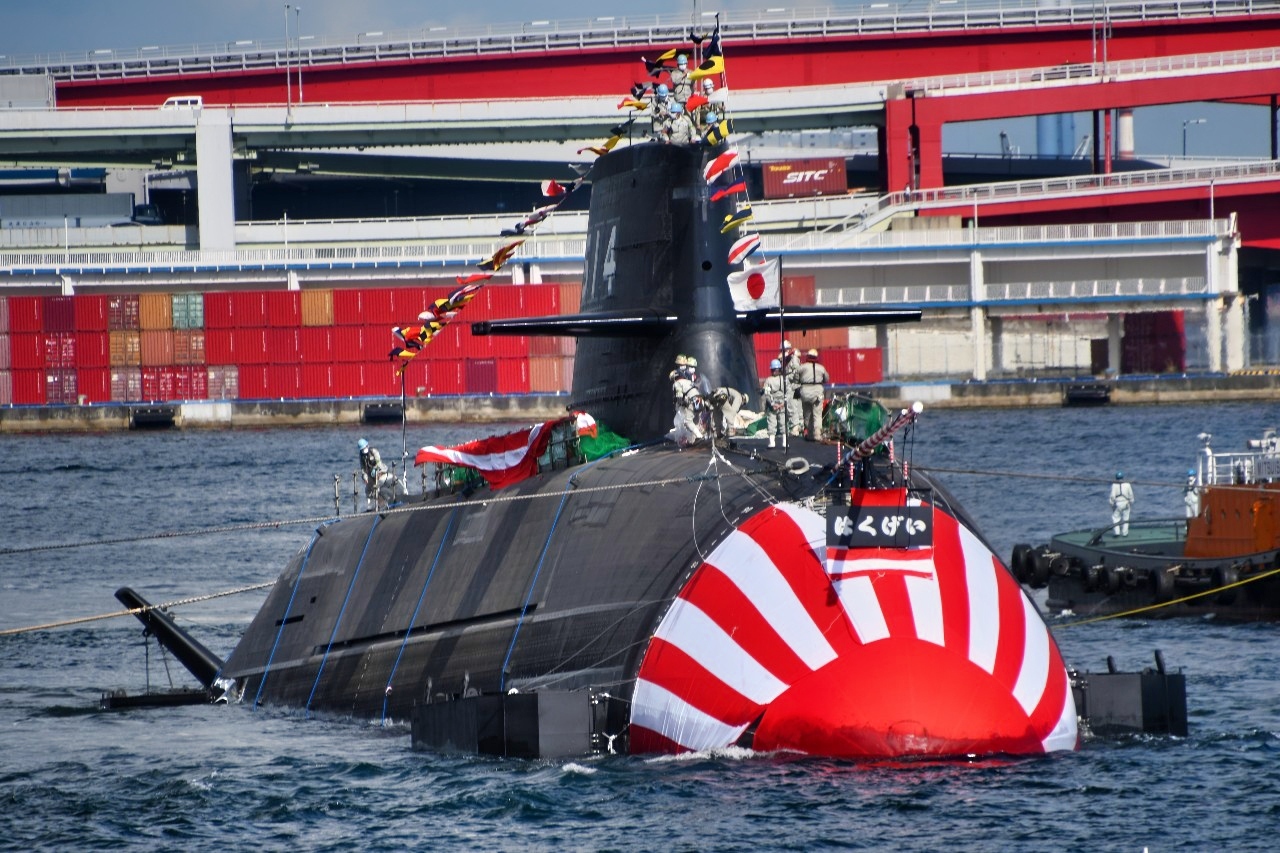
Taigei-Class Submarine from Japan. Image Credit: Creative Commons.
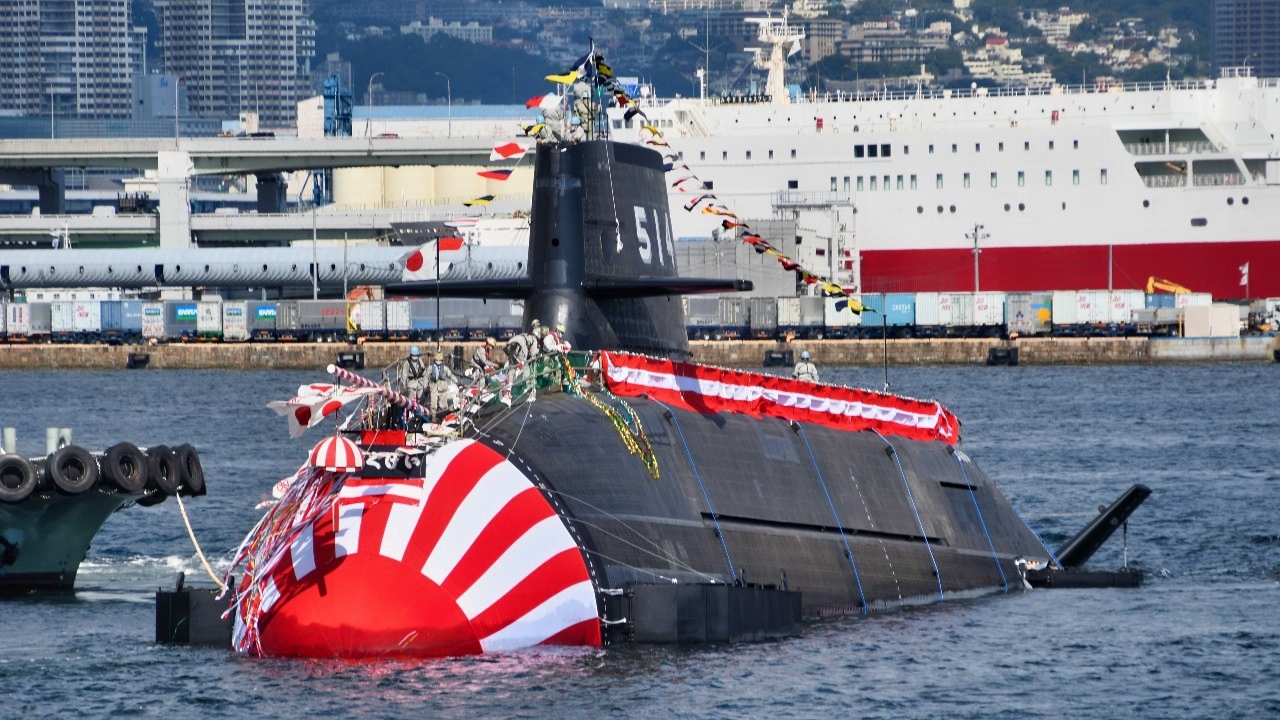
Taigei-Class Submarine Japan Navy. Image Credit: Creative Commons.
For all its advantages, AIP submarine propulsion may not compete in quality with the high-speed, deeper-depth Virginia-class submarines.
The Virginia Block IIIs boast advanced detection technologies and greater stealth capabilities.
The range and speed of nuclear-powered Virginia boats may be preferred for operations in high-risk areas such as the Western Pacific, where vast expanses of ocean require long-range, high-speed submarines.
Most Block III Virginia-class boats are engineered for lower acoustic signatures. They include new coating materials intended to make it much more difficult for undersea sonar pings to generate a return signal, as well as new antennas that strengthen communications while lowering the boats’ emissions. The Virginia-class Block III submarines also operate with a next-generation Large Aperture Bow sonar able to lower acoustic emissions by operating in a passive mode at great distances.
Soryu-class
The quieting technology of the Soryu-class cannot be understated, particularly in an era where newer non-acoustic technologies are improving submarine detection.
At the moment, the United States is believed to have undersea superiority over China, but it is unclear how long that will remain true.
Given that the U.S. Navy has been dramatically increasing the stealth capacities of its Virginia-class boats, a combination of ultra-quiet Japanese submarines and U.S. submarines could form a protective web across key parts of the Pacific.
Regular forward patrols could protect the Japanese coastline, the Senkaku Islands, and Taiwan.
About the Author: Kris Osborn
Kris Osborn is the President of Warrior Maven – Center for Military Modernization. Osborn previously served at the Pentagon as a highly qualified expert in the Office of the Assistant Secretary of the Army—Acquisition, Logistics & Technology. Osborn has also worked as an anchor and on-air military specialist at national TV networks. He has appeared as a guest military expert on Fox News, MSNBC, The Military Channel, and The History Channel.
More Military
China Has the Missiles to Sink U.S. Navy Aircraft Carriers, But Questions Remain
The P-51 Mustang Was the Best WWII Fighter
The U.S. Navy’s Great Aircraft Carrier Shortage of 2025 Won’t End
The Navy Isn’t Prepared For What’s Coming
Not Made in USA: The Vanguard-Class Missile Submarine Has Just 1 Mission


