

Key Points and Summary – China’s H-20 long-range stealth bomber is nearing operational status, a development that will fundamentally reshape the strategic balance in the Indo-Pacific.
-Western skepticism of the program is dangerously outdated.

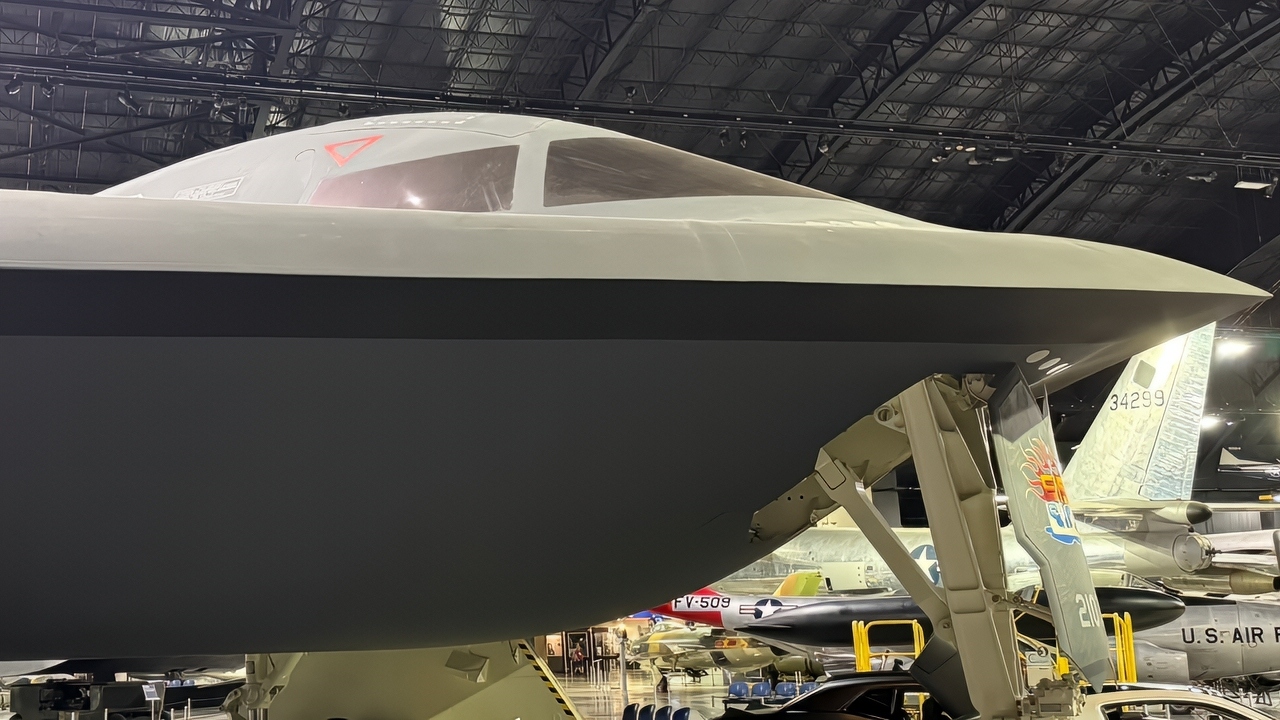
B-2 Spirit Stealth Bomber At USAF Museum. Image Credit: Harry J. Kazianis/National Security Journal.
-With a rumored range exceeding 8,000 kilometers and the possible ability to carry hypersonic missiles, the H-20 can hold US bases in Guam and Hawaii at risk, neutralizing America’s geographic advantages.
-This new “game-changing” capability, part of a broader military modernization effort, represents a generational leap for China’s power projection and demands an urgent reassessment of US and allied defense strategies.
Meet the H-20 Stealth Bomber from China
While Western analysts have sometimes expressed skepticism regarding China’s long-range stealth bomber program, they must now acknowledge that development of the H-20 long-range stealth bomber is nearly complete and that the Chinese military, should it decide to do so, will soon be able to deploy this aircraft at scale.
This is significant because the deployment of the H-20 has the potential to alter the balance of power in the Indo-Pacific and beyond. Despite lingering questions about its ability to evade American radar and penetrate US defenses, the H-20’s capabilities could enhance China’s power projection, fundamentally shifting the military dynamics in, and potentially beyond, the Western Pacific.
The H-20, which has a range of more than 8,000 kilometers (nearly 5,000 miles), gives China the ability to strike places that would be out of reach of advanced air defenses, such as Guam and military installations in Hawaii. Its unique flying wing design increases its survivability against radar for covert operations in enemy territory. It also has the capability of carrying a variety of advanced avionics and electronic warfare equipment, as well as an extensive load of precision munitions and long-range cruise missiles, including hypersonic missiles that can evade defenses and travel at speeds exceeding five times the speed of sound. Its ability to operate in all weathers and at night also enhances its strategic potential.
The H-20 Has Been Talked About For Years
The H-20 has been under development for over a decade, with work beginning in the early 2010s to fill the gap on the need for a modern strategic bombing aircraft that can operate in contested environments. Drawing on lessons learned from previous designs, such as the H-6 and J-20, the H-20’s design has undergone several iterations, with a focus on enhancing stealth and aerodynamic efficiency. The aircraft was officially recognized by the Chinese military as part of its fleet in 2016 and had undergone successful test flights, demonstrating the performance of its systems and the level of payload. Now thought to be entering final stages of testing, analysts argue China might have the H-20 operational in the next few years, in line with its broader efforts to modernize its military and give it the sort of deterrent capabilities one expects in China’s future air force.
The active deployment of the H-20 would have strategic and military ramifications for China’s position, which it has taken vis-à-vis regional and global flashpoints in the South China Sea and the Taiwan Strait—two significant global trade routes replete with territorial disputes between China and rival claimants, such as Vietnam and the Philippines. The Chinese H-20 enhances its ability to project power and establish a deterrence posture against potential third-party adversaries of the US, thereby allowing it to exert greater influence in regional conflicts in the future.
The H-20 features sophisticated weapons systems and has a large carrying capacity, making it an effective platform for both nuclear deterrence and precision strikes, as well as close air support for ground troops, thus enhancing the combat capabilities of the Chinese military. Its advanced stealth technology means the aircraft can patrol without risk of detection, handing China the ability to challenge for control over some of the world’s most hotly contested areas.
This mix of stealth and long-range precision strike would allow China to project its military power far beyond its shores, upending the military status quo in the Pacific. Being capable of attacking all-weather ground and air targets with a range of missiles and other munitions, the H-20 is versatile in multi-front or multi-threat warfare. Amid intensifying regional tensions, the H-20 could constitute a difference-maker in China’s ability to enforce its territorial claims and entangle US military activities in the Western Pacific, which are now primarily geared toward great power competition.
Why This Bomber Matters
The H-20 is part of a broader modernization initiative that encompasses air-launched weapons and unmanned systems.
The integration of drones, capable of flying in formation with the H-20, underscores China’s growing ability to project strike power far beyond its shores. The fusion of manned and unmanned systems enhances operational effectiveness and complicates adversary countermeasures. UAVs can serve as decoys and reconnaissance assets, working in tandem with the H-20 in combat scenarios. This combination of human and machine capabilities allows for more nuanced and flexible military tactics, providing China with a strategic advantage in future conflicts.
Skeptics may argue that China has been developing its long-range stealth bomber for years without tangible results, overlooking the PLA’s remarkable progress in aviation technology. The H-20 is not a standalone project; it reflects a broader modernization effort and a willingness to innovate within the Chinese military. The increasing importance of long-range strike capabilities is underscored by the growing global tensions and the diverse mission sets that the H-20 can fulfill. China needs to enhance its ability to defend its interests and assert its influence in the region.
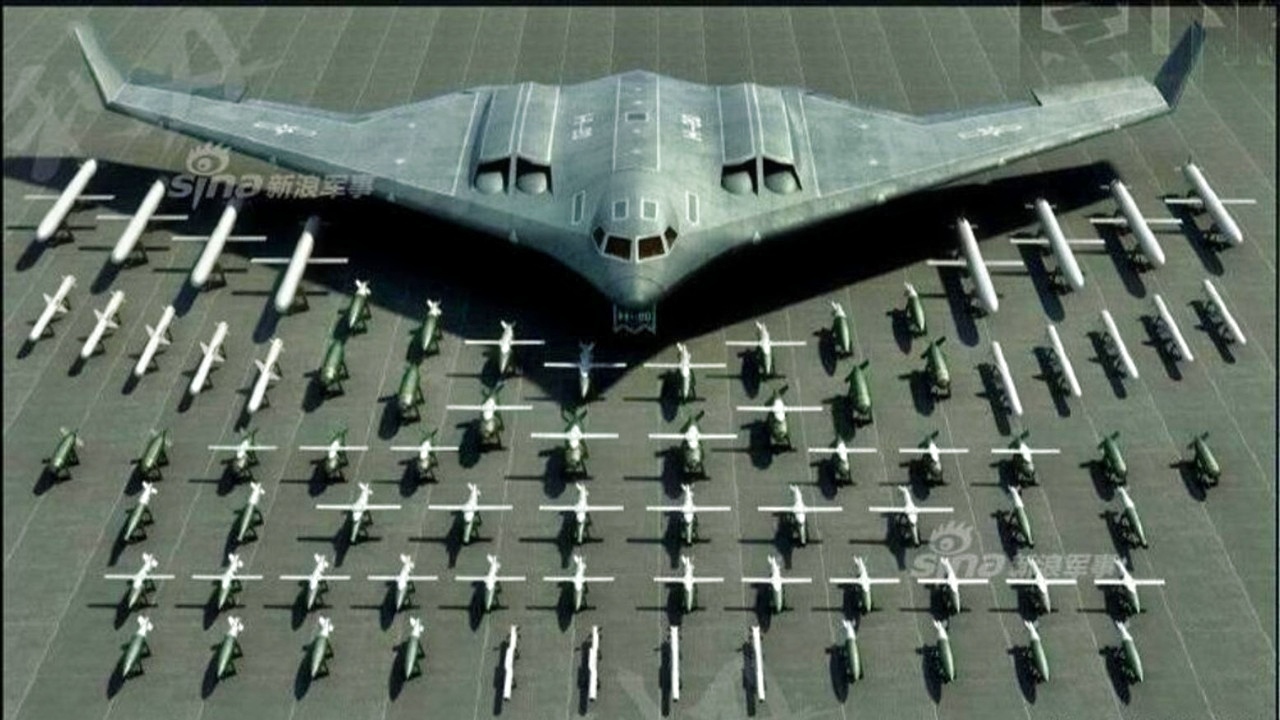
H-20 Bomber. Chinese Internet Social Media Screenshot.
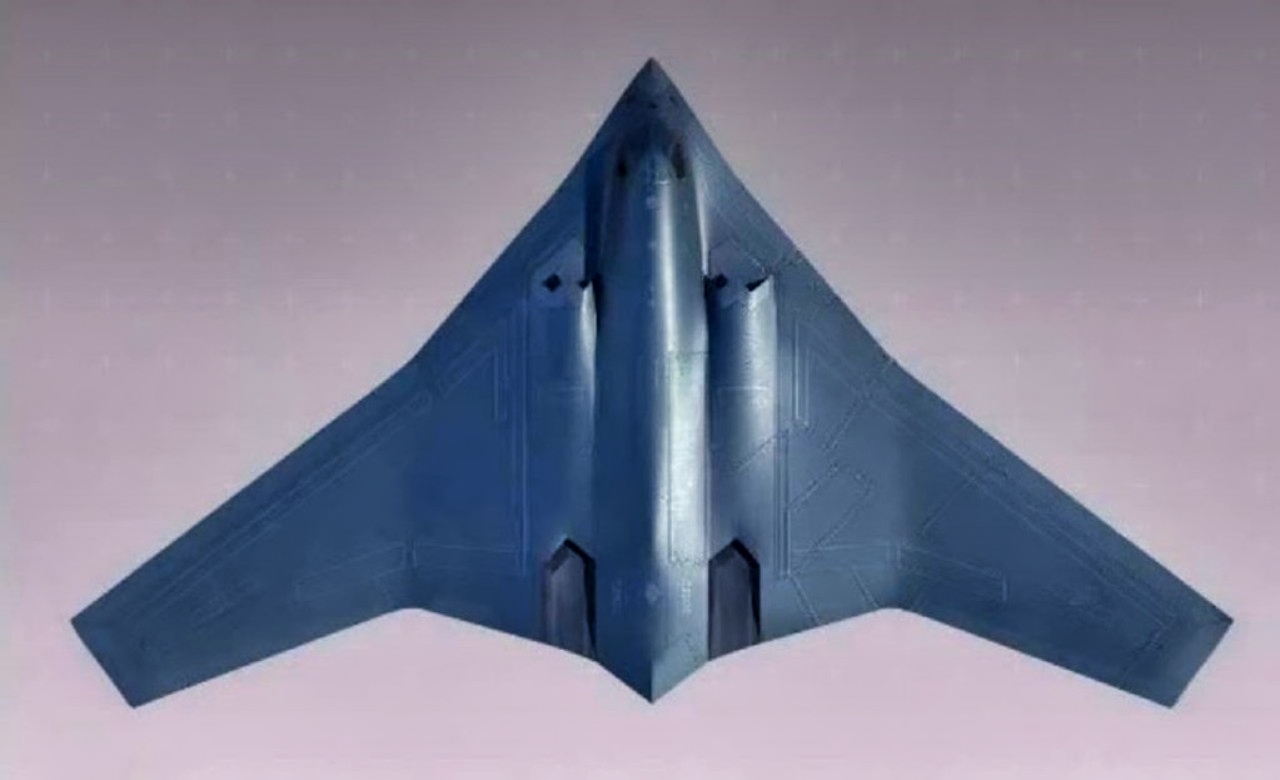
H-20 Bomber from China Artist Rendition. Creative Commons.

China’s H-20 Stealth Bomber. Image Credit: Creative Commons.
As Chinese military power continues to expand, US and allied military doctrines must adapt accordingly. The strategic implications of the H-20’s capabilities alter the defense posture and deterrence calculus across the region, prompting countries such as Japan, South Korea, and Australia to advance their own military modernization programs in response.
For instance, Japan has begun upgrading its missile defense systems and enhancing its long-range strike capabilities in response to China’s growing military presence. The H-20’s capabilities may incentivize these nations to reevaluate their defense strategies, potentially triggering an arms race.
The notion that China could never afford a long-range stealth bomber is rapidly becoming untenable. The H-20 symbolizes a rising great power intent on reshaping global dynamics in the 21st century. It is not merely another technological advancement; it holds strategic significance in the realm of military aviation and has the potential to challenge existing paradigms of air power and power projection.
Looking ahead, the emergence of “gigantic” optionally-manned and AI-driven aircraft is on the horizon. The H-20 is expected to play a pivotal role in this trend, positioning China as a formidable presence within global security frameworks for decades to come. The implications of this shift are monumental, with the potential to transform military tactics and alliances worldwide.
It’s Evolution for China
Ultimately, the Chinese stealth bomber is not just a technological marvel; it represents a strategic evolution that may permanently alter the balance of power in the Indo-Pacific and beyond. As China continues to develop and operationalize the H-20, the international community must acclimate to its presence. The H-20 signifies a generational leap in military capability that will shape the security landscape for years to come. “We must prepare ourselves for this new era of military aviation and the strategic implications that China’s advancements, exemplified by the H-20, will bring as it challenges America’s historical monopoly on such a critical weapon.”
The design of the H-20 reflects careful consideration of stealth and aerodynamics, featuring a flying wing configuration that minimizes radar cross-section and enhances aerodynamic efficiency. This design not only improves its ability to evade detection but also enhances its payload capacity and operational range. The aircraft’s engines are expected to incorporate advanced technologies that will further reduce their infrared signature, complicating efforts to target and track them.

B-2 Stealth Bomber at USAF Museum July 19 2025. Image Credit: Harry J. Kazianis/National Security Journal.
In addition to its offensive capabilities, the H-20 is expected to contribute to China’s strategic deterrence posture. With the potential to carry nuclear weapons, the H-20 could provide China with a robust second-strike capability, enabling it to respond effectively to any nuclear threat. This aspect of the H-20’s design underscores the necessity of maintaining a credible deterrent in an evolving security landscape.
As the H-20 becomes operational, tensions are likely to escalate among regional actors and the United States. The capabilities of this new aircraft will necessitate a reevaluation of military strategies and the balance of power, prompting nations to adjust their approaches to align with the latest security environment. The H-20 represents not only a technological advancement but also a significant shift in military aviation and the global balance of power.
What Happens Next?
In conclusion, the H-20 has the potential to fundamentally transform military aviation and international relations. As China’s new stealth bomber matures, its technological advancements and the country’s aspirations are poised to reshape the landscape of great-power relations for decades to come.
Consequently, the urgency to adapt to the arrival of the H-20 and to formulate realistic deterrent and contingency responses will only intensify. The world stands on the brink of a new era in military power projection, led by the H-20.
About the Author: Dr. Andrew Latham
Andrew Latham is a non-resident fellow at Defense Priorities and a professor of international relations and political theory at Macalester College in Saint Paul, MN. You can follow him on X: @aakatham. He writes a daily column for National Security Journal.
More Military
The U.S. Navy’s Submarine Crisis Is Real


Jim
July 21, 2025 at 11:06 pm
It’s sobering or should be.
Why do we want to get in a fight against China?
Geographical advantage??
Taiwan lays a hundred miles off the Chinese mainland.
It’s roughly 7,000 miles from Los Angeles.
Guam is a postage stamp and far away from Taiwan. Hawaii is roughly 5,000 miles from Taiwan and is important for logistics, but doesn’t provide a particular advantage when speaking about Taiwan.
Taiwan’s physical proximity to China provides interior lines of logistics, defense, and striking power at Taiwan.
The reasoning for defending Taiwan… it certainly isn’t a Vital National Security Interest and our allies & fiends in the broader East Asian theater are reluctant, Japan, South Korea, and Australia are all showing signs of being less than enthusiastic about a war over Taiwan… New Zealand has checked out completely.
So, what is this really about? Some people think it’s about the raison d’être of the U. S. Navy in the Western Pacific. If Taiwan is taking off the table as a reason to have a military presence in the Western Pacific then the need for a big naval presence also goes away… and then budgets start to get whittled down.
Washington is all about money & power and lobbyists for defense contractors.
These people are reptiles, cold-blooded, clear-eyed, and smart in a reptilian kind of way and they want contracts and the money which flows from them… and the cost overruns which inevitably happen… more money and so on, ad infinitum.
Where a person sits financially determines where a person stands politically… especially defense contractors and their influencers in the environs of Washington. Bet on it!
Michael McIntosh
July 23, 2025 at 7:05 pm
How the heck can something be “unique” when it’s a blatant copy? The Chinese are just copying American designs and they are not very good at it. I feel sort of sorry for the Chinese people that have to put up with the corrupt CCP.
USAF
July 24, 2025 at 6:54 am
Inferior and unproven
Ray
July 24, 2025 at 10:41 am
Everything China has was stolen from the U.S what a joke. You will never beat America 🇺🇸
barry
July 24, 2025 at 12:45 pm
Has it not occurred to the author and many others that if the US doesn’t encircle China with hundreds of military bases that China would not be compelled to build up its military? Has it not occurred to the author that Taiwan is part of China and it’s China sovereign right to do what it pleases in regard to Taiwan Has it not occurred to the author that the US is the rouge nation on this planet insisting that it must dominate all others? And, insisting all other nations who don’t submit and subjugate are unquestionably evil and must be destroyed?
How juvenile can one be? Humanity is better than perpetual fighting and destruction. Have we not learnt anything through thousands of years of existence?
Allen Smith
July 24, 2025 at 1:14 pm
It’s one mission is to crash and burn. China develops very little original technology, they simply steal tech, then mimic what they steal.
barry
July 24, 2025 at 6:33 pm
Copying is the highest form of flatter. Of course, all countries copy. Why reinvent the wheel.
Don’t tell me that the US is above stealing. Of course it steals. The whole damed country was stolen from the indigenous folks. We tried every which way to wipe them off the face of N America and failed. We stole Hawaii from the Hawaiian kingdom. We steal other countries’ sovereignty through permanent military bases, regime change ops, waging illegal wars against them and so on.
Don’t tell me the US is not actively trying to get its hands on the latest and greatest tech advances from China. As we speak, we are trying to steal TikTok from one of their companies through all sorts of nonsensical excuses.
Be real and be honest!
91 club game
August 15, 2025 at 11:29 am
This post provides a fascinating insight into China’s strategic military advancements. The focus on the H-20 stealth bomber highlights how crucial maintaining air superiority is for national security. It will be interesting to see how this asset affects regional dynamics and the reactions from neighboring countries. Thanks for the informative analysis!
LUCKY 101
August 18, 2025 at 9:18 am
The H-20’s development signifies a substantial shift in China’s military capabilities. As the focus moves towards advanced stealth technology, it’s crucial to consider how this could impact regional security dynamics and provoke responses from neighboring countries. Will this escalate an arms race in the Asia-Pacific region?
Javaburn
March 29, 2026 at 1:17 am
The development of the H-20 stealth bomber is a game changer for China’s national security strategy. It reflects a significant leap in military technology and a clear shift in defense priorities. I’m curious to see how this will impact the regional power dynamics and whether it will provoke similar advancements from neighboring countries. Exciting and concerning times ahead!