

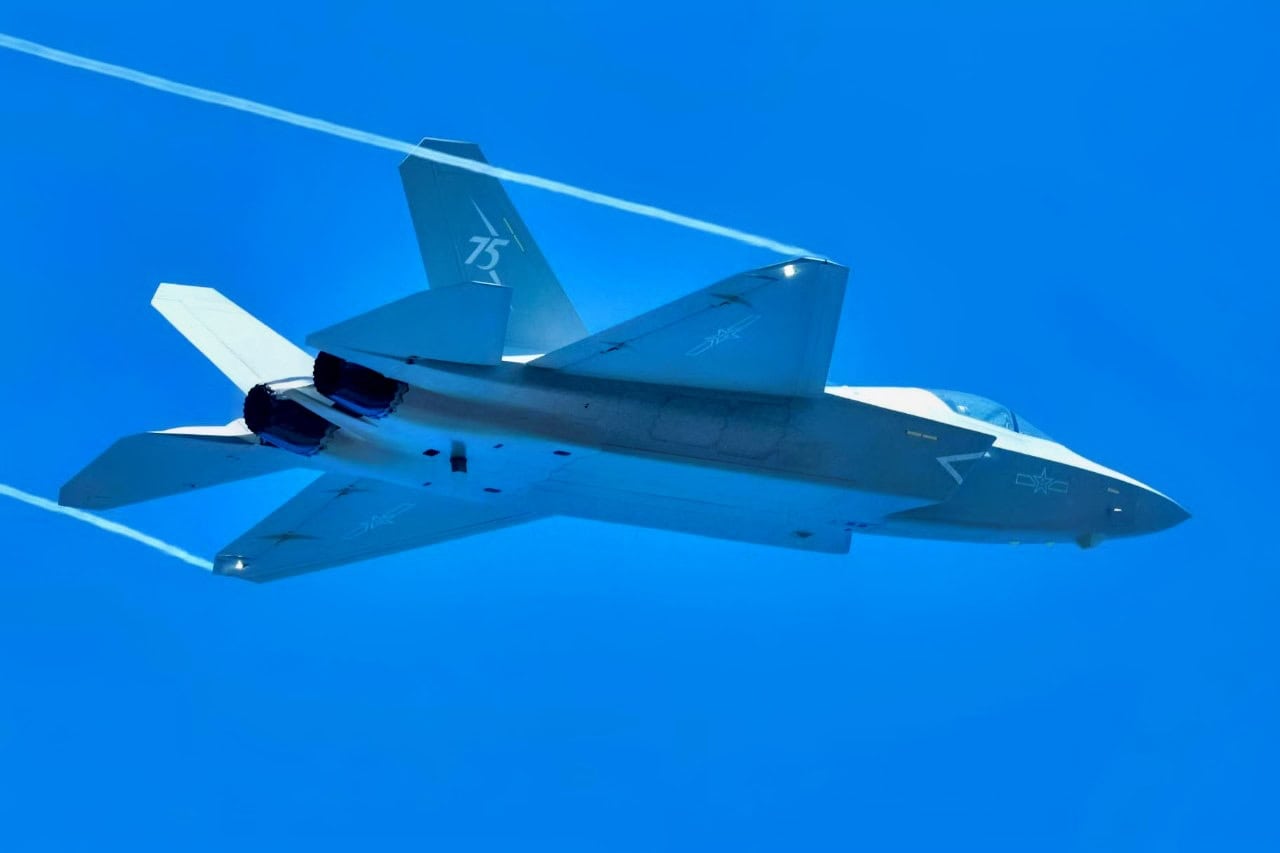
Key Points – China is reportedly expediting the sale of J-35 fifth-generation stealth fighters to Pakistan at a discount, a move poised to significantly alter the air power balance in South Asia.
-This development, which includes reports of Pakistani pilots already training in China on the new platform, would give Pakistan a stealth fighter capability that India currently lacks.
-The deal pressures India to accelerate its own fifth-generation fighter acquisition, forcing a difficult choice between its indigenous AMCA program, Russia’s Su-57, or the American F-35.
-The J-35 sale also marks a major step in China’s ambitions as a global supplier of advanced military technology.
China to Sell J-35 Stealth Jets to Pakistan in a ‘Game Changer’ for India
Just a few weeks after the militaries of India and Pakistan clashed, China has stepped in and is expediting the sale of J-35 fifth-generation stealth fighters to Pakistan at a discount while preparing to deliver them as early as August.
According to reports, a group of Pakistani pilots is already in China to undergo training on the new fifth-generation stealth platform, further reinforcing the idea that the J-35s may soon be inducted into the country’s air force.
The export of China’s J-35 stealth fighter to Pakistan has the potential to significantly alter the regional security landscape, with implications for India and the United States in particular, as well as benefits for China.
J-35: Pakistan’s Air Force Would Pass India In Terms of Capability
A Pakistani acquisition of the J-35 (also known as FC-31) would mark a significant upgrade to Pakistan’s air capabilities. The J-35 is China’s second stealth fighter, following the J-20, and its design is that of a fifth-generation, multi-role combat aircraft with stealth capabilities and advanced avionics.
Designed as a multi-role platform, the airframe is intended to excel in both air superiority fighter and ground attack roles. It has the potential to conduct carrier-based operations for the People’s Liberation Army Air Force (PLAAF) and the People’s Liberation Army Navy (PLAN).
Its stealthy design emphasizes reducing the aircraft’s radar cross-section, aided by a twin-engine design and by internal weapons bays to enhance survivability and operational effectiveness.
The F-35 J-35, equipped with advanced avionics, sensors, and electronic warfare capabilities, is a direct rival to other fifth-generation fighters, such as the F-35, from which the J-35’s design was stolen.
However, what the jet represents for Pakistan—and the strategic implications of the J-35’s reported deliveries are significant, particularly in the context of China’s regional ambitions.
How Could This Influence the Situation in Southwest Asia?
The expected quick delivery of China’s next-generation stealth fighters could shift the airpower balance in South Asia. India continues to modernize its air force with platforms such as the Russian Su-30MKI and the French Rafale aircraft.
This deal also marks China’s first known export of a fifth-generation fighter jet, reflecting its ambitions as a global arms supplier. Russia has offered India the source code for its Su-57 “stealth” fighter. While not much is known about either platform, we can expect to learn quickly how good the two aircraft truly are, given the tensions between India and Pakistan.
Pakistan’s acquisition of a fleet of 5th-generation stealth fighters (reportedly, 30 will be purchased) is a game-changer in the region. India currently has 4th-generation Western aircraft, but this could impel them to move quickly as well.
However, neither France (Rafael fighters) nor the US (F-35) will provide India with the source codes that Russia is offering. Production is another matter. Russia has only been able to produce 20 Su-57s, and India may have to wait a considerable amount of time.
The acquisition could also potentially impact maritime security in the Arabian Sea and Indian Ocean. With its advanced capabilities, the J-35 could enhance Pakistan’s ability to project power in these critical areas of the world’s oceans, which are vital for international trade and naval operations. And with their continued closeness with China, that is bad news for the US and the West.
Pakistani Deal Could Be a Boon For Chinese Aerospace Markets
China’s sale of the J-35 could create a huge selling market for their export technology if the aircraft is all it is claimed to be. This could further enhance China’s international prestige, a goal it is seeking to achieve.
However, Pakistan must be equipped with the necessary maintenance and training infrastructure to keep 5th-generation stealth fighters at peak readiness. It is one thing to buy stealth fighters; it is another to keep them flying.
Trump Offered India the F-35
The US has attempted, without success, to sell the F-35 to India. When Prime Minister Modi visited the White House in February, President Trump mentioned that the US was willing to sell India F-35s to enhance India’s national defense via increased military technology sharing, joint military exercises within the auspices of the burgeoning Quad alliance, and perhaps fast-tracking military arms sales.
Thus far, India has not shown interest in purchasing the F-35, primarily due to its focus on developing its 5th-generation fighters. However, India’s domestic Advanced Medium Combat Aircraft (AMCA) program remains years away from operational readiness, while Russian alternatives like the Su-57 carry concerns about production and reliability.
Could this latest news push India to change its mind? The US has been hesitant in the past due to the significant amount of Russian equipment that India uses, raising concerns about potential data security risks and technology leaks.
For an F-35 deal to be finalized, India would need to undertake credible reforms that safeguard sensitive US defense technologies while also ensuring interoperability.
There is no easy answer, but in the meantime, for India, the clock is ticking.
About the Author:
Steve Balestrieri is a National Security Columnist. He served as a US Army Special Forces NCO and Warrant Officer. In addition to writing on defense, he covers the NFL for PatsFans.com and is a member of the Pro Football Writers of America (PFWA). His work was regularly featured in many military publications.
Iran War
30,000 Pound Bunker-Buster Bombs Might Not Be Able to Destroy Fordow


Pingback: Russia's Alfa-Class Submarine Could Do Things the US Navy Dreamed About - National Security Journal