

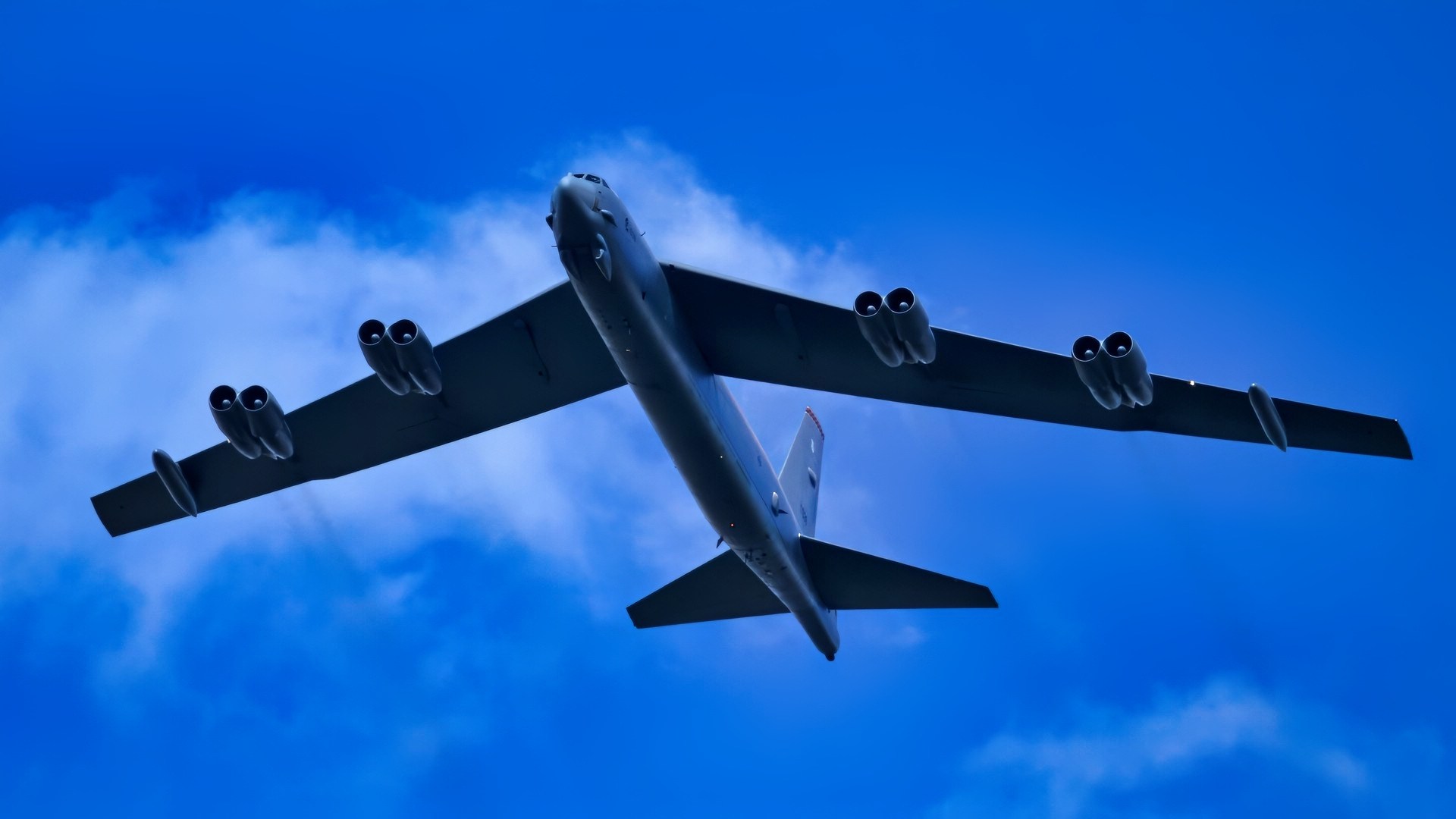
Key Points and Summary – The B-52 Stratofortress is undergoing a massive modernization to remain a cornerstone of U.S. airpower into the 2050s, potentially serving for 100 years. The core of this upgrade is the new B-52J variant, which includes replacing the eight original engines with new, commercially-based Rolls-Royce F130s.
-These engines, which passed a Critical Design Review in early 2025, are 30% more fuel-efficient and are so reliable they will not require an overhaul for their entire 30-year service life.
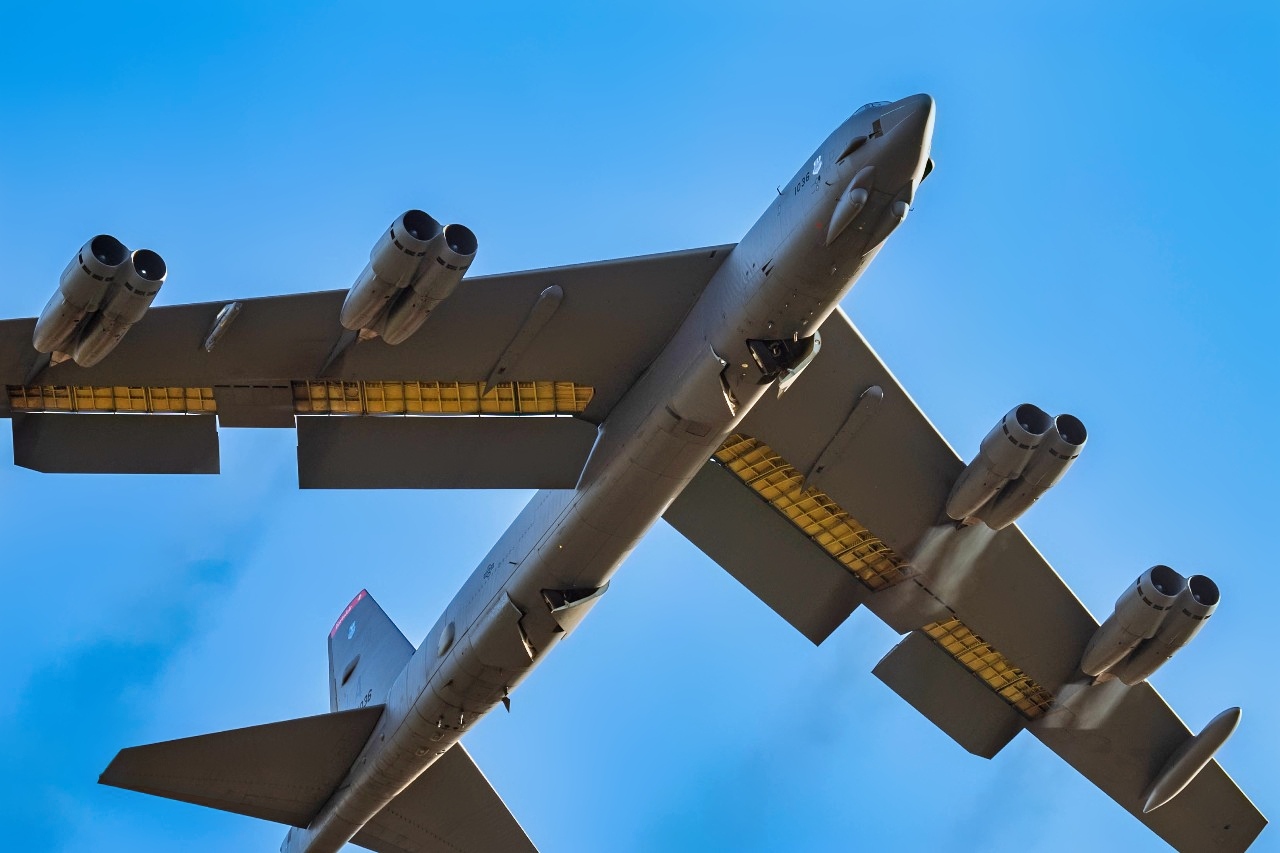
A B-52H Stratofortress assigned to the 20th Expeditionary Bomb Squadron takes off from RAF Fairford, England, for a training mission with the Royal Moroccan Air Force during Bomber Task Force 25-1, Nov. 22, 2024. The U.S. and Morocco’s strategic partnership is based on mutual interests in regional peace, security and prosperity, and we remain dedicated to working together on shared concerns. (U.S. Air Force photo by Senior Airman Mary Bowers)

A U.S. Air Force B-52 Stratofortress, assigned to the 5th Bomb Wing, conducts aerial refueling with a KC-135 Stratotanker, assigned the 350th Expeditionary Air Refueling Squadron, June 14, 2024 during a presence patrol mission over the U.S. Central Command area of responsibility. The B-52 is capable of flying at high subsonic speeds, at altitudes of up to 50,000 feet, within the atmospheric tropopause, with worldwide precision navigation capability, providing a unique rapid response to senior coalition leaders globally. (U.S. Air Force photo by Tech Sgt. Ashley Sokolov)
-This, combined with new avionics (CONECT), new weapons like hypersonics, and an ability to launch drones, will transform the B-52 into a highly effective standoff “missile truck.”
-Bonus: National Security Journal was able to tour a B-52 bomber recently and walk right under it. You can view the video and images from that visit here.
The ‘New’ B-52J Bomber Is Coming
The classic B-52 may fly for as long as 100 years, a staggering accomplishment that may not even surprise people, given the upgrades the aircraft has received over the years.
The Air Force is surging ahead with a new engine, a new “J” variant of the aircraft, and plans for future operations, possibly including launching drones, firing lasers, and carrying new generations of weapons.
The B-52 will fly with a new generation of air-dropped bombs and fly with new nuclear weapons such as the Long Range Standoff Weapon cruise missile and air-dropped B-61 Mod 12 upgraded nuclear bomb.
One of the most recent developments with continued B-52 improvement pertains to the well-known re-engining effort for the aircraft. For many years, the Air Force has been working with Boeing and Rolls-Royce to integrate a more powerful and efficient F-130 engine for the B-52.
Perhaps the most critical element of the new F130 engine is that it is expected to extend the B-52’s service life by 30 years.
Years ago, senior Air Force weapons developers explained that, with some structural reinforcement and maintenance, older airframes can remain viable and highly operational for years beyond their anticipated lifespan.
This appears to be the case with the B-52 because, although the aircraft is a Vietnam-era plane with a classic history, today’s B-52 is almost an entirely different aircraft due to the nature and extent of the upgrades.

A U.S. Air Force B-52H Stratofortress assigned to the 2nd Bomb Wing prepares to depart for a Bomber Task Force mission at Barksdale Air Force Base, La., May 18, 2025. These bomber missions are representative of the U.S. commitment to our allies and enhancing regional security. (U.S. Air Force photo by Airman 1st Class Jaiyah Lewis)
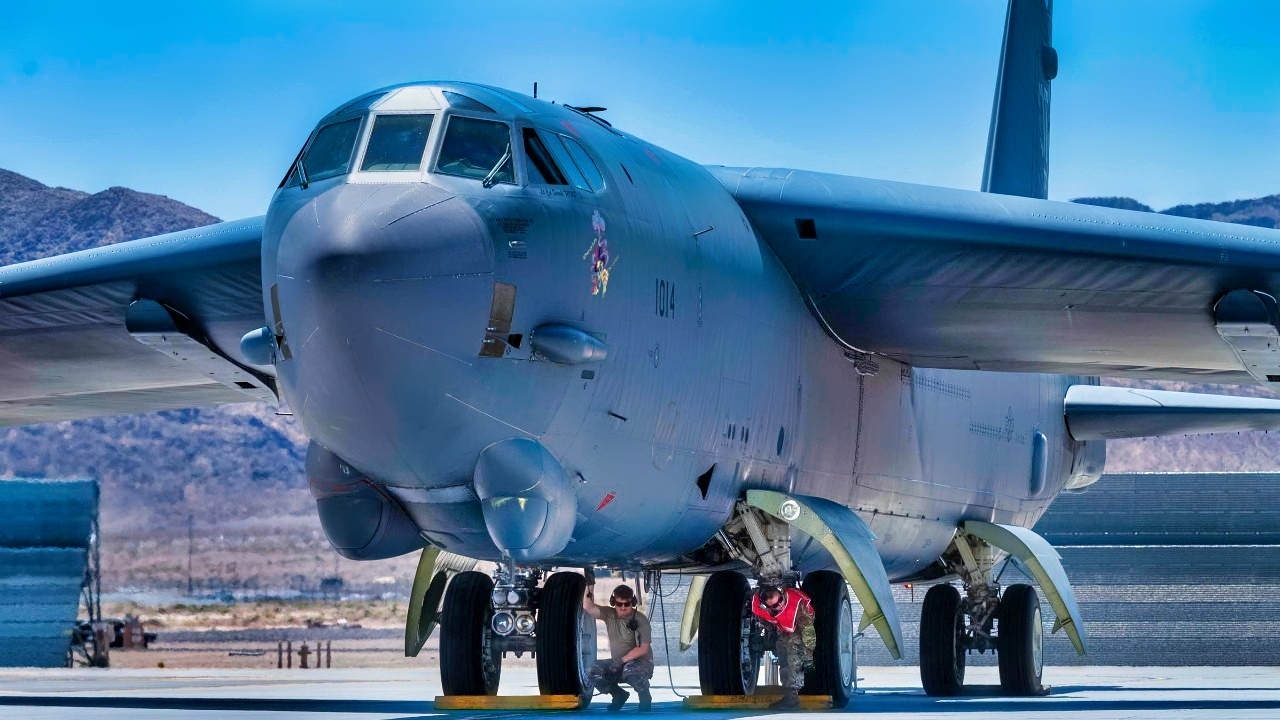
U.S. Air Force Tech. Sgt. Jacob Durham, left, and Staff Sgt. Kenneth Garris, crew chiefs assigned to the 307th Aircraft Maintenance Squadron, Barksdale Air Force Base, Louisiana, prepare to launch a B-52H Stratofortress in support of U.S. Air Force Weapons School Integration (WSINT) at Nellis Air Force Base, Nevada, June 3, 2025. WSINT serves as the culminating exercise for U.S. Air Force Weapons School students, bringing together air, space, and cyber forces in realistic, mission-critical training scenarios that mirror the complexities of modern warfare. (U.S. Air Force photo by William R. Lewis)
Within the last decade, the B-52 has received a communications technology overhaul, internal weapons bay reconfiguration, new weapons interfaces, and also developed an ability to launch drones.
A B-52 could also easily be configured to launch drone swarms from the air to achieve tactical surprise by blanketing an area with ISR, testing enemy air defense,s or even attacking as mini explosives.
New B-52 F130 Engine Surging
Rolls-Royce, Boeing, and the Air Force completed a critical design review of the engine in early 2025. This development enabled ongoing testing to remain on track.
Altitude testing of the new engine took place in February 2025 at the US Air Force Arnold Engineering Development Complex in Tullahoma, Tennessee. Rolls-Royce further explained that the first phases of sea-level tests had also been completed, which helped solidify data analysis for the new engine.
According to Rolls-Royce, the success of the recent testing helped validate the F130 engine’s dual-pod configuration as well. The engine is also built with a wide range of composite materials intended to increase reliability, improve weight distribution, and improve thermal management or the regulation of heat from the engine.

A U.S. Air Force B-52 Stratofortress, assigned to the 2nd Bomb Wing, flies over Southwest Asia during a aerial refueling mission with KC-135 Stratotanker aircraft assigned to the 340th Expeditionary Air Refueling Squadron Dec. 10, 2020. Bomber Task Force missions or deployments showcase the Air Force’s capability to rapidly and effectively support missions around the globe and seamlessly integrate into operations. (U.S Air Force photo by Master Sgt. Joey Swafford)
The new F130 engine is a critical element of the emerging US Air Force B-52J variant expected to continue flying into the coming decades.
While some structural reinforcements were performed on the airframe, the aircraft received an entirely new suite of avionics, computing, command-and-control technology, and weapons configurations.
These B-52 upgrades have been underway for many years at this point, improvements that will significantly fortify the most recent and cutting-edge B-52J.
B-52 Maintenance and Supply
The new engines will be at least 30 percent more fuel-efficient than the existing TF33s, lowering operational and maintenance costs and enabling more dwell time or time over targets on missions.
This enables a B-52 crew to re-evaluate and adjust targets or mission objectives for more extended periods.
The F-130s are built such that they will not need an engine overhaul during its lifespan, a fact which also increases operational efficiency and reduces long-term costs for the aircraft.
F-130 technologies
Maintaining the F-130 engines will not require the Air Force to rely on antiquated supply chains, as they are based on commercial jet engine technology, making it much easier to acquire spare parts and streamline supply chain operations.
Referred to as the Commercial Engine Replacement Program, the F-130 is a variant of Rolls-Royce’s BR725 commercial engine.
The new engine generates up to 17,000 pounds of thrust, well above the thrust of the existing TF33 engines.
About the Author: Kris Osborn
Kris Osborn is the President of Warrior Maven – Center for Military Modernization. Osborn previously served at the Pentagon as a highly qualified expert in the Office of the Assistant Secretary of the Army—Acquisition, Logistics & Technology. Osborn has also worked as an anchor and on-air military specialist at national TV networks. He has appeared as a guest military expert on Fox News, MSNBC, The Military Channel, and The History Channel. He also has a Master’s Degree in Comparative Literature from Columbia University.
More Military
The Army’s AbramsX Tank Boils Down to 1 Word
China’s Big Plan To Sink U.S. Navy Aircraft Carriers Comes Down to 4 Words
The New Air Force B-21 Raider Isn’t Just a Stealth Bomber
The F-22 ‘Super’ Stealth Fighter Is Coming
The Real Reason U.S. Air Force Recruiting Numbers Are Surging


PCman999
October 27, 2025 at 7:08 am
“The new engine generates up to 17,000 pounds of thrust, well above the thrust of the existing TF33 engines.”
The thrust of the current TF33s is exactly 17,000 lbs. No thrust upgrade with the new engines, the airframe probably could not withstand going any faster.
Hopefully the new engines are cooler running (lower IR signature) as well as being low maintenance and less thirsty.
tim williams
October 27, 2025 at 5:03 pm
This plane makes me feel old; I built a plastic model of it in the mid 50s.
Kenneth Wright
October 27, 2025 at 10:28 pm
All hail grandpa buff!