

Iran has rejected Washington’s response to its demands to reopen the Strait of Hormuz, raising new doubts about the prospects of resolving the conflict as diplomatic channels remain open.
Mohsen Rezaei, secretary of Iran’s Supreme National Security Council, said the United States had accepted some of the demands, but its stance on others remained uncertain.

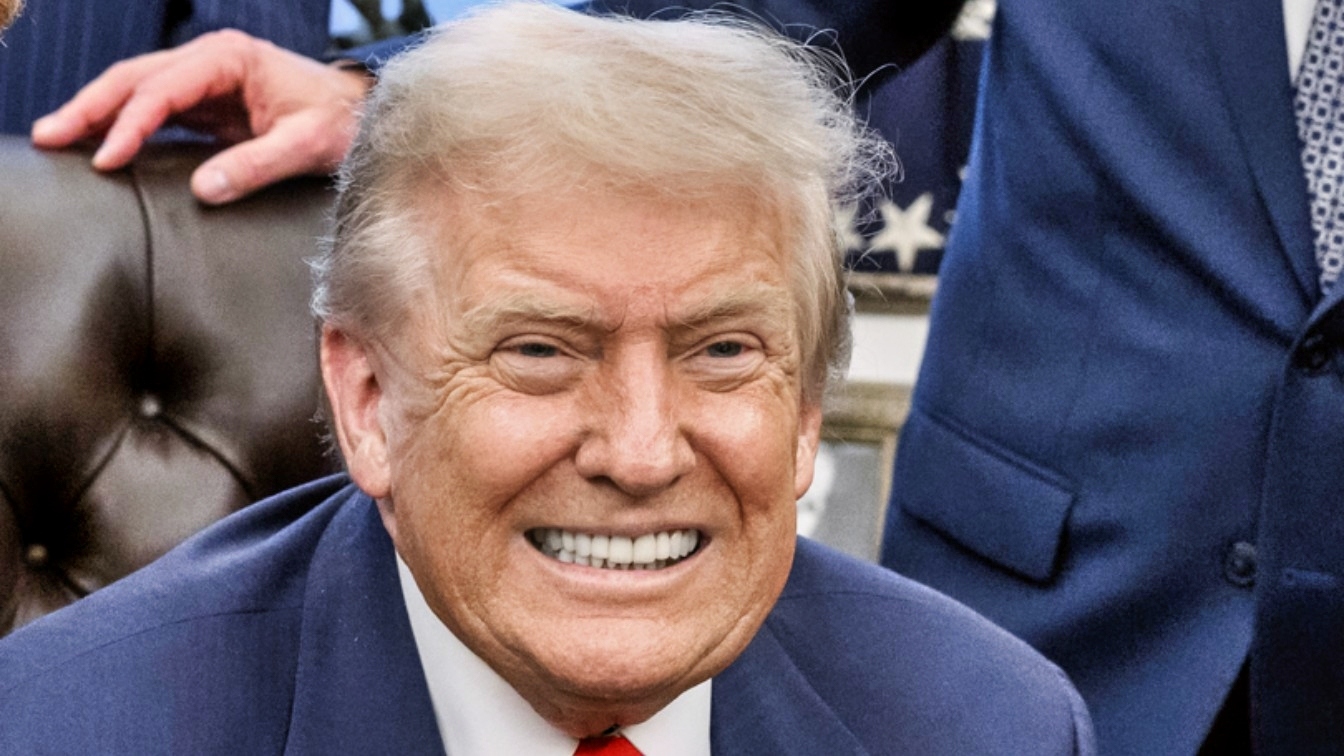
Donald Trump. Image Credit: The White House.

President Donald J. Trump attends Superbowl LIX between the Philadelphia Eagles and the Kansas City Chiefs, Sunday, February 9, 2025, at Caesars Superdome in New Orleans, Louisiana. (Official White House Photo by Daniel Torok)
Rezaei threatened on Sunday to attack communications cables, data centers and artificial intelligence facilities throughout the Middle East if hostilities were to resume.
Reuters reported on Monday that Foreign Ministry spokesman Esmaeil Baghaei said it was still reviewing the U.S. proposal and would respond through intermediaries.
Iran Poses Seven Conditions For Hormuz
Tehran made its latest bid to resolve the dispute at last month’s United Nations General Assembly.
It proposed ending the blockade of the critical shipping lane within seven days if Washington agreed to its seven conditions.
It is not immediately clear what Washington’s response was, other than that Qatari intermediaries conveyed it. “We proposed seven conditions to the Americans,” Rezaei said on Sunday, Reuters reported.
He warned that Iran would not resume the free flow of commerce to the United States or open negotiations, noting, “In their response, they have accepted some of our conditions, while others remain unclear.”
Iran is yet to release the full list publicly.
Previously identified demands include an end to hostilities, the unfreezing of restricted Iranian assets and the lifting of the naval blockade imposed by the United States.
Mohammad Bagher Ghalibaf, the speaker of Iran’s parliament and Tehran’s chief negotiator, insisted on October 4 that the era of American “unilateral demands” is over.
“The Strait of Hormuz will not be opened until our seven conditions are met, ” he said, according to a L’Orient-Le Jour report.
The White House has not confirmed that Washington accepted any of the seven conditions.
Iran Threatened Cables and Data Centers
Rezaei’s latest remarks went beyond the destruction of oil tankers or commercial ports to threaten the destruction of data centers and communications cables throughout the region.
“If war breaks out, many cables, data centers and artificial intelligence facilities, valued at $2 trillion, will be within range,” said Iran International’s report, quoting Rezaei.
Reuters separately reported that Rezaei threatened regional data centers.
An attack on such facilities could cripple commercial communications and disrupt the global digital economy.
The Islamic Revolutionary Guard Corps (IRGC) Navy separately warned that vessels in the strait that switch off their navigation and identification systems would be “identified as hostile.”
The IRGC extensively funds and trains terror proxies across the Middle East and is a listed terror group by Washington.
Washington Enforces Naval Blockade
The disagreement also involves differing interpretations of what opening the Hormuz Strait entails.
Washington is maintaining its blockade of vessels entering or leaving Iranian ports while supporting other commercial traffic through regional waters.
In an October 5, 2026, operational report, U.S. Central Command claimed it had directed 130 commercial vessels away from Iranian ports since it resumed its blockade on July 14, 2026.
U.S. Central Command commander Brad Cooper announced in September that the American military had facilitated more than 2,000 commercial transits through the Strait of Hormuz over a period of two months
The implication of this is that maritime commerce has partly resumed in the region due to U.S. military assistance, but commercial shipping traffic could still be vulnerable to Iranian attacks.
Houthis Escalate Against Riyadh
The disagreement was complicated last week by Saudi Arabia’s King Khalid International Airport being struck by a ballistic missile, claimed by Yemen’s Iran-backed Houthi terror proxy.
On Saturday, Secretary of State Marco Rubio issued a scathing condemnation, requesting that the Houthis “must stop now,” adding, “We stand with the Kingdom of Saudi Arabia and its people…”
He also noted that an American citizen had been among those killed in the attack.
The renewed violence threatens to derail the negotiations. Qatar has maintained that talks are still possible.
On October 6, Qatar’s Foreign Ministry confirmed that mediation between Washington and Tehran “is ongoing and uninterrupted.”
Monday’s Reuters report noted that as of now, the disagreement centers on which side will agree to address Iran’s nuclear program before discussing the Strait of Hormuz and maritime trade.
About the Author: Georgia Gilholy
Georgia Gilholy is a journalist based in the United Kingdom who has been published in Newsweek, The Times of Israel, and the Spectator. Gilholy writes about international politics, culture, and education.


