

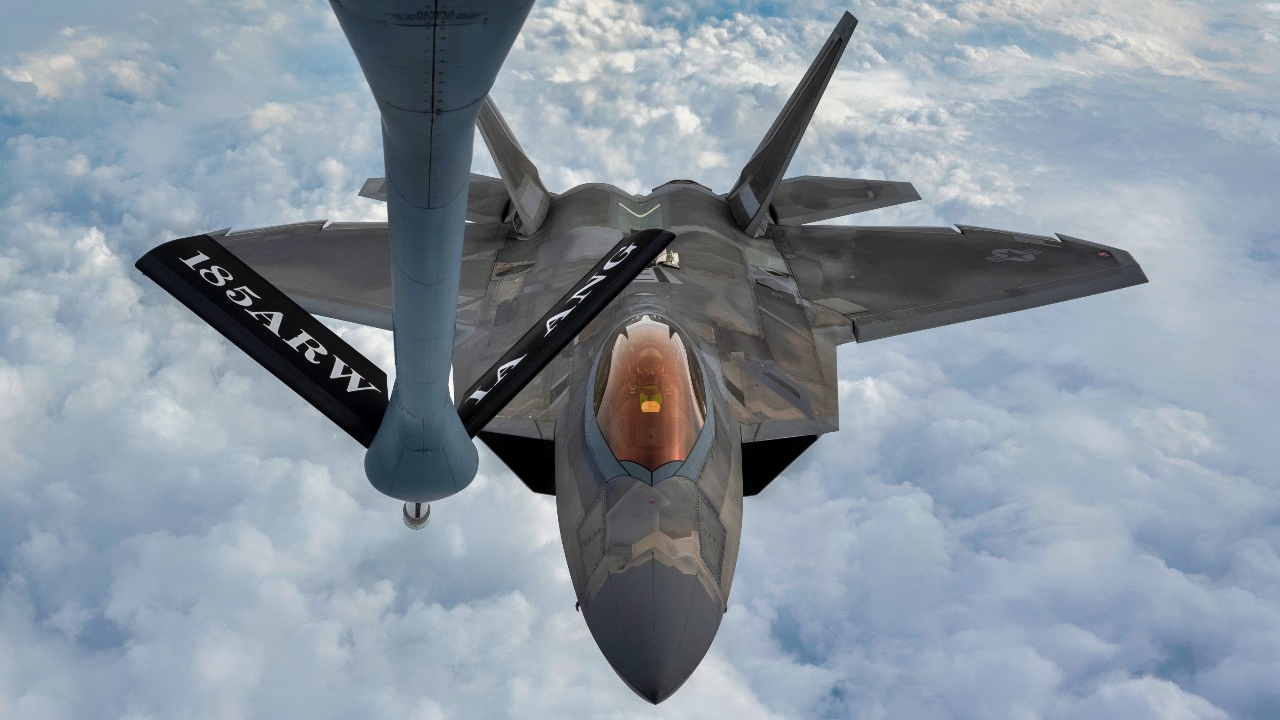
The war between the United States and the Islamic Republic of Iran has reached a fulcrum point. Multiple analysts now argue that Washington’s remaining options in going forward with the war all carry severe risks.
As the war continues, Iran maintains pressure on global shipping through the Strait of Hormuz. Now, policymakers are debating whether escalation or renewed diplomacy is the best path forward.
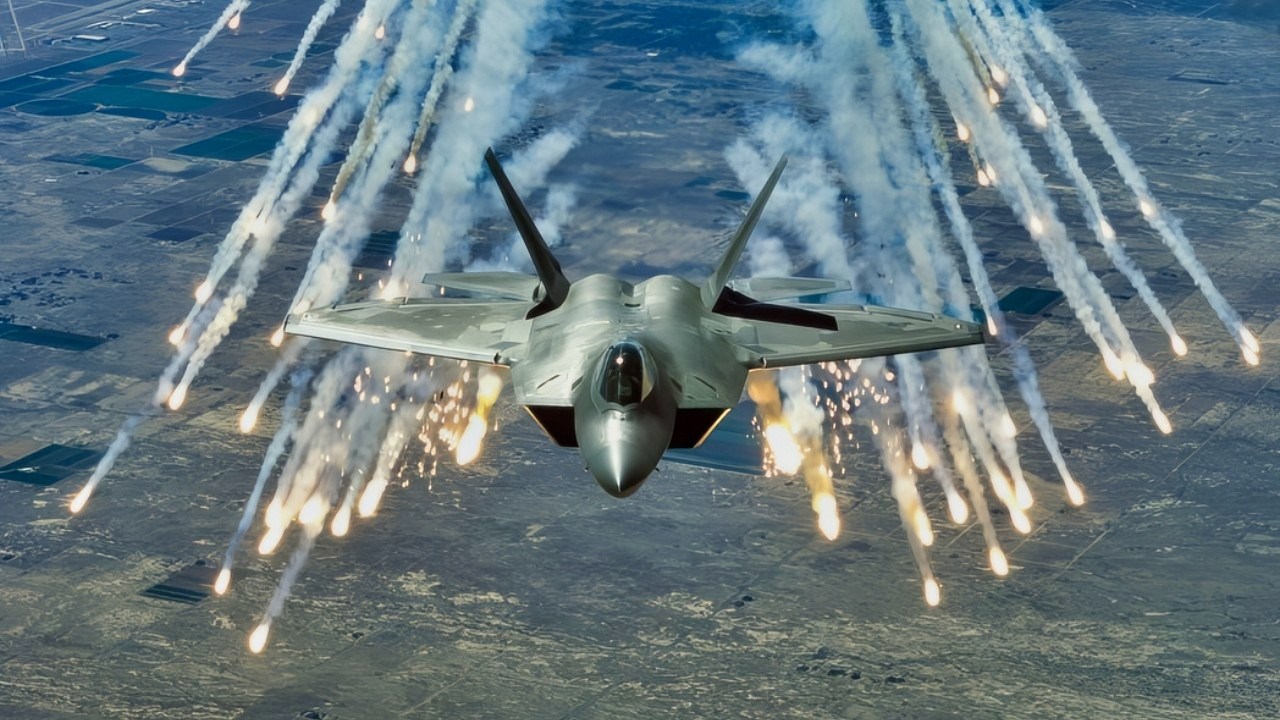
F-22 Raptor Firing Flares. Image Credit: Creative Commons.
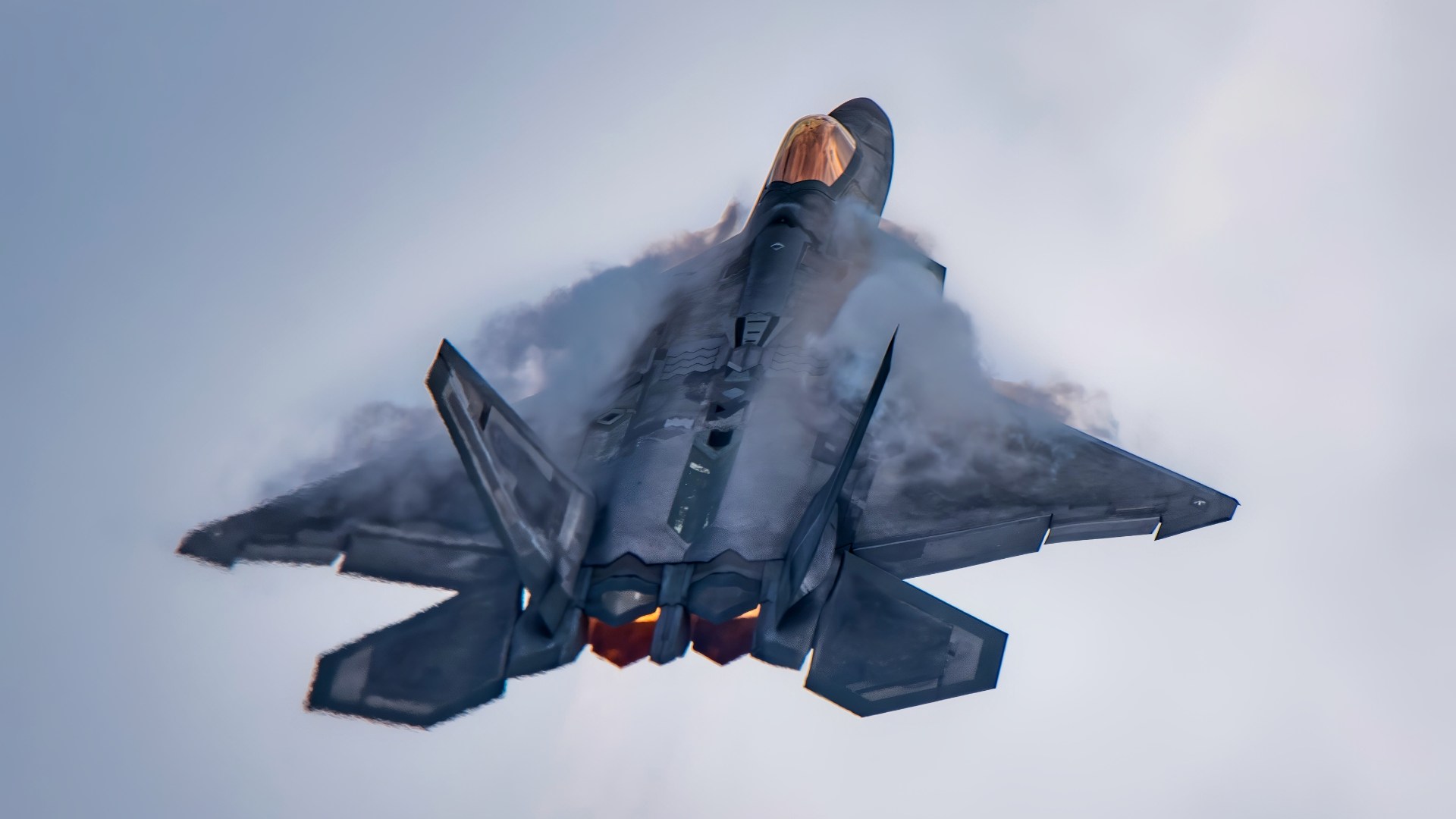
Maj. Paul Lopez, F-22 Raptor Demonstration Team commander, performs during the Chicago Air and Water Show, Aug. 17, 2019. Founded in 2007, the F-22 Demo Team showcases the unique capabilities of the world’s premier fifth-generation fighter aircraft. (U.S. Air Force photo by 2nd Lt. Samuel Eckholm)
Vice-President JD Vance continues arguing in favor of a peaceful end to the war. President Donald Trump, meanwhile, keeps talking about how the Iranians have not felt enough pain while the White House insists Trump is in “revenge mode.”
Why Hasn’t the Military Escalation Worked?
The law of diminishing returns has already set in for the American side in the conflict. Despite the repeated, sweeping strikes on critical Iranian military infrastructure, the Iranians continue to wage war against the Americans and Gulf Arab states.
The US Armed Forces have struggled in their primary objective of reopening the Strait of Hormuz. No matter how many targets the US military hits in Iran, it just appears as though the Iranians have not lost the will–or capability–to fight.
That’s because the Americans are hitting what they can see. That’s very different from what’s actually there. Iran has spent at least the last 20 years burying their key weapons, production, and launch facilities deep underground.
American forces have struggled to destroy those systems at a level that would pressure the Iranian regime to deescalate.
Kharg Island and the Option From Hell
Another proposal that’s been floating around is the idea that the Americans should seize or neutralize Iran’s Kharg Island, the country’s primary oil export terminal.
President Trump has spoken about his desire to knock out Kharg Island’s oil exporting capacity, so that the Iranians cannot continue benefiting from their oil sales. But taking Kharg is easier said than done.
Such an operation would also require substantial American naval and ground forces while exposing US personnel to missile attacks, drone strikes, and potential counteroffensives.
Explosive Escalation Everywhere
There’s also the added problem of greater escalation beyond Iran, which could destabilize the entire Middle East, affecting regional allies and security dynamics, as Tehran has repeatedly demonstrated its willingness to target energy infrastructure throughout the Gulf region, while Tehran’s regional partners–including Yemen’s Houthi movement–retain the capability to threaten commercial shipping in the Red Sea and the Bab el-Mandeb Strait.
A simultaneous disruption of both the Strait and the Red Sea’s shipping lanes would place additional pressure on global energy markets–which hurts the Americans and their allies far more than it does Iran.
This situation has worsened as Ukraine has struck at Russia’s energy refining capacity, creating systemic shortages in Russia.
Thus, global energy markets have been roiled between the Ukraine and Iran Wars.
These situations have congealed together to send oil and natural gas prices above their historical average, which is now contributing to inflation–raising the costs of the war for everyone.
Peace In Our Time? More Like Worst Case Scanerio
Many still pine for some peace deal, but understanding the likelihood and potential outcomes of such agreements is crucial for assessing future stability.
Many experts have already highlighted the complications in assembling a viable peace agreement with Tehran.
Under the scope of these discussions, the idea would be that Iran and the US would agree to de-escalate initially by allowing for regular shipping to resume in places like the Strait of Hormuz and throughout the Red Sea.
Of course, this was basically what the US and Iran sides were negotiating before the Americans took umbrage with Iran’s activities in the Strait of Hormuz during the MoU.
Now, neither side appears willing to trust each other.
Where Do We Go From Here?
Any lasting solution will ultimately require a return to diplomacy once military operations subside. But the chasm between war and peace appears far greater than it did even when the conflict began on February 28.
Too much blood has been spilled, and too many lies and manipulations have been enacted.
With all the talk about escalation and the president promising to go in “revenge mode,” the Americans may be preparing for one final assault on Iran–likely Pickaxe Mountain–after which they will end the attack.
Then again, these wars tend to take on a life and logic all their own. The secret hope in Washington may be that one last theatrical strike will conclude the fighting and then open the door to negotiations.
But the Iranians have been screaming for vengeance since the Americans (and Israelis) assassinated the Iranian Supreme Leader at the outset of the war. It’s clear, though, that the fight is not yet over.
Indeed, both sides appear intent on escalating at least one more time.
About the Author: Brandon J. Weichert
Brandon J. Weichert is Senior National Security Editor. He also manages The Weichert Brief on Substack. Weichert also hosts “National Security Talk” on Rumble. He is the author of four bestselling national security books, the most recent of which is A Disaster of Our Own Making: How the West Lost Ukraine (Encounter Books). Follow him via Twitter/X @WeTheBrandon.


