


Summary and Key Points: Every party in the Middle East says it wants the war to end — the U.S., Israel, Iran, and the Gulf states are all at the table. Yet a deal drifts further out of reach with each round, because every player holds a demand no one else will grant. Iran won’t surrender its enriched uranium. Israel won’t stop in Lebanon. Saudi Arabia wants a Palestinian state. Washington is swinging for the biggest bargain the region has ever seen.
The Iran War and Beyond

A U.S. Navy EA-18G Growler prepares to refuel from a U.S. Air Force KC-135 Stratotanker over the U.S. Central Command area of responsibility, March 29, 2025. The Growlers are assigned to the Harry S. Truman Carrier Strike Group supporting maritime security operations in the CENTCOM AOR. (U.S. Air Force photo by Staff Sgt. Gerald R. Willis)
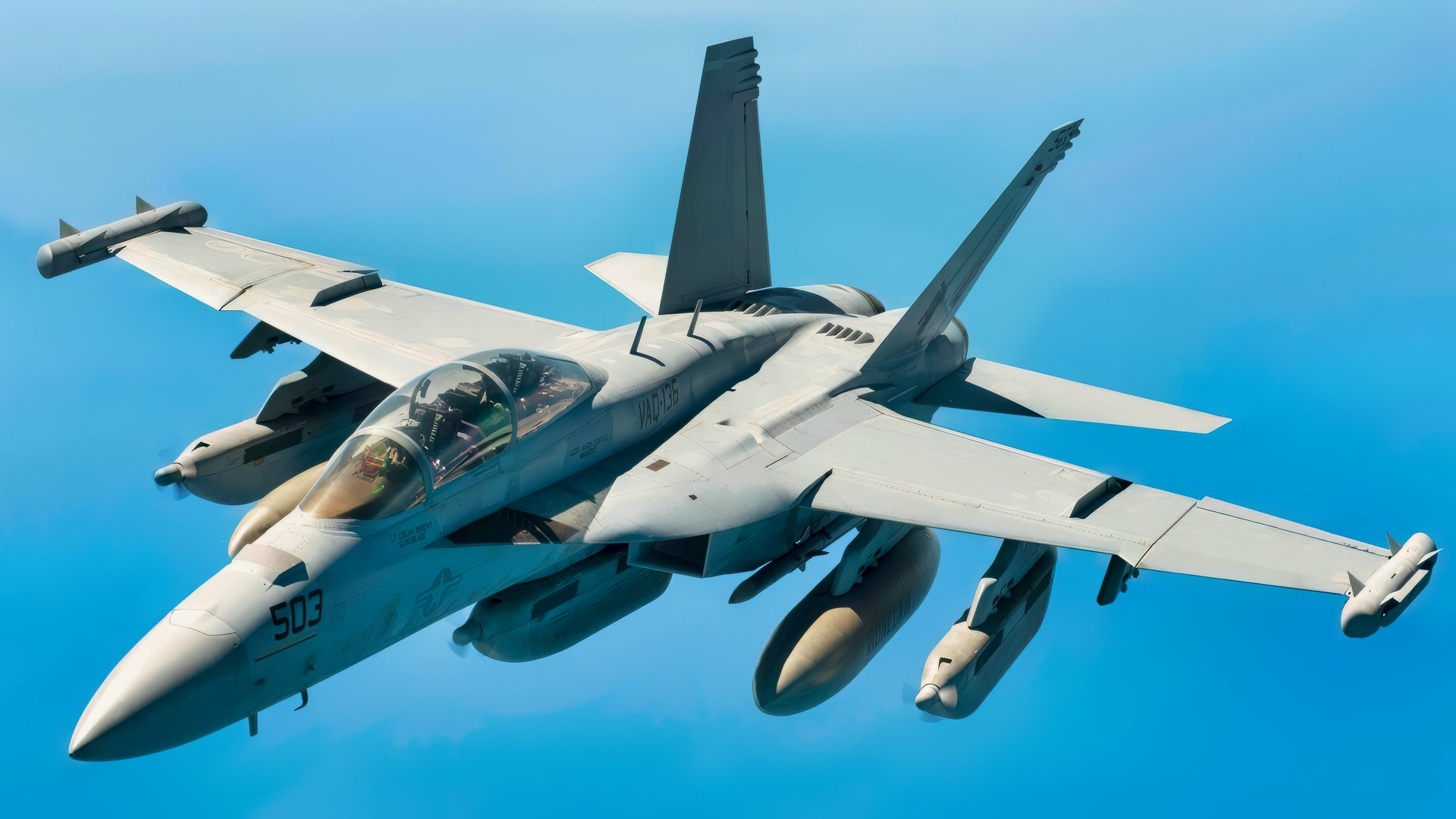
A U.S. Navy EA-18G Growler assigned to the USS Carl Vinson breaks away from a U.S. Air Force KC-135 Stratotanker from the 909th Air Refueling Squadron after conducting in-air refueling May 3, 2017, over the Western Pacific Ocean. The 909th ARS is an essential component to the mid-air refueling of a multitude of aircraft ranging from fighter jets to cargo planes from different services and nations in the region. (U.S. Air Force photo by Senior Airman John Linzmeier)
As the war in the Middle East heats up once again, the chances of a quick and peaceful settlement of the conflict are growing fainter by the day. Although the United States has repeatedly tried to broker a lasting peace in the region, President Trump finds himself in a diplomatic limbo, with neither side willing to accept the other’s demands. Part of this is because some parties, like Israel, want to continue the conflict in South Lebanon. Another issue is that President Trump wants to settle with a grand, comprehensive deal that is completely unacceptable to the Iranians.
Why a Peace Settlement Seems Unreachable
Around a month ago, President Trump convened a conference call with various leaders all across the Middle East, including Saudi Arabia, the United Arab Emirates, Turkey, Egypt, Jordan, Bahrain, and Pakistan. The President asked the representatives from each country for their support for a joint initiative to impose a lasting peace settlement on Iran, to which each agreed.
He then proposed potentially expanding the Abraham Accords, the U.S.-brokered agreements that normalized relations between Israel and some of its neighbors, and a major foreign policy victory for the first Trump Administration.
This suggestion was received rather poorly by the foreign audience.
This meeting signifies some of the greatest hurdles to any peace settlement, one of which is the President’s own grand aspirations. Since the implementation of the ceasefire, some eight weeks ago, the U.S. has sought a grand, region-transforming deal that would provide a comprehensive framework to bring peace to the Middle East. Not to say that these aspirations are inherently wrong, but they are currently unattainable by the U.S.’s current diplomatic position.
Trump wants a deal that is both bigger than Obama’s 2015 nuclear deal and an expansion of the Abraham Accords. However, the competing priorities of all parties involved have made this deal much harder to reach than the U.S. anticipated.

A U.S. Air Force F-15E Strike Eagle conducts a combat air patrol in the Air Force Central Command area of responsibility, June 10, 2025. These patrols are conducted in order to deter aggression and aid stability within the region. (U.S. Air Force Photo by Staff Sgt. John C.B. Ennis)
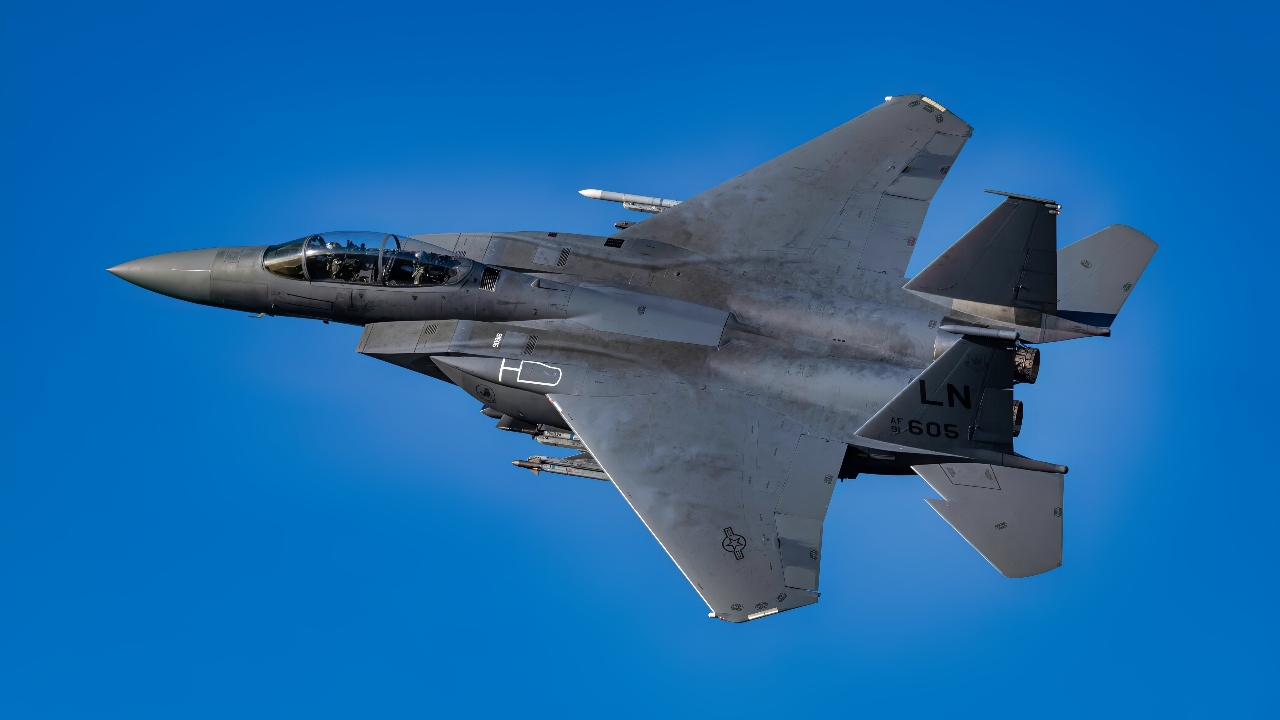
An F-15E Strike Eagle pulls out of a low approach and prepares to land at Royal Air Force Lakenheath, Jan. 5, 2022. The Strike Eagle is currently the second largest fighter aircraft in the U.S. Air Force’s inventory behind the new F-15EX. (U.S. Air Force photo by Senior Airman John Ennis)
Go Big or Go Nowhere
One of the biggest points of negotiation is the enriched uranium, which Iran allegedly possesses. From America’s perspective, these materials cannot remain in Iranian hands and could lead to the development of nuclear weapons.
At many points, the U.S. has threatened grave consequences if the materials are not handed over, and some reports even indicated that the U.S. may send in special forces to retrieve the nuclear materials by force. These options were ultimately rejected by the President. This is obviously unacceptable to the Iranians, who have been tirelessly pursuing a nuclear weapon for multiple decades at this point.
Despite the tactical success of Operation Epic Fury, Trump has been unable to force the Iranians to acquiesce to any deals. According to CENTCOM and other sources, the U.S. and Israel struck around 15,000 targets in the first weeks of the operation and decapitated dozens of Iran’s top political and military leadership. Despite these successes, the regime has proven more resilient than the U.S. anticipated and has leveraged its control of the Strait of Hormuz, creating a noticeable ripple effect in the global economy.
Now, the U.S. is trying to contain the fallout of the operation that it started in May.
Too Many Competing Interests
The U.S. also has to contend with the competing interests of its allies, particularly Israel. The main point of contention is Israel’s current operations in Southern Lebanon against Hezbollah, Iran’s proxy force in the region. These operations also frustrated the President, who was seemingly at the cusp of reaching a settlement with Iran.
Just a few days ago, the U.S. tried to cool tensions between Israel and Hezbollah, and reportedly received positive news from Hezbollah, but the damage was already done. Other regional players in the region, like Saudi Arabia, are also willing to cooperate, but only if a Palestinian state is created down the line.
Let the Missiles Negotiate
The unfortunate result is that peace talks have stalled on all sides. Despite all parties being willing to come to the table, no one has any incentive to compromise on the other party’s demands. Each round of talks has raised new issues, all of which need to be resolved at some point if the Middle East is to achieve any lasting peace. Even if a smaller agreement were reached to open up the Strait of Hormuz for commercial shipping, the larger issues, like Iran’s nuclear supplies, Israel’s presence in Lebanon, and the Palestinian question, are still unresolved.
Consequently, this leaves one last option: military action. If no side can reach an agreement, then the conflict will have to continue until one side agrees to compromise, whether it be Iran, the U.S., or Israel. In the last 24 hours, Iran has already launched its first waves of ballistic missiles since the enactment of the ceasefire, which have targeted military installations and airports across Kuwait and Bahrain. The U.S. has also resumed military strikes, although not yet to the scale seen in Epic Fury.
If the military option does not work out, the U.S. may have to agree to a peace proposal more humiliating than Obama’s 2015 nuclear deal, which could have significant political ramifications.
About the Author: Isaac Seitz
Isaac Seitz, a Defense Columnist, graduated from Patrick Henry College’s Strategic Intelligence and National Security program. He has also studied Russian at Middlebury Language Schools and has worked as an intelligence Analyst in the private sector.


