
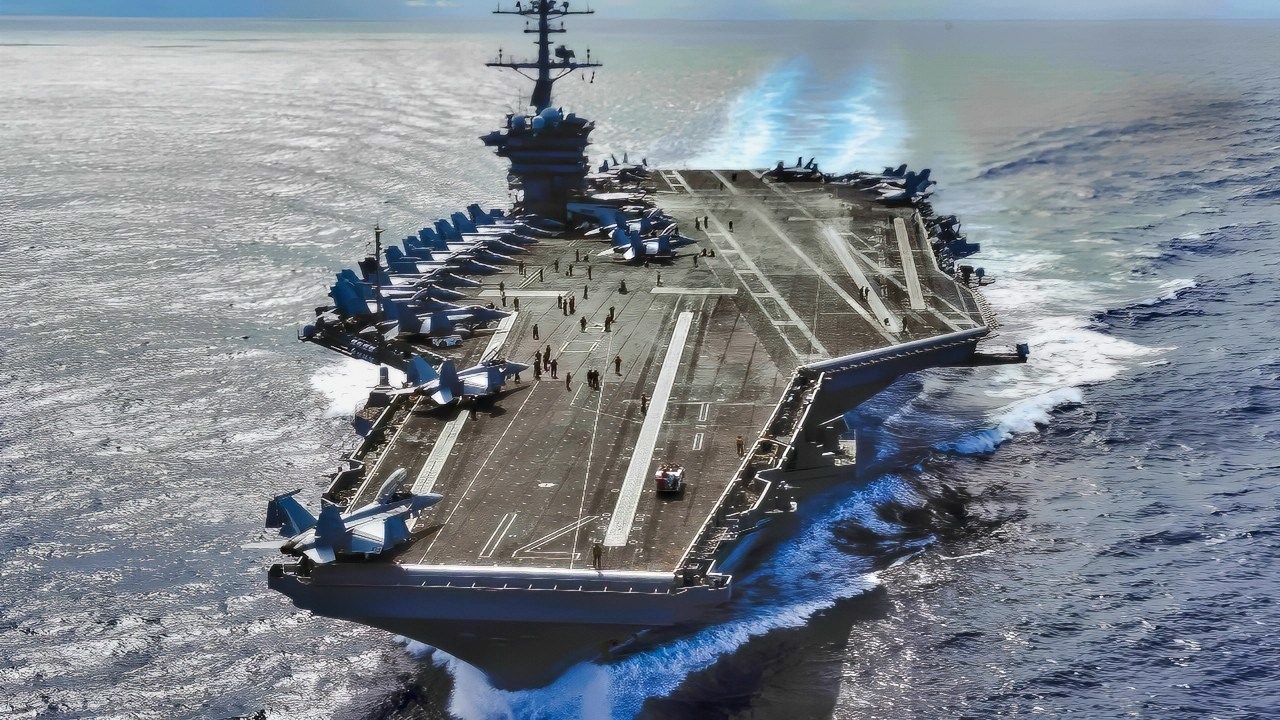
Iran reported no overnight U.S. airstrikes for the first time in nearly two weeks on Saturday, July 25. While the Islamic regime welcomed what it described as a “peaceful night,” the conflict in the region continues, and the U.S. may still be preparing for much larger nights in the near future.
Saudi Arabia, meanwhile, launched airstrikes against Houthi targets in Yemen.
First Pause After Nearly Two Weeks Of Bombing in Iran War
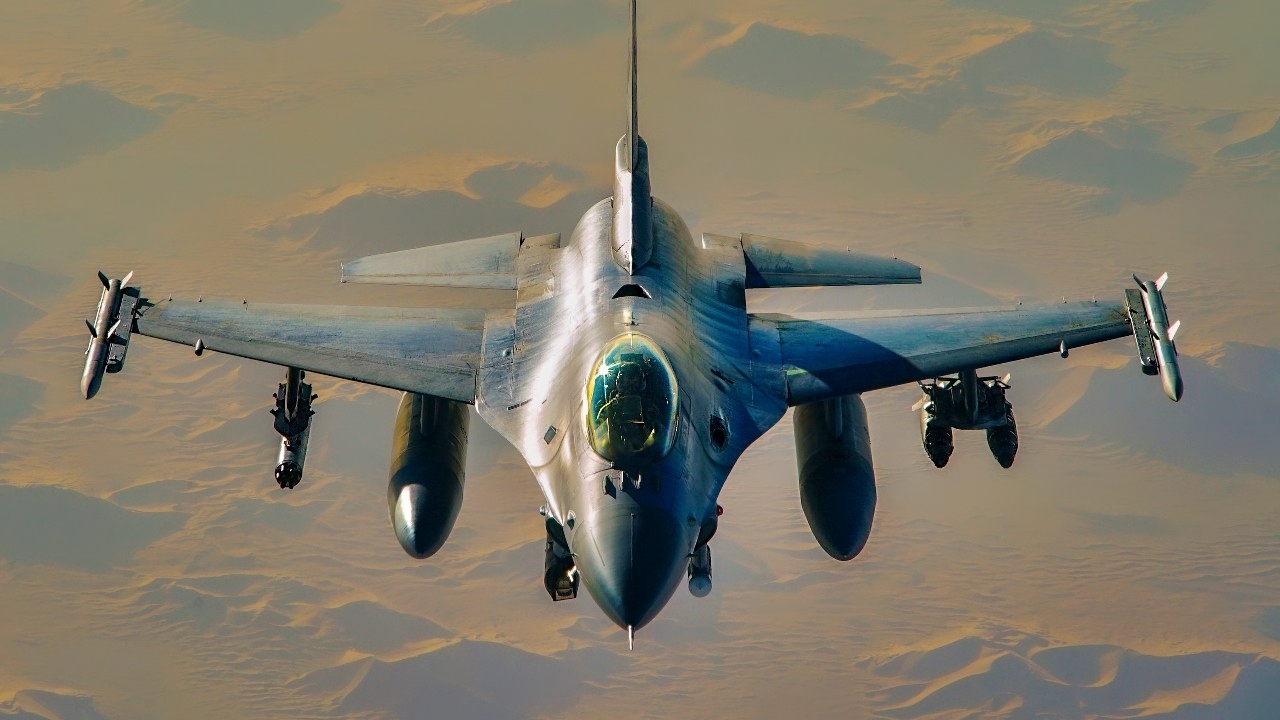
A U.S. Air Force F-16 Fighting Falcon based in the Central Command area of operations conducts armed aerial patrols in Somalia in support of Operation Octave Quartz, Jan. 9, 2020. The F-16s support to OOQ demonstrates the U.S. military’s reach and power projection across vast distances to hold adversaries such as al-Shabaab at risk with flexible, precise and lethal force that is capable of rapidly responding anywhere on the globe. The mission of OOQ is to reposition U.S. Department of Defense personnel from Somalia to other locations in East Africa. (U.S. Air Force photo by Staff Sgt. Taylor Harrison)
The apparent overnight break followed an unprecedented series of 13 consecutive nights of U.S. strikes that dramatically escalated the conflict, with Washington seeking to deliver on its promises to severely degrade Iranian military infrastructure if the regime did not come to a deal over the future of its nuclear program.
Throughout the campaign, CENTCOM has issued nightly statements detailing attacks against Iranian military infrastructure, including missile storage facilities and drone production sites, air defense systems, military command centers, logistics hubs, and the country’s maritime capabilities.
And while no new strikes were announced overnight, American military activity in the region continued. On Friday, July 24, U.S. naval forces disabled a merchant vessel in the Gulf of Oman after it allegedly repeatedly attempted to breach Washington’s blockade on Iranian ports.
The quiet night, however, doesn’t necessarily mean that the conflict is close to being over. U.S. President Donald Trump continues to signal that additional military action remains a possibility.
Trump said that U.S. forces were “locked and loaded” while also expressing openness to engaging in more diplomatic talks.
Speaking to reporters in the White House on Friday, July 24, the president said that Washington and Tehran are still engaged in negotiations to end the conflict, and even suggested that the regime was more “serious” than before.
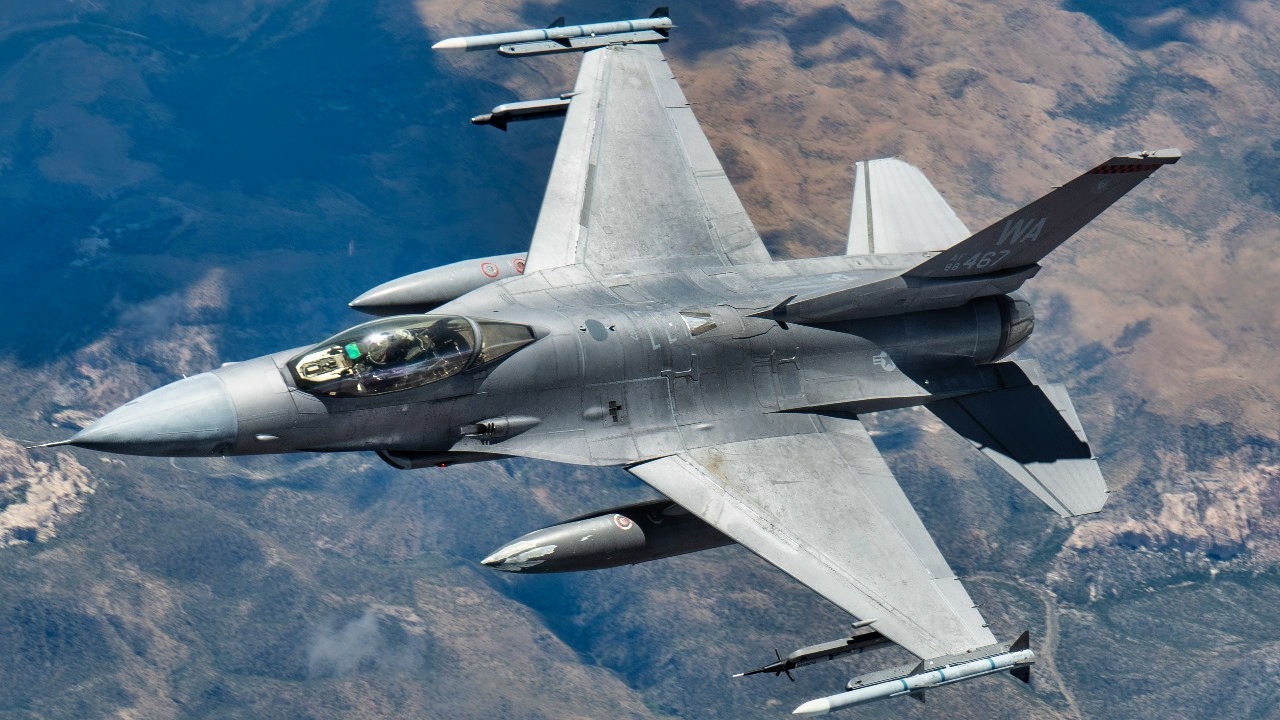
A U.S. Air Force F-16 Fighting Falcon assigned to the 16th Weapons Squadron flies over the Nevada Test and Training Range during a Weapons School Integration (WSINT) mission, June 9, 2025. WSINT is a graduate-level training event that combines multi-domain assets in large-force scenarios, enabling U.S. Air Force and joint service members to hone tactical expertise and integrate advanced capabilities in a dynamic threat environment. (U.S. Air Force photo by Staff Sgt. Jose Miguel T. Tamondong)
“We are talking to them. I think they’re being serious,” Trump said. “I think…they are being by far the most serious that we’ve seen them, but that doesn’t mean we get there. We’ll see what happens.”
Saudi Arabia Launches Strikes Against Houthis
While U.S. strikes paused overnight, the conflict continued and even escalated elsewhere in the region as Saudi Arabia carried out airstrikes against Houthi military targets in western Yemen.
The Saudi-led Coalition to Restore Legitimacy in Yemen announced strikes against Houthi positions near the Red Sea port city of Hodeida following Houthi attacks on Saudi-linked shipping.
It is one of Riyadh’s most significant military responses in years, following a period of relative calm along the Saudi-Yemen border.
On Monday, July 20, the Houthis announced a new naval blockade on Saudi Arabia, warning that any vessel traveling to or from Saudi ports would become a legitimate military target.
In response, coalition spokesman Maj. Gen. Turki Al-Malki rejected the claim, noting that more than 300 commercial vessels had entered the ports of Ras Isa, Salif, and Hodeida during the first half of 2026.
He said that the coalition had also begun implementing measures to protect commercial shipping through the strait.
“The Joint Forces Command of the Coalition has initiated the implementation of protection measures for Coalition vessels transiting through Bab al-Mandab Strait,” Al-Malki said.
“All Houthi threats against transiting vessels will be dealt with swiftly and firmly, as such threats are a blatant violation of international law and fall under acts of maritime piracy,” he continued.
The Houthis followed through on the threat on Thursday, July 23.
Military spokesman Yahya Saree announced that the group had fired ballistic and cruise missiles at the Saudi oil tankers Encelia and Layla, claiming that the ships had violated the blockade.
Reports later confirmed that the Saudi-flagged Encelia had transmitted a distress signal, reporting it had been struck by a missile near the port limits of Jizan and had been set on fire.
Saudi Arabia responded late on Friday, July 24, by launching airstrikes against Houthi military targets in and around Hodeida.
The Saudi-led coalition said that the operation targeted military infrastructure that was used to carry out attacks on commercial shipping. Houthi-run media outlets also reported strikes on the Red Sea port city and Kamaran Island.
Within hours, the Houthis had also responded, with military spokesman Yahya Saree claiming that the group had launched ballistic missiles and drones at Saudi Aramco facilities in Yanbu and Jizan, retaliating to the coalition’s airstrikes.
U.S. Strikes May Continue on Iran
The overnight U.S. pause in Iran war strikes may indicate that the U.S. is looking for an opportunity to bring Tehran back to the negotiating table, offering a moment of peace and a chance for Iranian officials to collect their thoughts and determine whether they have sufficient leverage to keep delaying a deal.
However, the Iran war bombing pause could also indicate that U.S. forces are preparing for a much larger attack, following days of reports of huge amounts of U.S. military resources being moved to the Middle East.
Trump has, after all, warned of a “massive” attack against Iran – and it looks like U.S. forces are well positioned to begin in the coming days.
About the Author: Jack Buckby
Jack Buckby is a British researcher and analyst specializing in defense and national security, based in New York. His work focuses on military capability, procurement, and strategic competition, producing and editing analysis for policy and defense audiences. He brings extensive editorial experience, with a career output spanning over 1,000 articles at 19FortyFive and National Security Journal, and has previously authored books and papers on extremism and deradicalization.


