

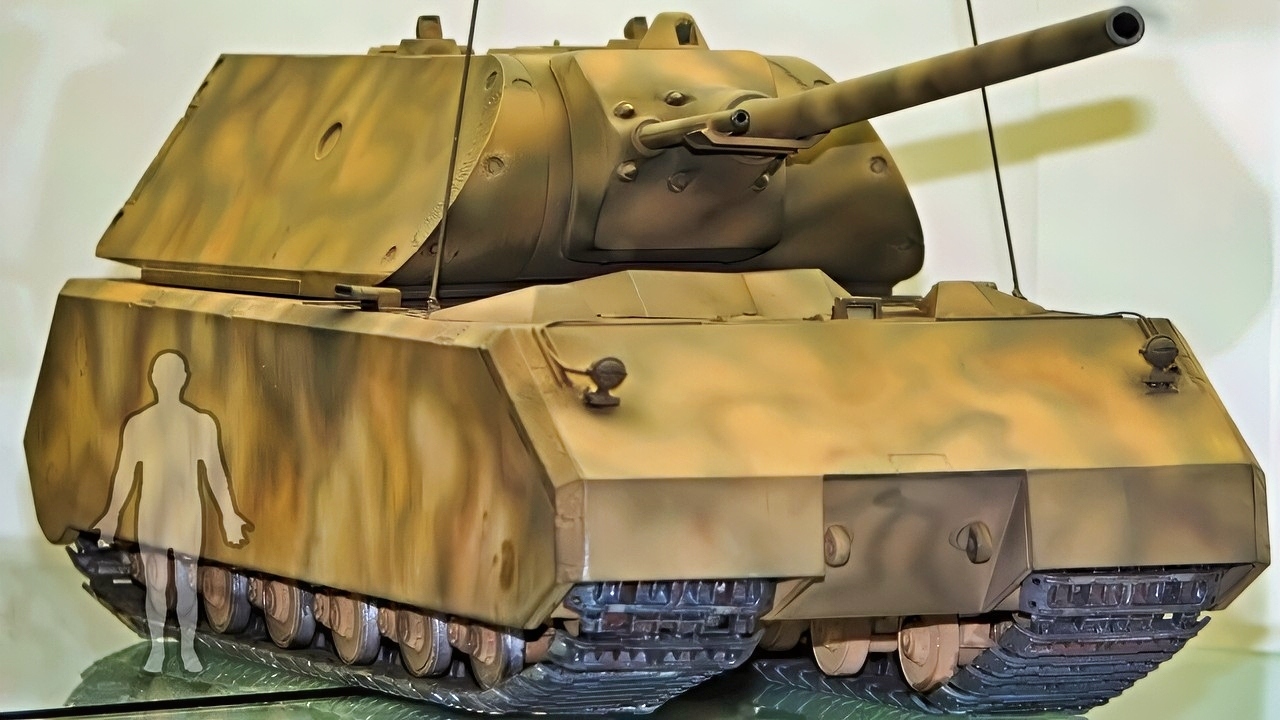
Hitler personally ordered Germany to build the Panzerkampfwagen VIII Maus — a 188-ton super-heavy tank. The Maus is the heaviest fully enclosed armored fighting vehicle ever built. Germany ordered 5 Maus tanks. Only 2 hulls and 1 turret were completed before Soviet forces captured the testing grounds in 1945. None saw combat.
Maus: The Super German World War II Tank That Never Saw Combat
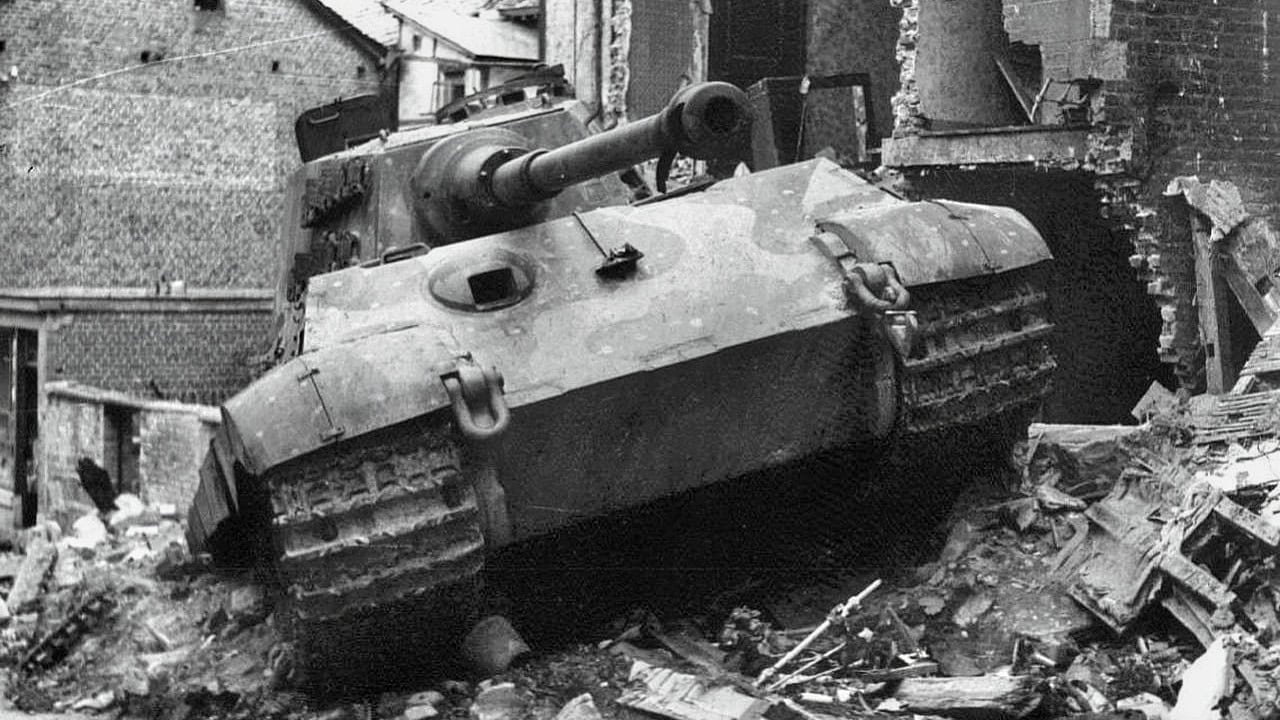
King Tiger Tank. Image Credit: Creative Commons.
The German war machine developed many outstanding weapons during the Second World War. Many of their designs, including the first jet aircraft, the world’s first ICBM, armored vehicles, and the world’s first assault rifle, were cutting-edge and among the best in the world at that time.
But the Germans were also guilty of producing some head-scratching blunders. Arguably, their biggest (literally, as well as figuratively) mistake was the Panzerkampfwagen VIII Maus (‘Mouse‘), a super-heavy tank completed in July of 1944.
It is the heaviest fully enclosed armored fighting vehicle ever built. Five were ordered, but only two hulls and one turret were completed; the turret was attached before the testing grounds were captured by the Soviet military.
It was the most impractical tank ever conceived, but Hitler himself pushed the design forward.
Background On The Development Of The Maus
During the war, tank developers on all sides of the conflict were trending toward developing heavy tanks. The United States was developing the 45-ton M26 Pershing tank, equipped with a 90mm gun, to defeat Germany’s heavy armor.

M26 Pershing Tank. Image Credit: Creative Commons.
The Soviets were developing the IS-2, sometimes known as the JS-2 Stalin tank, a 46-ton heavy tank with a 122mm main gun.
Hitler was obsessed with building bigger, heavier tanks, and in March 1942, Porsche received the official contract for the new 188-ton Maus, which would carry 100 rounds of ammunition and be armed with the high-performance 105mm L/60 or L/72 gun.
The design work began quickly, and the original design was to be called the Mammoth. The name was reportedly changed to Mäuschen (‘Little Mouse’) in December 1942 and finally to Maus (‘Mouse’) in February 1943, which became the name for Porsche’s design.
Due to its massive weight, the tank’s tracks had to be extended to more than 43 inches wide to maintain any semblance of mobility. The tracks had a suspension design with 24 road wheels per side, arranged in six bogie sets, staggered to span the entire width of the track.
Hitler intervened and ordered that the main armament be changed to the 128mm PaK 44 anti-tank gun, with the eventual incorporation of the 150mm anti-tank gun. The German 75mm gun would also be loaded into the 50-ton turret.
On May 1, 1943, the first wooden mockup was shown to Hitler and his generals. All of them, except Heinz Guderian, who was considered the architect of the German “Blitzkrieg,” considered the Maus a great tank.
In his book, Panzer Leader, Guderian saw the Maus for what it was. He wrote, “On 1 May, a wooden model of the ‘Maus’, a tank project of Porsche and Krupp, was shown to Hitler.
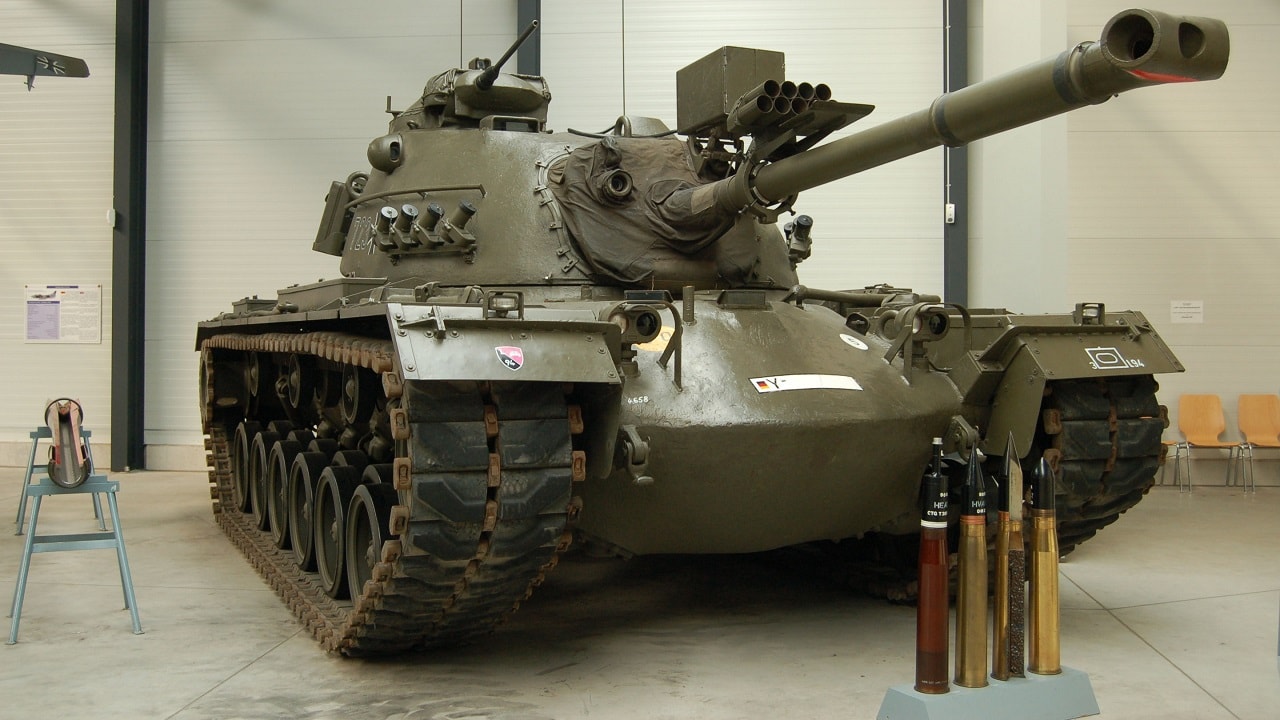
M48 Patton. Image Credit: Creative Commons.
“It was intended to mount a 150 mm gun. The tank’s total weight was supposed to reach 175 tons. It should be noted that, following Hitler’s design changes, the tank will weigh 200 tons.
“The model didn’t have a single machine gun for close combat, and for this reason, they had to reject it. It had the same design flaw that made the Elefant unsuitable for close combat.
“In the end, the tank will inevitably have to wage close combat since it operates in cooperation with the infantry. An intense debate started, and except for me, all of the present found the ‘Maus’ magnificent. It was promising to be exactly that, a ‘giant.’”
The Maus Was Totally Impractical
As Guderian correctly pointed out, the Maus’s initial design had no machine gun while supporting the infantry, something the Germans learned the hard way with the Elefant tank destroyer during the Battle of Kursk.
While the tank’s armor was massive and nearly impervious to most Allied anti-tank weapons, the engine and drivetrain to move this monster were totally inadequate.
Porsche used a vehicle version of the new DB 603 aircraft engine, a 44.5-liter V-12 petrol engine known as the MB 503A. Fuel-injected, this engine could produce 1,200 bhp at 2,300 rpm, but could only deliver 1,080 hp because it had to run engine accessories. The tank’s top speed was 11mph.
Besides that, the vehicle’s weight of 188 tons meant it could not cross any bridges in Europe. And it was too heavy to load on any railroad car. That alone should have stopped the design team in its tracks. But they persisted.
So Porsche decided that the Maus would ford any streams it encountered. The Maus could ford streams or rivers up to 25 feet deep, but had to be fitted with oxygen and a trunk that would double as a snorkel and an escape hatch for the crew.
The tank’s height was over 12 feet, making its profile highly visible to enemy gunners and/or fighter-bombers.
None ever saw combat, and the prototypes were captured by the Soviets in 1945 and shipped to Moscow for testing.
With Germany in the later stages of the war severely lacking in fuel, developing a gas-guzzler of the nth degree made little sense. And it was a total waste of resources and time. German tank production could never hope to match the Allies’.
The Maus was a massive waste of time and resources when they should have been focused on producing existing tank designs.
About the Author: Steve Balestrieri
Steve Balestrieri is a National Security Columnist. He served as a US Army Special Forces NCO and Warrant Officer. In addition to writing on defense, he covers the NFL for PatsFans.com and is a member of the Pro Football Writers of America (PFWA). His work was regularly featured in many military publications.


