


Key Points and Summary – Europe has entered a “gray zone” of hybrid conflict with Russia, facing a wave of provocations that fall short of open war.
-For over a month, suspected Russian drones have repeatedly violated NATO airspace, forcing major airports to close and causing damage in Poland.
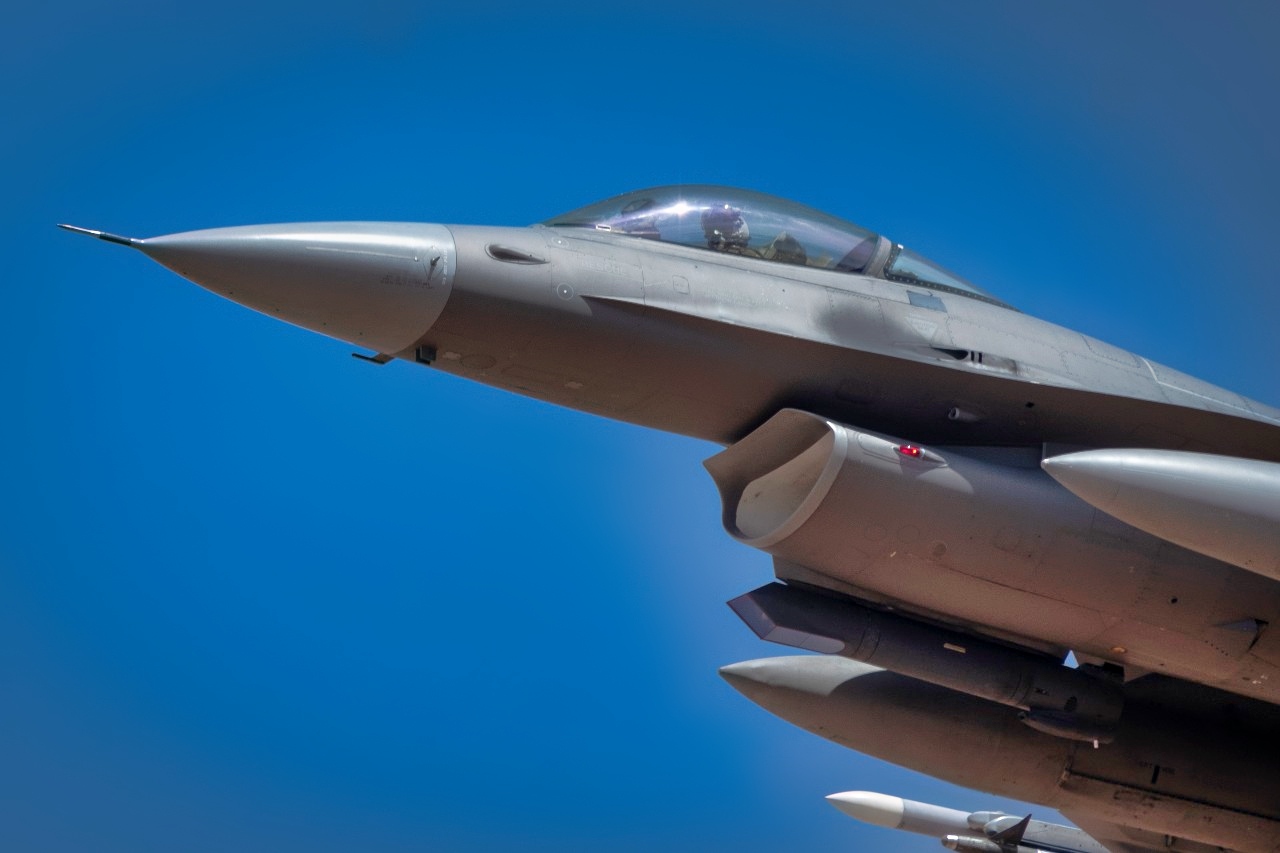
A U.S. Air Force F-16 Fighting Falcon assigned to the 54th Fighter Group soars through the sky over the Oscura Range at Holloman Air Force Base, New Mexico, April 21, 2025. During range operations, F-16 pilots perform munition drops and strafing maneuvers to test their abilities in the aircraft. (U.S. Air Force photo by Senior Airman Nicholas Paczkowski)

F-16 Fighting Falcons assigned to the 180th Fighter Wing connected with a KC-135 Stratanker from the 121st Air Refueling Wing for some aerial refueling in the skies over southern Ohio June 1, 2023. It was the final flight for one of the pilots, Lt. Col. Ricardo Colon, who is about to retire after 26 years of service with the 180th FW. (U.S. Air National Guard photo by Ralph Branson)
-Analysts view these incursions as a calculated “stress test” designed to sow fear and probe Western unity.
-While European nations have invoked NATO’s Article 4 and are considering a “drone wall,” a former NATO chief warns civilian infrastructure is unprepared, and the U.S. response has been ambivalent, leaving allies uncertain.
The Russia-Europe Sort of War of 2025?
Is Europe at war?
Not quite, but it certainly is no longer at peace.
The continent’s uneasy drift into what German Chancellor Friedrich Merz recently described as a “gray zone” of hybrid conflict marks a turning point in post-war history.
After eighty years of relative peace, aside from major conflicts in the Balkans, Russian cyber warfare, and drone intrusions are threatening European security.
For over a month, unmanned aerial vehicles (UAVs) that are assumed to belong to Russia have violated the airspace of numerous NATO member states.
At various points, Copenhagen, Munich, and Oslo have all been forced to close airports after suspicious drones were detected temporarily.
NATO jets have already scrambled to intercept Russian fighter jets zooming in Estonian airspace. Homes in Poland have even suffered major damage on September 10th due to Russian drone attacks at the Ukrainian border.
Ex-NATO Secretary-General George Robertson recently warned that Europe’s “civilian infrastructure is unprepared” to defend itself against organized gray-zone warfare. Such tactics deliberately blur the lines between peace and open war. “It’ll be too late if the lights go out,” he told an event at the Wigtown Book Festival.
Moscow, for its part, mocks Western alarm as “paranoia.” But former Russian President Dmitry Medvedev’s remarks this week, in which he expressed hope that Europeans would “fear and tremble like dumb animals in a herd”, underscore the Kremlin’s aims to sow further division and anxiety in the West.
The strategy is clear: raise anxiety, sow division, and probe NATO’s political will without triggering direct confrontation.
Analysts see the incursions as a calculated stress test of Western unity. “Russia is slowly increasing the heat,” Kirsten Fontenrose of Red Six Solutions told CNN, likening the campaign to “boiling a frog.”

U.S. Air Force Nathalie Olarte, crew chief, launches an F-16 Fighting Falcon from an undisclosed location within the U.S. Central Command area of responsibility, Jan. 14, 2024. The F-16 can fly more than 500 miles (860 kilometers), deliver its weapons with superior accuracy, defend itself against enemy aircraft, and return to its starting point. The U.S. Air Force’s expeditionary capability enables U.S. and coalition forces to rapidly establish credible, combat-ready forces within U.S. Central Command’s area of responsibility to proactively deter potential adversaries. (U.S. Air Force photo by Tech. Sgt. Alexander Cook)
That latter question looms large. President Donald Trump’s ambivalence toward NATO, combined with his volatile personal dynamic with Vladimir Putin, has sown uncertainty in European capitals.
His reaction to the recent airspace breaches, joking online that they “might have been a mistake”, did little to reassure allies.
Meanwhile, European leaders continue to consider how to respond.
Poland already invoked NATO’s Article 4 back in September, hoping to demand discussions on a joint response to Russian aggression.
Britain and France also dispatched fighter jets to fortify the alliance’s eastern flank.
EU states are also considering a so-called “drone wall” that would stretch from the Baltic countries to the Black Sea.
Whatever is decided upon will probably come with a hefty price tag.
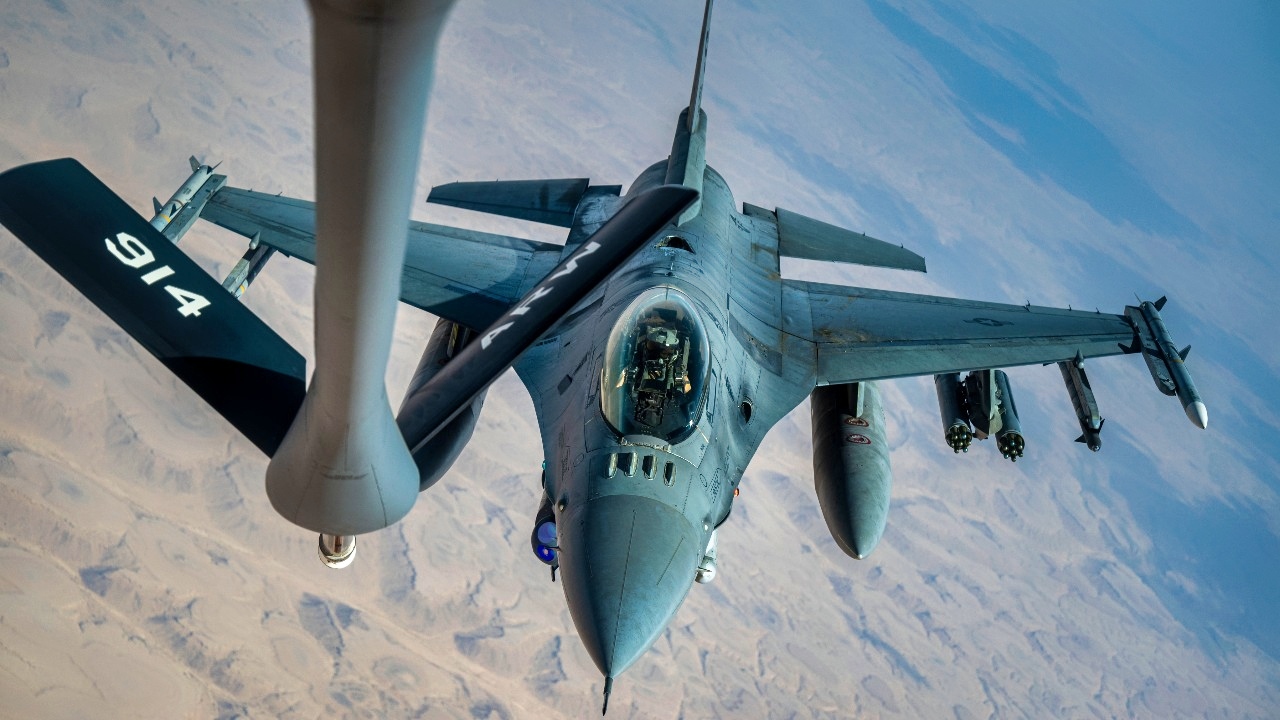
A U.S. Air Force F-16 Fighting Falcon prepares to receive fuel from a KC-135 Stratotanker over the U.S. Central Command area of responsibility, May 28, 2025. F-16s conduct combat air patrols within the USCENTCOM AOR to deter regional aggression and protect coalition partners. (U.S. Air Force photo by Airman 1st Class Christopher Lyons)
The Kremlin’s cheap gambit has, for now, helped it score a psychological victory.
Whether NATO and its allies can translate that fear into sturdy, long-term resilience remains to be seen.
About the Author: Georgia Gilholy
Georgia Gilholy is a journalist based in the United Kingdom who has been published in Newsweek, The Times of Israel, and the Spectator. Gilholy writes about international politics, culture, and education. You can follow her on X: @llggeorgia.
More Military
The U.S. Air Force’s Big B-21 Raider Stealth Bomber Mistake Still Stings
The U.S. Navy’s Big Ford-Class Aircraft Carrier Mistake Still Stings
Russia’s Admiral Kuznetsov Aircraft Carrier Can’t Stop Pumping Out Toxic Black Smoke
India’s Big Blunder Purchase of Russia’s ‘Mothball’ Aircraft Carrier Still Stings


