

Warsaw, Poland – An earlier this week report from the American CBS news service quotes several retired US generals and the former director of the US Defense Intelligence Agency (DIA) as stating that, given present circumstances, they assess that Ukraine now has both the initiative and the advantage in the war with Russia.
Their assessment comes at the same moment that the commander-in-chief of the Ukrainian armed forces, General Oleksandr Syrsky, announced that his forces have recaptured approximately 600 square kilometers (232 square miles) of territory previously occupied by the Russian army.
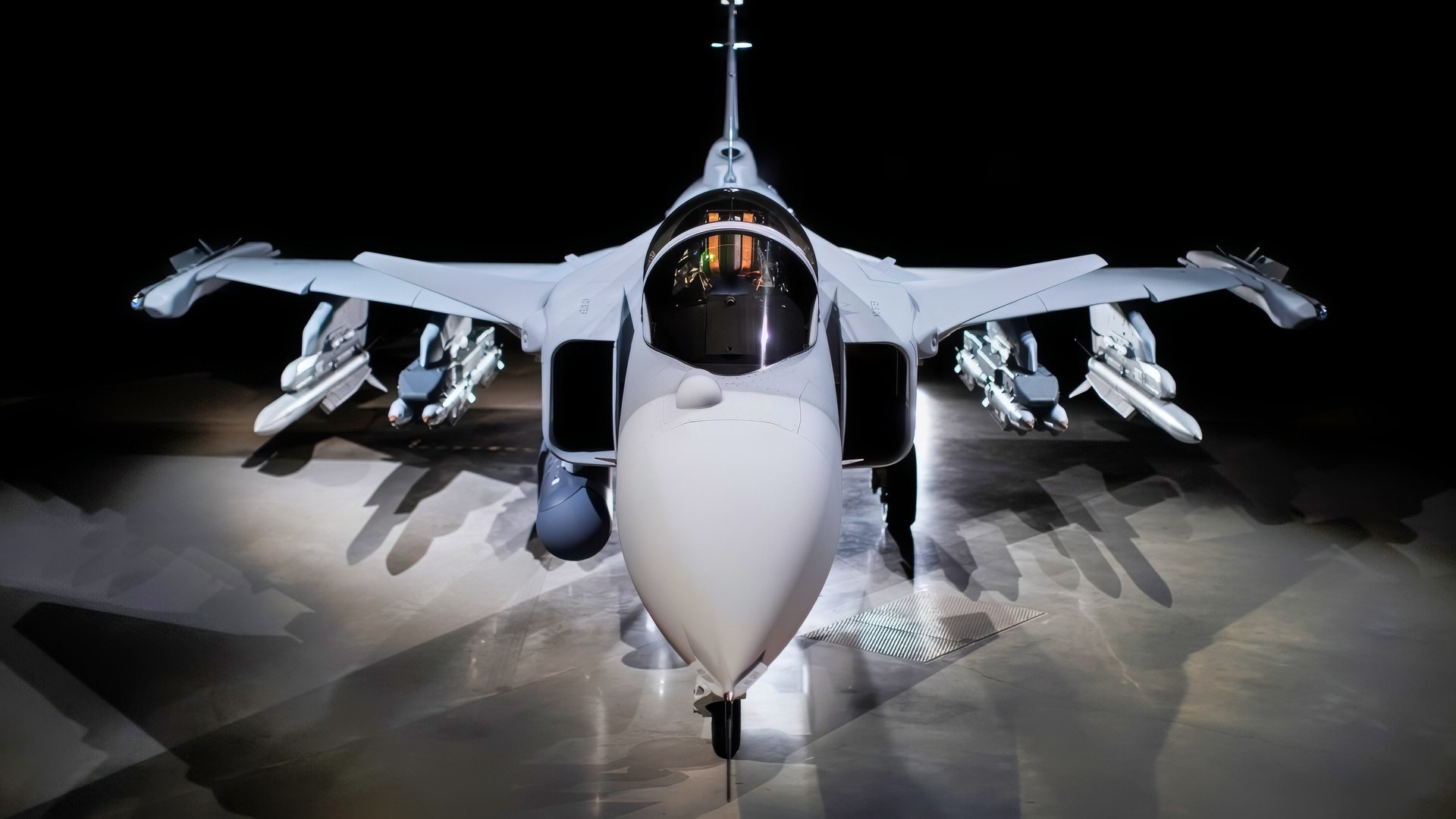
JAS 39 Gripen by Saab. Image Credit: Saab.
Syrski did not specify at which point along the front these gains were made, but he added that the fighting had been heaviest in the country’s southeastern regions of Oleksandrivka and Huliaipole.
The former DIA Director, retired Lt. Gen. Robert Ashley, told the US news service, “I would assess Ukraine operationally is winning in the context they are defeating enemy operational objectives, creating conditions for follow-on operations and preserving freedom of action,” he wrote in an emailed response to questions from CBS this week.
Two other generals who were also interviewed concurred with Ashley’s observations, and he stressed that one of the central points that is behind Ukraine’s increasing dominance on the battlefield is that Kyiv’s forces are consistently outmaneuvering Russian units.
There are several reasons for this, one of which is Russia’s longstanding problem with timely communication between units, a situation exacerbated by the American-South African billionaire Elon Musk cutting off Moscow’s access to his Starlink network.
Drone Campaigns
What numerous analysts of the conflict point to as one of the keys to Ukraine’s successes is what could be described as a bifurcation of the drone wars being conducted against Russia. In one category are the long-range strikes and special operations that target strategic sites and degrade Moscow’s ability to both fund and prosecute the war.
Examples of these are the by now almost daily attacks on Russia’s oil industry, including the series of strikes against a large Russian oil refinery installation at Tuapse on the Black Sea. This war on Russia’s oil industry is what the Ukrainian President Volodymyr Zelenskiy has described as his country’s “sanctions” against the Kremlin’s ability to earn revenue from energy exports.

JAS 39 Gripen E Fighter. Image Credit: Creative Commons.
Also, special operations like the 2025 Operation Spider Web have taken out major air assets that Russia can use to launch long-range cruise missiles on Ukrainian cities. Other attacks have targeted Russian military bases as far away as St. Petersburg.
But more recently – and some would say even more effectively – the aspect of this drone warfare that is seen as having the most direct impact on the front lines is the intensification of mid-range drone strikes. Since 2023, Ukraine has been building and refining the design of short-range First Person View (FPV) drones for this purpose.
These unmanned systems are inflicting 90 percent of Russia’s casualties at the front today, according to Zelenskiy.
Expanding The Middle-Range Campaign in the Ukraine War
But more recently, Ukraine has had trouble designing a drone capable of accurately hitting targets 30-60 miles from the front. This became an essential mission for the Ukrainians, as this was the only means of interdicting supply lines for Russia’s front-line units.
In March, one of the R&D sections for Ukraine’s drone force told CBS News that increasing the range of these FPV drones to conduct reconnaissance and hit targets beyond 30 miles became a “top priority.”
One of the experts who spoke to the network was Rob Lee, a military analyst based in Ukraine and a former US Marine Corps infantry officer. He described the Ukrainian drone industry as having resolved this problem.
“Ukraine just lacked this capacity last year, the ability to hit targets at 50 to 100 kilometers (30 to 60 miles) past the front line,” Lee told CBS. “They’re [now] doing that very often, basically every day now. And the quantities of these drones they’re using is only going to increase.”
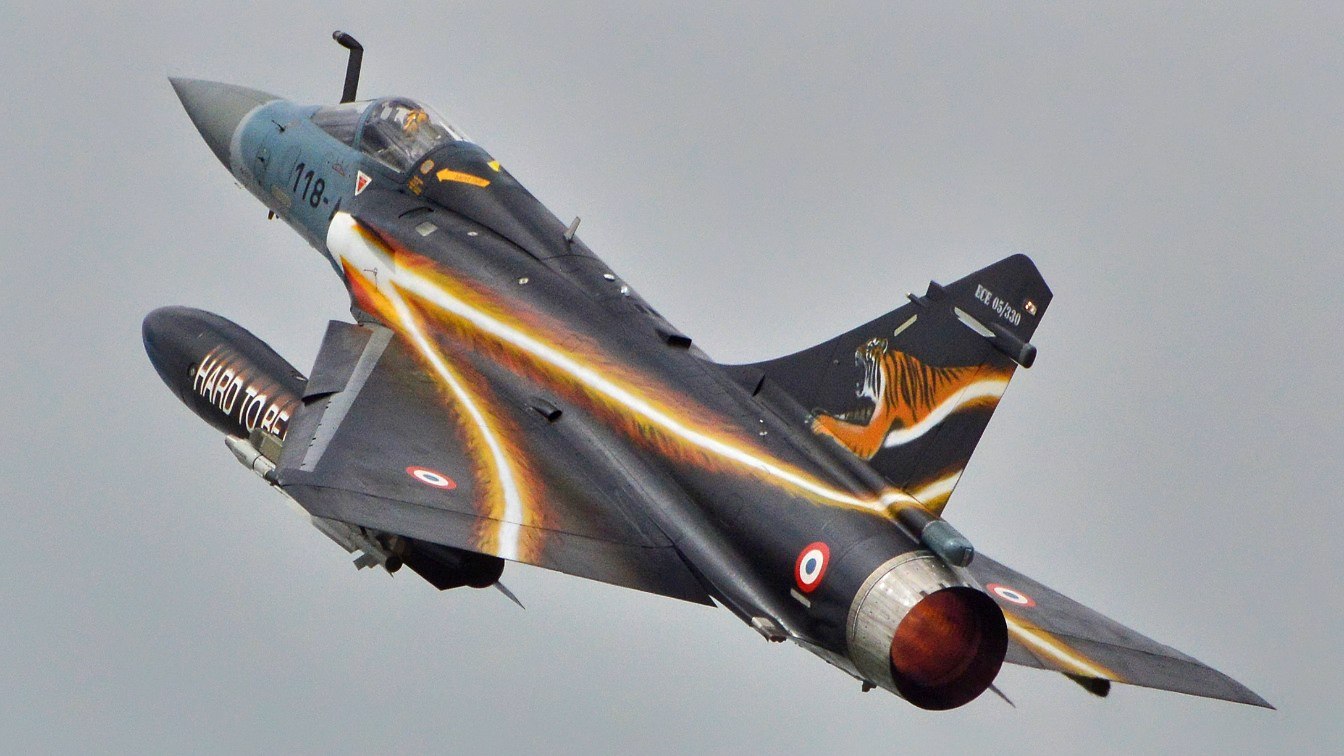
Mirage 2000. Image Credit: Creative Commons.
“Command posts are getting targeted, warehouses with ammunition, vehicles,” Lee said. “And so over time, it’s going to degrade what gets to the front line.”
If Ukraine can continue this kind of campaign, it will essentially starve Russian units of everything they need to maintain combat-effective units on the front line and coordinate their movements.
Ashley told the network that “all of this is reversible and fragile at best, depending on how much Putin wants to escalate. Both sides still see victory, which means no one will entertain a ceasefire anytime soon. But time is not necessarily on Putin’s side,” he concluded.
About the Author: Reuben F. Johnson
Reuben F. Johnson has thirty-six years of experience analyzing and reporting on foreign weapons systems, defense technologies, and international arms export policy. Johnson is the Director of Research at the Casimir Pulaski Foundation. He is also a survivor of the Russian invasion of Ukraine in February 2022. He worked for years in the American defense industry as a foreign technology analyst and later as a consultant for the U.S. Department of Defense, the Departments of the Navy and Air Force, and the governments of the United Kingdom and Australia. In 2022-2023, he won two awards in a row for his defense reporting. He holds a bachelor’s degree from DePauw University and a master’s degree from Miami University in Ohio, specializing in Soviet and Russian studies. He lives in Warsaw.


