

Article Summary – South Korea’s KF-21 Boramae is a home-grown 4.5-generation “budget stealth” fighter aimed squarely at countries that want advanced jets but can’t afford large F-35 fleets—or don’t want the strings that come with them.
-Powered by twin F414 engines, equipped with an AESA radar and modern avionics, the KF-21 trades full stealth and internal bays for lower cost and easier export.

KF-21. Image Credit: Creative Commons.
-Seoul is already courting buyers from Indonesia to the UAE while fast-tracking weapons integration and future Block upgrades toward true fifth-generation capability.
-If it delivers on price and performance, the KF-21 could carve out a powerful niche below the F-35.
South Korea’s KF-21: The ‘Cheap F-35’ That Could Rewrite the Fighter Market
The KF-21 Boramae, South Korea’s home-grown advanced fighter jet, is a curious beast – and it’s rapidly moving from prototype into production.
If the plan works, this budget stealth fighter could challenge the dominance of the American F-35 Lightning II in the export market.
And there’s a market out there just waiting, too: look at Europe.
While the jet can’t yet match the F-35’s complete stealth or sensor package, the KF-21 offers modern capabilities at a significantly lower price, making it a serious alternative for mid-tier air forces actively looking to reduce their dependence on expensive – though superior – American platforms.
Meet the KF-21
The KF-21 program, led by Korea Aerospace Industries (KAI) in partnership with the Agency for Defense Development (ADD), came about as a result of South Korea’s growing appetite to build indigenous next-generation platforms.
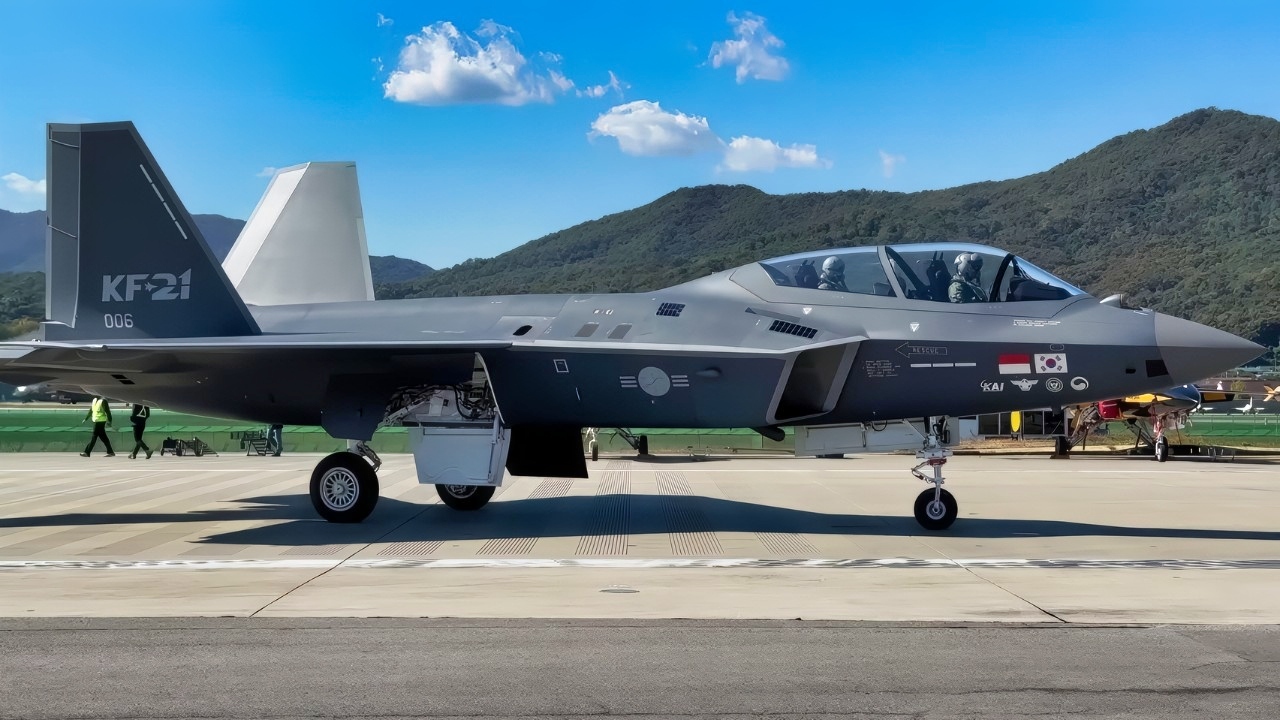
KF-21 Fighter from South Korea. Image Credit: Creative Commons.
The jet was officially unveiled to the public in April 2021 and made its maiden flight soon after, in July 2022. Only a handful of years on, the jet is expected to enter service with the Republic of Korea Air Force (ROFAK) by the middle of 2026.
If all goes to plan, the program will deliver a 4.5-generation fighter with an upgrade path to fifth-generation capabilities in later Block upgrades.
While it was developed quickly, the KF-21 has many strengths. But there are also tradeoffs.
Let’s start with the positives: the KF-21 uses twin GE F414 engines, an active electronically scanned array (AESA) radar, and features a modern airframe that was heavily customized to meet Korean requirements.
Its development cost was roughly $7.5 billion USD for the first production version, and early pricing estimates place it in the $80-100 million per aircraft range, which is considerably below the price of many export F-35 variants.
It’s for that reason the aircraft is often described as South Korea’s “cheap” F-35.
But there are key differences. The current Block I version of the KF-21 lacks full internal weapons bays and complete stealth shaping, as defined by the F-35. Instead, it uses external hard-points and is aiming only for semi-stealth – the most that can be achieved while storing weapons externally.

KF-21 Boramae Fighter KAI Image
Its sensor-fusion capability and global logistics support are also still under development, meaning that even if the export orders roll in, it cannot yet match the F-35 in terms of full combat integration and support. If anything, it’s a big gamble for early customers.
Why A Cost-Effective Alternative Is Necessary
The significance of the KF-21 lies mainly in its appeal to air forces that cannot afford to purchase substantial fleets of F-35s, but which are also seeking advanced capabilities.
The KF-21 is well-positioned to fill that void, creating a middle tier in the market. It’s less expensive to procure and maintain, and there are far fewer export restrictions than the U.S. fighter.
South Korea is also actively leveraging the program to expand and improve its aerospace industry, supporting export ambitions and even broadening its role, taking South Korea from “buyer” status to “supplier.”
Competing in the high-end market against the United States isn’t possible, but that isn’t necessary either.
Seoul is already in talks with the United Arab Emirates on a potential production export package worth $15 billion USD, centered around the KF-21 platform.
Things look good for South Korea, but the KF-21 still faces hurdles. Its complete fifth-generation upgrade (Block III) is years away, meaning early customers will receive a 4.5-generation aircraft. Export prospects are also partially constrained by the U.S.-supplied engines and sensor components, limiting how freely Seoul can actually market the jet globally.
From a strategic perspective, for Washington at least, the emergence of a new, lower-cost advanced fighter jet from a major U.S. ally raises questions about the future of coalition interoperability – and indeed how supply chains will continue to evolve.

An F-35A Lightning II, assigned to the 388th Fighter Wing, at Hill Air Force Base, UT, flies in formation with a Belgian Air Force F-16 Fighting Falcon on Sept 10, 2022, Kleine Brogel Air Base, Belgium. The F-35 Demo Team consists of approximately 15 total Airmen to include the pilot and commander, pilot safety officers, superintendent, team chief, maintenance Airmen, aircrew flight equipment specialists, and public affairs personnel. (U.S. Air Force photo by Staff Sgt. Thomas Barley).
On the Korean side, though, the program reflects a broader effort to reduce reliance on foreign platforms.
By creating their own solution, they also provide an outlet for smaller nations seeking an alternative to U.S. platforms – even if they are overseas.
And times are getting interesting for South Korea’s burgeoning aerospace industry.
In October, Seoul put the KF-21 front and center at the largest-ever Seoul ADEX arms fair, flying the jet in public air shows as part of a push to boost defense exports.
In June, South Korea and Indonesia signed a revised KF-21 cost-sharing deal that kept Jakarta in the program, reduced its contribution, and reaffirmed its planned purchase of 48 aircraft.
And in August, DAPA moved to fast-track air-to-ground capabilities and weapons tests to the first half of 2027.

F-35I Adir Lockheed Martin Photography by Todd R. McQueen.
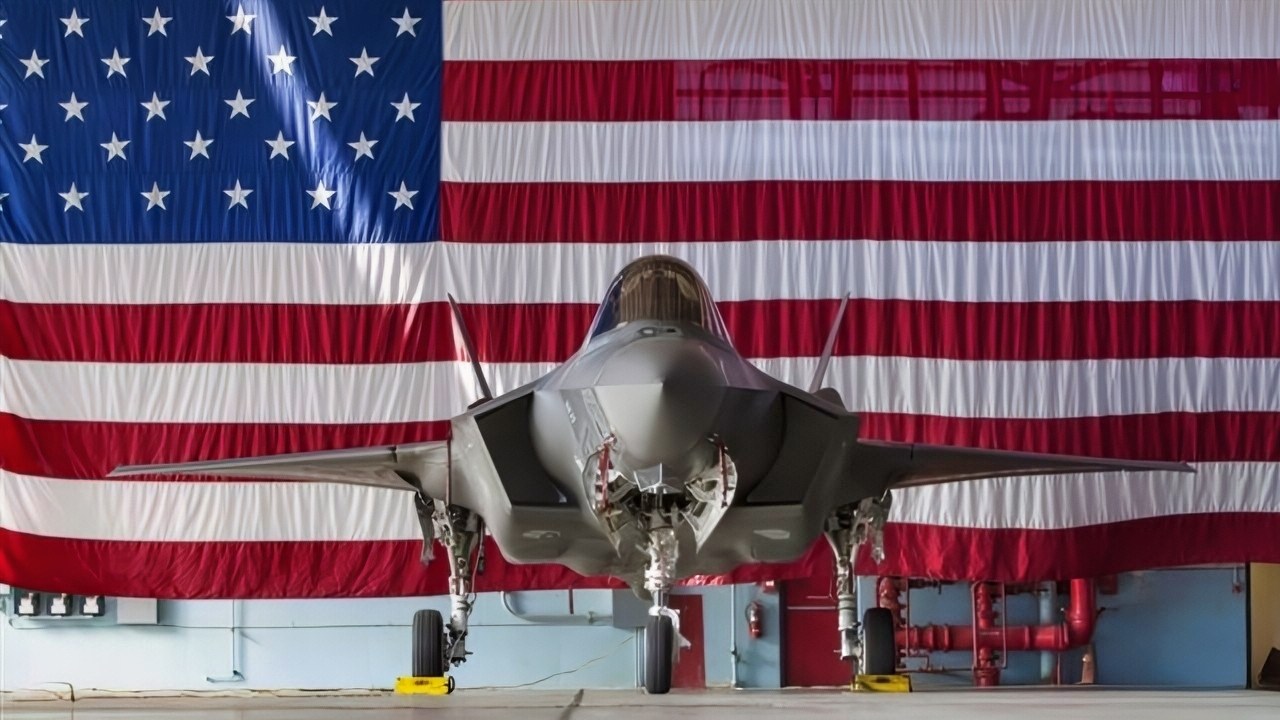
F-35 Fighter Image by Lockheed Martin

An F-35 Lightning II assigned to the 56th Fighter Wing performs a strafing run during exercise Haboob Havoc, April 26, 2023, over Barry M. Goldwater Range, Ariz. Haboob Havoc is a total force competition enabling pilots from various bases to demonstrate their skills across a diverse range of aircraft while also testing their abilities in different mission sets such as dogfighting and gun-runs. (U.S. Air Force photo by Airman 1st Class Mason Hargrove)
It’s clear what Seoul is doing. This isn’t just about building a budget stealth fighter, but racing to make the KF-21 a real, export-ready alternative to the F-35 – with room to improve substantially as the years go by.
About the Author:
Jack Buckby is a British author, counter-extremism researcher, and journalist based in New York who writes frequently for National Security Journal. Reporting on the U.K., Europe, and the U.S., he works to analyze and understand left-wing and right-wing radicalization, and reports on Western governments’ approaches to the pressing issues of today. His books and research papers explore these themes and propose pragmatic solutions to our increasingly polarized society. His latest book is The Truth Teller: RFK Jr. and the Case for a Post-Partisan Presidency.


