
Ukraine’s long-range drone and missile strike campaign against Russia is still expanding, even as Moscow seeks to take advantage of Kyiv’s shortage of Patriot interceptors with its own long-range ballistic missile campaign.
Ukraine’s devastating strikes against Russian infrastructure are beginning to create problems that the Kremlin is being forced to address at the national level.
Putin at Women’s Forum Creative Commons Photo
Putin in 2025 Government Meeting Creative Commons Photo
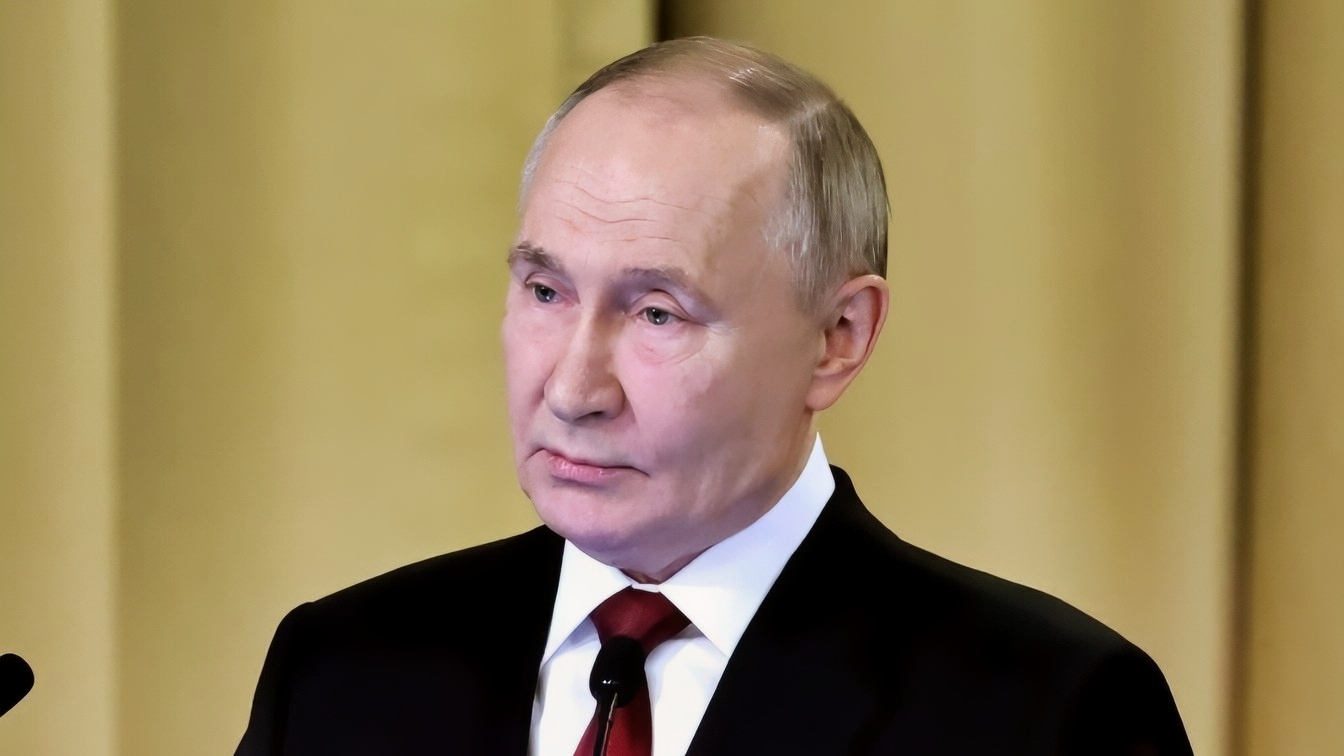
On Wednesday, Russian President Vladimir Putin ordered his government to develop a program to rebuild commercial warehouses destroyed or damaged during Ukraine’s weeks-long campaign against logistics infrastructure.
Overnight into August 20, Ukraine continued these strikes, hitting oil refineries, fuel terminals, and military sites including radar installations and airfields used to launch Russian attack drones.
Moscow is now being forced to defend an enormous territory while simultaneously mitigating damage caused to critical infrastructure that not only sustains the war in Ukraine but also keeps Russia’s fragile wartime economy afloat.
And Moscow is beginning to buckle.
Ukraine Hits Russian Energy Sites Again
Ukraine’s General Staff said on Thursday that its forces struck the TANECO oil refinery in Russia’s Tatarstan region, as well as the Tamanneftegaz oil terminal in Krasnodar Krai. Fires were reported at both facilities.
The TANECO facility is located more than 600 miles from Ukrainian-controlled territory and had already been attacked earlier in August.
The latest strikes show that, even as Russia continues to launch devastating ballistic missile strikes, Kyiv is undeterred and continues to expand its campaign deep inside Russian territory.
Ukrainian military intelligence also said its forces struck Russian military facilities overnight into August 20, including two airfields used for drone operations, as well as radar equipment and the Tamanneftegaz terminal.
Ukrainian reports said one of the targeted sites was an airfield in Russian-occupied Donetsk used to store and launch drones against Ukraine.
Ukraine’s long-range strikes have long targeted Russian refineries before expanding into commercial and military logistics operations.
Kyiv says the intent is to raise the cost of sustaining the war and destroy infrastructure used to supply forces on the front lines.
And the strategy is working.
Russia Is Running Short Of Fuel
Russia cannot pretend it has no problems.
You can see it at gas stations across the country, including in Moscow, where the Kremlin has tried to insulate residents from the worst of the shortages by redistributing fuel from more rural regions of the country.
Reuters reported on August 20 that motorists in the capital city and surrounding region were spending hours searching for gasoline or waiting in lines that sometimes stretched for as far as a kilometer.
Some stations stopped selling gasoline altogether and offered only diesel.
The shortages have been ongoing for months, isolated to certain regions of the country.
But those shortages accelerated in May and spread across most Russian regions by July.
Emergency government measures then began to improve supplies, as Moscow temporarily halted exports and made deals to import petroleum products from overseas. But the latest refinery strikes are triggering another wave of fuel shortages nationwide.
How Russia Is Responding
In response, Gazprom Neft has limited gasoline purchases at automated Moscow stations to 40 liters per customer and 60 liters at conventional gas stations.
Rosneft, meanwhile, has imposed a nationwide 30-liter-per-vehicle gasoline limit, and Tatneft is restricting customers to 50 liters.
Lukoil has also introduced some restrictions in Moscow and surrounding areas.
Fuel availability for regular motorists, and indeed farmers who depend on fuel to harvest their crops, is slipping rapidly.
Russian newspaper Izvestia checked 21 filling stations in Moscow and Moscow Oblast on August 17 and found AI-92 gasoline available at only seven, AI-95 at six, and AI-98 at five.
The shortages are also affecting Russia’s wholesale market, with gasoline sales on the St. Petersburg International Mercantile Exchange down an average of 20% since the beginning of August compared with the second half of July.
At an August 14 meeting chaired by Deputy Prime Minister Alexander Novak, Russian energy officials discussed the problem and identified shortages in Orenburg, Lipetsk, Tver, Oryol, Krasnodar, Zabaykalsky, Primorsky, Krasnoyarsk, Tuva, and Khakassia.
The Economic Damage Is Spreading
Russia’s fuel nightmare is causing more than just inconvenience for motorists.
The consequences are also spreading far beyond the gasoline market.
Russian business newspaper Kommersant reported this week that Russia is also experiencing shortages of motor oil shortages, partly because refineries are diverting aromatic hydrocarbons into lower-octane gasoline production to compensate for disrupted supplies.
Those same petroleum products are also used to manufacture synthetic materials, rubber, polymers, and other industrial products.
The shortage is, therefore, impacting a wide range of industries domestically – and it is only getting worse.
And that damage is difficult for Putin to conceal. Speaking on August 19, the Russian president acknowledged that economic growth had slowed and admitted that what he called external pressure and “terrorist attacks” were affecting the economy.
About the Author: Jack Buckby
Jack Buckby is a British researcher and analyst specializing in defense and national security, based in New York. His work focuses on military capability, procurement, and strategic competition, producing and editing analysis for policy and defense audiences. He brings extensive editorial experience, with a career output spanning over 1,000 articles at 19FortyFive and National Security Journal, and has previously authored books and papers on extremism and deradicalization.


