


NASA’s X-43A scramjet aircraft hit Mach 9.64 at 110,000 feet in November 2004—and that record for an air-breathing aircraft still stands more than two decades later. Despite all the talk about America falling behind China and Russia in hypersonics, NASA’s tiny 12-foot unmanned vehicle quietly proved the U.S. has been flying hypersonic platforms longer than anyone.
The X-43A Smashed All the Records:
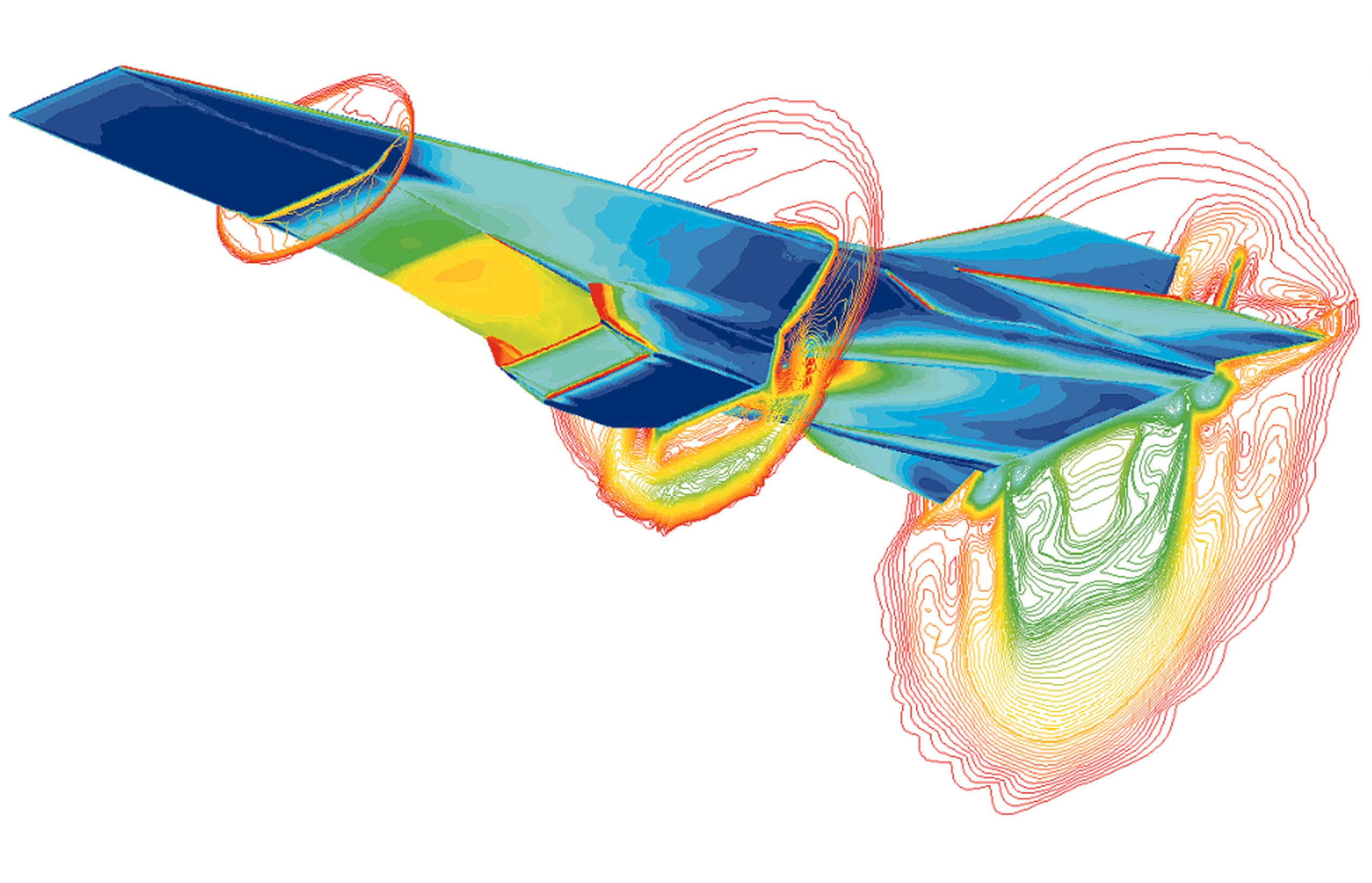
NASA’s X-43A was a small, unmanned experimental hypersonic aircraft. It was part of the Hyper X program that set world speed records in 2004 by flying past Mach 9.6 (nearly 6,400 miles per hour), using an air-breathing scramjet engine.
Measuring roughly 12 feet long, the lifting-body vehicle was launched from a B-52 by a rocket booster. The X-43 demonstrated that air-breathing engines can operate at hypersonic speeds.
The NASA Hyper-X program was an eight-year, $230 million initiative that achieved the first successful, free-flying flights of scramjet-powered aircraft. Utilizing the unpiloted X-43A research vehicle, the program demonstrated air-breathing hypersonic flight and overcame significant scramjet and propulsion challenges.
The first captive-carry flight of NASA’s X-43A hypersonic research vehicle occurred on April 28, 2001, aboard a B-52 over the Pacific Test Range. A Pegasus booster rocket was attached to the X-43A, which was carried on a B-52’s wing pylon.
Despite all the talk about how the United States is lagging behind China and Russia in hypersonics, the United States has been flying hypersonics for longer than anyone, and the X-43A’s record for an air-breathing aircraft still stands: Mach 9.64 at 110,000 feet. Considering that the SR-71 Blackbird cruised at about Mach 3, this NASA aircraft was really moving.
Meet The NASA X-43A:
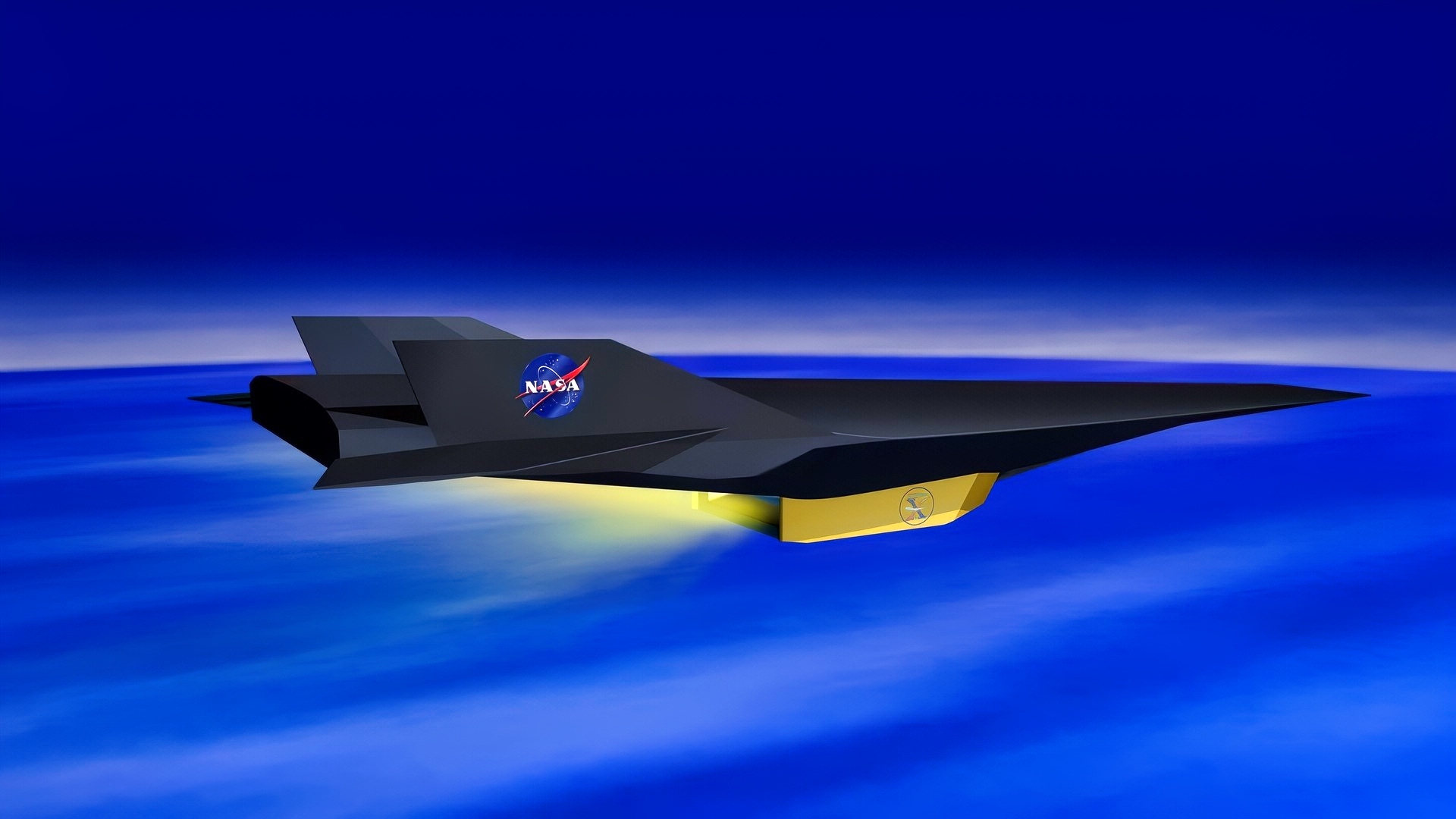
X-43A from NASA. Image Credit: Creative Commons.
The X‑43A was designed to be flown once and not recovered. It was one of NASA’s “better, faster, cheaper” programs developed in the late 1990s. The aircraft weighed about 3,300 pounds, and the program cost $230 million.
The scramjet that powered it was a supersonic combustion ramjet integrated with the X-43’s lower fuselage, and was designed for speeds up to Mach 10.
This was the first hypersonic research program since the X-15 in the 1960s.
NASA built three X-43As: the first two were designed to fly at Mach 7, and only the last was designed to fly at Mach 10.
The first aircraft was destroyed when the first stage of the Pegasus booster rocket failed. In 2004, tests were completed, and the X-43A reached speeds of Mach 6.83. The final X43A flew on November 16, 2004 and set the speed record.
The requirements for the X-43A involved severe engineering challenges in thermal management, propulsion, and guidance. Issues included managing temperatures exceeding 2,000° Fahrenheit, which engineers accomplished with advanced materials; ensuring scramjet combustion stability within milliseconds; and controlling the vehicle’s hypersonic dynamics.
At speeds nearing Mach 10, friction creates immense temperature spikes. Engineers used advanced carbon-carbon composites and special alloys to protect the structure.
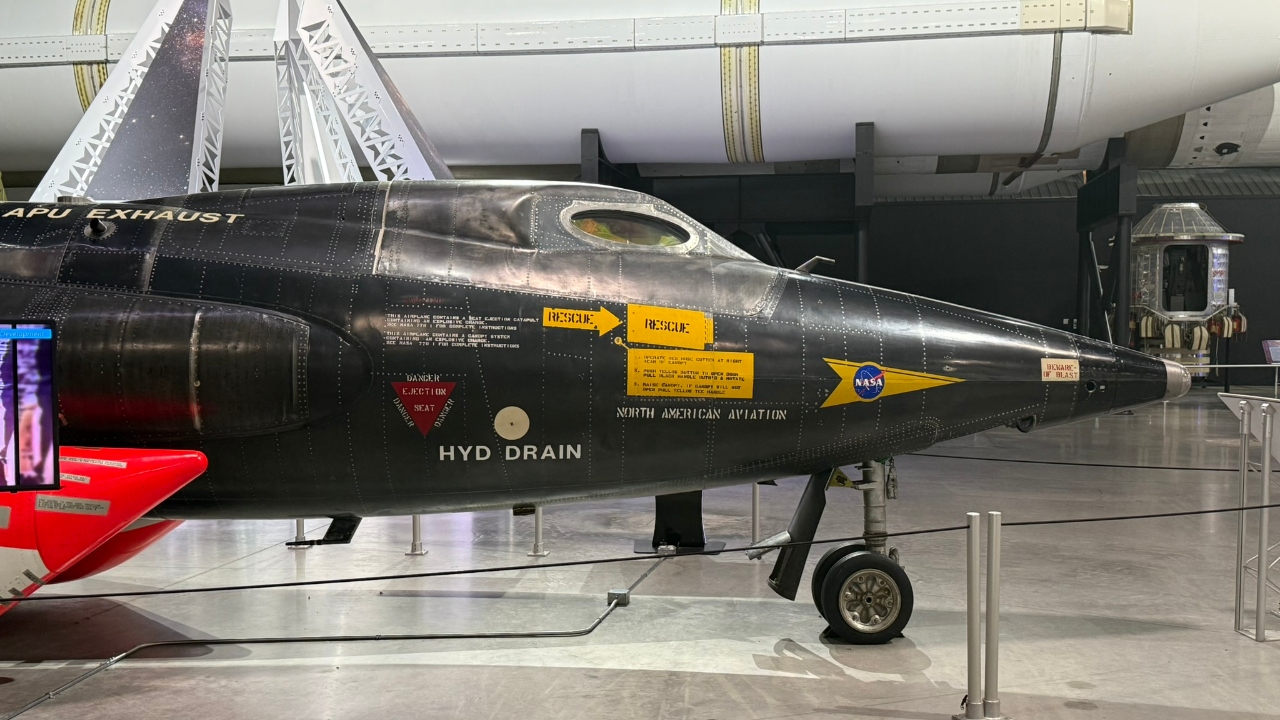
X-15 Harry J. Kazianis National Security Journal Photo.

X-15 Long Shot and Engine Photo. Image Credit: National Security Journal.
How Do Scramjets Work?
According to NASA, “A scramjet (supersonic-combustion ramjet) is a ramjet engine in which the airflow through the engine remains supersonic.
“In contrast to traditional jet engines, which slow incoming air to subsonic speeds before combustion, scramjets allow air to remain supersonic throughout the combustion process. This supersonic airflow enables much higher speeds and greater efficiency at hypersonic velocities.
“However, scramjets cannot operate at low speeds, so the X-43A required a rocket booster to reach operational velocity before the engine could ignite.
“Scramjet-powered vehicles are envisioned to operate at speeds of at least Mach 15. Ground tests of scramjet combustors have shown this potential, but no flight tests have surpassed the Mach 9.6 X-43A flight.”
Because scramjets use external air for combustion, they are more efficient propulsion systems for atmospheric flight than rockets, which must carry all their oxygen. Scramjets are ideally suited for hypersonic flight within the atmosphere.
NASA planned to build an X-43B, an ambitious project in which the aircraft would fly at supersonic speeds at lower altitudes and then use scramjet propulsion at higher speeds and higher altitudes.
The planned “Hyper X” aircraft, the X-43C, was scheduled for the late 2000s and intended to demonstrate a solid-fuel scramjet engine at speeds between Mach 5 and 7, likely in 2008. However, the project was canceled. The Air Force continued testing hypersonic aircraft with the X-51 “Waverider” program.
The Waverider can fly 600 nautical miles in 10 minutes after being released from a B-52 mothership such as the X-43A.
Why Did NASA “Conclude” the X-43 Project?
The NASA X-43 program was not formally canceled, but instead concluded after successfully meeting its narrow objectives, according to NASA.
The program was a three-flight effort to demonstrate scramjet technology. After the final successful flights in 2004, NASA had the data it needed; it had demonstrated hypersonic flight at Mach 6.8 and Mach 9.6. The program certainly had achieved its goal of proving that air-breathing hypersonic flight was possible.
The 2004 Vision for Space Exploration redirected NASA’s focus toward human spaceflight, particularly the Moon-to-Mars initiative.
This led to budget cuts to aeronautics research, including hypersonics, and to a reduction in program support.
This initiative, introduced by President George W. Bush, focused on a human return to the Moon by 2020 to prepare for eventual missions to Mars and beyond.
This vision entailed completing the International Space Station, retiring the Space Shuttle, developing new vehicles such as the Crew Exploration Vehicle (later renamed Orion), and establishing a sustained human presence on the Moon.More recently, President Donald Trump’s vision has again emphasized returning to the Moon, as well as developing new rockets such as the Space Launch System, and establishing the U.S. Space Force.
Was the X-43 program closed too soon? That is the question that begs answering.
The proposed X-43D was supposed to be the Mach 15 risk-reduction step between NASA’s experiments and cutting-edge operational hypersonic systems. That step, regrettably, never happened.
The Air Force Continues Hypersonic Testing:
Meanwhile, the X-51 “Waverider” program can fly 600 nautical miles in 10 minutes after being released from a B-52 mothership, like the X-43A. It made its first flight in 2010.
The Air Force built four X-51 Waveriders, which were technology demonstrators and were not intended as prototypes for a weapon.
The final flight of the X-51A occurred on May 1, 2013, and was the most successful in meeting all experimental objectives. The cruiser traveled more than 230 nautical miles in just over six minutes, reaching a peak speed of Mach 5.1.
About the Author: Steve Balestrieri
Steve Balestrieri is a National Security Columnist. He served as a US Army Special Forces NCO and Warrant Officer. In addition to writing on defense, he covers the NFL for PatsFans.com and is a member of the Pro Football Writers of America (PFWA). His work was regularly featured in many military publications.


