


Key Points and Summary – Debates over the “death” of the aircraft carrier ignore a basic reality: nothing else can do what a big-deck carrier does.
-Submarines are unmatched for stealth and nuclear deterrence, but they cannot show the flag, fly daily sorties or reassure allies.
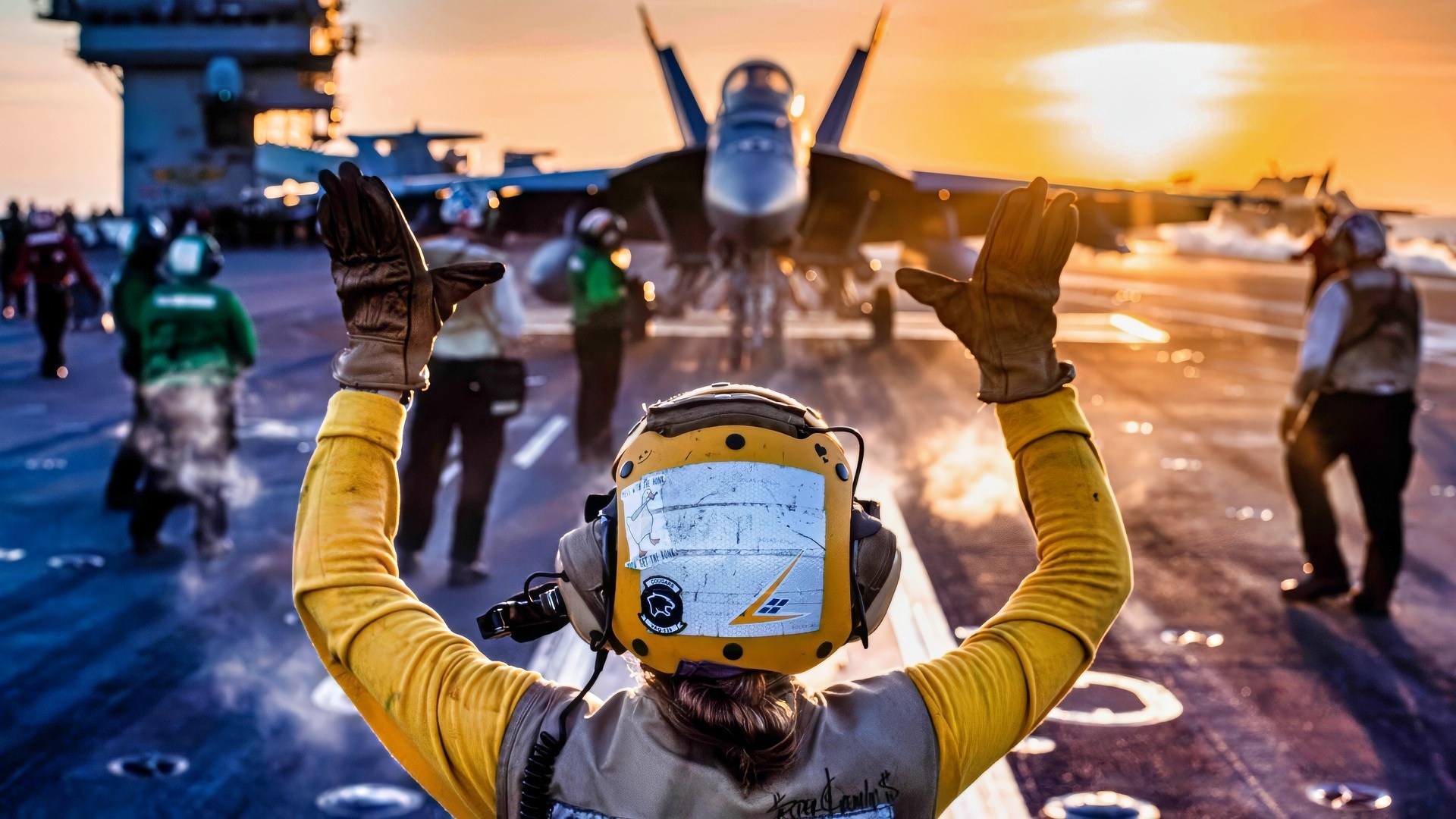
U.S. Navy Aircraft Carrier Training. Image Credit: Creative Commons.

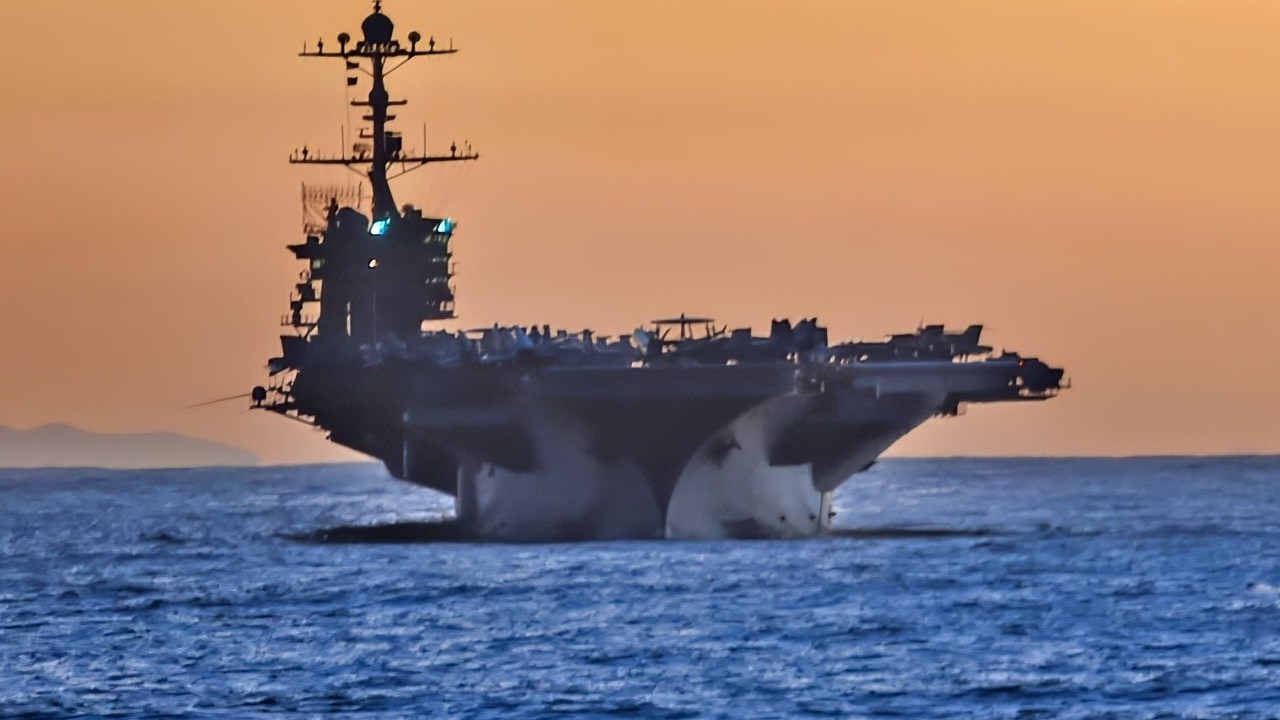
USS Carl Vinson Aircraft Carrier. Image Credit: Creative Commons.
Small, missile-armed frigates are cheaper and more expendable, yet they seize sea control rather than visibly exercising it.
-Even B-21s and other bombers, for all their reach, lack the flexibility for crises, humanitarian missions and steady grey-zone pressure.
-Hypersonic missiles demand new carrier concepts and defenses—but short of full-scale war, no platform projects power like a carrier strike group.
Subs, Frigates, Bombers: None Can Truly Replace the U.S. Aircraft Carrier
It has often been said that the carrier has become obsolete in today’s warfare. In the era of unmanned systems and hypersonic missiles, carriers are easy targets and are far too expensive for the Navy to maintain effectively.
Experts have suggested that carriers be replaced with other vessels, such as submarines, or with distributed fleets of smaller ships, but is this really a good idea?
Can the aircraft carrier really be replaced so easily, or are people overreacting about the supposed weakness of carrier strike groups (CSGs)?
Can Submarines Replace the Carrier?
Attack submarines are often considered a potential replacement for carriers.
Nuclear attack submarines of all types (SSNs, SSBNs, SSGNs) are a significant investment and offer several advantages over carriers.
Despite large subs like the Ohio-class measuring at 560 ft, they are extremely stealthy and hard to detect until it is too late.
SSBNs like the Ohio-class above are armed with 20 nuclear missiles, each containing up to eight MIRVs, giving them some of the most destructive capabilities across the entire U.S. Armed Forces.
It is no exaggeration to say that SSBNs are some of the most critical assets in the U.S. Navy.
However, it is essential to realize that submarines fulfil a fundamentally different role within naval doctrine.
151111-N-KM939-021 PACIFIC OCEAN (Nov. 11, 2015) – USS John C. Stennis (CVN 74) travels behind the guided-missile destroyer USS Stockdale (DDG 106) during a Missile Exercise (MSLEX). Sailors from the John C. Stennis Strike Group are participating in a sustainment training exercise (SUSTEX) to prepare for future deployments. (U.S. Navy photo by Mass Communication Specialist 3rd Class David A. Cox/Released)

EAST CHINA SEA (Dec. 06, 2010) Sailors assigned to the Eagles of Strike Fighter Squadron (VFA) 115 move an F/A-18E Super Hornet on the flight deck aboard the aircraft carrier USS George Washington (CVN 73). George Washington is participating in Keen Sword 2010 with the Japanese Maritime Self-Defense Force through Dec. 10. (U.S. Navy photo by Mass Communication Specialist 3rd Class David A. Cox/Released)
Whereas carriers are large vessels that operate in a large CSG designed to project power through air power, submarines often operate alone as stealth vessels to gather intelligence, eliminate enemy vessels, or act as nuclear deterrence.
While submarines are invaluable, they do not have the same capabilities as carriers, nor do they have the psychological impact that large, majestic carriers possess. Submarines will always have a place in the Navy, but they alone cannot replace carriers.
What About Smaller Vessels?
Smaller, more distributed operations have also been suggested as a replacement for carrier strike groups.
This is currently the route that the Russian Navy has been taking with its smaller frigates. Smaller frigates are easier to maintain and replace if lost in a full-scale conflict.
These ships can be fitted with anti-ship missiles that pose a significant threat to carriers and larger naval vessels. Russia has been investing in its Admiral Gorshkov-class frigates, which possess hypersonic missiles and are easier to produce than larger aircraft carriers or even destroyers.
This approach makes sense from an economic perspective as a Navy of smaller, more distributed ships is much cheaper to maintain than an aircraft carrier, and much easier to replace if lost.
Smaller, more distributed ships have their place in the Navy. Indeed, a balanced navy should include small missile frigates and other vessels, but, as with submarines, they cannot fully replace carriers.
While smaller, more mobile cruisers may be better for warfighting, they cannot fulfil the other naval functions that carriers can.
Warfighting is arguably the most essential function of any Navy, but it is not its only function. As naval theorists and historians have noted, there is a big difference between seizing control of the seas (often done through battle) and exercising control over them.
Cruisers, frigates, and other smaller vessels may be able to seize control of the seas, but they cannot exercise control over them the way a carrier can.
What About Bombers?
Some have also posited that long-range bombers can act as a replacement for the carrier strike group. This is simply preposterous. American strategic bombers, particularly the B-21 Raider, are certainly invaluable to the U.S.
Their ability to deliver devastating conventional or nuclear attacks cannot be understated.
Bombers are also significantly cheaper to produce than carriers, and their intercontinental range allows them to respond to crises around the world at any time.
Stealth bombers in particular can penetrate enemy airspaces in a way that naval air wings cannot.
Long-range bombers will always be a strategic necessity, but they too cannot replace the carrier. Strategic aviation lacks the flexibility needed to respond to different kinds of threats.
In the past, carriers have been able to respond to humanitarian crises and rescue missions in a way that strategic bombers simply cannot.
While bombers act as nuclear deterrence, the presence of an American carrier on an adversary’s shores is usually enough to deter most (but not all) enemies. A carrier strike group’s smaller air wing makes it more preferable for responding to smaller-scale missions that would be wasteful if passed on to a strategic bomber.
Why the Aircraft Carrier is Irreplaceable
All of the proposed replacements to the carrier (there are many more that I do not have the space to cover) are still helpful and have their place in the armed forces, but they cannot replace the carrier.
Carriers will indeed have to evolve to stay relevant in the age of hypersonic missiles, and they cannot fight and win wars the way they did in WWII, but that does not make them inherently useless.
Hypersonic missiles do pose a significant threat to carriers; there is no denying it.
Missiles like the DF-ZF and the DF-26 can strike aircraft carriers thousands of miles from the shore. These capabilities mean the aircraft carrier’s role in great-power conflicts should be reevaluated.
However, short of full-scale war, no platform on the planet can project power as effectively as an aircraft carrier. Among naval platforms, the airline is the only one capable of great-power competition in grey zones. Additionally, carriers have demonstrated their ability to project power and engage in diplomacy, offering unmatched peacetime capabilities. So, while the aircraft carrier may be more vulnerable than it ever was, its value in both peacetime and war outweighs its disadvantages, real or perceived.
About the Author: Isaac Seitz
Isaac Seitz, a Defense Columnist, graduated from Patrick Henry College’s Strategic Intelligence and National Security program. He has also studied Russian at Middlebury Language Schools and has worked as an intelligence Analyst in the private sector.
More Military
Could America Have Lost the Revolutionary War?
The Marines Don’t Have Tanks Anymore
The Essex-Class Aircraft Carriers Have An Embarrassing Message for the U.S. Navy
‘New’ Mach 4 MiG-41 6th Generation Stealth Fighter Has Warning for U.S. Air Force
Boeing’s F-47 NGAD 6th Generation Stealth Fighter Is No ‘Mission Impossible’


