


Key Points and Summary – The Pentagon is advancing the Navy’s F/A-XX program toward a contractor downselect, with Boeing and Northrop Grumman reportedly in the lead after Lockheed’s bid fell short.
-Despite earlier moves to prioritize the Air Force’s F-47, Congress restored funding, positioning F/A-XX to enter EMD by late FY25 and deliver in the 2030s while Super Hornets remain through the 2040s.

F/A-XX U.S. Navy Fighter. Image Credit: Creative Commons.

F/A-XX U.S. Navy Fighter. Image Credit: Creative Commons.
-Navy leaders say F/A-XX will differ from F-47, highlighting much greater range (125%+ over today), organic refueling concepts, and affordability for large-deck carriers.
-A timely decision is critical: further delays risk a carrier airpower gap in the 2030s as peer threats grow.
After F-47 Tug-of-War, Pentagon Greenlights F/A-XX Selection
The Pentagon is getting ready to pick a defense company to design and build the next-generation Navy stealth fighter, a project known currently as F/A-XX, Reuters reported Tuesday, citing “a US official and two people familiar with the decision.”
Boeing and Northrop Grumman Corp. are seen as the finalists for the contract, as Breaking Defense reported in March that Lockheed Martin was out of the bidding for the Navy stealth contract. Lockheed had made a bid for the contract, but “the proposal did not satisfy the service’s criteria,” Breaking Defense reported.
According to a Reuters report, Defense Secretary Pete Hegseth had decided last Friday to move ahead, and the winner of the contract may be announced as early as this week.
Further Delays?
One of Reuters’ sources added that “last-minute snags have delayed progress on the Navy jet in the past and could do so again.” However, any further delay, according to Reuters, “could leave the Navy without a modern fighter capable of operating from carriers in the 2030s and beyond, potentially undermining the fleet’s ability to project power.”
There were also delays, Reuters said, caused by funding disputes between the Pentagon and Congress this spring and summer. Congress ultimately allocated $750 billion to speed the development of the F/A-XX program, which was included in the “One Big Beautiful Bill” that passed earlier this year. Congress has added $1.4 billion more for F/A-XX in fiscal 2026, Reuters said.
As of now, the first production jets are “expected to enter service in the 2030s,” with the existing F/A-18s expected to stay in service through the 2040s.
Delay, or Not?
In June, according to Bloomberg News, the Pentagon sought to delay the Navy’s next-generation fighter to focus on the F-47. The Pentagon had asked Congress to shift $500 million from the “accelerated development” to the F-47.
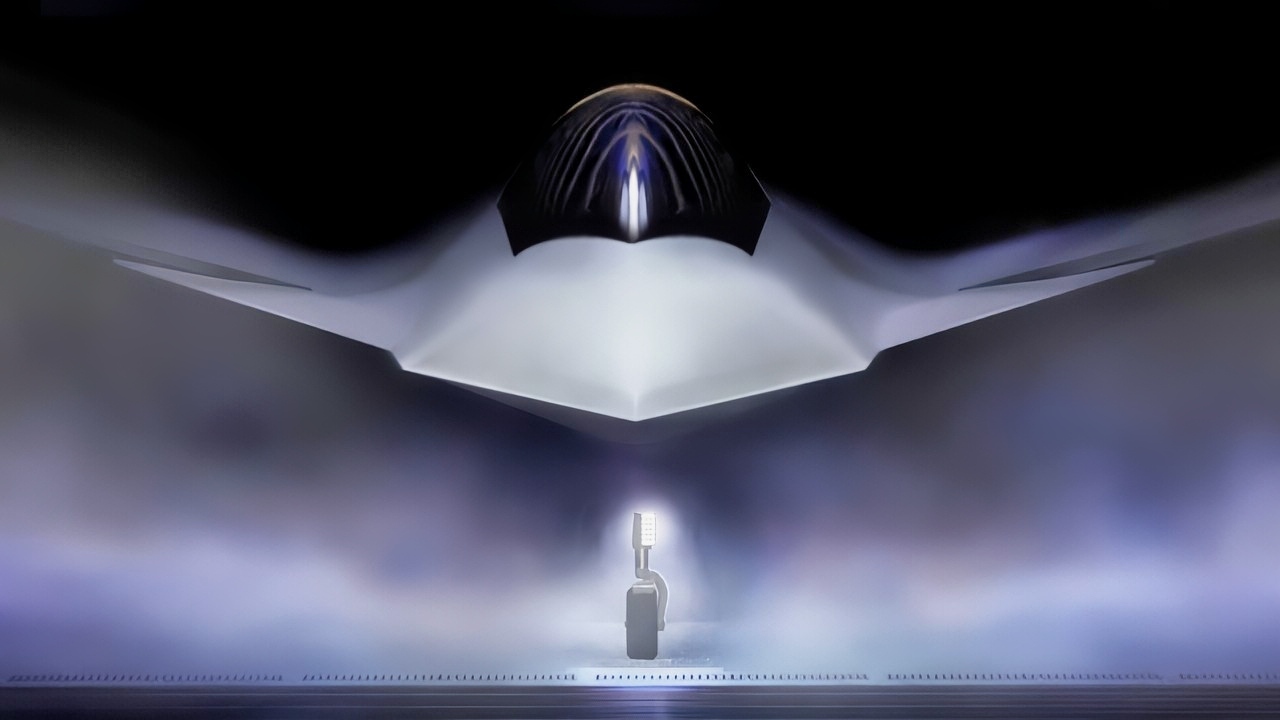
Shown is a graphical artist rendering of the Next Generation Air Dominance (NGAD) Platform. The rendering highlights the Air Force’s sixth generation fighter, the F-47. The NGAD Platform will bring lethal, next-generation technologies to ensure air superiority for the Joint Force in any conflict. (U.S. Air Force graphic)
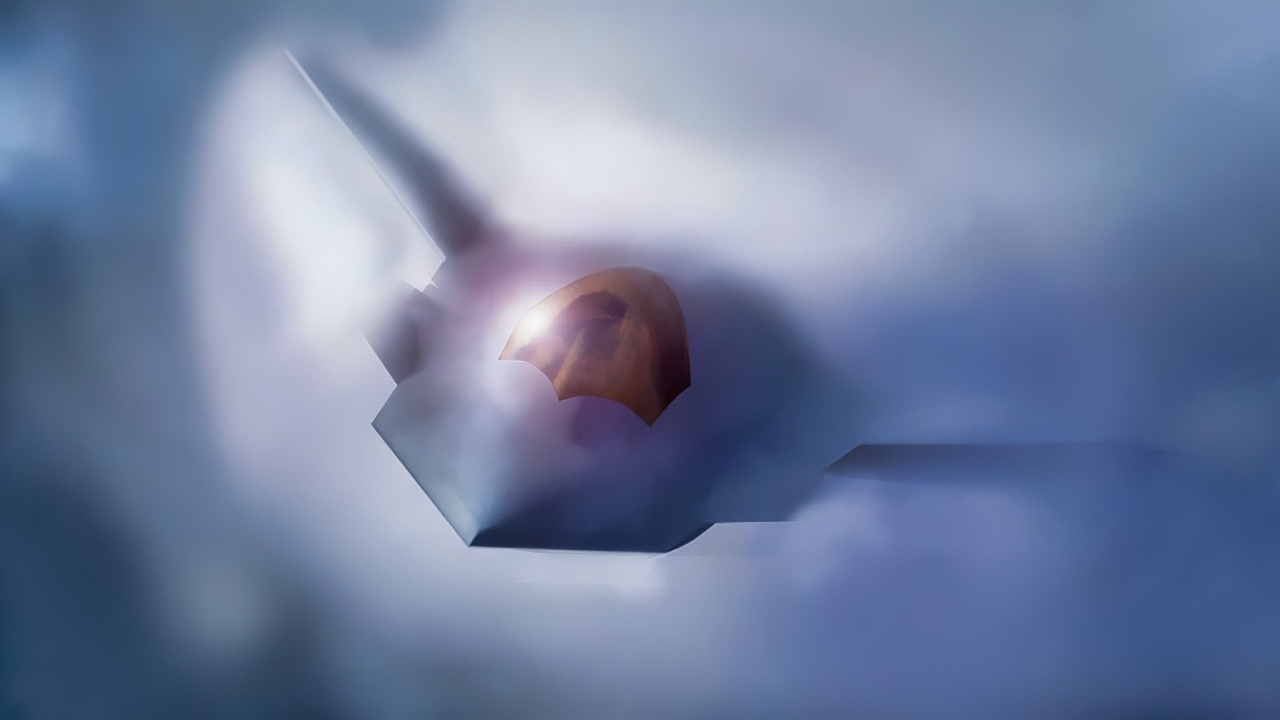
Shown is a graphical artist rendering of the Next Generation Air Dominance (NGAD) Platform. The rendering highlights the Air Force’s sixth generation fighter, the F-47. The NGAD Platform will bring lethal, next-generation technologies to ensure air superiority for the Joint Force in any conflict. (U.S. Air Force graphic)
“Simultaneously [pursuing] two sixth-generation fighters risks under-delivery on both,” the Pentagon had said in a request this summer to defense policy committees in the House and Senate.
“Given the schedule delays and cost growth across numerous airframes, DoD recommends a focus on the F-47, giving the Navy’s F/A-XX program time for technical maturity and development,” that memo to the committees said.
“Phasing the F/A-XX after the Air Force’s initial F-47 development will alleviate capacity concerns in the industrial base,” the Pentagon added.
However, the Pentagon has had a change of heart, at least enough to move forward with selecting a contractor for the fighter.
Per an Aviationist story in late August, the Navy “can now breathe a sigh of relief and prepare for a downselection of a winning design,” after the U.S. Senate restored funds for the F/A-XX program.
“A Very Exciting Aircraft”
“It’s going to be a fascinating aircraft. I’m looking forward to the downselect. I’ll leave it to the professional acquisition folks … but I’m looking forward to that because that sixth-generation means air superiority in that timeframe in the future, which means sea control,” Vice Adm. Daniel Cheever, Commander of Naval Air Forces, said during a recent CSIS event, per The Aviationist.
Cheever also made it clear that the new Naval jet will have a very different design from the Air Force’s F-47.
In June, Hegseth testified before Congress, alongside Gen. Dan Caine, Chairman of the Joint Chiefs of Staff, and the Secretary of Defense, who stated that the 2026 budget request “funds the complete design of F/A-XX.”
“We’re certainly reviewing it—working with the Joint Staff, working with the [combatant commands]—at its application around the globe. So it’s in the mix, but we recognize we need — we also need a capability as quickly as possible for the threats that we face,” Hegseth said at a hearing of the House Armed Services Committee, as reported by Defense Scoop.
Additionally, according to a separate Defense Scoop report, in April, the F/A-XX is expected to feature an increased range, according to Rear Adm. Michael “Buzz” Donnelly, director of the Air Warfare Division.
“That increased range is an essential attribute that we’re looking to field. So probably over 125 percent of the range that we’re seeing today to give us better flexibility, operational reach,” Donnelly said in the April interview with that publication.
“It will, of course, have refuel ability. And all of our air wings, our tactics and what we are designing in the future considers organic refueling capability. So the F/A-XX will be able to leverage that.”
Last November, The Aviationist reported that the Navy was officially developing the next-generation fighter independently of the Air Force’s NGAD review, according to an interview Donnelly gave to Aviation Week. The interview also stated that three companies—understood at the time to be Boeing, Lockheed Martin, and Northrop Grumman—were in the running for the Navy’s next-generation contract. He stated at the time that the program was on track to receive a Milestone B decision, which would enable it to transition to the Engineering and Manufacturing Development (EMD) phase by the end of fiscal 2025.
“We have to have an affordable platform to make it relevant to our force structure and force design, so we’ve got that in mind,” Donnelly said in that November 2024 interview. “We think we’ve got an affordable solution that supports our force structure of the future.”
What Happened With Lockheed on F/A-XX?
Per that Breaking Defense report in the spring, the competition for the next-generation Naval fighter represents the “highest-profile aircraft competition in the Navy in two decades,” the first since the F-14 Tomcat was developed. It’s unclear, though, why exactly Lockheed was shut out.
Lockheed, which dominated the fifth-generation fighter space with the F-35 Joint Strike Fighter and the F-22 Raptor, also lost out on the Air Force’s sixth-generation fighter contract to Boeing, for what’s now called the F-45.
John Phelan, the Secretary of the Navy, had described the proposed F/A-XX program as a “next-generation aircraft, offering significant advancements in operational reach and capacity within contested environments.”
About the Author: Stephen Silver
Stephen Silver is an award-winning journalist, essayist, and film critic, and contributor to the Philadelphia Inquirer, the Jewish Telegraphic Agency, Broad Street Review, and Splice Today. The co-founder of the Philadelphia Film Critics Circle, Stephen lives in suburban Philadelphia with his wife and two sons. For over a decade, Stephen has authored thousands of articles that focus on politics, national security, technology, and the economy. Follow him on X (formerly Twitter) at @StephenSilver, and subscribe to his Substack newsletter.
More Military
Russia’s ‘New’ Su-75 Checkmate Stealth Fighter Could Soon Be In the Air
China’s New Aircraft Carriers Have 1 Big Advantage over the U.S. Navy
Russia’s Airspace Provocations Are a Tell — And a Weakness
USS Parche: A U.S. Navy Nuclear Spy Submarine That Had Its Own Self-Destruct Mode
How a ‘Cheap and Tiny’ Submarine ‘Sank’ a $4,500,000,000 Nuclear Navy Aircraft Carrier


