


North Korean MiG-29s Now Carry IRIS-T-Style Missiles — With Russian Help?: Article Summary
-New imagery from North Korea’s KCNA shows MiG-29s carrying a previously unseen infrared-guided air-to-air missile that closely resembles Western and Asian designs such as Germany’s IRIS-T, Japan’s Type 04, and China’s PL-10E.

MiG-29 Fighter U.S. Air Force Museum July 2025. Image Credit: National Security Journal.

MiG-29 Flares. Image Credit: Creative Commons.
-Rough estimates suggest a 3-meter, 90-kilogram weapon with a 15–25 km range, modern IR seeker, and tail control surfaces for high-agility close-in combat.
-It appears designed to pair with Pyongyang’s recently tested radar-guided medium-range AAM, giving the KPAAF a NATO-style missile mix.
-South Korean officials suspect Russian technical support, likely tied to North Korea’s backing of Moscow’s war in Ukraine, raising the lethality of even older DPRK fighters.
Forget Old MiGs: North Korea’s New AAMs Could Change the Air War
North Korea’s state-controlled KCNA news agency recently released photos of what appears to be a new infrared-guided air-to-air missile (AAM). The projectile is similar in size and aerodynamic design to the German-made Diehl Aerospace IRIS-T/Type 04.
The photos show the missile being mounted on a Korean People’s Army Air Force (KPAAF) Mikoyan MiG-29 aircraft. The missile’s range is estimated to be similar to the IRIS-T’s 15-25 kilometers.
The missile also shows some similarities with Japan’s Type 04 AAM, as well as the Chinese PL-10E. The North Korean missile was seen for the first time mounted on the MiG-29, but it was also placed next to a Su-25 for a static display.
The missile was being shown during a KPAAF anniversary celebration at Wonson air base on the country’s Pacific coast. The North Korean government and KPAAF officials present did not disclose the designation of the missile or any of its design specifications.
Estimated Performance and Design Specifications
If the missile is in fact comparable to the IRIS-T, it would weigh approximately 90 kilograms, with a length of about 3 meters. Its configuration would be that of a short-to-medium-range weapon that employs an infrared-guidance system. If the missile performs as suspected, the seeker would be enhanced to achieve a high level of jamming immunity.
Aerodynamically, the new model is similar in dimensions and design details to IR-guided missiles designed for close air-to-air combat.
The slightly heavier Type 04 missile from Japan is equipped with a tail-mounted control system and a thrust-vector-control system fitted to the missile engine’s exhaust nozzle. It weighs 95 kg, with a maximum range of 30–35 km. It is 3.105 meters long and 130 mm in diameter.
China’s PL-10E is 3 meters long, weighs 89 kg, and is believed to have a maximum range of 20 km. It also has a tail control surface module that is similar to the North Korean design.
The North Korean has a nose-mounted IR seeker head. Its aspect changes in flight are accomplished with a tail module that features large control surfaces.
| System | Length | Diameter | Mass | Range | Note |
| Type 04 (Japan) | 3,105 m | 130 mm | 95 kg | 30–35 km | TV commercial; tail control |
| IRIS-T (Germany) | 2.94 m | 127 mm | 87 kg | 25-50 km | Similar aerodynamic configuration |
| PL-10E (China) | 3.0 m | 160 mm | 89 kg | maximum 20 km (alleged) | Analog tail control surface |
| New missile (North Korea, estimated) | ≈ 3.0 m | 130 mm | ≈ 90 kg | ≈ 15–25 km | Infrared guidance head |
New Radar-Guided Missile Tested
Integration on the MiG-29 might indicate the missile is intended for air-to-air combat missions.
In May 2025, the KPAAF conducted a test-firing of a domestically developed medium-range AAM. The KPAAF had carried out the firing from a MiG-29, and the launch successfully destroyed a target unmanned aerial vehicle.
The missile’s dimensions were described as being equivalent to the U.S. active-homing AIM-120 or China’s PL-12. The leading aerodynamic wing is positioned in the same manner as the AIM-120A/B versions, as well as the way it is on the PL-12.
That missile appears to have been designed to be flown and fired along with the recently seen infrared missile, essentially mimicking the weapons load of NATO-nation aircraft.
Development of both new missiles likely benefited from the increasing military-industrial cooperation between North Korea, Russia, and China. The KPA has rolled out several new systems recently at a tempo that strongly suggests external technical assistance was provided.
Suggestion of Russian involvement has come from South Korea’s Joint Chiefs of Staff, which assessed that this new air-to-air missile may have been developed with the support of Russia’s Tactical Missiles Corporation, likely in exchange for Pyongyang’s support of Moscow’s war in Ukraine.
If the DPRK can produce both these missiles in large numbers, it will give the KPAAF an entirely new arsenal of modern, air-launched weapons. The KPAAF possesses older aircraft at present, but has been promised newer Su-27 models from Russia. Should those models be provided to Pyongyang, and if they can fire these new missile systems, the KPAAF fighter force could soon be far more lethal.
MiG-29 Fighter Photos
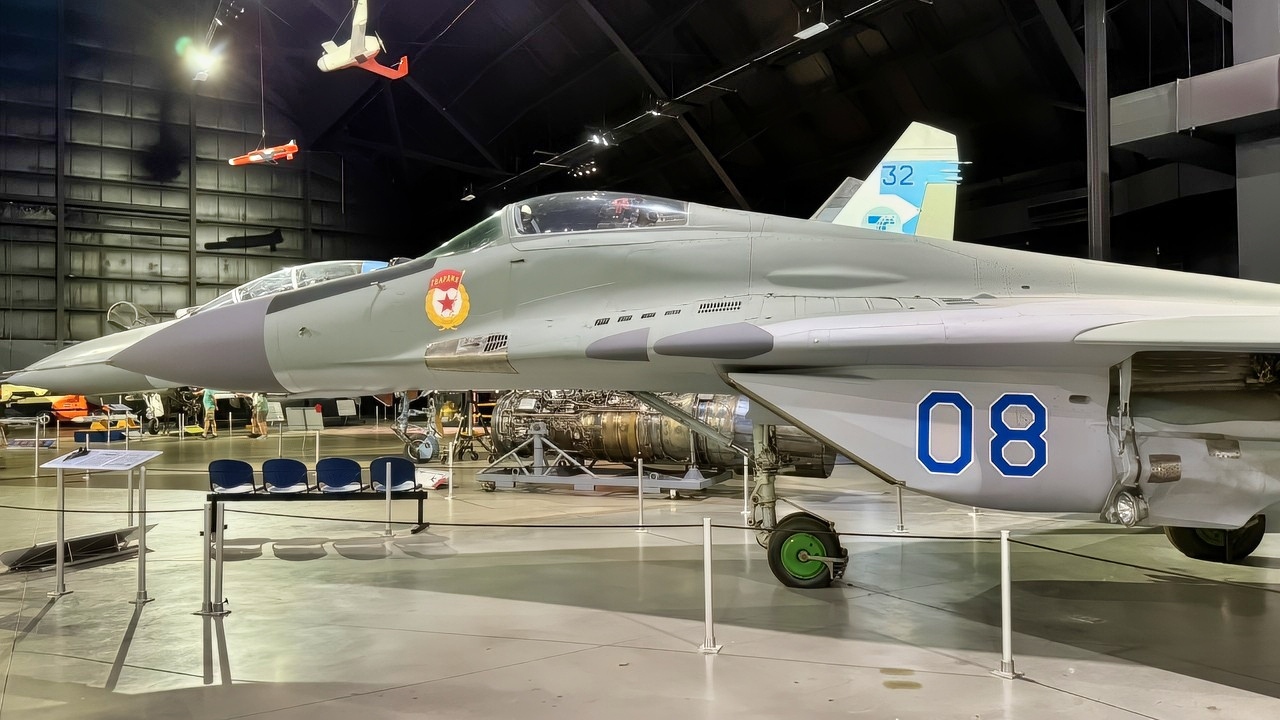
Real MiG-29 at USAF Museum in Dayton. Image Credit: National Security Journal.
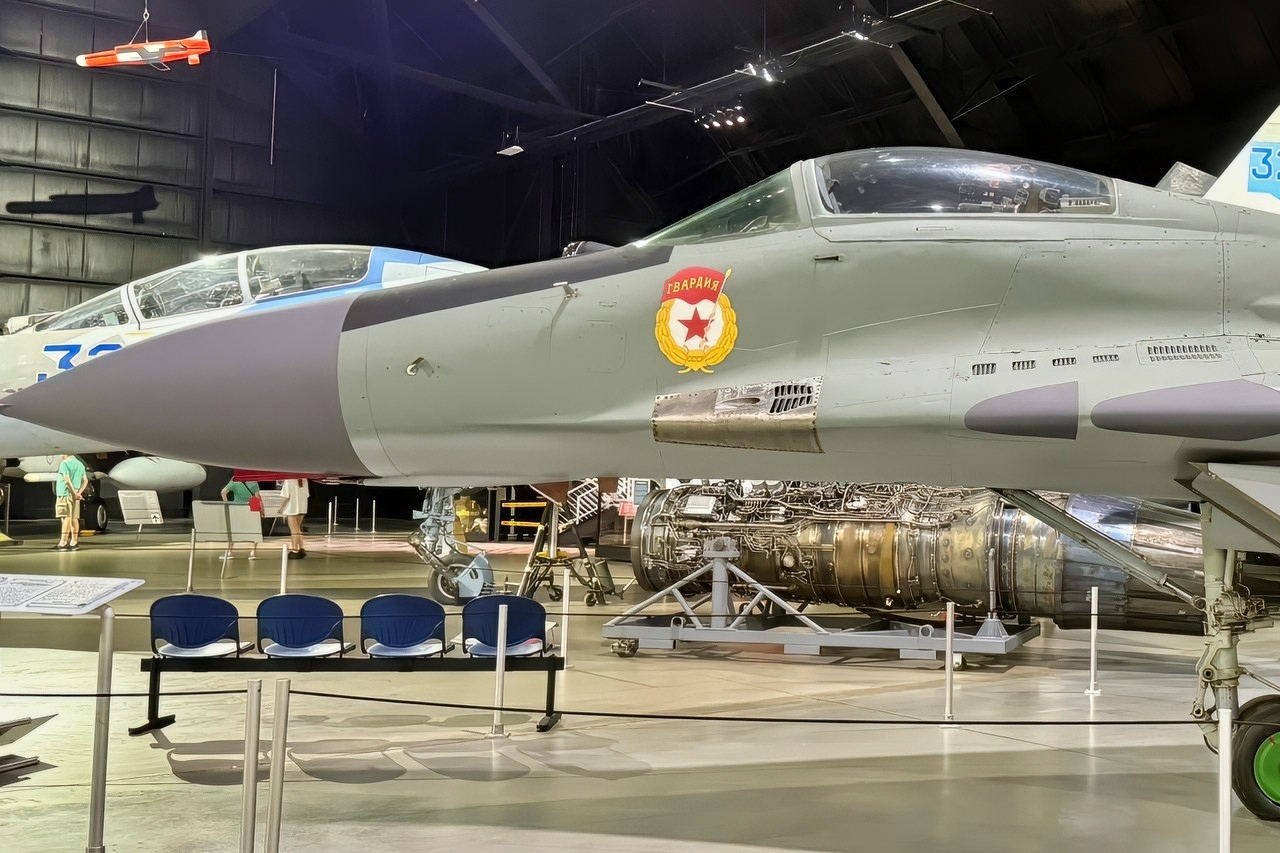
MiG-29 National Security Journal Photo Taken in July, 2025.
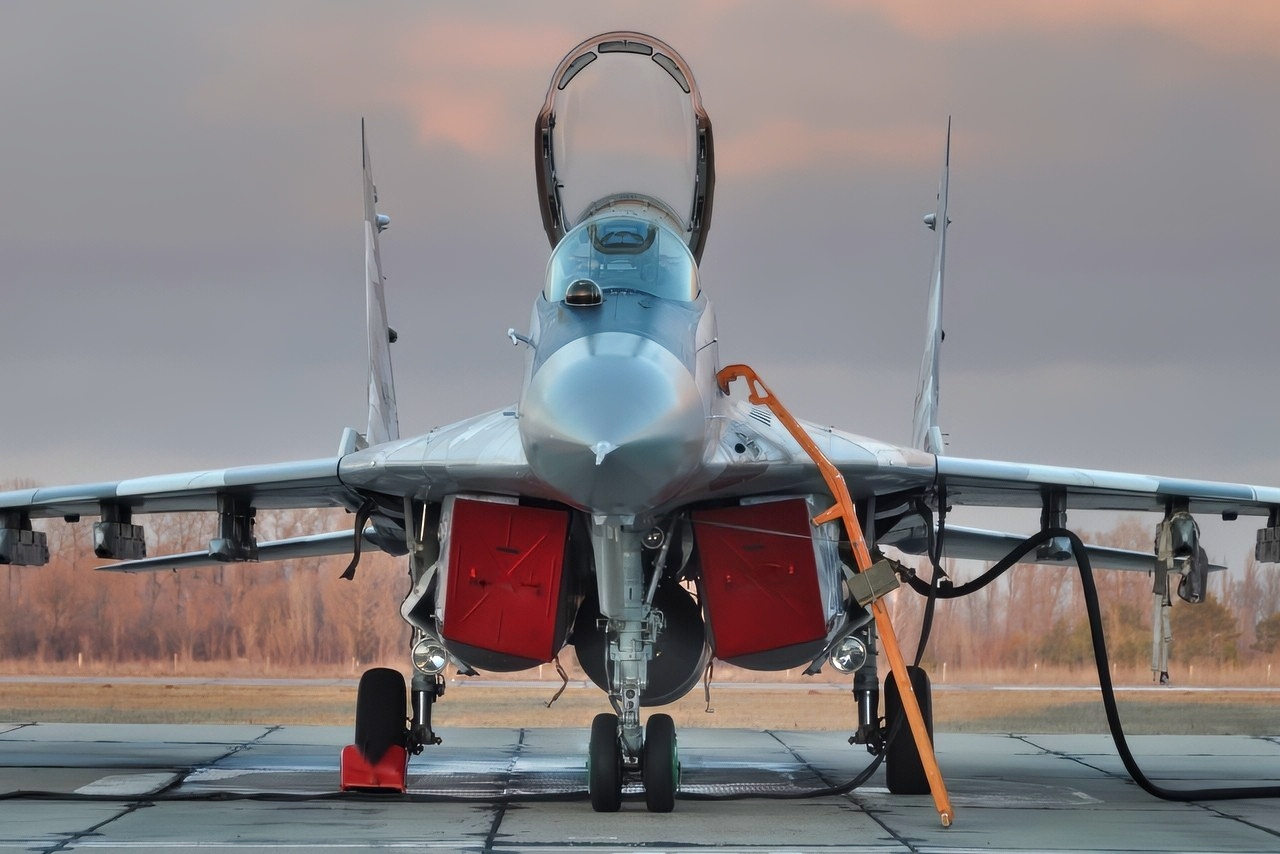
MiG-29 Fighter. Image Credit: Creative Commons.

MiG-29 Fighter. Image Credit: Creative Commons.

MiG-29 Fighter. Image Credit: Creative Commons.
Author Biography and Expertise
Reuben F. Johnson has thirty-six years of experience analyzing and reporting on foreign weapons systems, defense technologies, and international arms export policy. Johnson is the Director of Research at the Casimir Pulaski Foundation. He is also a survivor of the Russian invasion of Ukraine in February 2022. He worked for years in the American defense industry as a foreign technology analyst and later as a consultant for the U.S. Department of Defense, the Departments of the Navy and Air Force, and the governments of the United Kingdom and Australia. In 2022-2023, he won two awards in a row for his defense reporting. He holds a bachelor’s degree from DePauw University and a master’s degree from Miami University in Ohio, specializing in Soviet and Russian studies. He lives in Warsaw.


