

Ukraine just carried out the deepest confirmed strike inside Russian territory since the beginning of the war, having sent long-range drones more than 1,800 miles into Russian territory to strike two major gas processing facilities located in western Siberia.
Ukraine’s Special Operations Forces said that the operation, conducted on September 9, targeted facilities at Novy Urengoy and sites in the Purovsky district of the Yamalo-Nenets Autonomous Okrug — the central hub of Russia’s massive gas industry.
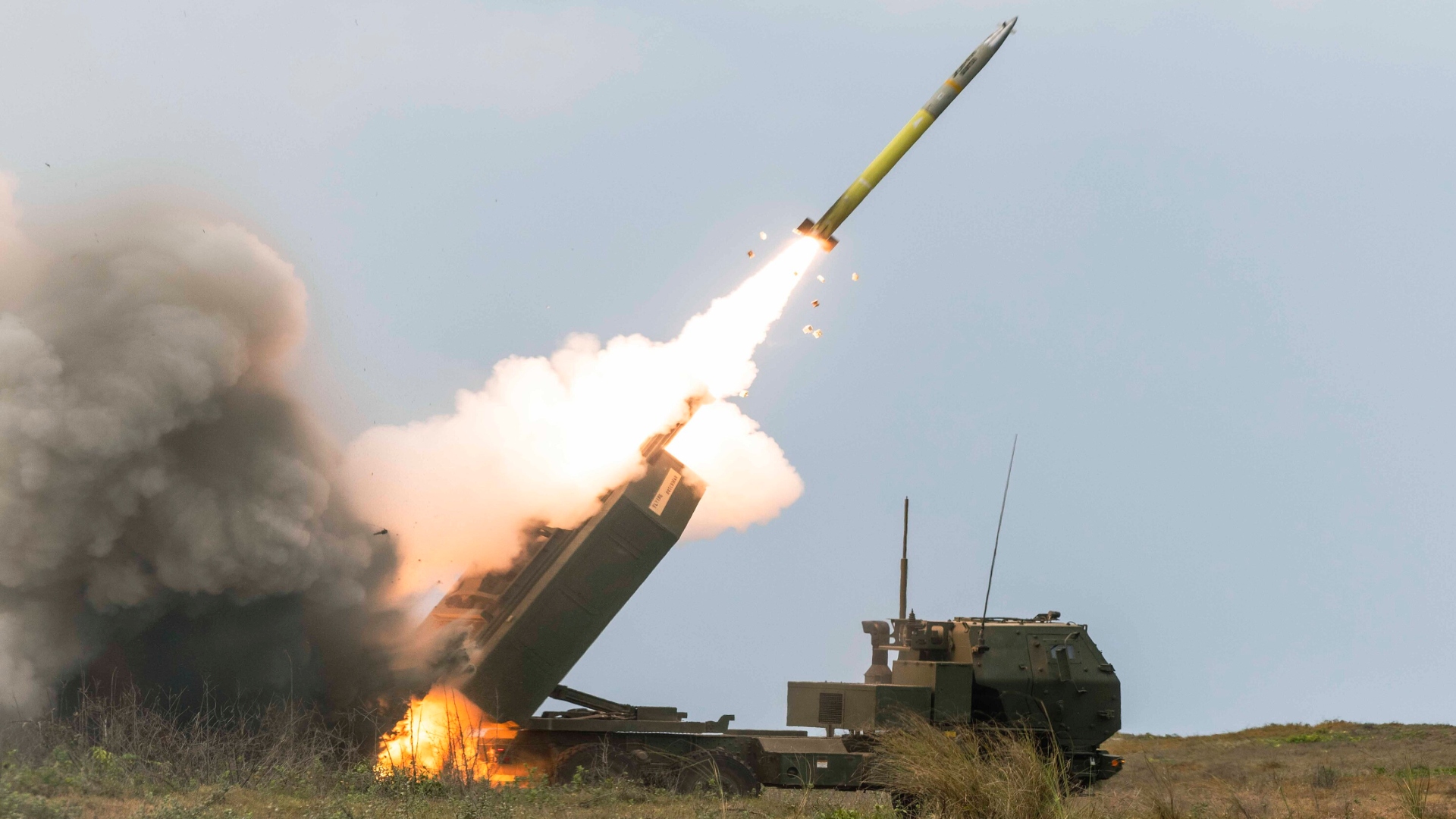
HIMARS Attack. Image Credit: Creative Commons.
The region has long been considered beyond the reach of Ukraine, but the strike proves that almost all major infrastructure and energy sites in Russia are now under threat.
Russian officials confirmed that an industrial facility in Novy Urengoy was struck. Yamalo-Nenets Governor Dmitry Artyukhov also said Russian forces intercepted the attack but that falling drone debris started a fire.
No deaths or injuries were reported.
Ukraine Reaches Russia’s Gas Capital
Deep Strike units of the Ukrainian Special Operations Forces carried out the September 9 operation. Ukraine said that the drones traveled more than 3,000 kilometers before reaching their targets, and Ukrainian defense manufacturer Fire Point also said that its FP-1 drones covered more than 3,200 kilometers during the operation.
It is an enormous victory for Ukraine’s homegrown defense sector – and, in particular, its burgeoning drone industry.
Kyiv described the attacks as successful, but the extent of the damage is still unclear. Russian authorities have publicly acknowledged the strike at Novy Urengoy so far but have not provided details about the target or the damage.
Governor Dmitry Artyukhov said Russian air defenses intercepted the attack over Novy Urengoy, with debris subsequently falling onto an industrial facility and starting a fire.
While the distance was remarkable, the sites were not chosen simply because they were far away.
Both facilities process gas condensate extracted from the huge fields of the Yamal region’s huge fields, making them a critical part of the industrial network that generates revenue for the Russian state.
The operation was specifically intended to damage those facilities and prevent Russia from using them to generate revenue and thereby support the war economy and the invasion of Ukraine.
Novy Urengoy
Novy Urengoy is particularly significant.
It is a remote Siberian city widely known as Russia’s unofficial gas capital because of its position at the center of the country’s natural gas industry.
The surrounding Yamalo-Nenets region accounts for around 80% of Russian natural gas production. It also contains some of the largest gas reserves found anywhere in the world.
The massive Urengoy gas field, discovered in 1966 and brought into production in 1978, became of foundation of the Soviet and later Russian gas industry.
Gazprom today operates major production and processing infrastructure around the city, while the Yamal region is also connected by an extensive network of pipelines and processing facilities that move gas and condensate to domestic customers and the export market.
The Novy Urengoy condensate facility targeted by Ukraine has a design capacity of roughly 19.5 million metric tons of raw material per year.
That all makes the site a target because it is critical to Moscow’s ability to finance government spending and support its wartime economy. It is also crucial for directly supporting the war.
Russia’s federal budget received roughly 8.5 trillion rubles in oil and gas revenues in 2025, according to Finance Ministry data. That’s equivalent to about one-fifth of total federal revenues.
While oil provides a larger share of those receipts than natural gas, gas production, processing, and exports remain an important source of tax and corporate revenue.
That makes the infrastructure around Novy Urengoy economically important well beyond Siberia.
Disruption there could affect companies and revenue streams that directly contribute to the Russian government’s finances, at a time when defense and national security spending consume a historically large share of the federal budget.
Gas Prices Climb
As Ukraine and Russia trade increasingly damaging long-range strikes, the world energy market is feeling the effects.
On Thursday, September 10, European natural gas prices climbed to their highest level in almost four years as traders responded to disruptions and the prospect of continued attacks in Russia’s most important gas-producing region.
The benchmark Dutch TTF contract rose around 3% to €81.58 ($95) per megawatt-hour, its highest level since December 2022.
The increase came just one day after the Novy Urengoy strike, adding new pressure to an already tight European gas market.
European gas prices were already elevated, too, caused by reduced liquefied natural gas supplies from the Persian Gulf amid the ongoing war in Iran. Europe is also looking at low storage levels as winter approaches.
The September 9 attack, then, is a global concern, risking supply at a time when the global energy market is facing historic uncertainty.
Ukraine’s next round of strikes could prove consequential to the world – not just Russia.
About the Author: Jack Buckby
Jack Buckby is a British researcher and analyst specializing in defense and national security, based in New York. His work focuses on military capability, procurement, and strategic competition, producing and editing analysis for policy and defense audiences. He brings extensive editorial experience, with a career output spanning over 1,000 articles at 19FortyFive and National Security Journal, and has previously authored books and papers on extremism and deradicalization.


