

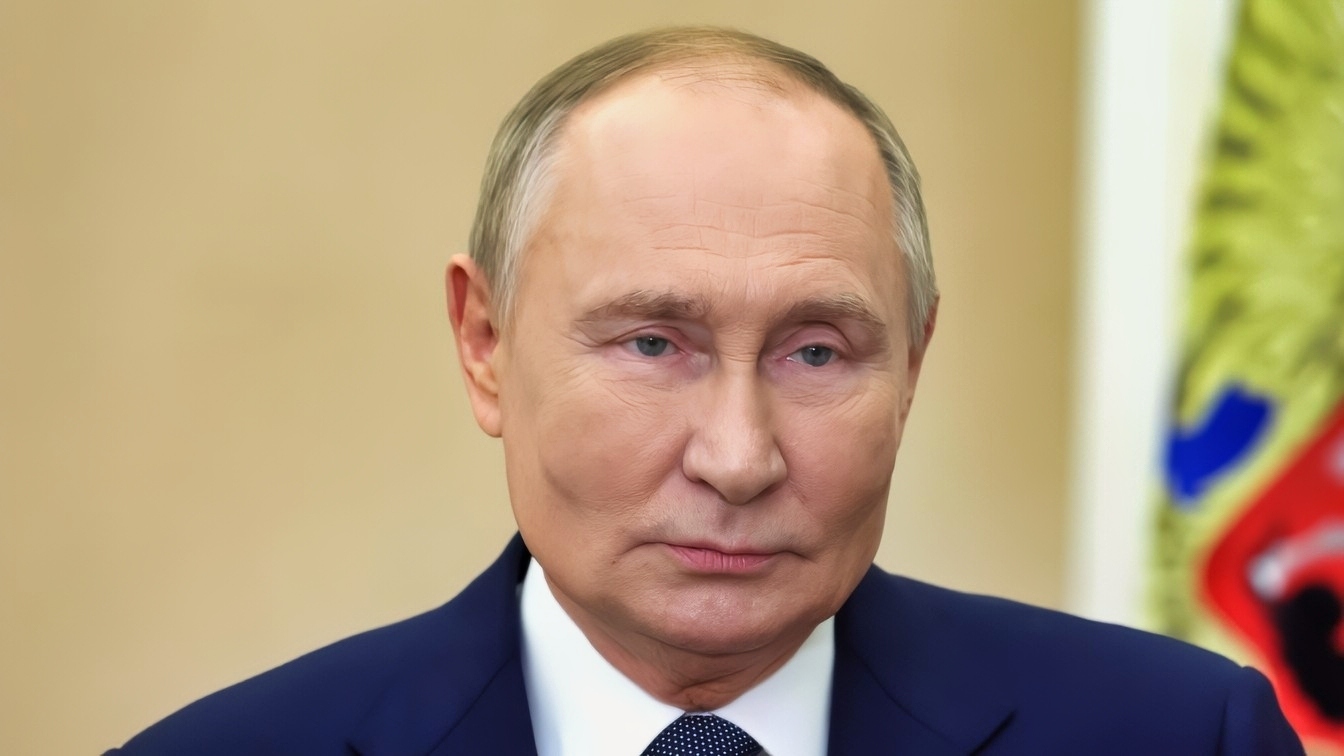
A growing set of problems with Russia’s war in Ukraine may be pushing the Kremlin to launch a serious escalation of its military effort. This deteriorating situation in the Ukraine war is causing an increasing unraveling of Russian President Vladimir Putin’s long-vaunted image of wise and unparalleled effective leadership.
No small measure of that unraveling is due to the Ukraine military’s apparent ability to hit any target, any arms factory, any oil refinery – even the city of Moscow itself. It is a poisonous combination for the former KGB Lt. Col., according to a long article printed on 29 May in the LA Times.
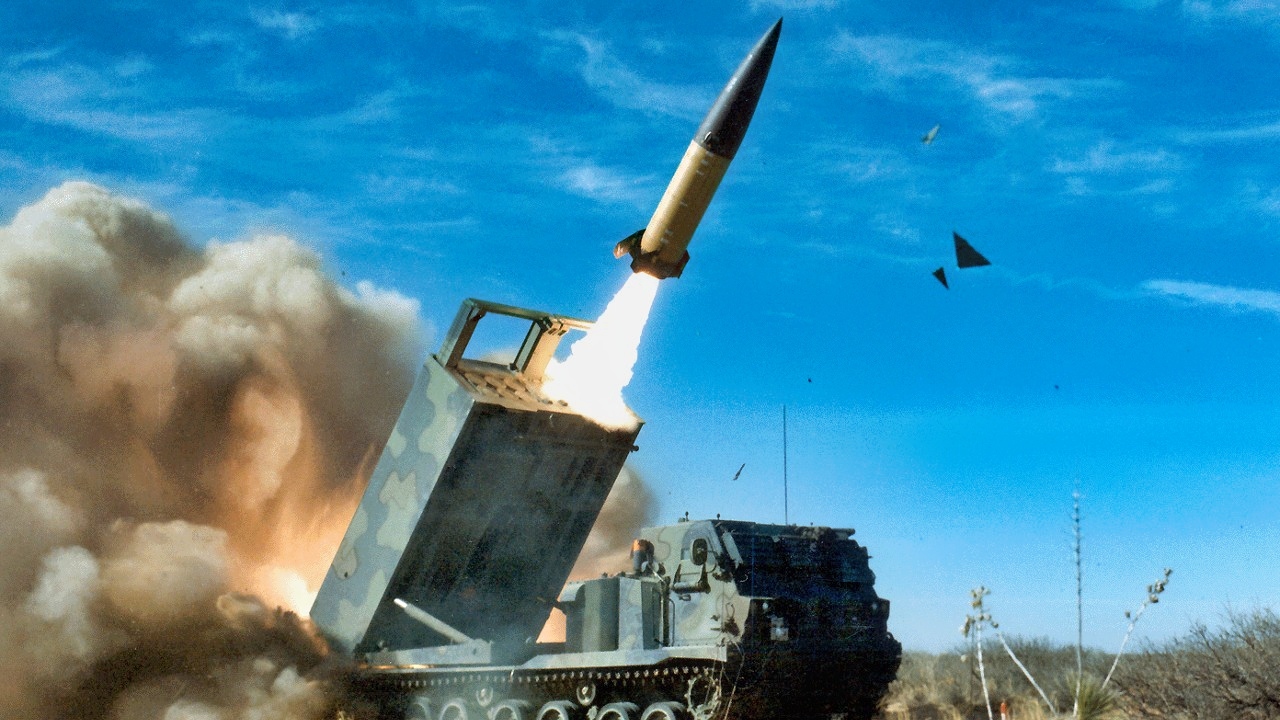
An ATACMS missile being launched from an M270 MLRS.
Russian President Vladimir Putin’s “10-day Special Military Operation” that was supposed to take the Ukrainian capital of Kyiv in three days seems to have ground to a halt a long time ago, but the troubles do not end there. More recently, Moscow’s forces have even been losing ground in this war – the lines moving back towards Russia’s borders despite their unspeakable human casualties and the destruction of more military hardware than could have even been anticipated.
The price that Russia has paid in this war in blood and treasure prompted the Director of the United Kingdom’s Government Communications Headquarters (GCHQ) to revise upward the number of Russian soldiers killed in Ukraine just this week. In her inaugural address as the intelligence agency’s new head, Anne Keast-Butler, stated that up to 500,000 Russian servicemen had met their end in this conflict – an almost 50 percent increase above other previous estimates.
“The character of the war is shifting in favor of Ukrainian forces, at least for now,” reads one of this week’s assessments from the Washington-based think-tank, the Institute for the Study of War. “Russian forces’ rates of advances are stagnating while Ukrainian forces are employing novel tactics and operational concepts in efforts to break out of positional warfare.”
Belarus: Nuclear Signaling or Role-Playing?
Given the circumstances, it becomes impossible for Putin to claim in the 5th year of this war that his strategy is working and Moscow is prevailing in the conflict. Since the battlelines are now moving in the wrong direction, the Russian President is now, according to several sources, contemplating a massive uptick in missile and drone attacks on Ukraine’s cities. Recent attacks are supposed to be the beginning of what he has warned will be a set of “consistent and systematic” missile strikes.

Mirage 2000 Fighter. Image Credit: Creative Commons.
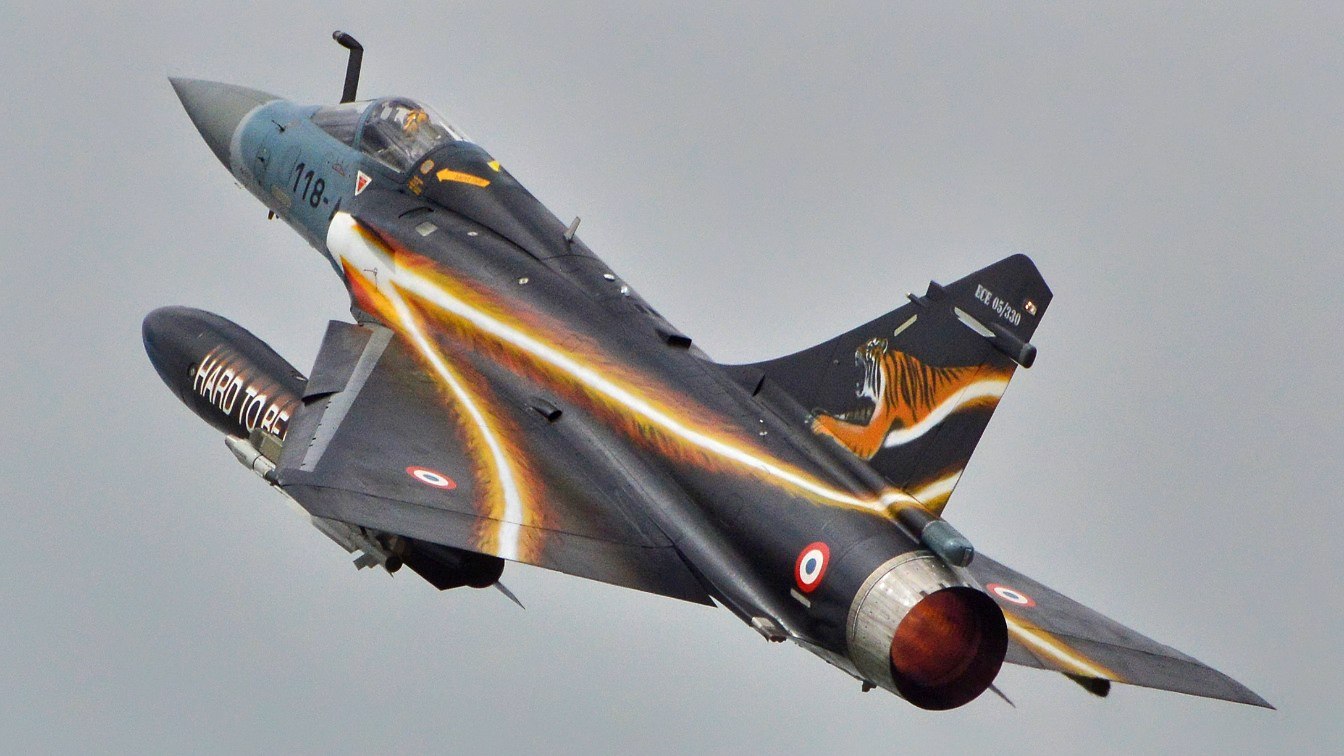
Mirage 2000. Image Credit: Creative Commons.
In parallel, earlier this month, Moscow conducted a series of drills of Russia’s nuclear forces. The exercises were larger than normal for this kind of exercise, but that was not their only notable aspect. For the first time, these drills also included the armed forces of Ukraine’s neighboring and allied state, the former USSR republic of Belarus.
The drills took place the week of 21 May and saw the two heads of state, Putin and Belarusian President Aleksandr Lukashenko, making provocative statements that were broadcast on the two nations’ television networks. “The use of nuclear weapons is an extreme, exceptional measure for ensuring the national security of our states,” Putin said.
In other coverage, Lukashenko was seen inspecting the Russian Iskander intermediate-range nuclear-capable ballistic missiles at a military unit that was participating in these drills. “I dreamed about this machine a long time ago,” said the Belarusian leader who has managed to retain the office of president since 1994 and has made a habit of either imprisoning political opponents or making them “disappear.”
Putin wants to send two messages here. By pulling his Belarus ally into the equation and trying to imply that there would also be nuclear weapons based on the former Soviet vassal state’s territory as well as his own, Putin is trying to increase the threat to the West.
His other goal is to reinforce the narrative that he remains powerful and retains the means to bend Ukraine and its Western allies to his will. But the preponderance of evidence is against him, making that a convincing argument, as his military is unable to stop Ukraine’s relentless missile and drone strikes.
As the EU’s diplomatic directorate said earlier this year, after four years of war, “Russia’s military is not winning.” Not only is it not winning, said a Ukrainian defense executive whose company has a presence on the front lines, “but shows all the signs of having very real and increasing chances of losing.”
Reality of Russia’s Threats to Escalate
An Atlantic Council commentary from late last year pointed out that “When Russian President Vladimir Putin first announced the full-scale invasion of Ukraine in February 2022, his official video address was accompanied by thinly-veiled nuclear threats aimed at Western leaders. This Russian nuclear saber-rattling has remained a prominent feature of the war ever since.”
Putin continuing to invoke the nuclear threat has had only minimal utility so far. At times, it has slowed the pace of Western military aid to Ukraine, but it has never convinced any of the countries supporting Kyiv to curtail that aid altogether. The overall assessment today is that Putin will continue to use nuclear threats because he simply has very few means at his disposal to intimidate the West.
But it is increasingly clearer that the saber-rattling has, as economists would say, “reached the point of diminishing returns.” Rather than convincing the opponents of the former KGB mid-level functionary of how strong Russia remains, it instead telegraphs that invoking this threat is, in fact, little more than a gimmick used to disguise Russian weakness.
About the Author: Reuben F. Johnson
Reuben F. Johnson has thirty-six years of experience analyzing and reporting on foreign weapons systems, defense technologies, and international arms export policy. Johnson is the Director of Research at the Casimir Pulaski Foundation. He is also a survivor of the Russian invasion of Ukraine in February 2022. He worked for years in the American defense industry as a foreign technology analyst and later as a consultant for the U.S. Department of Defense, the Departments of the Navy and Air Force, and the governments of the United Kingdom and Australia. In 2022-2023, he won two awards in a row for his defense reporting. He holds a bachelor’s degree from DePauw University and a master’s degree from Miami University in Ohio, specializing in Soviet and Russian studies. He lives in Warsaw.


geh-geh
May 30, 2026 at 8:46 am
According to non-western reports, russian military is busily kicking asse against ukro troops in sumy region.
Sumy region is adjacent to luhansk which has voted to join russia.
Even though sumy wasn’t previously included as a part of the donbass, the russian military has since 2025 entrenched itself in the region, and so, in any future settlenent, ukraine will never regain it.
Sumy is much less densely populated than donetsk, and Thus the russian military has been able to liberally employ thermobaric weapons against the nazi troops.
According to front line troops, the nazis were easily eliminated.
Swamplaw Yankee
May 31, 2026 at 4:04 am
As in 2013, so in 2026, the Kremlin Muscovy ethnics know that ‘redline’ threats scare the Woke desk drones sitting overpaid in Mainland USA.
As the Muscovy pulled down their pants in 2014 to redline Obama, he immediately capitulated + betrayed the WEST with his “GREEN” light facilitation of the Balkanization of Independent Ukraine.
The 2026 MAGA POTUS Trump + his elite all want a personal cuddle time with Putin + Lavrov to see those redline lines in those Muscovy underwear. It is so shocking a redline sight, that the POTUS immediately must imitate all Kremlin Narratives as he sells out Ukraine.
The real nuclear threat comes from Kremlin occupation of the largest hub of nuclear reactors in Europe located in the middle of Ukraine.
Anarchist Rasputin Putinites have evicted all real educated Ukrainian personnel + have this nuclear site set on explosion course. Of course, Putin has no knowledge or control over his Rasputin like privateers.
Blowing up the 6 reactors is a quick job for only 2 or 3 Muscovy anarchists.
Is it true true that every Kremlin Muscovy safety crew on duty at chornobyl were safely in Brighton Beach, NYC, before their handiwork exploding the reactor was even controlled?
Sabre-rattling? It will be more like cheaply blaming the FREE PRC jet motors that failed to work on the high explosive UAV/ drones that suddenly plunged into the 6 reactors to release uncontrollable radioactivity over all Europe.