


Ukraine launched what appears to be the largest drone attack of the war against Moscow on June 18, striking a major oil refinery, disrupting all four of the capital’s airports, and forcing Russian authorities to acknowledge a massive penetration of the country’s most heavily defended airspace. The attack marks a turning point in the conflict, in which the veil of Russian domestic immunity has been punctured. And while Russian officials claimed to have intercepted hundreds of drones, the scale of the attack has shifted perceptions about what Ukraine is capable of.
Energy Targets
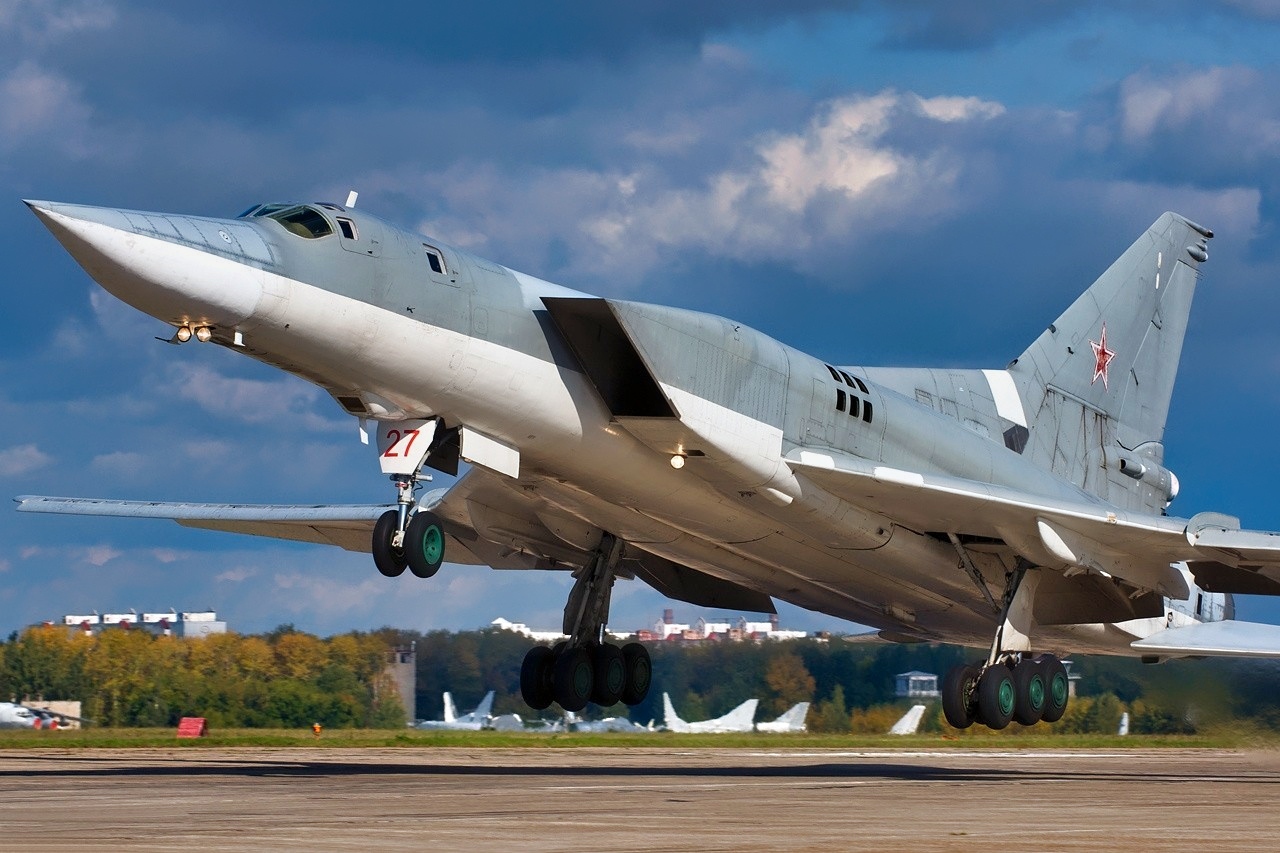
Tu-22M Backfire Bomber from Russia. Image Credit: Creative Commons.

Tu-22M3 Russian Bomber. Image Credit: Creative Commons.

Tu-22M3 Bomber Russian Air Force. Image Credit: Creative Commons.
The strikes were not random. The centerpiece of the operation was the Gazprom-owned Kapotnya refinery southeast of Moscow. The facility reportedly supplies roughly 40 percent of Moscow’s gasoline and approximately 50 percent of the Moscow region’s diesel demand. The refinery is an obvious target, as modern war requires vast quantities of fuel to support logistics, transportation, and industry, and to maintain economic stability. Ukraine appears to be increasingly focused on attacking the economic foundations supporting Russia’s war effort rather than just military targets near the front. The new strategy increases the cost of continuing the war and gradually applies political pressure on the Kremlin to resolve the conflict.
The Tactics: Saturation
The operation reportedly followed a layered approach. Phase one included a decoy swarm; large numbers of slower, propeller-driven drones launched first to activate radars, force Russian air defenses to engage, and consume interceptor missiles. Phase two included fast-penetration assets; reportedly, faster jet-powered systems were used.
These platforms compress defender reaction times, exploiting gaps created after initial defensive engagements. Last, phase three included terminal precision strikes—a final attack wave that concentrated on specific infrastructure nodes rather than broadly scattering impacts across the city. Increasingly, Ukraine is conducting complex strike packages resembling traditional air campaigns despite lacking a conventional strategic bomber force.
Air Defenses Compromised
Moscow possesses some of the densest air defenses in Russia—yet the strike still got through. Why?
The challenge isn’t necessarily about defeating every interceptor, but about forcing defenders to make impossible choices.
Every missile fired at a decoy drone consumes inventory, creates a temporary reload window, taxes personnel, and increases the likelihood of a penetration. This reflects a recurring, remarkable theme in modern warfare: cheap autonomous systems can force expensive defensive responses.
For much of the war, many Russians experienced the conflict through television.
That dynamic is changing, with Ukraine bringing the war to the Russian capital. The latest attack caused airport shutdowns, traffic disruptions, refinery fires, and smoke visible across the capital region. Ukraine is increasingly demonstrating that Russia cannot completely insulate its political and economic center from the consequences of war.
Resource Allocation Problem
Russia faces a growing resource allocation problem. Air defense assets cannot be everywhere simultaneously.
Moscow naturally requires protection—but so do front-line troops, logistics hubs, ammunition depots, oil facilities, and military airfields. Every additional system moved to defend Moscow potentially leaves other regions less protected, a dilemma which Ukraine recognizes and appears intent on forcing.
The strike also highlights a broader trend: Ukraine is increasingly targeting energy infrastructure.
This makes sense. Infrastructure attacks generate effects beyond their immediate physical damage. Potential ramifications include fuel shortages, repair costs, production interruptions, and economic uncertainty.
Even temporary disruptions can impose disproportionate costs. From Kyiv’s perspective, this may represent one of the few areas where relatively cheap drones can create strategic-level effects.
Diplomatic Timing
The timing of the strike was relevant, too. The strike occurred amid renewed diplomatic discussions regarding the future of the conflict. Ukraine may be hoping to increase its leverage before any negotiations, showing that it is capable of imposing legitimate costs on Russia.
Said another way, Kyiv appears determined to avoid entering negotiations from a position of weakness.
The latest attack was significant, demonstrating the growing sophistication of Ukraine’s long-range strike campaign.
The strike exposed the difficulty of defending vast territories against massed autonomous systems and reinforced Ukraine’s strategy of targeting energy infrastructure and economic pressure points. And, it showed how modern warfare rewards scale and persistence, often over geographic depth.
Moscow was not crippled in the attack. But the attack proves Moscow is not beyond Kyiv’s reach.
About the Author: Harrison Kass
Harrison Kass is a writer and attorney focused on national security, technology, and political culture. His work has appeared in Tablet, City Journal, The Hill, The Spectator, and The Cipher Brief. He holds a JD from the University of Oregon and a master’s in Global & Joint Program Studies from NYU. More at harrisonkass.com.


