

The price tag for rebuilding Ukraine keeps climbing, and the latest official estimate puts it close to $588 billion. That figure, daunting as it is, may be the easier half of the problem. Money can be borrowed, seized, or donated. People are far harder to replace, and after more than four years of war, Ukraine has lost millions of them, including a large share of the young, educated, and skilled workers any reconstruction will depend on. The country faces a reconstruction bill measured in hundreds of billions, colliding with a population that has shrunk dramatically and may not fully recover. Whether Ukraine can raise the money is a serious question. Whether it can get its people back is the one almost no one is asking, and it may matter more.
What Rebuilding Ukraine Will Actually Cost

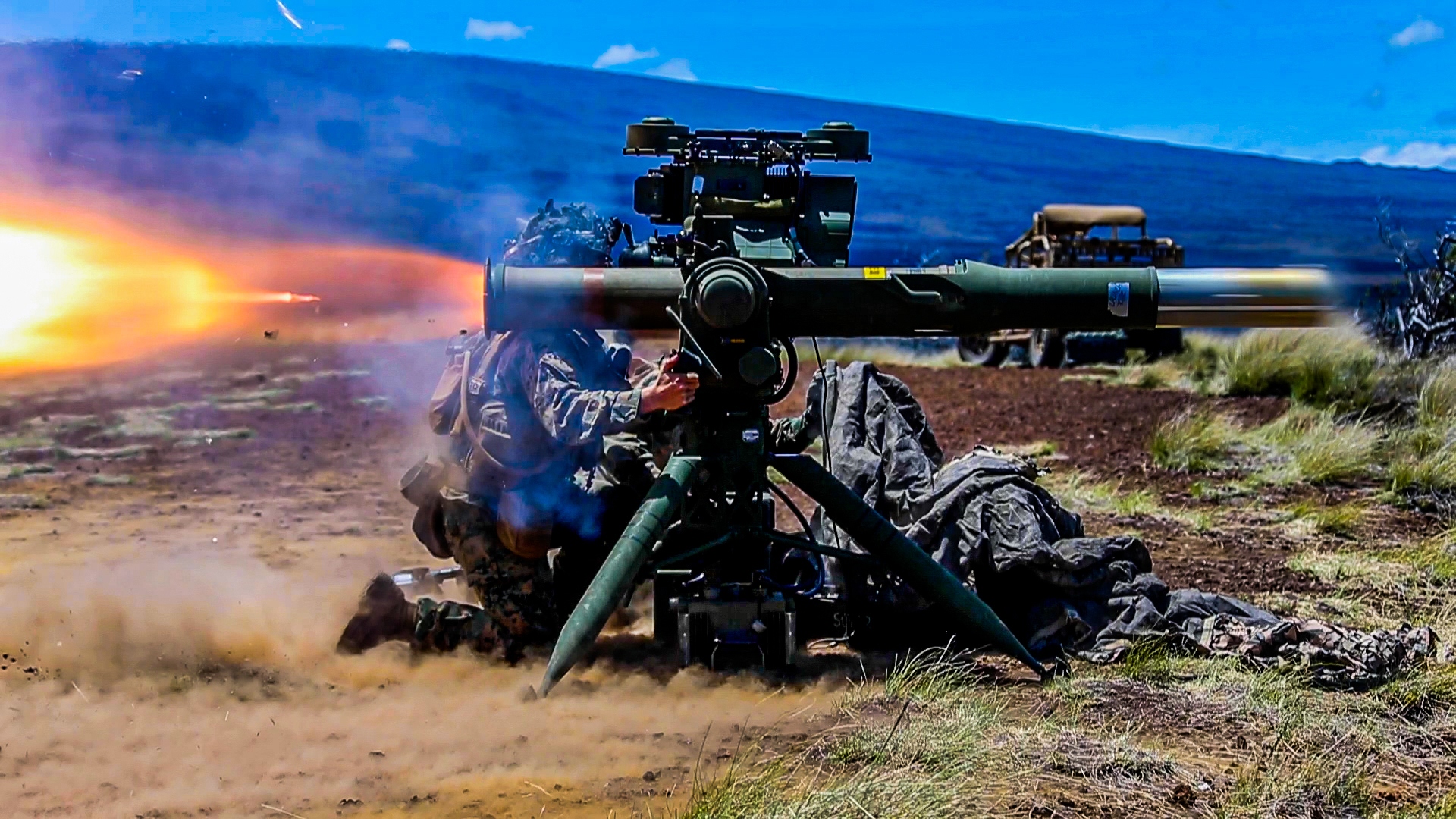
A soldier from the Idaho Army National Guard, Charlie Company, 2-116th Combined Arms Battalion, 116th Cavalry Brigade Combat Team makes Idaho National Guard history with the first firing of a Javelin anti-tank missile.
In a historic moment of training for the Idaho Army National Guard, soldiers from Charlie Company, 2-116th Combined Arms Battalion, 116th Cavalry Brigade Combat Team, fired the FGM – Javelin portable anti-tank missile on Sunday while conducting a series of field training exercises scheduled for the week on the Orchard Combat Training Center ranges.
The authoritative number comes from a joint assessment by the Government of Ukraine, the World Bank, the European Commission, and the United Nations, the fifth such review since the invasion. Released in late February 2026, it estimates the total cost of reconstruction and recovery at nearly $588 billion over the next decade, measured as of the end of 2025.
That is nearly three times Ukraine’s entire annual economic output. The figure has risen with each assessment, from $349 billion at the start of the war to $524 billion a year ago, reflecting damage that continues to accumulate faster than anyone can repair.
Direct physical damage alone now stands at more than $195 billion, and the breakdown shows how deep the destruction runs. The largest long-term needs are in transport at roughly $96 billion, energy at nearly $91 billion, and housing at almost $90 billion, with 14 percent of the country’s entire housing stock damaged or destroyed and more than three million households affected.
Clearing rubble and removing unexploded ordnance from farmland and cities will cost close to $28 billion on its own. The regions nearest the front, including Donetsk, Kharkiv, and Kherson, have absorbed the overwhelming share of the damage, which means the hardest rebuilding is concentrated exactly where security will remain most fragile. The private sector is expected to cover perhaps a third of the total, but the rest will require enormous and sustained outside support.
Who Pays For It
The single largest potential source of funding is also the most contested.
Western governments froze roughly $300 billion in Russian central bank assets after the 2022 invasion, about $210 billion of it held in Europe, mostly at the Euroclear clearinghouse in Belgium, with only around $5 billion under American control.
The European Union has been advancing a plan to use those assets to back a large loan to Ukraine, in the range of €140 to €165 billion, with the idea gaining political momentum at an October 2025 summit and legislation targeted for 2026.

Student of the Advance Small Arms Instructor (ASAI) conducted a range with M-203 grenade luncher, C16 Automatic Grenade Luncher, C6 light machine gun and Carl Gustav 84mm anti-tank. These photos were taken at the Infantry School, 5th Canadian Division Support Base (5 CDSB) Gagetown, New Brunswick, on 31 October 2024.
The debate over whether to do this is genuine and unresolved. Supporters argue it is simply Russia paying for the damage it caused, and the US Congress authorized confiscation in 2024, while the European Parliament passed a non-binding resolution backing the idea in 2025. Opponents, led by Belgium and echoed by the European Central Bank, warn that seizing a sovereign nation’s reserves could undermine the stability of the international financial system, prompting countries such as China and the Gulf states to withdraw their reserves from European institutions.
Moscow calls the plan outright theft and has pursued its own legal claims, with a Russian court granting a damages case against Euroclear worth more than $200 billion. There is a further complication that peace talks have made acute.
The frozen assets have become a potential bargaining chip, with at least one floated proposal directing some funds toward Russian-occupied areas or back to Russia entirely, an outcome Kyiv strongly opposes as a betrayal of the war’s victims.
The People Problem
The money, however it is raised, runs into a harder constraint. Reconstruction needs workers, engineers, doctors, teachers, and entrepreneurs, and Ukraine has been bleeding exactly those people for four years.
Roughly 5.6 million Ukrainians are refugees abroad as of early 2026, and another four million or more are internally displaced, which means more than 10 million people, about a fifth of the prewar population, have been driven from their homes.
The damage to the workforce is already visible. The number of full-time employees in Ukraine fell from around seven million in 2021 to roughly 5.3 million by late 2025, and staff shortages have become the single biggest problem Ukrainian businesses report, with the construction sector, the one most central to rebuilding, among the hardest hit.

U.S. Army Pvt. 1st Class Ian Wojick, assigned to 552nd Military Police Company, 25th Infantry, aims a DroneBuster, an anti-drone weapon, toward the sky during the Joint Pacific Multinational Readiness Center Exportable (JPMRC-X) exercise at Fort Magsaysay, Philippines, June 1, 2025.
This iteration of the JPMRC-X marks the second Combat Training Center (CTC) rotation conducted in the Philippines. As part of the Army’s premier regional CTC, JPMRC-X enables the U.S. Army, joint force, allies, and partners to develop skills in realistic environments and conditions. Through exportable capabilities, JPMRC-X strengthens war-fighting readiness, enhances multilateral relationships, and contributes to regional security and stability in the Indo-Pacific. (U.S. Army photo by Staff Sgt. Keith Thornburgh)
The more serious damage is demographic. The death rate in Ukraine in 2025 outpaced the birth rate by nearly three to one, and the fertility rate has fallen below one child per woman, far under the roughly 1.4 average across the European Union and nowhere near the level needed to sustain a population.
Ukraine was already aging and shrinking before 2022, one of the steepest demographic declines in the world, and the war accelerated every negative trend at once. Demographers now project that without major changes, the population could fall to under 29 million by 2041, down from well over 40 million before the war. Ukraine’s own central bank does not expect net migration back into the country to even begin until 2027, and then only slowly.
Why The Best And Brightest May Not Return
The most damaging part of the human loss is who has left and whether they will come back. The people abroad are disproportionately the ones on whom a modern economy is built. Two-thirds of Ukrainian refugees are of working age, and more than half are under 35, the very generation that would carry reconstruction and repopulate the country. The trend in their intentions has moved in the wrong direction.
The share of Ukrainian refugees who said they wanted to return home fell from 83 percent in 2022 to 61 percent in 2024, while the share saying they would not return rose steadily. By early 2026, only about 43 percent intended to return at all, and nearly 80 percent of those said they would do so only after the war fully ended, with a signed peace and the resumption of civilian flights.
Younger refugees are the least likely to come home. Research by Ukraine’s Centre for Economic Strategy found that those under 35 are far less inclined to return than older Ukrainians, because they have integrated into host countries, found jobs and higher salaries, and are unwilling to bring children back into a country still under threat. After the relaxation of wartime travel rules in 2025, roughly 96,000 young men aged 18 to 22 left in a matter of months, about one in seven in that age group. Many of those who left were educated and skilled, the kind of people who anchor businesses and institutions, and the longer they build lives in Warsaw, Berlin, and Toronto, the less likely they are to uproot again.
The uncomfortable reality is that these refugees have become an economic asset to their host countries rather than to Ukraine, with Ukrainians in Poland alone estimated to generate around 2.7 percent of that country’s economic output.
What It Will Take Beyond Money
The challenge is severe but not hopeless, and the same research documenting the losses points to what could reverse them. The single most important factor is how the war ends. Refugees overwhelmingly say they will consider returning only with a genuine peace and credible security guarantees, which means the terms of any settlement will shape the demographic future as much as the battlefield did.
The Centre for Economic Strategy estimates that between 1.3 and 2.2 million people could return once the war ends, depending on the conditions, and older Ukrainians are already showing signs of coming back in greater numbers than the young.
Ukraine’s bid to join the European Union cuts both ways and could become a powerful pull factor, offering jobs, institutions, and a standard of living that would give people a reason to return rather than to stay away. The war has also reshaped the workforce in lasting ways, with women moving into professional and technical roles long dominated by men, and employers turning even to teenagers to fill gaps.
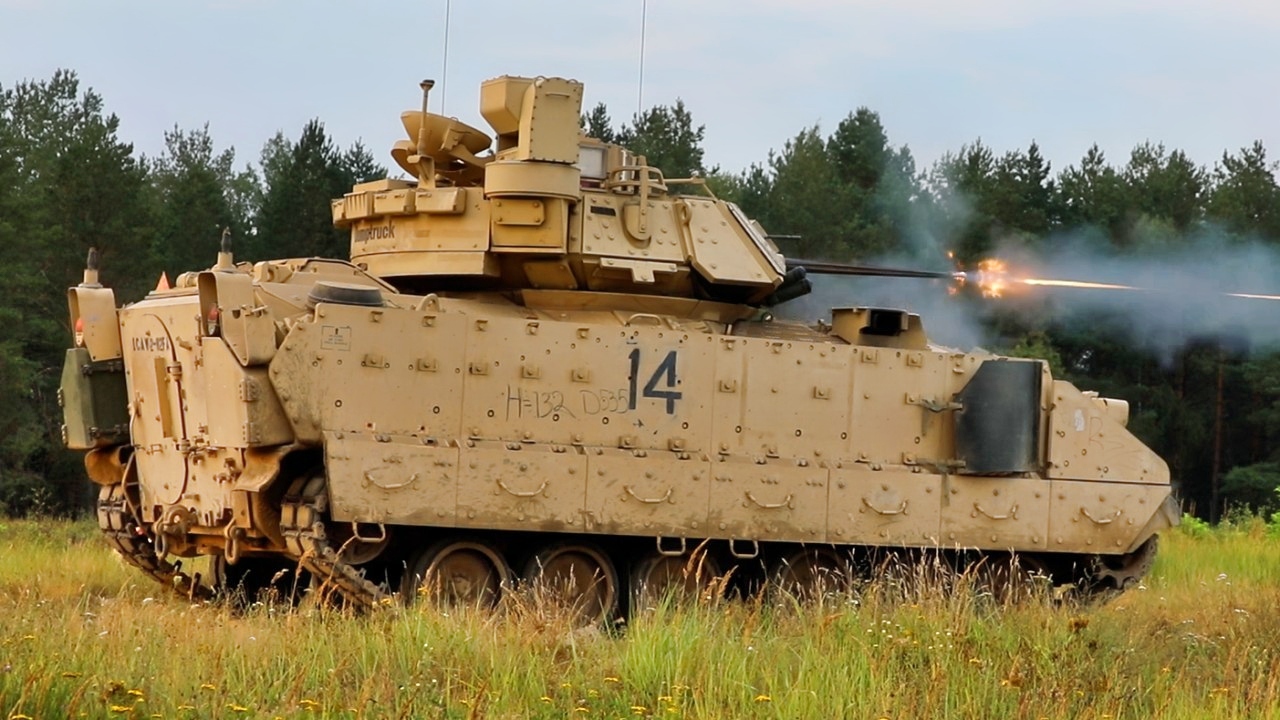
Troopers with 3rd Armored Brigade Combat Team, 1st Cavalry Division firing the 25mm canon on a Bradley fighting vehicle in order to zero the vehicles weapons systems at a range in Poland. Ranges such as these familiarize troopers with the vehicles systems in order to ensure combat readiness. US Army Photo.
Ukraine has drafted a demographic strategy through 2040 and sharply increased payments for newborns, though officials concede there is no quick fix for a birth rate this low. There is also a growing argument that Ukraine should treat its diaspora as a resource rather than a loss, drawing on the skills, money, and connections of those abroad, even if many never permanently return, the way other countries have turned large overseas populations into engines of investment at home.
The arithmetic still points to a hard road. The World Bank’s own coordinator in Ukraine put it plainly, noting that the country’s most critical asset is its people, and that refugee return, veteran reintegration, and women in the workforce will shape recovery as much as capital and concrete. Rebuilding the roads, power plants, and apartment blocks is the part that money can buy, and even that will take a decade and require the West to either seize Russia’s frozen billions or keep writing checks of its own.
Rebuilding the population, persuading millions of educated young Ukrainians who have started new lives abroad to come home to a country still scarred by war, is the part no donor conference can fund, and it is the one that will determine whether the nation that emerges from this war is whole or hollowed out.
About the Author: Harry J. Kazianis
Harry J. Kazianis (@Grecianformula) was the former Senior Director of National Security Affairs at the Center for the National Interest (CFTNI), a foreign policy think tank founded by Richard Nixon based in Washington, DC. Harry has over a decade of experience in think tanks and national security publishing. His ideas have been published in the NY Times, The Washington Post, The Wall Street Journal, CNN, and many other outlets worldwide. He has held positions at CSIS, the Heritage Foundation, the University of Nottingham, and several other institutions related to national security research and studies. He is the former Executive Editor of the National Interest and the Diplomat. He holds a Master’s degree focusing on international affairs from Harvard University.


