

Key Points – Three renowned US Navy museum battleships are undergoing significant restoration projects to preserve their history for future generations.
-The USS Texas (BB-35) is in Galveston for a $75 million overhaul that includes replacing over 700 tons of steel and restoring its 40-ton foretop.
-The USS New Jersey (BB-62) recently completed a 78-day dry-dock period in Philadelphia where its hull was repainted and its cathodic protection system was replaced.
-At the USS North Carolina (BB-55) memorial in Wilmington, a “living shorelines” project is underway to combat severe tidal flooding and improve visitor access to the historic vessel.
The Navy’s Great Battleships Make a Comeback of Sorts
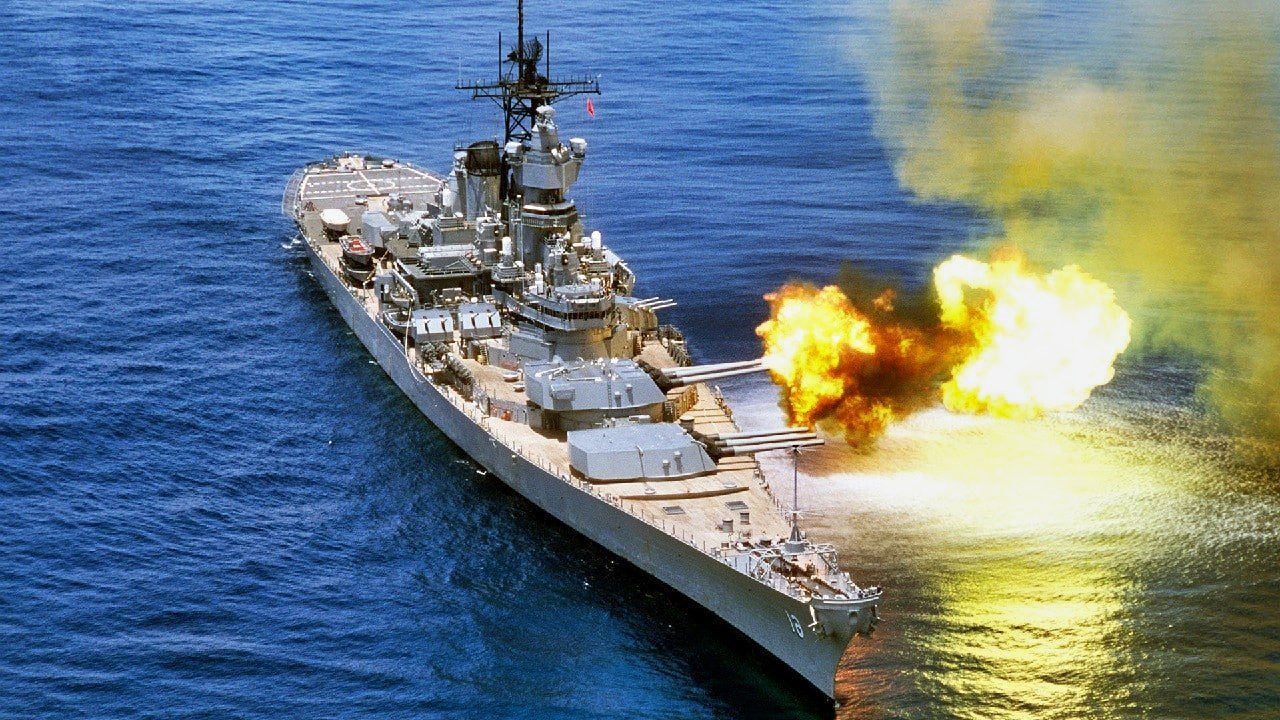
World War Two experts, aficionados, and curious onlookers hold special feelings for the US Navy’s renowned battleships. There is just something special about the size and big guns of these warships that brought thunderous firepower to a fight.
They had the ability to elegantly cut through the waves of even the choppiest of seas at high speeds. Many of these ships have become floating museums, so families that may not have a strong background in naval history can see them up close in all of their glory.
But these dreadnoughts, after all of their decades in the water, need to be restored and refurbished so they can entertain guests in the 21st century.
Let’s look at three battleships that have undergone or are undergoing improvements so tourists from around the world will have a heightened experience.
USS Texas Has a Huge Project With Workers Streaming Around the Ship
I’ll start with the 27,000-ton USS Texas since the Lone Star State is my adopted home. The New York-class Battleship Texas is undergoing a considerable facelift as the ship is surrounded by scaffolding with workers toiling all over the confines.
Two cranes are working at the port. On December 9, 2024, the foundation in charge of the restoration ordered employees to begin work on the foretop that controls the 14-inch and 5-inch gun batteries. The 40-ton foretop is undergoing a major refit project that includes “restoring watertight integrity, reinstalling historically accurate antennas and lights, and fully coating the inside and out,” according to the ship’s foundation website.
The contractor has employed numerous welders, fitters, and painters to do the job. After the work, the foundation claims the ship will be good to visit for another 100 years. The project is being conducted in Galveston, Texas. This undertaking is a $75 million restoration with over 200,000 person-hours already spent. The USS Texas took on 2,000 gallons of water, and the foundation was adamant about fixing it to preserve history. Workers painted the hull and replaced over 700 tons of steel.
USS New Jersey Received a Major Overhaul
Battleship New Jersey endured its time in dry dock for a major restoration project. Two thousand tons of water was used for ballast. Before work could begin, the Iowa-class vessel started in Paulsboro Marine Terminal in New Jersey and cruised north on the Delaware River to the Philadelphia Naval Shipyard. The dry dock period lasted for 78 days. The main effort was to paint the hull.
The Battleship New Jersey organization described the excitement of seeing the vessel transformed. “Once the hull was pressure washed and rid of mud, marine growth, and flash rust, her below-water hull was painted red! This system of immersion-grade coatings was designed to fill in most of the pitting on the hull and form an abrasion-resistant barrier. With each coat a different color, over the next 30 years, we’ll be able to tell how much of the paint has worn away!”
The “anodes on the hull and along the propellor shafts used for the cathodic protection” were also replaced. This was a badly needed job. The restoration work will benefit the permanent mooring in the Delaware River’s freshwater.
USS North Carolina Visitor’s Site Had to Contend with Major Flooding
The USS North Carolina Battleship Memorial, located alongside the Cape Fear River near downtown Wilmington, North Carolina, is seeing better days for the giant vessel. There was once a “7,021% increase in tidal flooding since the battleship came to the site in 1961,” the memorial said.
The idea behind the restoration project is to create a safe and elevated parking lot and “re-naturalize” the flood plain. “Living shorelines use native vegetation alone or in combination with low sills, such as rocks or oyster reefs, to stabilize the shoreline.
This green infrastructure helps absorb nutrient runoff, creates essential fish habitat, and buffers shorelines from waves and storms. Research indicates that living shorelines are more resilient than bulkheads in protecting against the effects of hurricanes,” the memorial foundation explained.
Once this is done, visitors can better enjoy visiting the ship after all the flooding. 13 million people have visited the North Carolina since 1961.
Hand it to all the workers and volunteers who have been preserving history with their efforts to enable tourists to see these wonders of World War Two and other conflicts. This is exciting for professional historians and laypeople who are simply fascinated by the size of the gargantuan battleships.
We are lucky to have such a dedicated group to restore and refurbish the ships and improve the environments near the memorial sites.
So, take some time to visit these historical sites when you have the chance. You won’t be disappointed.
About the Author: Dr. Brent M. Eastwood
Brent M. Eastwood, PhD is the author of Don’t Turn Your Back On the World: a Conservative Foreign Policy and Humans, Machines, and Data: Future Trends in Warfare plus two other books. Brent was the founder and CEO of a tech firm that predicted world events using artificial intelligence. He served as a legislative fellow for US Senator Tim Scott and advised the senator on defense and foreign policy issues. He has taught at American University, George Washington University, and George Mason University. Brent is a former US Army Infantry officer. He can be followed on X @BMEastwood.
The Best Tanks on Earth
AbramsX: The Tank the US Army Wants


Bruce S. Conklin
June 16, 2025 at 7:29 pm
Let us all hope that these invaluable assets can be revived and rejuvenated. The Zumwalt class “destroyers” ( actually Heavy Cruisers ) are not adequate as substitutes.
Pingback: USS Long Beach: The Navy's 'Nuclear-Powered' Cruiser Broke All the Rules - National Security Journal