


Russia’s attacks on Ukraine’s energy sector have amounted to war crimes and crimes against humanity, a UN probe has found.
The Independent International Commission of Inquiry on Ukraine found that Russia had launched a deliberate attack on Ukraine’s civilian energy infrastructure, leaving millions of people to freeze, in what amounts to war crimes and crimes against humanity.
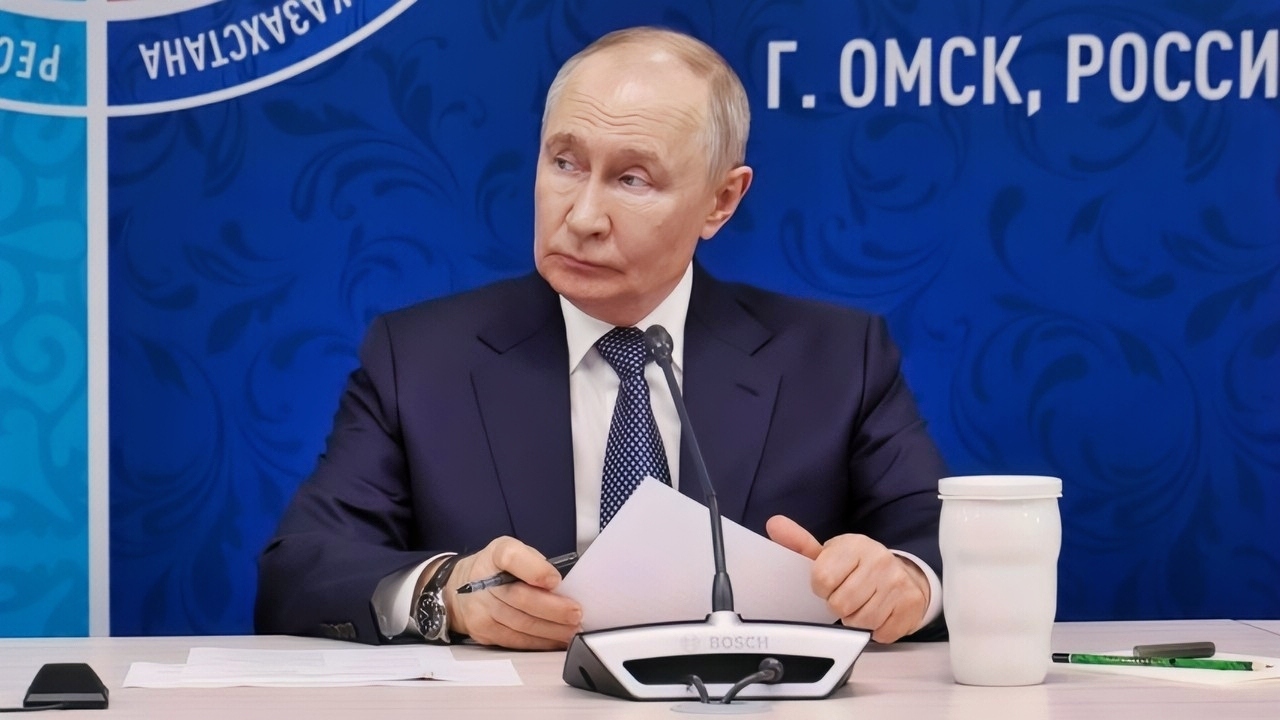
Putin at Conference on July 2026 Creative Commons Photo
Putin in December of 2023 Creative Commons Image
“As the cold season approaches, the attacks have intensified once again, raising serious concerns about the threats to civilians’ lives and health,” commission chairman Erik Møse said.
The findings are based on an investigation, rather than a legal ruling.
Russia does not recognize the commission’s authority.
Deliberate Attacks On Heating Infrastructure
Investigators found that Russian commanders were aware that the heating infrastructure they were ordering attacks on was crucial for civilian survival.
The commission found that while there were deliberate attacks on civilian infrastructure (war crimes), there was also a wider pattern of attacking civilians to cut off electricity and vital services to Ukrainians (crimes against humanity).
The investigation included testimony from 255 individuals across nine regions, as well as evidence from doctors, officials, and humanitarian groups.
Russia’s Defense Ministry announced in August that it was preparing “mass attacks on Ukraine’s energy facilities”, according to the UN Human Rights Monitoring Mission.
In an update on October 16, officials wrote that on October 13/14 Russia launched an attack on three large power stations in Kyiv, cutting off electricity to some 600,000 people.
“People will face the same challenges next winter, and even more so if attacks resume,” Danielle Bell, the mission’s head, warned over the summer.
Cold Winter Looms
The commission found that during the 2025/26 winter, families were left without heating, electricity, water, or gas, with temperatures dropping to minus 21 degrees Celsius (-5.8 degrees Fahrenheit).
One 53-year-old Kyiv resident said he was terrified to go to sleep in his cold home, explaining: “The scariest thing was to fall asleep and not to wake up; it was like torture to be scared of dying from cold.”
Elderly residents couldn’t reach air raid shelters because elevators failed during power outages.
The commission warned back in September that “we are concerned that the coming winter will be more difficult to endure.”
Another UN report in June found that Russia launched at least 423 attacks on electricity infrastructure, and 74 on heating infrastructure between October 2025 and March 2026.
This impacted hospitals, schools and water supplies.
New Outages As Air Defense Shortage
Volker Türk, UN human rights chief, warned on October 8 that “many parts of Ukraine are plunged into darkness.”
This threat remains, with Ukrainian energy company DTEK saying that one of its thermal power plants was severely damaged by a Russian attack on October 22 and was forced to shut down.
Since February 2022, TEK’s thermal power plants have been attacked over 230 times
On October 26, grid operator Ukrenergo said new outages hit six regions, including Kharkiv, Sumy, and Zaporizhzhia, and urged consumers to save electricity.
Ukraine is also struggling to get interceptors from Washington. President Volodymyr Zelensky said on Monday that Kyiv had been waiting for almost a month for U.S. Defense Secretary Pete Hegseth to approve the use of Patriot and NASAMS missiles, according to Reuters.
However, Foreign Minister Andrii Sybiha said he was pleased to see that the International Atomic Energy Agency had a plan to send missions to 19 substations crucial to nuclear safety. He said this is the largest deployment of its kind ever.
Foreign Nationals ‘Trafficked’ Into Military Service
The commission’s report on October 26 also found evidence that the Russian authorities had trafficked soldiers from 29 different countries. They were often promised jobs in the civilian sector but were then forced to sign contracts in Russian.
Some lost their lives, went missing, or were taken as prisoners of war.
The commission wants these soldiers discharged and attacks on civilians to stop.
However, Moscow has denied the investigation’s findings. The Russian Mission to the UN told the Associated Press that the commission used “falsified data” and that it does not recognize its authority.
Russia claims it only attacks military and military-linked sites.
The investigators also examined reports of Ukrainian attacks on energy facilities in Russia and Russian-occupied territory in Ukraine. However, they said they could not investigate further because Moscow denied them access.
About the Author: Georgia Gilholy
Georgia Gilholy is a journalist based in the United Kingdom who has been published in Newsweek, The Times of Israel, and the Spectator. Gilholy writes about international politics, culture, and education.


