


Amid repeated drone strikes on Russian oil and fuel infrastructure, some Russian experts have urged Vladimir Putin to use tactical nuclear weapons in Ukraine to restore a strong position of deterrence.
Under Russia’s current nuclear policy, the Kremlin is well within its rights to launch a strategic nuclear strike against adversaries who threaten the territorial stability of the Russian Federation (including its annexed territories).

Tu-160 bomber Creative Commons Image
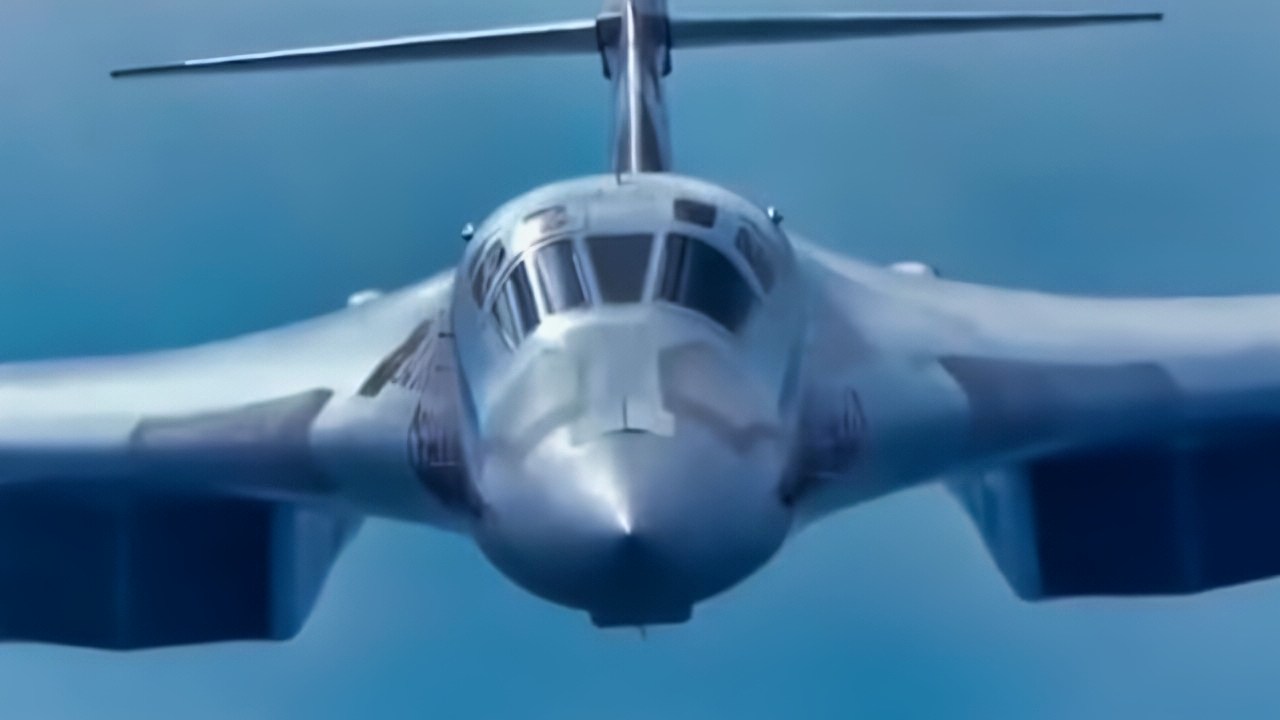
Tu-160 Bomber. Image Credit: Creative Commons.
The only thing that is seemingly stopping Russia from flattening Kyiv is the potential retaliation from NATO. As the war progresses, however, the pressure on Moscow from the inside to launch a nuclear strike on Ukraine will become increasingly hard to ignore.
The Basics of Russian Nuclear Doctrine
But what exactly is Moscow’s nuclear doctrine, and what conditions need to be met for a nuclear strike? Russia’s nuclear doctrine is publicly available for all the world to read, and the present author strongly recommends that readers review the policy and draw their own conclusions.
The primary goals of the policy are the protection of national sovereignty, the maintenance of territorial integrity, and ensuring that any conflict that does occur ends on terms acceptable to Moscow.
While the language of the doctrine presents a defensive posture, it is also deliberately ambiguous, providing the Kremlin with flexibility in deciding when and where a nuclear response is necessary.
Russia’s nuclear capabilities are built around a traditional strategic triad composed of land-based intercontinental ballistic missiles, submarine-launched ballistic missiles, and air-launched cruise missiles from strategic bombers.
This diverse arsenal ensures survivability and allows Russia to maintain a credible second-strike capability, meaning it can respond even after absorbing a nuclear attack.
Additionally, Russia possesses a large stockpile of non-strategic, or tactical, nuclear weapons, which are intended for use in regional or battlefield contexts. These weapons are not constrained by most arms control agreements and have been a staple of the military since the Cold War.
Criteria for a Nuclear Response
The older 2020 version of the doctrine specified four principal scenarios that could justify the use of nuclear weapons. The first involves receiving reliable information about the launch of ballistic missiles targeting Russian territory or that of its allies.
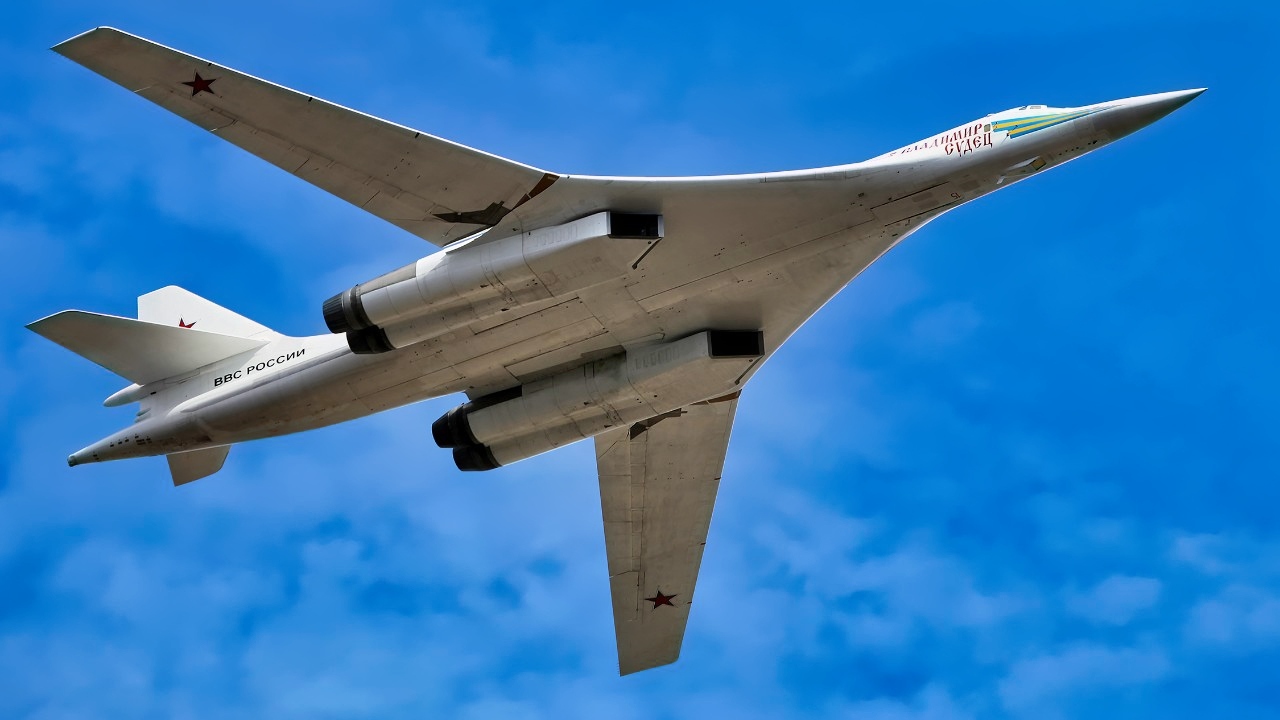
Tu-160 Bomber from Russia. Image Credit: Creative Commons

Tu-160 Bomber Russian Air Force. Image Credit: Russian State Media.

Russia Tu-160 Bomber. Image Credit: Creative Commons.
The second scenario is the use of nuclear or other weapons of mass destruction against Russia or its allies. The third concerns attacks against critical government or military infrastructure that would undermine Russia’s ability to respond with nuclear forces.
The fourth and most debated condition is a large-scale conventional attack that threatens the very existence of the Russian state. These conditions make clear that Russia does not adhere to a strict “no first use” policy, leaving open the option of employing nuclear weapons in response to extreme non-nuclear threats.
Rewriting Russia’s Nuclear Doctrine to Give More Power to the Kremlin
In 2024, Russia quietly revised its nuclear doctrine, altering some of the conditions necessary for a nuclear strike. One of the most notable adjustments is the shift in language used to describe conventional threats.
The new doctrine allows for nuclear use in response to attacks that threaten Russia’s “sovereignty and territorial integrity,” as opposed to the earlier requirement of threatening the “existence of the state.”
This change widens the range of situations that could potentially trigger a nuclear response, giving Putin greater discretion in interpreting threats. Many Western analysts interpreted this change as a lowering of the threshold for nuclear use, even though the doctrine still technically describes nuclear weapons as instruments of last resort.

Tu-160 bomber. Image Credit: Creative Commons.
Additionally, the 2024 changes updated the scope of Russia’s nuclear doctrine. The new policy explicitly extends Russia’s nuclear protection to Belarus, effectively placing the country under Moscow’s nuclear umbrella.
It also introduces a provision stating that an attack on Russia by a non-nuclear state supported by a nuclear power could be treated as a joint attack, implying that such a scenario might justify a nuclear response.
Furthermore, the doctrine broadens the types of attacks that could trigger nuclear use, including large-scale aerial assaults involving drones, cruise missiles, or other non-ballistic systems. Taken together, these updates create a more expansive and less predictable framework for nuclear decision-making.
Escalate to De-escalate
One of the core principles of Russia’s nuclear doctrine is a concept which Western analysts call “escalate to de-escalate.” This idea suggests that Russia might use a limited nuclear strike in order to force an adversary to back down and bring a conflict to an end on favorable terms.
Some analysts believe that such a strategy could involve a small, demonstrative nuclear strike aimed at signaling resolve without triggering full-scale nuclear war.
This is how the Kremlin currently uses the Oreshnik IRBM. It is a flashy, very clear signal that a line has been crossed and that Moscow is clamping down. However, Russia has yet to deploy any nuclear armaments as a means of de-escalation in Ukraine.
Ever since Russia’s invasion of Ukraine, nuclear weapons have been the uncomfortable elephant in the room that has been on everyone’s minds. Despite repeated threats from the Kremlin to use tactical nukes, no WMDs have yet been deployed during the four years of fighting.
However, the conflict has continued to escalate with each passing year of the war. Ukraine has ramped up its drone attacks against targets deep behind Russian lines, some of which have been against Russia’s nuclear triad, which demands a nuclear response.
Thankfully, cooler heads in the Kremlin seem to have prevailed, and there is as of yet no sign that Russia is preparing to nuke Ukraine. However, as Ukraine takes the initiative, the pressure mounting inside the Kremlin could force Putin to consider a nuclear strike to save face.
About the Author: Isaac Seitz
Isaac Seitz, a Defense Columnist, graduated from Patrick Henry College’s Strategic Intelligence and National Security program. He has also studied Russian at Middlebury Language Schools and has worked as an intelligence Analyst in the private sector.


