

Russia’s oil crisis can no longer be ignored. Videos shared on social media show Russian citizens expressing their anger at the fuel pumps and fighting in the streets over access to fuel. Some videos show women breaking down in tears, with one explaining that she had waited so long in line for fuel that her car battery died. Regular Russian citizens are now feeling the impact of the war, and that’s precisely what Kyiv set out to do when it announced the ongoing 40-day campaign.

Tim Murry, a foreign threats compound contractor, drives a T-72 battle tank into position to serve as adversary targets for a joint service exercise, Emerald Flag, at Eglin Air Force Base, Fla., Nov. 30. Emerald Flag is a multi-service exercise aimed to unify information sharing across joint domain platforms. (U.S. Air Force photo/1st Lt Karissa Rodriguez)
For Ukrainian President Volodymyr Zelenskyy, the latest long-range strikes – which he describes as a “long-range sanctions” campaign – are the best chance yet at raising the cost of the war and forcing Putin to come to the negotiating table.
And while Putin has yet to agree to anything other than a full Ukrainian surrender, there are signs that things are beginning to change.
Over the weekend, the Russian president, Vladimir Putin, publicly acknowledged that long-range Ukrainian strikes are now forcing the Kremlin to take drastic action – including export bans and emergency measures designed to stabilize domestic supplies.
The recent admissions are significant because, up until recent weeks, Putin would not speak openly about the damage being done to the Russian economy.
But now, with the country feeling the pressure, he can no longer pretend it isn’t happening.
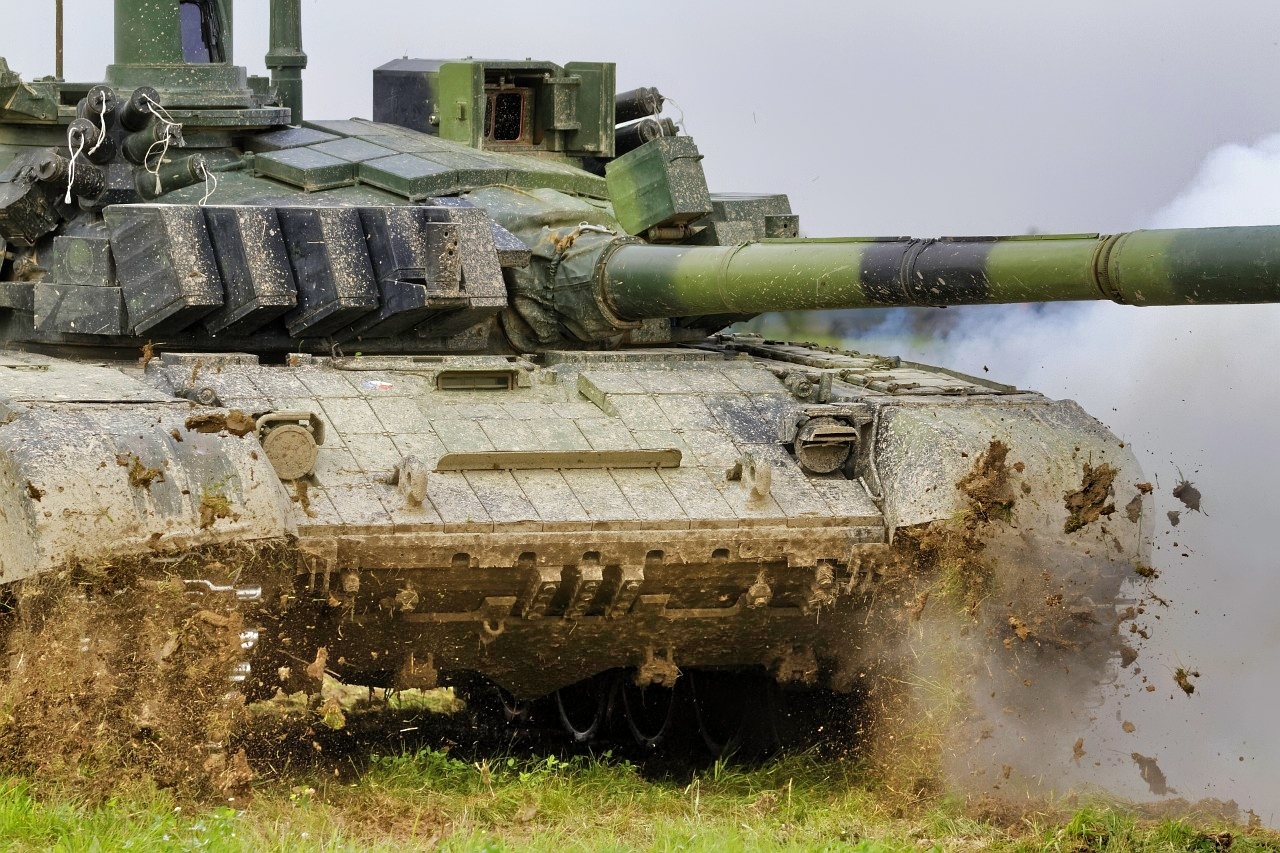
T-72 Tank. Image Credit: Creative Commons.
What Putin Said
Speaking during a June 28 meeting, Putin admitted that motorists and businesses were beginning to feel the effects of the crisis and that the problem had now expanded beyond certain regions, such as Crimea.
“As for strikes against critical infrastructure in general, and energy infrastructure in particular, of course, these attacks on our infrastructure facilities create problems; that’s obvious,” Putin said.
“Right now, we’re observing a certain shortage, but it’s not critical,” he continued.
Putin also attempted to reassure the public that the problem would not persist, saying that damaged facilities are being repaired quickly and that Russia plans to increase fuel imports while accelerating repairs.
The Russian president portrayed the problem as temporary, but it remains to be seen whether it has sufficient air defense capabilities to protect these critical sites across its vast territory. So far, it isn’t looking good.
Ukrainian Strikes Target Russia’s Oil Industry
Ukraine has spent months expanding its long-range strike campaign, culminating in devastating strikes on the Moscow Oil Refinery earlier this month. Ukrainian strikes now occur on a daily basis, targeting refineries and energy infrastructure as part of a plan to weaken Russia’s ability to finance and sustain the war. On June 28, Ukrainian forces struck two more refineries.
Zelenskyy confirmed that drones hit the Sloviansk refinery in Russia’s Krasnodar region, roughly 300 kilometers from the front line, as well as another refinery in the Yaroslavl region, around 700 kilometers from Ukraine’s border.
Production Losses Create National Fuel Crisis
The cumulative effect of a constant barrage of strikes against major oil refineries and infrastructure should be obvious: Russia is facing a fuel crisis.
According to Reuters, Russia has lost approximately 25% of its gasoline production capacity after repeated attacks on refineries, and overall oil refining volumes have fallen to their lowest level in more than two decades.
Those shortages are a problem for soldiers on the front line, but they also impact civilians – and that’s an issue for Putin.
Fuel restrictions have been imposed across Crimea and southern Russia, and in occupied Ukrainian territories and even parts of Siberia. At least 15 Russian regions have officially introduced restrictions on fuel sales, and the number of affected regions continues to grow.
Scrambling to Contain the Problem
The Kremlin must not only solve the problem in the short term but also prevent a long-term crisis by more effectively defending its most critical oil and energy infrastructure. The Kremlin is scrambling to contain an impossible-to-hide crisis, establishing a new government task force to coordinate fuel supplies and take other measures to prevent a full national crisis. Moscow has also approved the production of lower-quality gasoline and diesel for domestic consumption, allowing fuels to be produced and distributed more quickly.
Russia is also reportedly in talks with Kazakhstan about importing 50,000 metric tons of AI-92 gasoline to offset shortages caused by Ukrainian strikes. Kazakh officials say they have yet to receive a formal government request, but multiple industry sources have claimed that negotiations are underway. And it may not be the first request Russia makes to regional allies as Ukrainian strikes escalate over the coming weeks.
Given that Ukraine’s promised 40-day campaign has only just begun, further refinery strikes are guaranteed. What’s not guaranteed, though, is Russia’s ability to defend them. Moscow may be looking for quick and easy fixes now, but without taking drastic action to resolve the problem before the strikes recur, it’s hard to imagine it not getting significantly larger before the end of the summer.
About the Author: Jack Buckby
Jack Buckby is a British researcher and analyst specializing in defense and national security, based in New York. His work focuses on military capability, procurement, and strategic competition, producing and editing analysis for policy and defense audiences. He brings extensive editorial experience, with a career output spanning over 1,000 articles at 19FortyFive and National Security Journal, and has previously authored books and papers on extremism and deradicalization.


